Those small red berries popping up in your lawn or along grassy edges are most likely wild strawberry (Fragaria spp. Actaea rubra (red baneberry) species review | U.S. Forest Service (FEIS) notes that Actaea rubra (red baneberry) is an herbaceous woodland species with clusters of bright red (sometimes white) berries that contain protoanemonin/ranunculin derivatives and cardiogenic toxins; the berries are highly poisonous, documented in Forest Service and extension resources. ), mock strawberry (Potentilla indica), or occasionally wintergreen (Gaultheria procumbens). Less commonly, you might be looking at lingonberry, a stray bittersweet nightshade vine, or red baneberry near a woodland edge. Most of what you find in an ordinary lawn is harmless, but a couple of lookalikes are genuinely toxic, so it's worth spending five minutes making a confident ID before you let kids or pets near them.
What Are the Red Berries That Grow in the Grass: ID Guide
Spotting red berries in your lawn: who this guide is for
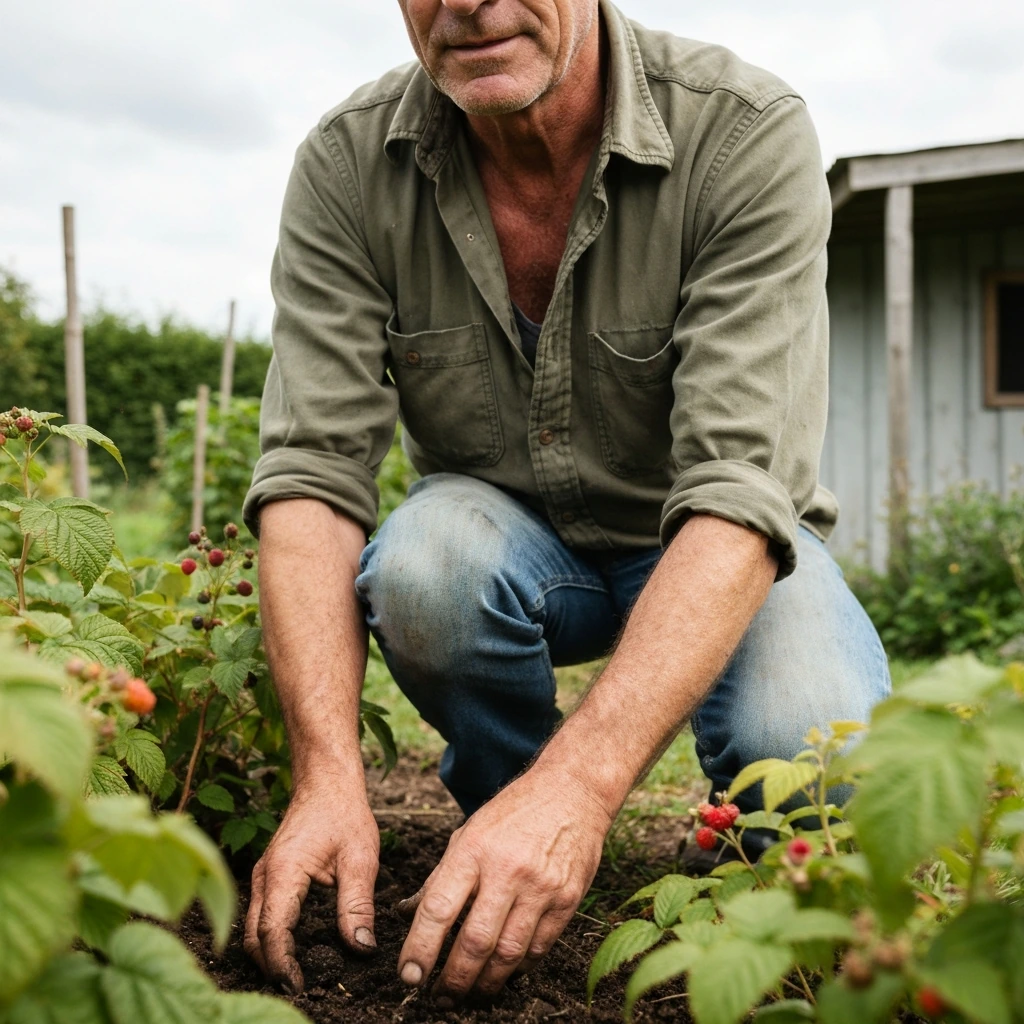
If you've crouched down in your yard and thought 'wait, are these safe?' then this guide is for you. I've had that exact moment more than once, the first time with a patch of mock strawberry that had crept into my lawn without any invitation. This article walks through every low-growing red-berry species you're realistically likely to encounter, from common lawn weeds to bog plants to a few genuinely dangerous ones. I've organized it so you can move from 'what is this?' to 'is it safe?' to 'what should I do about it?' as quickly as possible. If you're also curious about red berries on shrubs, trees, or vines rather than on groundcover plants, those are related but separate topics worth exploring on their own. If you want information on whether berries that grow on trees are poisonous, see our related guide on are berries that grow on trees poisonous for tree- and shrub-specific ID and safety advice.
Photo ID checklist: what to capture before you touch anything
Before you start searching apps or field guides, take a few photos. A good set of images will let you confirm an ID yourself or get a fast, confident answer from an expert. Here's exactly what to photograph, in order of usefulness.
- The whole plant from about two feet away, showing its growth habit (flat on the ground, trailing, upright, or climbing)
- A leaf close-up from both the upper and lower surface, showing edge teeth, vein pattern, and any hair
- The leaf arrangement and petiole (stem connecting leaf to plant stem)
- Flower close-ups if present, especially petal count, color (white, pink, or yellow matters a lot here), and sepal number
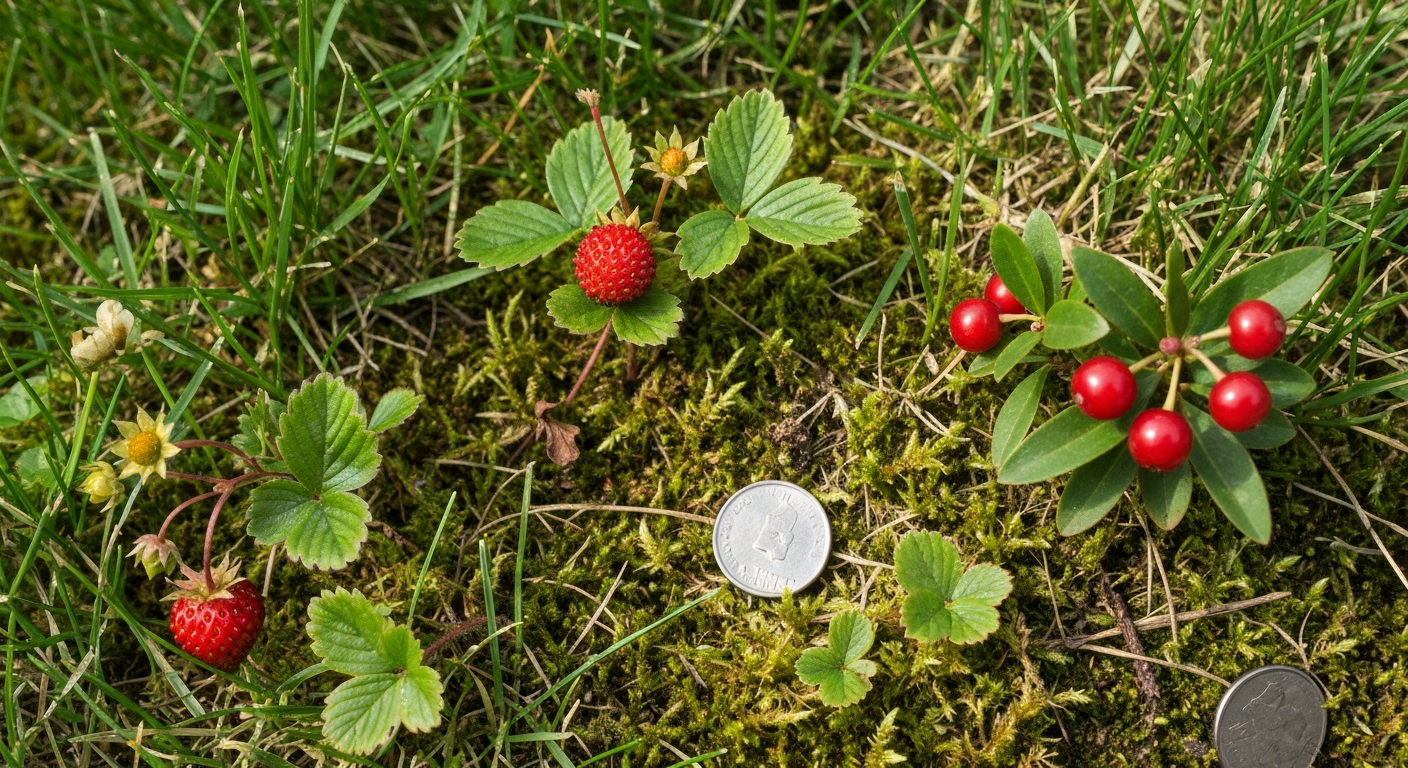
- The fruit itself from directly above and from the side, with something for scale, like a coin or your finger
- A macro shot of the fruit surface: are the seeds sitting on top of the flesh or embedded in tiny pits? Are you seeing one fused berry or a cluster of tiny beads (drupelets)?
- Any remaining calyx (the green star-shaped collar) on or under the fruit, and whether it sits above, level with, or wraps under the berry
- The stem, checking for hairs, thorns, or a reddish tint
- Habitat context: lawn interior, shaded woodland edge, bog margin, rocky disturbed ground
That last shot matters more than people expect. A plant growing in a sphagnum bog margin is almost never bittersweet nightshade. A plant with a vivid red single berry on a shaded forest floor near a wet area warrants more caution than the same-sized red berry in the middle of a sunny suburban lawn. Context narrows the list fast.
Common low red-berry species at a glance
| Species | Fruit appearance | Season | Typical habitat | Edible? |
|---|---|---|---|---|
| Wild strawberry (Fragaria vesca / F. virginiana) | Small conical red accessory fruit; achenes on surface or in shallow pits | Late spring to midsummer | Lawns, meadows, woodland edges, disturbed ground | Yes, sweet and edible |
| Mock / Indian strawberry (Potentilla indica) | Round red accessory fruit; achenes on bumpy surface; yellow flowers | Spring through fall | Lawns, edges, disturbed turf | Technically safe but tasteless/bland |
| Wintergreen (Gaultheria procumbens) | Round, shiny red berry-like capsule; 6–10 mm; wintergreen scent | Fall through winter (persists) | Acidic forest floor, pine barrens, heathland | Edible in small amounts; avoid if aspirin-sensitive |
| Lingonberry (Vaccinium vitis-idaea) | Small round true red berry (~1 cm); slightly tart | Late summer to fall | Boreal forests, acidic bogs, tundra edges | Yes, widely eaten |
| Small cranberry (Vaccinium oxycoccos) | Small, spotted/streaked red true berry on thin trailing stems | Late summer to fall | Peat bogs, sphagnum margins | Edible; very tart raw |
| Bittersweet nightshade (Solanum dulcamara) | Glossy oval red true berry in hanging clusters; unripe berries green | Summer through fall | Disturbed ground, thicket edges, fences, climbing through grass | TOXIC — do not eat |
| Red baneberry (Actaea rubra) | Glossy round red (sometimes white) berries in tight clusters on upright stems | Midsummer | Shaded woodland floors, moist forest edges | HIGHLY TOXIC — do not touch |
Wild strawberry: the one you're probably hoping for
Wild strawberry is the most welcome surprise in a lawn. Fragaria vesca (woodland strawberry) and Fragaria virginiana (common wild strawberry) both grow as low, stoloniferous groundcovers, spreading by runners that root wherever they touch soil. The leaves come in groups of three, are toothed all the way around, and have a noticeable tooth at the tip of each leaflet. Flowers are white with five petals, appearing in spring. The fruit is a small, conical red accessory fruit, meaning the red fleshy part is actually the swollen flower receptacle, with the true botanical seeds (achenes) sitting on or just in the surface. In F. vesca those achenes sit on top of the flesh; in F. virginiana they sit in shallow surface pits. That difference shows up beautifully in a close-up photo and is one of the easiest ways to tell the two species apart.
Season-wise, expect ripe fruit from late May through July depending on your region and elevation, with warmer zones ripening first. Wild strawberry thrives across a huge range: USDA zones 3 through 10, in lawns, forest edges, roadsides, old fields, and disturbed ground. It tolerates part shade, which is why it often appears under trees where lawn grass has thinned. The fruit is fully edible and genuinely delicious, much more intensely flavored than a commercial strawberry despite being the size of a pea.
Mock strawberry: the look-alike that disappoints at dinner
Mock strawberry (Potentilla indica, also still widely listed as Duchesnea indica) is the species I mentioned finding in my own lawn. It looks convincingly like wild strawberry at a glance: same trifoliate leaves, same low trailing habit with runners, same small red fruit with achenes on the surface. But there are two fast ways to tell them apart. First, look at the flower: mock strawberry has yellow flowers, while true wild strawberry always has white or occasionally pale pink flowers. Second, taste the fruit if you're already confident it's one of these two: wild strawberry is sweet and aromatic; mock strawberry is bland to the point of tasting like nothing. It's not toxic, just deeply anticlimactic.
Mock strawberry originally comes from South Asia but has naturalized widely across North America, Europe, and Australia. It's considered weedy and in some regions is classified as invasive, particularly in the eastern United States. It tolerates shade better than wild strawberry and tends to persist in lawns under trees. You'll also see it along grassy paths, disturbed edges, and garden beds. If you have it, you're not in danger, but you're also not getting a snack.
Wintergreen: shiny red berries that smell like a breath mint
Gaultheria procumbens, known as American wintergreen or teaberry, is a mat-forming evergreen groundcover in the heather family (Ericaceae). It grows very low, usually under 15 cm tall, with small leathery oval leaves that are dark green and slightly glossy. The red fruits are round, about 6 to 10 mm across, and have a distinctive wintergreen scent when crushed. That scent comes from methyl salicylate, the same compound used in muscle rubs and old-school wintergreen candy. The berries ripen in late summer but persist through fall and often into the following spring under snow, which is why you might spot them in late winter or early spring when almost nothing else is visible.
Wintergreen is strongly tied to acidic soils, typically pH 4.5 to 6.0, and grows in pine barrens, oak forests, heathlands, and shaded mossy slopes across the northeastern and north-central United States and into Canada. You won't find it in a typical suburban lawn unless your soil is quite acidic and you have significant tree cover. The berries are edible and have been used traditionally for centuries, but the methyl salicylate content means you should eat them in moderation and avoid them entirely if you're sensitive to aspirin or taking blood thinners.
Lingonberry and cranberry: red berries from acidic bogs
If you're near a peat bog, a sphagnum marsh, or a boreal forest edge, the small red berries trailing low through the vegetation are likely lingonberry (Vaccinium vitis-idaea) or small cranberry (Vaccinium oxycoccos). Both are members of the heather family and share the acidic, wet, low-nutrient habitat preferences that define true bog environments. Lingonberry is a small evergreen shrub, usually 10 to 40 cm tall, with oval leathery leaves and clusters of small red true berries about 1 cm across that ripen in late summer and fall. It's widespread across boreal North America, northern Europe, and into Alaska and is a staple edible berry across Scandinavia and Russia.
Small cranberry (V. oxycoccos) is even lower-growing, often trailing through sphagnum moss on very thin wiry stems with tiny leaves. Its berries are smaller and often have a spotted or streaked appearance before fully ripening to red. The large cranberry you buy in stores is V. macrocarpon, a related but distinct species cultivated in wet bog beds across Massachusetts, Wisconsin, New Jersey, and the Pacific Northwest. See GBIF for taxonomic details and occurrence records: Vaccinium macrocarpon Aiton | GBIF (taxon page & occurrence records). If you're in a bog margin in northern Minnesota, Maine, or the Canadian Shield and you see tiny red berries on thin trailing stems through moss, small cranberry is your most likely candidate. Both species are edible, quite tart raw, and widely used in cooking.
Dangerous lookalikes: bittersweet nightshade and red baneberry
This is the section to read carefully, especially if you have children or pets. Two low-growing or low-arching red-berry plants found in grassy and woodland edges are genuinely toxic and should never be tasted.
Bittersweet nightshade (Solanum dulcamara)
Bittersweet nightshade is a vine or scrambling semi-woody plant that often threads itself through grass, hedges, and fence lines, making it easy to mistake for something that 'grows in the grass.' Its berries are small, oval, and glossy, hanging in grape-like clusters. They ripen in stages, so a single cluster often shows green, yellow-orange, and red berries at the same time, which is actually a useful ID feature. The flowers are distinctive: purple with reflexed petals and a prominent yellow anther cone, looking a lot like a small tomato flower (which makes sense, as it's in the same family). All parts of the plant are toxic, containing glycoalkaloids including solanine-family compounds. Unripe green berries have the highest concentration. Symptoms of ingestion include nausea, vomiting, abdominal pain, and in severe cases neurological effects. If a child or pet eats these berries, contact Poison Control (1-800-222-1222 in the US) or a veterinarian immediately. Do not wait for symptoms.
Red baneberry (Actaea rubra)
Red baneberry is a woodland herbaceous plant, not a lawn plant, but it's worth knowing if you back onto forest or shaded edges. It grows upright to about 50 to 80 cm and produces tight clusters of bright, glossy red berries on thick red stalks in midsummer. The berries can also be white (a white-berried form exists), but the red-stalked cluster shape is distinctive either way. Baneberry contains protoanemonin derivatives and cardiogenic toxins. Even a small number of berries can cause serious cardiovascular effects in children. This one is genuinely dangerous: identify it, mark it, and remove it or fence it off if young children access the area.
A useful warning sign for both species: neither grows flat on the ground the way wild strawberry and mock strawberry do. Nightshade climbs and scrambles; baneberry stands upright. If the red berries are hanging in a cluster rather than sitting individually on a low plant, treat them as suspect until you've made a confident ID.
Where these berries grow: matching species to region and habitat
Geography and habitat do a lot of the identification work for you. Here's how to use where you are to narrow down what you're looking at.
- Sunny suburban lawn or meadow edge (any region): Wild strawberry and mock strawberry are your top candidates. Mock strawberry tolerates shade and compacted soil better; wild strawberry tends to prefer slightly better-drained, less-disturbed ground.
- Shaded lawn under conifers or oaks, acidic soil (Northeast, upper Midwest, Appalachians, Pacific Northwest): Wintergreen is possible, especially if soil pH is below 6.0. Wild strawberry also tolerates light shade.
- Bog margin, peat, sphagnum moss (northern US, Canada, Alaska): Small cranberry and lingonberry. These won't appear in a typical lawn but are common in their native habitats.
- Disturbed or rocky ground, roadsides, lava-disturbed substrate (Pacific Northwest, Hawaii, volcanic regions): Pioneer species including wild strawberry and mock strawberry can colonize disturbed mineral substrates. Certain Vaccinium species also establish on open, acidic volcanic material over time.
- Thicket edges, fence lines, overgrown areas (widespread): Bittersweet nightshade. This is a vine, not a groundcover, but it threads through grassy areas convincingly.
- Shaded moist woodland floor (northeastern and north-central US, Canada): Red baneberry. Not a lawn plant but common on forest edges.
Growth habits explained: groundcover, vine, shrub, or tree
One of the quickest ways to narrow down a red-berry ID is to figure out what kind of plant is producing it. The species in this article are all low-growing, but 'low-growing' covers several very different growth habits, and knowing which one you're dealing with helps immediately.
Wild strawberry and mock strawberry are true groundcovers: they spread horizontally by stolons (runners) and stay flat on the ground, rarely exceeding 15 to 20 cm in height. Wintergreen is also a groundcover, mat-forming and evergreen. Lingonberry and small cranberry are low shrubs or near-prostrate woody plants, trailing rather than standing. Bittersweet nightshade is a vine or scrambling semi-woody climber, which is why it appears in grassy areas even though it isn't a grassland plant. For more detail on species that climb or trail rather than grow flat, see the related guide on what berries grow on vines. Red baneberry is a clump-forming herbaceous perennial.
If you're wondering about berries on taller plants, the growth habit immediately shifts the species list. Dewberries (Rubus species) are a common source of confusion here. Dewberries are trailing or low-arching brambles, not trees, and their fruit is an aggregate of small drupelets that starts red and ripens to black or dark purple, not a single smooth red berry. If you see a cluster of tiny bead-like segments, you're looking at an aggregate fruit, and that points toward Rubus rather than any of the species above. Similarly, berries on vines high off the ground or on woody trees belong to a completely different set of species. For guidance on identifying and safely eating berries found on shrubs and trees, see the related guide Can you eat berries that grow on trees. If you meant berries on shrubs or trees, see our separate guide on what berries grow on trees.
Edibility and safety: a clear decision checklist
Use this checklist before eating any wild berry, every time, even if you think you've identified it before.
- Have you made a confident species-level ID using multiple features (leaf shape, flower color, fruit structure, habitat), not just the fruit color alone? If no, don't eat it.
- Is the plant growing flat on the ground with trifoliate toothed leaves and white or yellow flowers? Likely wild or mock strawberry. White flower = edible wild strawberry; yellow flower = bland but safe mock strawberry.
- Does the fruit smell unmistakably of wintergreen when gently crushed? If yes and you're in acidic woodland in the Northeast or upper Midwest, likely Gaultheria. Edible in small amounts; avoid if aspirin-sensitive.
- Are you in a northern bog or sphagnum habitat and the fruit is on a trailing woody plant? Likely cranberry or lingonberry. Both edible; very tart raw.
- Are the berries hanging in an oval-shaped cluster, glossy, with a mix of green and red on the same cluster, on a climbing or scrambling plant? Stop. This is likely bittersweet nightshade. Do not taste.
- Are the berries bright red and glossy in a tight upright cluster in a woodland setting? Stop. Possible red baneberry. Do not taste or handle.
- Never use the 'birds eat it so I can' rule. Birds can safely eat many berries that are toxic to humans and pets.
- If a child or pet has eaten unknown berries, call Poison Control (US: 1-800-222-1222) or a veterinarian immediately. Bring a photo or sample of the plant.
Growing these species in your garden or containers
Most of these species are genuinely worth cultivating deliberately, and knowing their native conditions makes replication much easier.
Wild strawberry
Wild strawberry is one of the easiest groundcovers to establish. It grows in USDA zones 3 through 10, tolerates a wide range of soils as long as drainage is reasonable, and does best in full sun to part shade. Start from runners or transplants rather than seed if you want faster coverage. It spreads quickly on its own once established. In containers, use a standard well-draining potting mix and let it trail over the edges. It needs regular water but not standing moisture. Harvest fruit when fully red and slightly soft.
Mock strawberry
Mock strawberry grows itself whether you want it to or not. If you're deliberately cultivating it as a groundcover (it does suppress weeds effectively), it tolerates shade, poor soil, and neglect better than wild strawberry. Zones 5 through 9. It can become invasive, so container growing with a solid base is worth considering if you're in a region where it spreads aggressively.
Wintergreen
Wintergreen is worth growing but requires patience and the right conditions: acidic soil (pH 4.5 to 6.0), consistent moisture, and shade to part shade. It's best suited to zones 3 through 8 and thrives under conifers or in woodland gardens. Amend your soil with sulfur or peat moss to lower pH before planting. Wintergreen is slow to establish from plugs but very long-lived once settled. Container growing is a practical option: use an acidic ericaceous potting mix and keep it consistently moist.
Lingonberry
Lingonberry is one of the most rewarding low-maintenance edible groundcovers for northern gardeners in zones 2 through 6. Like wintergreen, it needs acidic soil (pH 4.5 to 5.5), good drainage, and at least half a day of sun. Named cultivars like 'Koralle' or 'Red Pearl' produce more reliable crops than wild-collected plants. In zones 7 and warmer, lingonberry is a tough grow: it needs cold winters to fruit well. Container growing in an acidic mix works well in zone 7 if you keep the pot in a cool location.
Small cranberry
Small cranberry (V. oxycoccos) is a specialist plant that truly needs bog conditions: saturated, acidic, low-nutrient peat soil. It's not a practical container plant for most home gardeners unless you're building a dedicated bog garden. For zones 2 through 6, a small backyard bog (a lined raised bed filled with sphagnum and peat, kept consistently wet) can work well. Don't try to adapt it to regular garden soil; it will not thrive.
Removing or suppressing unwanted red-berry plants
If you want these plants gone, the method depends on the species and how established it is.
- Mock strawberry: Hand-pull in spring or fall when soil is moist, removing the full runner system. It re-roots easily from any fragment left behind, so be thorough. A dense lawn with regular overseeding and fertilizing will outcompete it over time. For heavy infestations, smothering with cardboard and thick mulch (8 to 10 cm) for a full season is effective.
- Wild strawberry: Same approach as mock strawberry. Because it's a native species in many regions and genuinely edible, consider relocating it to a garden edge rather than discarding it.
- Wintergreen: Hand-pull in early spring before new growth. Because it's slow-spreading and not typically considered weedy, removal is rarely needed; it usually indicates naturally acidic soil conditions worth knowing about.
- Bittersweet nightshade: Cut stems at the base repeatedly through the growing season to exhaust root reserves. Wear gloves; the sap can irritate skin. For large infestations, targeted application of a broadleaf herbicide containing triclopyr or glyphosate in late summer is effective, but follow all label instructions and keep away from desirable plants. Remove and bag all plant material; do not compost.
- Red baneberry: Hand-pull in early spring before fruiting. Wear gloves. Dispose of plant material in sealed bags; do not compost. Mark the location and check for regrowth.
Wildlife, seed dispersal, and why these plants keep turning up
Red berries in unexpected places are almost always the result of bird or mammal activity. Thrushes, robins, waxwings, cedar waxwings, and many sparrow species consume red berries and deposit the seeds in their droppings, sometimes far from the parent plant. This is how mock strawberry spreads so relentlessly through lawns and how bittersweet nightshade appears along fence lines and hedgerows where birds perch. Wild strawberry seeds pass through bird digestive systems and remain viable, which is why a single plant can colonize a lawn edge within a season or two.
The same mechanism drives colonization of unusual substrates. On lava fields and other disturbed volcanic ground in the Pacific Northwest and Hawaii, pioneer berry plants establish from bird-deposited seeds on bare mineral surfaces, sometimes before almost any other vegetation. See more on birds whose diet includes berries that grow on lava for how these avian vectors start plant succession on bare volcanic rock. Once established, they modify the soil and create conditions for other plants to follow. This is relevant for home gardeners on disturbed or recently graded ground: if you see a lone red-berry plant appearing in fresh soil, a bird almost certainly brought it there.
Confirming your ID and knowing when to ask for help
For most lawn red-berry encounters, your photo checklist and this guide will get you to a confident answer. But when you're not sure, especially if children or pets may have had contact with the plant, go to an expert rather than waiting. Here's how to get a fast, reliable answer.
- Submit photos to iNaturalist: the community ID feature often returns an accurate species suggestion within hours, and the observation gets reviewed by expert naturalists. Include all photo types from the checklist above.
- Contact your local cooperative extension service or Master Gardener program. Most US states run free plant ID hotlines or walk-in clinics. Bring a sample in a sealed bag with leaves, stem, and fruit.
- For any suspected poisoning, call US Poison Control at 1-800-222-1222 immediately. Do not wait for symptoms to appear. For pets, call the ASPCA Animal Poison Control Center at 1-888-426-4435 (a fee may apply).
- When submitting a sample to any service, include your location (county and state at minimum), a description of where the plant was growing (lawn, edge, woodland, bog), and approximately how many berries were consumed if this is a potential ingestion situation.
- Your local state herbarium or university plant science department can confirm tricky IDs from pressed specimens, which is worth doing if you're managing a large property or making cultivation decisions based on the ID.
Your action checklist: next steps for gardeners
Here's how to move from 'I found red berries in my grass' to confident, practical action in a single afternoon. For another relevant comparison, see do dewberries grow on trees.
- Photograph the plant using the checklist above before touching or removing anything.
- Compare to the ID table and species descriptions in this guide. Focus on flower color, fruit surface structure, and growth habit first.
- If you cannot make a confident ID, submit to iNaturalist or contact your extension service before touching the plant.
- If a child or pet has eaten any unidentified berry, call Poison Control or your veterinarian immediately and bring a photo or sample.
- Once identified as safe: decide whether to keep, cultivate, or relocate the plant. Wild strawberry is worth keeping. Mock strawberry is safe but may warrant control if it's spreading aggressively.
- Once identified as toxic (nightshade, baneberry): remove the plant using gloves, dispose of it in sealed bags, and check the area for regrowth over the following two seasons.
- If you want to cultivate wild strawberry, lingonberry, or wintergreen deliberately, match the soil pH, sun, and moisture conditions described in the cultivation section above, and start with named cultivars for best results.
- For region-specific guidance, consult your local cooperative extension office: they will know which species are most common in your area, whether any are considered invasive in your state, and which cultivated varieties perform best in your climate zone.
FAQ
What species-level facts are essential to include for each red berry you might find low in grass or groundcover?
For each species include: accepted scientific name and common names; diagnostic morphological features (leaf shape/arrangement, flower color/structure, fruit type — true berry vs aggregate vs accessory, surface details like achenes or drupelets); growth habit (groundcover, stoloniferous runner, vine, shrub); typical mature size and seasonal timing (flower and fruit months); primary toxic/edible compounds (e.g., methyl salicylate in Gaultheria, glycoalkaloids in Solanum); distinguishing characters vs lookalikes (e.g., yellow flowers of Potentilla indica vs white/pink Fragaria); and reliable refs (peer-reviewed flora, extension pages, USDA/FS, Kew, regional herbaria).
Which species should the article explicitly cover as the most likely low red‑berried plants in lawns and grassy edges?
At minimum: Fragaria vesca (wild/woodland strawberry); Potentilla indica / Duchesnea indica (mock/Indian/false strawberry); Gaultheria procumbens (American wintergreen); Vaccinium vitis‑idaea (lingonberry); Vaccinium oxycoccos and Vaccinium macrocarpon (bog cranberries/cranberry); Solanum dulcamara (bittersweet/climbing nightshade); Actaea rubra (red baneberry); plus notes on Rubus spp. (dewberries/raspberries — aggregate fruits) and other low poisonous berries occasionally found in lawns. For each list authority citations and regionally relevant variants.
What photograph-friendly ID features and close‑up shots should the article recommend collecting?
Recommend a standardized photo checklist: whole‑plant habit (wide shot with scale, e.g., coin or ruler), leaf upper and lower surfaces and arrangement, close‑ups of the flower (showing color and petal count), close‑ups of fruit with a ruler/metric scale and side and top views (to show achenes, drupelets, embedded pits or smooth skin), stem detail (hairs/thorns), persistent calyx or sepals, and habitat context (lawn, bog, forest floor, volcanic rock). Note lighting tips (diffuse light, avoid heavy backlight), focus stacking for macro details, and include date/location/UTC coordinates if possible.
How should the article explain fruit type terminology to gardeners (true berry vs aggregate vs accessory)?
Provide concise definitions and photographic examples: true berry = fleshy fruit from a single ovary (e.g., cranberry, tomato); aggregate = many small fruitlets from multiple pistils of one flower (e.g., raspberry, dewberry; look for drupelets); accessory (pseudocarp) = fleshy tissue derived from non‑ovarian parts, e.g., Fragaria fruit where the swollen receptacle carries surface achenes ('seeds'). Explain why these differences matter for ID (surface achenes vs smooth berry skin) and include one‑line illustrated comparisons.
What region and habitat distribution data are required to make the article geography‑aware?
Include: native vs introduced status by broad region (e.g., North America: eastern/western distribution; Europe; boreal/tundra ranges); typical habitats (lawns, meadow/field edges, acidic peat bogs, forest floor, riparian edges, disturbed volcanic/lava flows); USDA hardiness zones or Köppen climates where species thrive; elevation ranges where relevant; and occurrence frequency (common, occasional, rare) with links to occurrence databases (USDA PLANTS, GBIF, regional herbaria). Provide simple maps or point to authoritative map resources for readers to check local presence.
What safety and edibility guidance must the article include?
Give clear, conservative rules: identify species known edible (wild strawberry, lingonberry, cranberry) and note palatability differences (mock strawberry bland); list highly poisonous species (red baneberry, bittersweet nightshade) and their symptoms; warn that many Solanaceae berries are toxic, and that wintergreen contains methyl salicylate (avoid if aspirin‑sensitive or in large amounts). Provide a 'When in doubt, don’t eat' rule, recommend consulting Poison Control/medical professionals for exposures, and link to authoritative toxicology sources (ASPCA, MedlinePlus, extension tox pages). Describe obvious visual red flags (clusters vs single berries, glossy vs seeded surface) that should trigger caution.