
Yes, some berries really do grow on trees, but the list is shorter than most people expect. The two you'll actually encounter in a home garden or at a nursery are mulberries (Morus spp.) and serviceberries (Amelanchier spp.), sometimes called Juneberries or Saskatoon berries. Everything else that gets called a "tree berry" is usually a shrub, a vine trained up a support, or a cane plant that someone has let grow tall. If you want to plant something today, those two are your practical starting point.
What Berries Grow on Trees: Types, Tips, and How to Grow
Marcus Holloway
3 Apr 2026
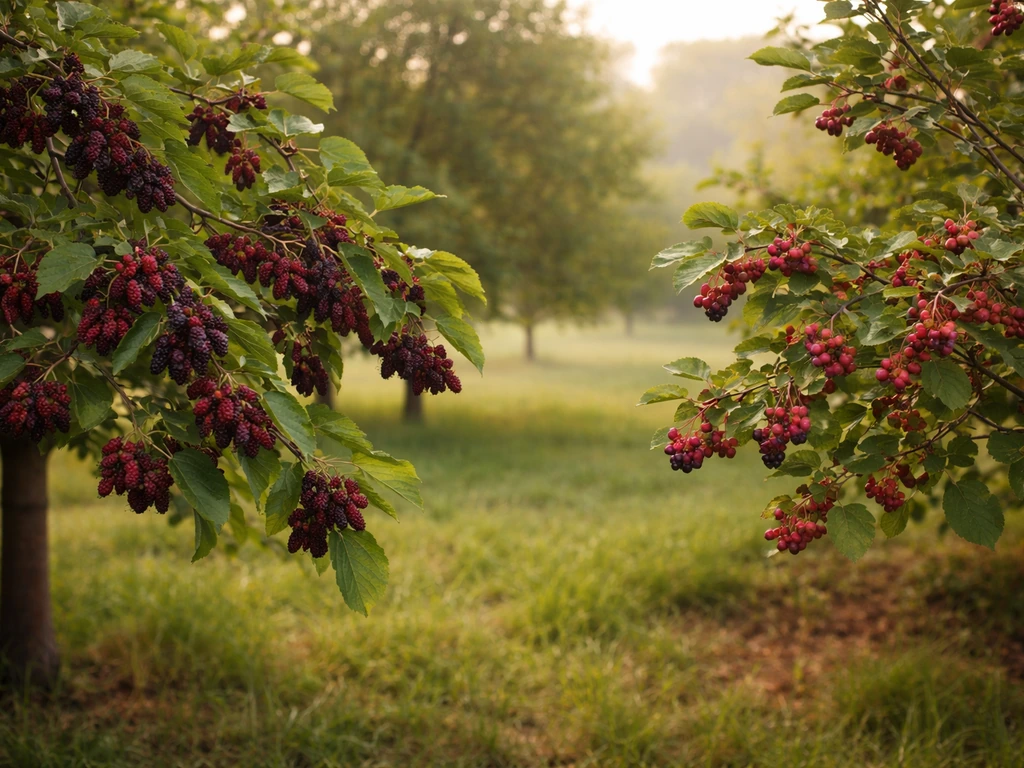
Do berries really grow on trees (and where the confusion comes from)
The confusion is completely understandable, and a lot of it comes down to how loosely we use the word "berry." Botanically speaking, mulberries are not even true berries in the strict sense: they are multiple fruits, meaning each one is a cluster of tiny drupelets fused together. But in everyday gardening language, anything small, round, and juicy growing on a plant gets called a berry. That mismatch between botanical precision and common usage creates a lot of search confusion.
The bigger source of confusion is plant habit. Blueberries grow on shrubs, not trees. Blackberries and raspberries grow on arching canes. Berries that grow on vines, like grapes or hardy kiwi, sometimes get trained up poles or fences and can look tree-like from a distance. Dewberries trail low along the ground, and people regularly wonder whether dewberries grow on trees for exactly this reason. They don't. If you want a true tree-form plant that produces fruit you'd commonly call berries, mulberry and serviceberry are the honest answers.
Types of edible "tree berries" worth growing
Mulberry (Morus spp.)
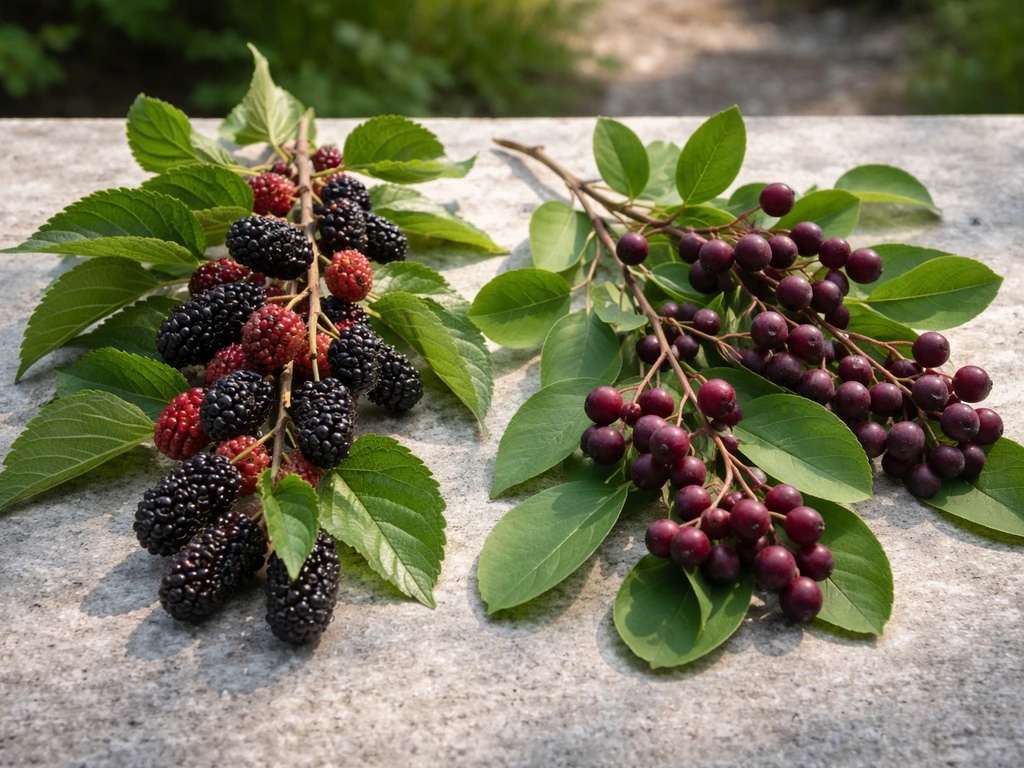
Mulberries are the most productive and fastest-fruiting true tree berry you can plant. White mulberry (Morus alba) is cold-hardy across USDA zones 3B through 9, which covers an enormous geographic range. The fruit ripens in late May through July depending on where you are, with Illinois DNR noting that white mulberry ripens in June or July and drops over a period of several weeks rather than all at once. White mulberry fruits ripen and then drop over a broader June to August period, as noted by Illinois DNR white mulberry ripens in June or July and drops over a period of several weeks rather than all at once. That staggered drop is both a blessing (longer harvest window) and a nuisance (the fallen fruit stains patios and attracts wasps). Color is your ripeness indicator: fruit goes from white or pale to pink and finally to deep red or nearly black when it's fully ripe and sweet.
Serviceberry / Juneberry / Saskatoon (Amelanchier spp.)
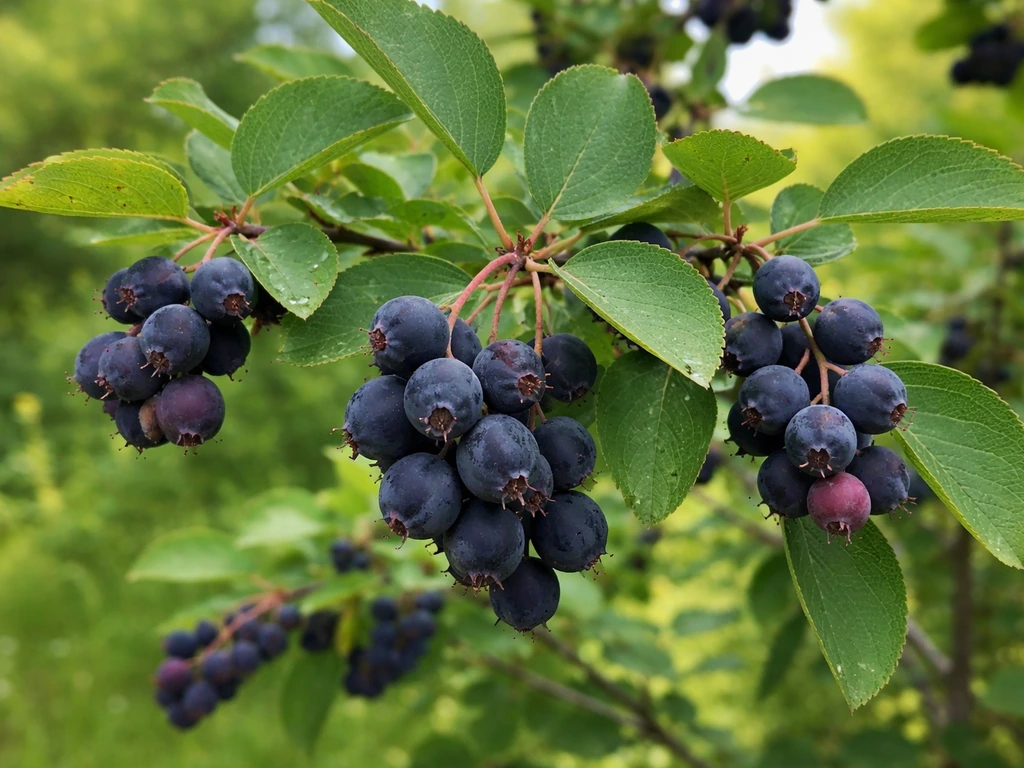
Serviceberry is a native North American plant that sits right on the line between large shrub and small tree. The USDA Forest Service describes Saskatoon serviceberry (Amelanchier alnifolia) as a "native, deciduous shrub or small tree" reaching anywhere from 3 to 26 feet at maturity. Utah State University Extension confirms it is cold-hardy to zone 3 and can be grown as either a large shrub or a small tree depending on how you prune it. The berries taste somewhere between a blueberry and an almond, which surprises most people the first time they try one. They ripen in June or early July, which is exactly where the common name "Juneberry" comes from.
A quick comparison
| Feature | Mulberry (Morus alba) | Serviceberry (Amelanchier spp.) |
|---|---|---|
| USDA Zones | 3B–9 | 3–8 |
| Mature height | Up to 30–40 ft (can be pruned smaller) | 3–26 ft depending on species/pruning |
| Fruit flavor | Sweet, similar to blackberry | Blueberry-almond hybrid |
| Harvest window | Late May–July (staggered drop) | June–early July |
| Container-friendly | Yes, with annual pruning (2–6 ft) | Yes, in 5–10 gallon pot with dwarf variety |
| Key challenge | Staining, bird competition, size management | Rust and leaf spot diseases |
| Self-fertile | Yes (most cultivars) | Mostly yes, though multi-plant planting improves yield |
If you're in zones 3–5 and want the hardiest option, serviceberry is the better fit. If you're in zones 6–9 and want maximum fruit volume with the least fuss, mulberry wins easily.
How to identify whether it's a true tree berry in your yard or nursery
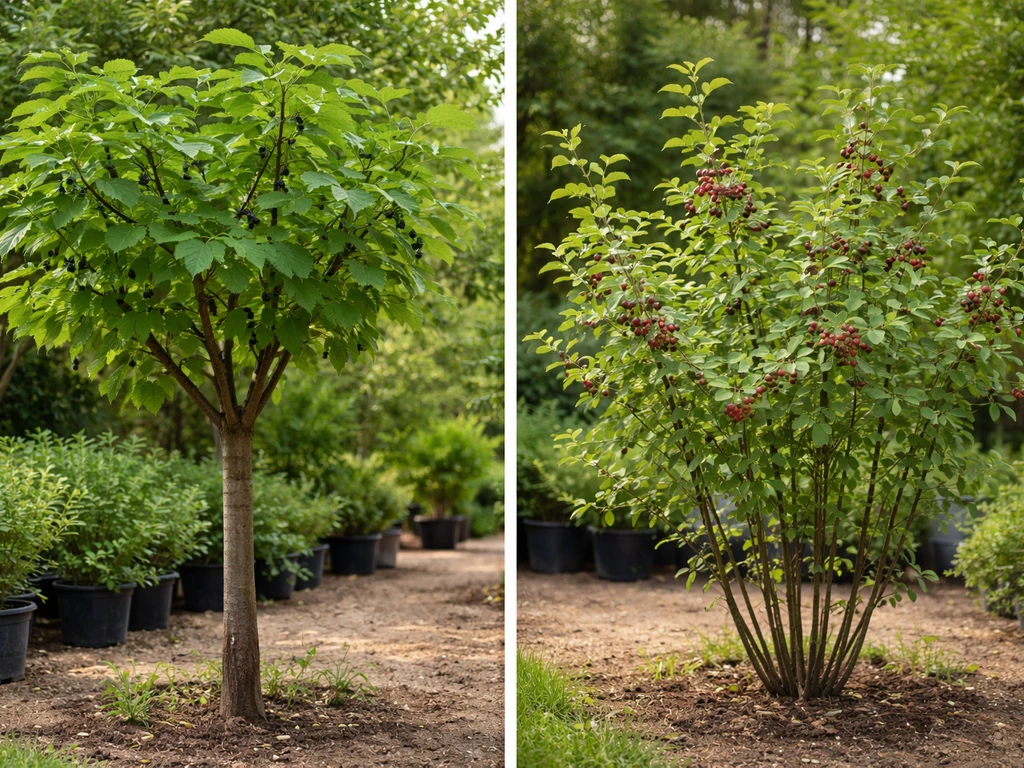
When you're standing in a nursery or looking at an unfamiliar plant in your backyard, a few quick checks will tell you whether you're looking at a tree-form berry plant or something else entirely. Whether you can eat berries that grow on trees is a related question worth thinking through, because not every tree berry you encounter is edible or safe.
- Check for a single trunk: true tree-form mulberries and serviceberries have one main trunk (or a small number of main stems), not dozens of canes emerging from a base like blackberries or raspberries do.
- Look at the bark: mature mulberry bark is gray-brown and furrowed; serviceberry has smooth, light gray bark with subtle streaking, somewhat similar to beech.
- Examine the leaf shape: mulberry leaves are variable (some lobed, some not) on the same tree, which is unusual and actually a helpful ID clue. Serviceberry leaves are oval with finely serrated edges.
- Find the fruit location: on both mulberries and serviceberries, fruit grows along woody branches, not on canes that arch to the ground or on a vine.
- Ask at the nursery for the botanical name: Morus for mulberry, Amelanchier for serviceberry. This removes any ambiguity about what you're buying.
If you've found something with small red berries growing at or near ground level rather than on a true woody tree, that is almost certainly something different. Red berries that grow in the grass are a separate category entirely and include some plants that are not safe to eat.
On the edibility and safety front: both mulberries and serviceberries are well-documented as safe and edible for humans. However, some berries that grow on trees are poisonous, including elderberry when raw, yew berries, and the berries of ornamental landscape trees like pyracantha. If you're not completely certain of an ID, don't eat it.
Climate and location fit: where tree berries actually thrive
Mulberry is one of the most climate-tolerant fruiting trees you can plant. White mulberry covers zones 3B through 9, handles drought once established, and tolerates both heat and cold better than most stone fruits. SARE's mulberry cultivation resources emphasize that different cultivars exist for different hardiness and production goals, so if you're in a short-season climate (like zone 4 or 5), look specifically for cold-hardy named cultivars rather than just generic "white mulberry" seedlings, which can vary widely.
Serviceberry is equally cold-tolerant (zone 3) but prefers a climate with defined seasons. It does best in the northern US, Canada, and similar temperate climates. In the deep South (zones 8–9), serviceberry can struggle with heat and may not fruit reliably. Mulberry is the better tree-berry choice for hot climates. For mountain West growers, serviceberry is native to many of those landscapes and will often outperform mulberry in rocky or drier high-elevation soils.
It's also worth knowing that birds absolutely love both of these plants. There's a reason birds that include tree berries in their diet are so well documented in ornithological literature: mulberry and serviceberry are among the most attractive wildlife food sources you can plant. Plan to share, or plan to net.
How to grow them: soil, sun, watering, spacing, and care
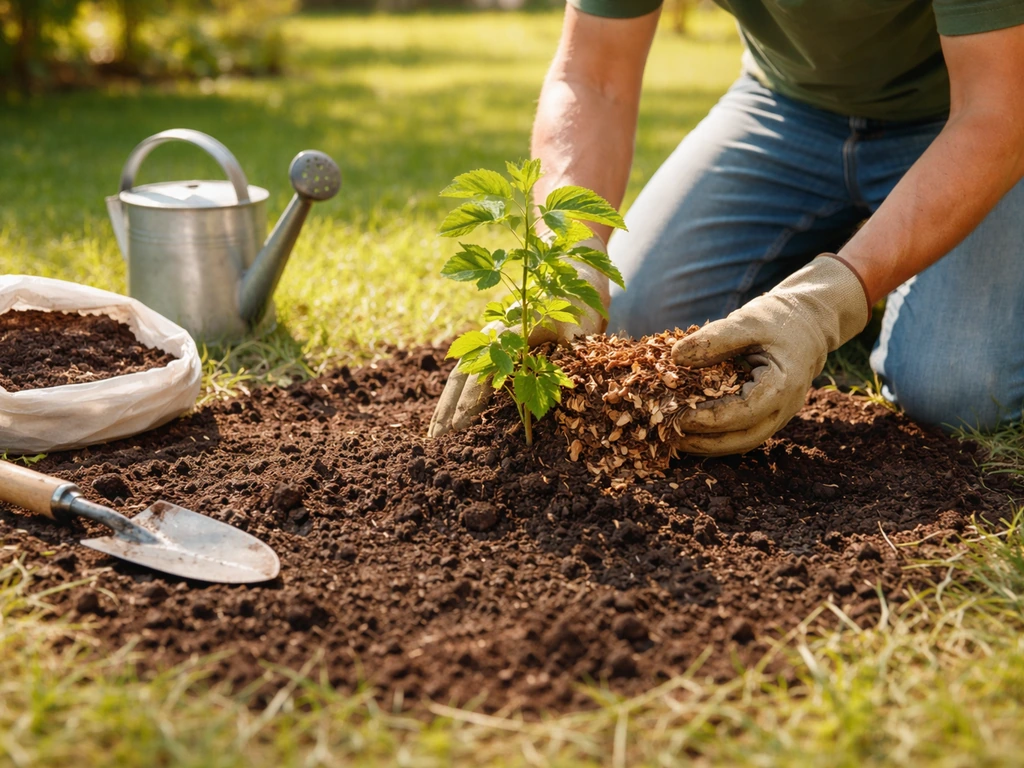
Mulberry
Mulberry is genuinely low-maintenance once established. Plant in full sun for the best fruit production, though it tolerates partial shade. It grows in a wide range of soils, but good drainage is important since standing water can cause root problems. Spacing for a standard in-ground mulberry should be at least 15 to 20 feet from other trees and structures, because the canopy spreads widely and the roots can be vigorous. Water regularly in the first two years while the tree establishes, then you can back off significantly. The main ongoing care task is managing size through pruning after the fruiting season if you want to keep it manageable. Fungal diseases like leaf spot and powdery mildew can appear in wet conditions: RHS guidance suggests maintaining good drainage and consistent watering during dry periods to reduce the risk of powdery mildew, while Connecticut plant-pest resources note that powdery mildew on mulberry shows up as a white powder-like coating on leaves, particularly in humid weather.
Serviceberry
For serviceberry, University of Wisconsin guidance recommends a soil pH of 6. UMN Extension also notes that serviceberry tolerates relatively dry soil conditions and generally grows best at a soil pH between 5.5 and 6.5 serviceberry tolerates relatively dry soil conditions and grows best at a soil pH between 5.5 and 6.5. 0 to 7.0 (it can tolerate 5.0 to 8.0) and full sun for the best fruiting. One thing Montana State University Extension makes clear is that serviceberry should not be planted in heavy, wet, poorly drained soils: root health suffers, and disease pressure goes up. Use drip irrigation or water at the base of the plant rather than overhead watering, because wet foliage invites the rust and leaf spot diseases that are serviceberry's biggest weakness. Space plants 6 to 10 feet apart if you're planting multiples, or give a single tree-form specimen at least 10 feet of clearance.
Growing options for small spaces: containers vs planting in-ground
Both mulberry and serviceberry adapt reasonably well to containers, which makes them realistic for people with only a patio or balcony to work with. For serviceberry, Almanac.com recommends a 5- to 10-gallon pot with drainage holes and specifically suggests choosing a dwarf variety for container growing. Amelanchier canadensis tends to be one of the more container-friendly species. Expect fruit in the 1 cm diameter range, with harvest running June through August depending on your climate. Container-grown serviceberries need consistent watering since pots dry out faster than in-ground planting, but they reward you with spring flowers and fall color in addition to edible fruit.
Container-grown mulberries can be kept to 2 to 6 feet with disciplined pruning after fruiting each year, according to Gardening Know How's guidance on pot-grown mulberries. Use a large container (at least 15 gallons) and choose a compact cultivar if you can find one. The downside of container mulberry is that you need to be willing to prune consistently, because mulberry really wants to become a large tree. Leave it alone for a season and you'll have a plant that has outgrown its pot.
In-ground planting is always preferable where space allows: you get more fruit, the roots can establish deeply, and you don't have to water as vigilantly. If you're debating which growth form to try first, note that mulberry and serviceberry have very different habits from ground-trailing plants. Where dewberries grow gives a useful contrast: dewberries sprawl low along the ground and need open, trailing space, which is almost the opposite of what a tree-form berry needs.
Harvest, storage, and troubleshooting common problems
Harvesting
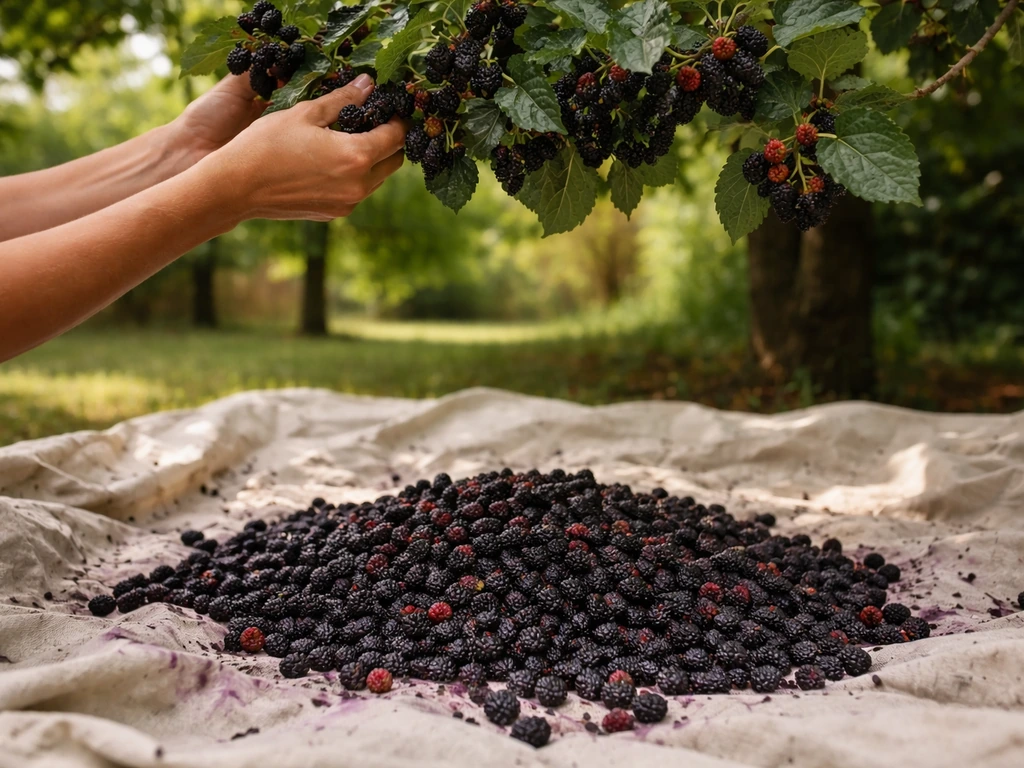
Mulberries are best harvested by spreading a tarp or old sheet under the tree and shaking branches gently. Ripe fruit falls easily. The berries go through a color progression from white or pale green to pink to deep red or black, and the darkest-colored ones are the sweetest. Don't try to pick mulberries one by one like blueberries: it takes too long and the fruit bruises easily. For serviceberries, hand-picking works well. Taste a few before you commit to a full harvest: ripe serviceberries are sweet and slightly nutty, while underripe ones have a chalky, astringent quality.
Storage
Fresh tree berries don't last long at room temperature. In cold storage, small fruits like these can be held for roughly 2 to 14 days depending on firmness and ripeness at harvest, so use them quickly or preserve them immediately. University of Alaska Cooperative Extension recommends freezing serviceberries by spreading them in a single layer on a tray first, then transferring them to bags once frozen solid. This prevents the clumping that makes it hard to use small quantities later. Mulberries freeze the same way. Both also make excellent jams, syrups, and baked goods if you have a big harvest and can't eat fresh fast enough.
Common problems and fixes
- Mulberry powdery mildew: shows as white coating on leaves in humid weather. Improve air circulation through pruning, avoid overhead watering, and ensure good soil drainage.
- Mulberry leaf spot: fungal, favored by wet weather. Same basic fix: drainage, airflow, and avoiding waterlogged soil.
- Serviceberry rust: orange or rust-colored spots on leaves, often caused by Gymnosporangium fungi. Iowa State Extension lists rust as a common serviceberry disease. Remove infected leaves and avoid planting near juniper or cedar, which act as alternate hosts for the rust fungus.
- Serviceberry leaf spot/blotch: University of Minnesota Extension recommends a diagnosis approach based on the pattern of spotting to distinguish between leaf spot fungi and other causes. Generally managed by reducing overhead watering and removing fallen infected leaves in autumn.
- Bird competition on both plants: net smaller trees before fruit colors up, or accept the wildlife sharing and plant more than you think you need.
FAQ
How can I tell if “tree berries” I see in my yard are actually edible like mulberry or serviceberry?
Look at the whole plant habit and location. Mulberry and serviceberry have woody stems and fruit hangs from branches, not from the ground or herbaceous growth. Avoid eating any “tree berry” you cannot confidently identify, especially plants sold as ornamentals (for example, many have lookalike red berries) or anything with a single uncertain name at purchase.
Do mulberry or serviceberry fruit all at once, or is it spread out?
Mulberries typically drop fruit over a period of weeks rather than in a single day, which means you can harvest repeatedly but you also need to plan for fallen fruit on patios (use a tarp to reduce mess). Serviceberries usually have a more typical early-summer window, but exact timing varies by climate and pruning.
Will I get fruit the first year I plant a mulberry or serviceberry?
Expect delays. These plants often take time to establish root systems before they fruit reliably, especially in colder zones and if you plant from smaller stock. The first season may be light or none, with better yields once the plant is established and receiving full sun.
Do I need more than one plant to get berries, especially for serviceberry or mulberry?
It depends on the cultivar and species. Many gardeners assume “any tree berry will cross pollinate,” but fruit set can be inconsistent if you end up with poor pollinator activity or incompatible plants. If your nursery label does not specify pollination needs, ask whether a second plant or specific cultivar is recommended.
How do birds affect harvesting, and what practical options do I have?
Bird pressure can be heavy because both mulberry and serviceberry are high-value wildlife food. For protection, netting before berries color up is more effective than waiting until you see birds pecking. If you cannot net, plan to share and harvest quickly once fruit begins ripening, since birds can reduce yield fast.
What’s the best way to harvest mulberries without bruising the fruit?
Use a spread-out tarp and gently shake branches so ripe fruit drops on its own. Picking one by one is slower and bruises easily. Sort quickly, keep the darkest-ripe fruit separate (it’s sweetest), and refrigerate promptly if you are not freezing or processing immediately.
If my serviceberry rust or leaf spot shows up, what should I change first?
Start with watering method and spacing. Water at the base or via drip, avoid overhead watering, and ensure enough airflow between plants (and from nearby structures). Wet foliage drives the main disease pressure, so consistent dryness on leaves often helps more than spraying for many home gardens.
Can I grow tree berries in containers if I’m in a hot or dry climate?
Yes, but container success depends on disciplined watering and choosing the right size. Serviceberries need consistently moist soil because pots dry fast. For mulberry, container plants must be pruned yearly to control size, and large containers are crucial (smaller pots can lead to stress and weak fruiting in heat).
What temperature or season problems stop serviceberry from fruiting in warmer regions?
Serviceberry can struggle in very hot summers (zones 8 to 9) because flowering and fruit set can become less reliable when conditions stress the plant. If you are in a warm climate, mulberry is generally the safer “tree berry” bet, or choose a site with more favorable microclimate (morning sun, some afternoon relief) and adequate soil moisture.
How long can I keep freshly harvested berries, and is freezing better than canning?
Fresh tree berries are perishable, and storage depends on ripeness at harvest, firmess, and how quickly you cool them. If you want portion control later, freeze by spreading berries in a single layer first so they do not clump, then bag once frozen. For longer shelf stability, jams and syrups are well suited to big harvests, but freezing preserves fresh flavor more directly for later use.