
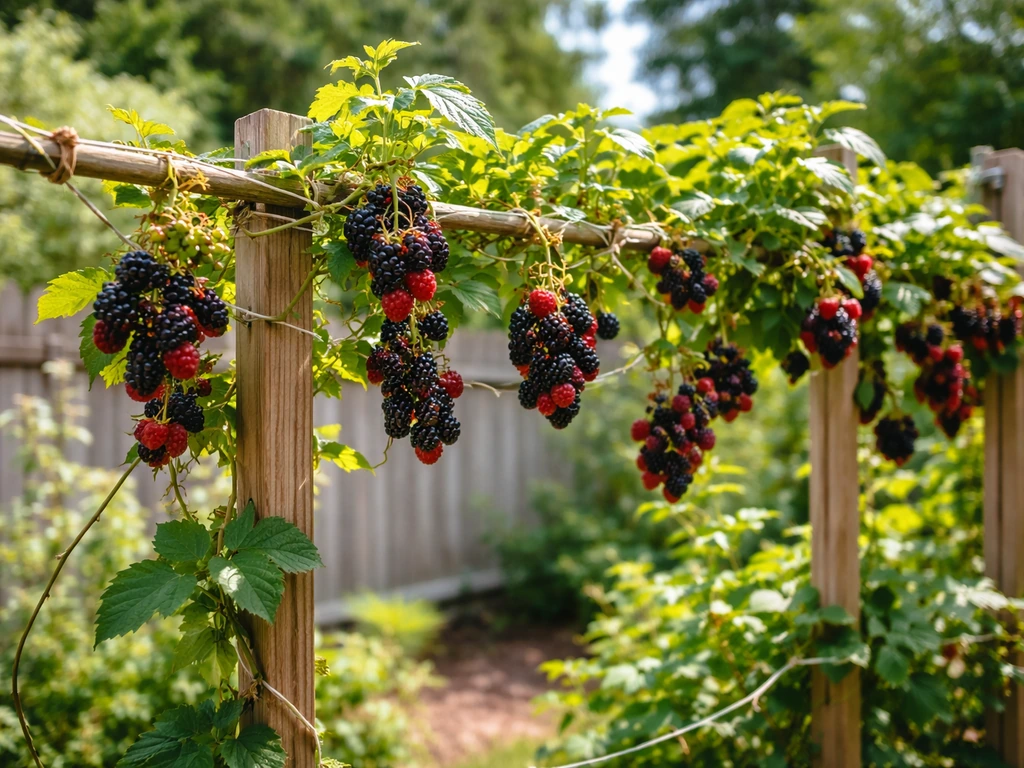
Several berries do grow on vines or vine-like plants: grapes, kiwifruit, passion fruit, blackberries, raspberries, and dewberries are the main ones you'll encounter as a home grower. Grapes and kiwifruit are true climbing vines. Passion fruit is a vigorous tropical climber. Blackberries, raspberries, and dewberries are technically cane plants, but they trail, ramble, and climb in a way that looks and acts like a vine in the garden, and they all need support structures to manage well. If you've got something scrambling across your fence or creeping along the ground and producing berries, it's almost certainly one of these. If you mean red berries growing in grass, the answer is often different plants like crabapple or wild berries, so check the plant and leaf shape closely what are the red berries that grow in the grass.
What Berries Grow on Vines: Types and How to Grow Them
The vine-growing berries worth knowing
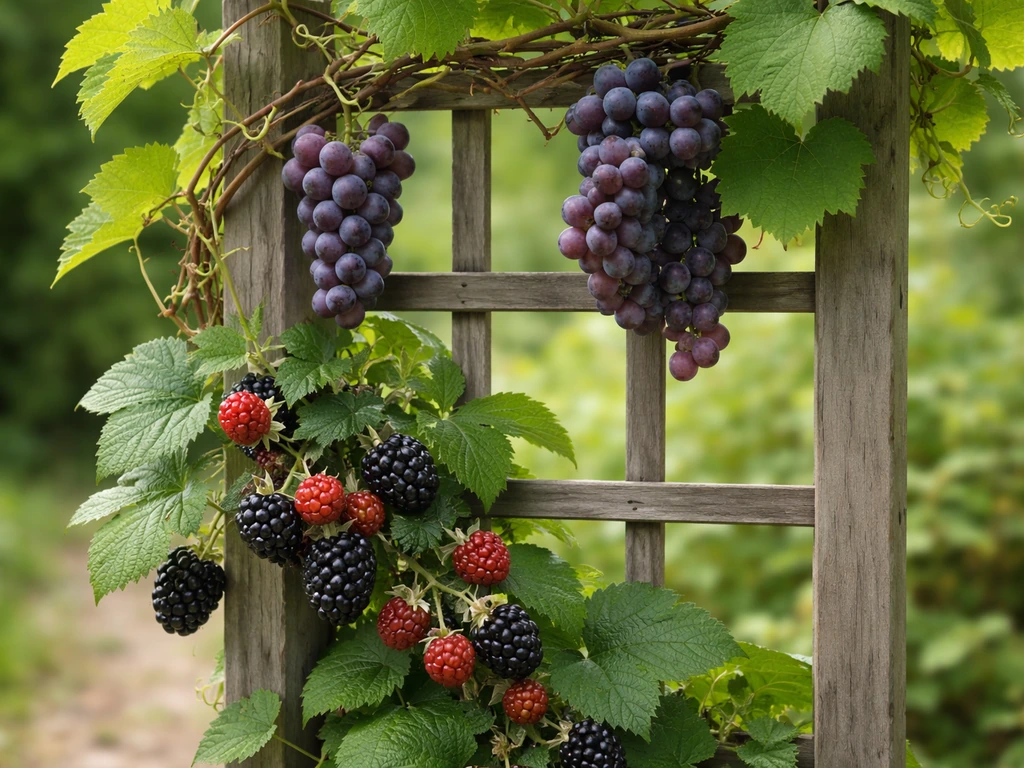
Before you plant anything, it helps to know exactly what you're dealing with. These are the main berry types that grow on vines or vine-like structures, and a quick note on their growth habits:
| Berry | Plant Type | How It Climbs/Trails | USDA Zone Range |
|---|---|---|---|
| Grape | True woody vine | Tendrils wrap around supports | Varies by cultivar: zones 4–10 |
| Kiwifruit | True woody vine | Twining stems, needs trellis or arbor | Hardy kiwi: zones 3–8; fuzzy kiwi: zones 7–9 |
| Passion fruit | True tendril-climbing vine | Tendrils grip trellis, fence, or wire | Zones 9–11 (some to zone 7 with protection) |
| Blackberry (trailing types) | Biennial cane, trailing/semi-climbing | Arching canes lean on support | Zones 5–9 depending on cultivar |
| Raspberry | Biennial cane, upright to trailing | Canes grow upright then arch, needs support | Zones 3–9 depending on cultivar |
| Dewberry | Trailing cane/vine-like | Sprawls along ground or climbs low fences | Zones 5–9 |
Grapes and kiwifruit are the classic true vines: they put out long, woody stems year after year that will cover an arbor or trellis completely if you let them. Passion fruit is a rapid-growing tropical vine that can hit 20 feet in a single season. Blackberries, raspberries, and dewberries are sometimes called caneberries or brambles, and while they aren't technically vines, their long arching canes absolutely need support or they'll turn into an impenetrable tangle. If you're wondering about other berries that grow in different ways, berries that grow on trees behave quite differently and have their own set of growing requirements worth exploring separately. Dewberries do not grow on trees, since they are cane plants that sprawl close to the ground and may climb when they have support berries that grow on trees. While this guide focuses on vine-growing berries, some berries that grow on trees can be poisonous, so it helps to verify the exact plant before eating any fruit are berries that grow on trees poisonous. Berries that grow on trees are a different category, with different eating and growing considerations than vines and canes. If you’re specifically looking for what berries grow on trees, the plant types and growing conditions are different from vine berries berries that grow on trees.
How to tell vines vs. bushes vs. canes in your yard
I've had people show me photos of what they thought was a 'vine berry' that turned out to be a blueberry bush, and vice versa. Here's a quick way to figure out what you've got:
- True vines (grapes, kiwi, passion fruit): Have long flexible or woody stems that actively seek support. Grapes and passion fruit use tendrils to grip wires or fences. Kiwi twines. Left unsupported, they sprawl across the ground but won't stand up on their own.
- Cane plants/brambles (blackberries, raspberries, dewberries): Produce new canes from the base each year. Canes are stiff and often thorny. They arch outward and can root where tips touch the ground (tip layering). They grow tall enough to need support but don't truly climb the way a grape does.
- Shrubs/bushes (blueberries, gooseberries, currants): Have a woody, multi-stemmed base that holds its shape. They don't produce long trailing or climbing stems. They stand on their own with no support needed.
- Ground-level runners (wild strawberries): Spread horizontally via stolons (runners) right at or just above soil level. Not really a vine in any useful sense.
The easiest field test: try to pull a stem away from the base of the plant. If it's long, flexible, and wants to wrap around something, you've got a vine or trailing cane. If the whole plant feels like a stiff, self-supporting shrub, it's a bush. Dewberries are worth a special mention here: they sprawl very close to the ground in a way that can look like a groundcover, but the canes will definitely climb if they find a fence or low wire.
Where you live matters: a region-by-region guide
This is the piece most gardening articles skip, and it's the one that causes the most frustration. Not every vine berry grows everywhere. Dewberries also have their own best growing regions, so match the plants to your climate for the best chance of success where do dewberries grow. Match your climate to the right berry and you'll save yourself years of disappointment.
Cool climates (zones 3–5: Upper Midwest, New England, Mountain West)
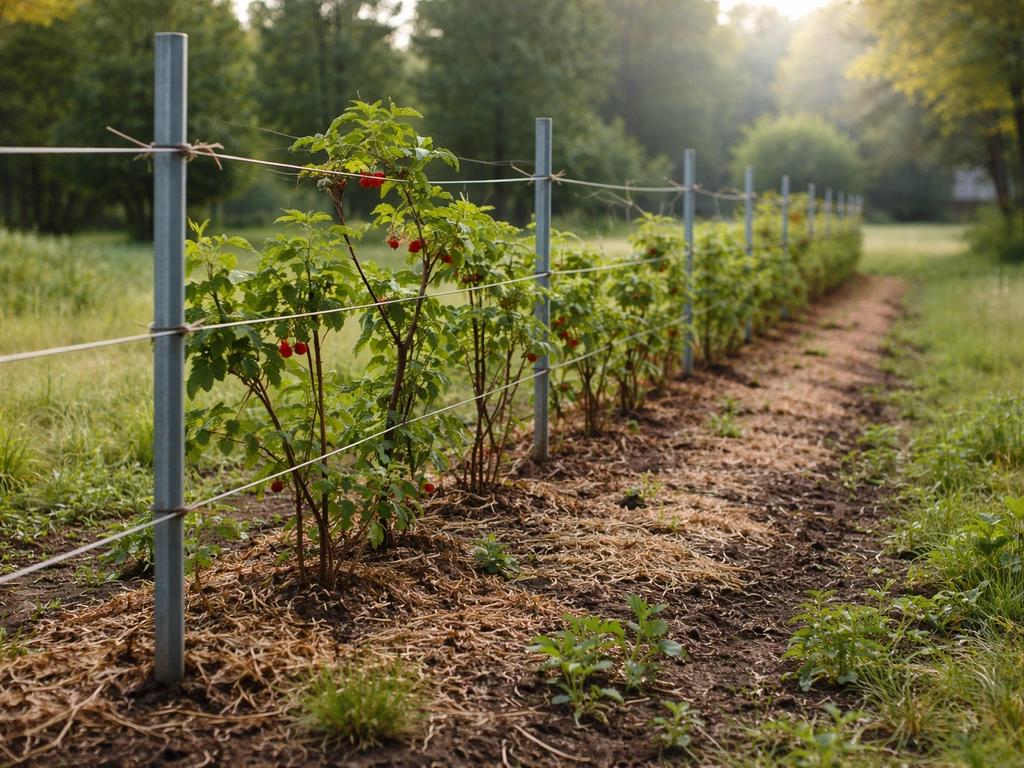
Raspberries are your best vine-like option here, with many cultivars (Heritage, Autumn Bliss, Boyne) bred specifically for cold winters and short summers. Hardy kiwi (Actinidia arguta or A. kolomikta) is also genuinely cold-hardy to zones 3–4 and produces small, grape-sized fruits without the fuzzy skin. Grapes work in zones 4–5 if you choose cold-hardy cultivars like Marquette, Frontenac, or Concord. Most trailing blackberries struggle with hard winters, though some erect-cane blackberry types (like Illini Hardy) extend down to zone 4.
Moderate climates (zones 6–7: Pacific Northwest, Mid-Atlantic, parts of the South)
This is honestly the sweet spot for vine berries. Trailing blackberries (Marion, Boysen, Loganberry) thrive here. Raspberries perform well across both summer-bearing and fall-bearing types. Fuzzy kiwifruit (Actinidia deliciosa, the kind from the grocery store) does well in the milder parts of zone 7, especially in the Pacific Northwest. Grapes are easy to establish across this zone. Wine and table grapes love the Pacific Northwest's dry summers, and the Mid-Atlantic gets great results with American hybrid cultivars.
Warm climates (zones 8–9: Southeast, California, Gulf Coast)
Muscadine grapes are the native vine berry of the Southeast and do extremely well here, but they are not cold-hardy, so they're really a zones 7–10 plant. Mississippi State Extension specifically notes that muscadine adaptation is limited by cold hardiness, which is why you rarely see them grown successfully north of zone 7. Blackberry cultivars with low chill requirements (like Ouachita or Natchez) are excellent here. Raspberries are trickier in zone 8 and above: heat tolerance varies by cultivar, and insufficient winter chilling can prevent proper bud break and fruiting. Passion fruit becomes a realistic option starting around zone 9.
Tropical and subtropical climates (zones 10–11: South Florida, Hawaii, coastal Southern California)
Passion fruit is the star vine berry here. It's fast, productive, and perfectly suited to humid subtropical conditions. Muscadine grapes and some tropical grape cultivars grow here too, though table grapes don't get enough chilling (ATTRA notes most grape cultivars won't develop properly below about 45°F and need at least 50 to 400 chill hours depending on the cultivar). Mississippi State University Extension explains that chilling hours are counted using temperatures below 45°F and provides a grape chilling-hour range in its table grape chilling needs at least 50 to 400 chill hours depending on the cultivar, with development not properly occurring below about 45°F. Raspberries and most blackberries won't perform well in zones 10–11 without very careful cultivar selection.
Soil, sun, and water: what vine berries actually need
Most vine berries want similar baseline conditions, with some important differences. Getting these right from the start is far easier than trying to fix problems once a vine is established.
Soil and pH
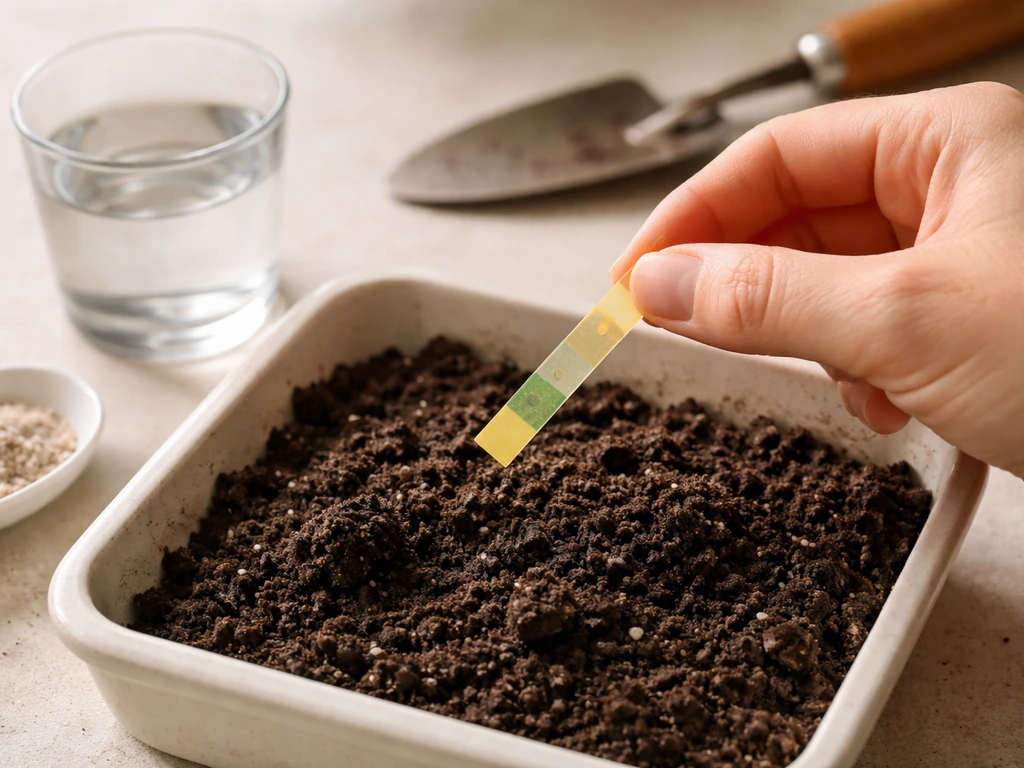
Nearly all vine berries prefer slightly acidic, well-draining soil. Grapes do best at a pH of 6.0 to 6.5, though they tolerate a range of 5.5 to 7.5. Kiwifruit wants a pH of 5.6 to 6.5 and performs best in fertile sandy loam or clay loam with good water-holding capacity. Blackberries and raspberries both like a pH between 6.0 and 6.5, with raspberries especially sensitive to going outside that range. Passion fruit is the most flexible, tolerating pH from 6.0 to 7.5. The one thing all of them share: they cannot handle waterlogged soil. Standing water around the root zone, especially in early spring, can kill or seriously damage established plants.
Sun
Full sun means at least six hours of direct sunlight per day, and that's the minimum for any vine berry worth growing. Grapes and kiwifruit are especially demanding: they need full sun to ripen fruit properly and to develop the fruiting wood that carries next year's crop. Raspberries can tolerate a little afternoon shade in hot climates, which can actually extend the harvest window in zones 7 and above. Passion fruit wants full sun in subtropical zones and will sulk in shade.
Water
Consistent moisture matters most during the growing season. Raspberries can transpire up to about a quarter inch of water per day from June through August, so keeping soil consistently moist (but not wet) during that period is important for good yields. Grapes are more drought-tolerant once established, but young vines need regular water during their first two seasons. Kiwifruit needs moderate, consistent moisture, especially while fruiting. Passion fruit needs regular watering but needs excellent drainage. A drip irrigation system or soaker hose works well for most vine berries since it keeps water off the foliage, which reduces disease pressure.
Fertilizing
For kiwifruit, OSU Extension identifies nitrogen as the most important nutrient in home-garden soils because it drives the vigorous vegetative growth that eventually produces fruiting wood. The same principle applies broadly: vine berries need good nutrition in their first couple of years to build the framework they'll fruit on for decades. Avoid over-fertilizing with high-nitrogen products on established fruiting vines, though, or you'll get lots of leafy growth and fewer berries.
How to plant and set up supports for vine berries
The biggest mistake I see new vine-berry growers make is planting before the trellis or support is in place. Get your structure built first, then plant. Trying to install trellis posts around an established vine is awkward at best and damaging at worst.
Choosing and building your support
- T-bar trellis: Two arms extend horizontally from a central post, with wires strung between the arms. Great for raspberries, blackberries, and grapes. Allows good air circulation and makes harvest easy.
- V-trellis: Two posts angle outward from a central base, forming a V shape. NC State uses this as the basis for training blackberry and raspberry canes, guiding new primocanes up through the center between the two wire planes.
- Arbor or pergola: Ideal for grapes and kiwifruit in a landscape setting where you want shade and fruit production together. OSU lists this as a practical home-garden option for kiwifruit specifically.
- Single fence or wire: A simple two-wire fence (wires at about 3 and 5 feet) works fine for trailing blackberries and raspberries. UConn Extension confirms trailing plants can be trained to a two-wire trellis.
Planting steps
- Build your trellis or support structure before planting. Set posts at least 2 feet deep for stability.
- Test your soil pH and amend if needed: add sulfur to lower pH or lime to raise it. Do this several months before planting if possible.
- Plant bareroot or container plants in early spring (for most zones) or late fall (in mild zones 8–10). Dig a hole wide enough to spread roots without bending them.
- Space plants correctly: trailing blackberries about 3.5 to 4 feet apart in-row; raspberries about 2.5 to 3 feet apart; grapes typically 6 to 8 feet apart; kiwifruit 10 to 15 feet apart on an arbor.
- Water in thoroughly and mulch 2 to 3 inches deep around the base, keeping mulch away from the crown.
- In the first season, focus on root development. For grapes, remove any fruit clusters that form: Utah State University Extension recommends this specifically to let the plant build a strong root system before full cropping.
- As canes or vines grow, tie or train them to the lowest wire first, then work upward. For raspberries and blackberries, guide new primocanes up through the center of the trellis as they grow toward the bottom wire.
- Tip canes when they reach the top wire of the trellis to encourage side branching and more fruit.
Winter and summer pruning basics
For raspberries and blackberries, winter pruning before growth starts involves cutting side branches back to two to six buds, or roughly 8 to 12 inches long per cane. This keeps the fruiting zone manageable and improves light penetration. For kiwifruit, summer pruning means removing any suckers that sprout from the lower trunk or base during the growing season. These suckers compete with the main vine for energy and should be removed as soon as you see them.
Growing vine berries in containers and small spaces
You don't need a large yard to grow vine berries successfully, but you do need to match the plant to the container and give it something to climb. Passion fruit is particularly well-suited to containers: it grows fast, produces fruit within a year or two, and can be managed on a trellis or obelisk. The minimum container size for passion fruit is 12 to 16 inches wide with excellent drainage. Dwarf or compact grape varieties like Pixie Pinot or Concord Seedless work reasonably well in large containers (at least 15 to 20 gallons) on a patio with a small obelisk or wall trellis. Hardy kiwi can be grown in large containers too, though you'll need both a male and female plant unless you have a self-fertile cultivar like Issai.
Raspberries in containers work well with varieties like Heritage or Raspberry Shortcake (a compact, thornless type bred specifically for pots). Use a container at least 15 inches wide, fill it with well-draining potting mix amended with compost, and set up a simple bamboo or wire support. Container plants dry out faster than in-ground ones, so you'll need to water more frequently during summer, sometimes daily in hot weather. Feed with a balanced slow-release fertilizer at planting and a liquid feed monthly during the growing season.
Troubleshooting, pests, and getting a good harvest
Pollination
Blackberries and raspberries are self-fertile, so one plant can produce fruit on its own. Grapes vary: most table and wine grapes are self-fertile, but some older cultivars benefit from cross-pollination. Kiwifruit is the big one to watch: most kiwifruit varieties are dioecious, meaning you need a male plant and at least one female plant to get fruit. Plan for one male plant to pollinate up to eight female plants. The exception is the self-fertile Issai hardy kiwi, which is a good option if you only have space for one plant. Passion fruit is generally self-fertile, though fruit set improves with cross-pollination or hand pollination.
Common pests and diseases
For brambles (blackberries and raspberries), the most important disease to know is anthracnose, a fungal cane disease caused by Gloeosporium venetum. It shows up as small purple spots on canes that enlarge and turn gray in the center. Infected canes become weak and unproductive. Managing it means removing and destroying infected canes, avoiding overhead irrigation, and maintaining good air circulation through proper pruning and spacing. University of Kentucky's fruit IPM program also flags spotted wing drosophila (SWD) as a key pest for brambles: the fly lays eggs inside ripening fruit, and the larvae ruin the berry from the inside. Monitor with SWD traps from mid-summer onward and harvest frequently when fruit is ripe.
Grapes are susceptible to powdery mildew, black rot, and Japanese beetles depending on your region. Kiwifruit is relatively pest-free in most home gardens, though root rot from poor drainage is the most common killer. Passion fruit can get whiteflies and spider mites, especially in dry conditions.
Why your vine berries might not be producing
- Not enough chill hours: Blackberries and grapes need sufficient winter chilling (cold hours below a threshold temperature) to break dormancy properly. If your winters are too warm, buds may fail to open or produce poorly. This is a known issue with blackberry cultivars in warmer parts of the South, and selecting a low-chill cultivar is the solution.
- Too young: Grapes and kiwifruit typically take 3 to 5 years to begin producing meaningfully. Don't panic if year two gives you nothing.
- Missing pollinator plant: If your kiwifruit has never produced, the most likely culprit is a missing male plant (or a male that died).
- Incorrect pruning: Raspberries and blackberries fruit on second-year canes (floricanes). If you cut everything to the ground every year thinking you're doing the right thing, you're removing the fruiting wood.
- pH too far off: At a pH above 7.5 or below 5.5, vine berries struggle to take up nutrients even if they're in the soil. Get a soil test before assuming you have a fertilizer problem.
- Waterlogged roots: If the planting site stays wet after rain, especially in spring, roots may be suffocating. Raised beds or mounded rows solve this in most cases.
Harvesting
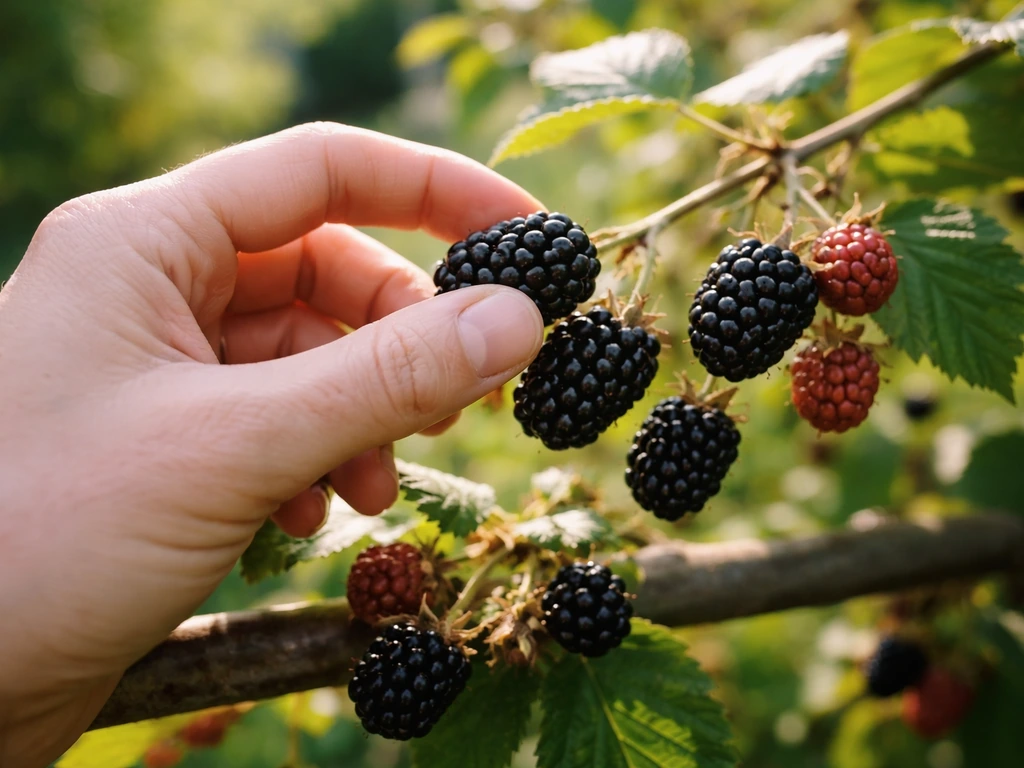
Berries don't continue to ripen meaningfully after picking, so timing matters. Blackberries are ready when they turn fully black and pull easily from the plant with no resistance. Raspberries should come free with the lightest tug and the core (receptacle) should stay on the plant. Grapes are best tested by taste: color change alone isn't reliable. Kiwifruit is typically harvested by calendar date and firmness, then ripened off the vine at room temperature. Passion fruit is ready when the skin begins to wrinkle slightly and the fruit drops or pulls easily. Harvest everything frequently during peak season to encourage continued production and stay ahead of pests. A bird whose diet includes berries that grow on lava can be a fun ecological twist to look for in certain island and geothermal habitats.
FAQ
How can I tell if a berry plant is a vine berry versus a bush, without knowing the name?
Look at how the stem behaves when you gently bend it near the base. True vines (like grapes, kiwifruit, passion fruit) tend to be long, flexible runners or woody climbing stems, while brambles (blackberries and raspberries) usually have thorned canes that stand up until they arch over. Dewberries are the confusing one because they sprawl low like groundcover, yet their canes will climb when they hit a fence or low wire.
What’s the most common soil mistake that kills vine berry plants?
Planting in soil that stays wet is the fastest way to lose vine berries. Avoid spots with puddling after rain, depressions in the yard, or beds that freeze and thaw while saturated in spring. If your area has drainage issues, plan raised rows or improve drainage before planting, not after the plants are established.
Do vine berries grown in containers need the same care as in-ground plants?
No, container growing is different mainly because roots dry out and nutrient needs rise. Most vine berries will underperform in small pots, because they cannot build enough framework or moisture reserves. Use the larger minimums the article mentions, and consider a drip line or self-watering approach for hot spells to prevent daily wilting.
Can I grow vine berries with just one plant?
For most vine berries, yes. However, kiwifruit is the standout exception since most varieties are dioecious, you need a male and at least one female plant. If you only have space for one plant, choose a self-fertile option like Issai hardy kiwi, or plan the second plant early so you can train both to the trellis.
Why do my grapes or brambles taste sour even though the color looked right?
Don’t rely on “green to colored” as your ripeness test, especially for grapes. Instead, taste grapes for sugar and flavor, and for berries like blackberries, wait for full color plus easy pull. If you harvest too early, the fruit will not meaningfully sweeten after picking.
When should I prune my vine berry, and what happens if I prune at the wrong time?
Plan pruning around when that plant forms fruiting wood. Brambles generally need winter cane management to control the fruiting zone and light, and kiwifruit needs sucker removal during the growing season. If you cut at the wrong time, you can remove the wood that would have borne fruit, causing a weak or missing harvest next season.
What can I do if my brambles keep getting cane spots and seem to decline year after year?
Yes, especially for brambles. Anthracnose can worsen when foliage stays wet, so avoid overhead watering and water at the base. Use spacing and proper trellising so canes dry faster after rain, and remove infected canes promptly so the disease does not build up in the plant.
How do I reduce spotted wing drosophila damage if I can’t harvest daily?
Watch for SWD from mid-summer onward, but act based on fruit ripeness and frequency of picking. The larvae damage ripening fruit from inside, so leaving berries on the plant “to pick all at once” increases risk. Consider harvesting more frequently during the hottest weeks.
My grapevine grows leaves but doesn’t fruit. What’s the first thing to troubleshoot?
If grapes fail to fruit, it’s often chilling requirements and training, not just watering. Many cultivars need a minimum cold exposure for proper bud break, and insufficient chilling can mean no fruit even if the vine looks healthy. Choose cold-hardy cultivars for your climate and build a trellis system before planting so the vine can develop proper fruiting wood.
Can I grow vine berries in partial shade?
Create shade or wind protection only if your climate is truly hot and the variety needs it, because most vine berries require at least six hours of direct sun. In partial shade, some varieties may survive but ripening and next year’s fruiting wood development can stall. If afternoon heat is extreme, slight shade can help raspberries, but keep it limited.
What should I check if my vine berry flowers but fruits poorly?
Pollination can be the hidden cause of poor fruit set. Grapes are often self-fertile, passion fruit usually sets on its own but benefits from cross-pollination, and kiwifruit may require a specific male to female ratio. If you’re seeing flowers but few fruits, verify plant sex (for kiwi), and consider hand pollination if your area has low pollinator activity.
How should I water vine berries to avoid disease and still get good yields?
Use a drip line or soaker hose with the goal of keeping foliage dry, but the exact timing matters by crop. Raspberries need consistent moisture through the main fruiting window, young grapes need regular watering in their first couple of seasons, and passion fruit needs moisture with excellent drainage. If you irrigate too late in the day or in bursts, you may still promote disease or cause fruit stress.