
Gooseberries do not grow on trees. They grow as thorny, deciduous shrubs, typically reaching about 3 to 5 feet (roughly 1 to 1.5 meters) tall and wide at maturity. The confusion is understandable because you can train a gooseberry into a 'standard' form with a bare trunk and a rounded head of branches at the top, and that lollipop shape does look a lot like a small tree. But that's a pruning trick, not natural growth. Left to its own devices, a gooseberry is blank" rel="noopener noreferrer">a spreading, multi-stemmed bush with sharp spines and arching branches.
Do Gooseberries Grow on Trees? How They Grow and Care

Marcus Holloway
1 Jun 2026
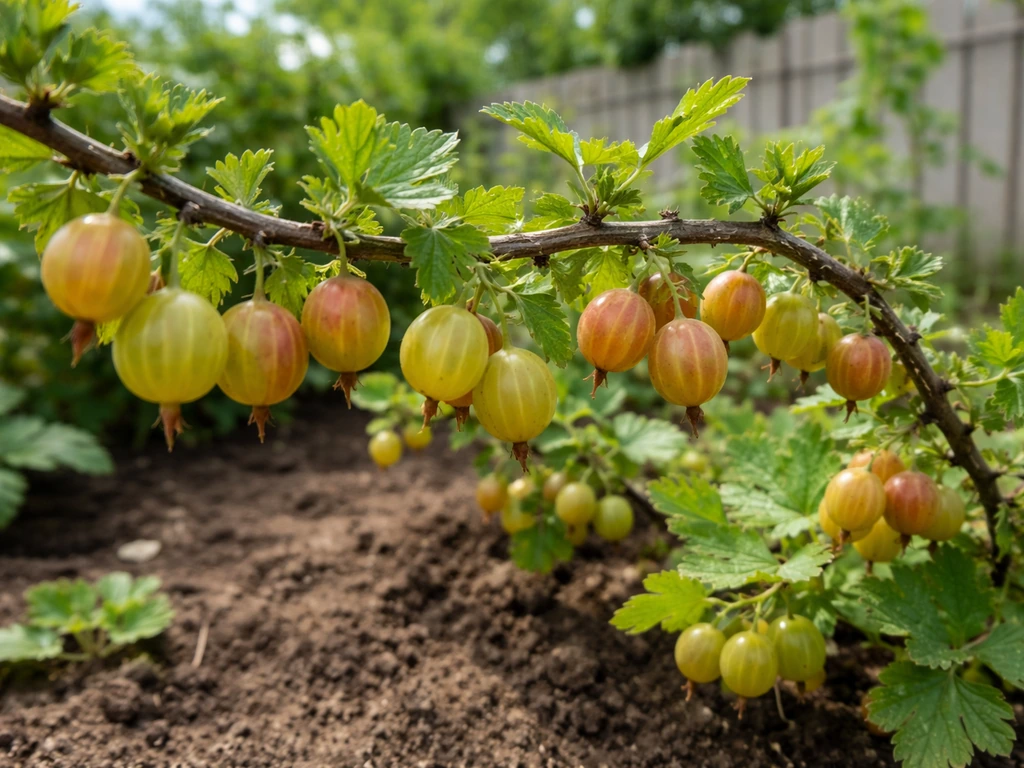
What kind of plant is a gooseberry, exactly?
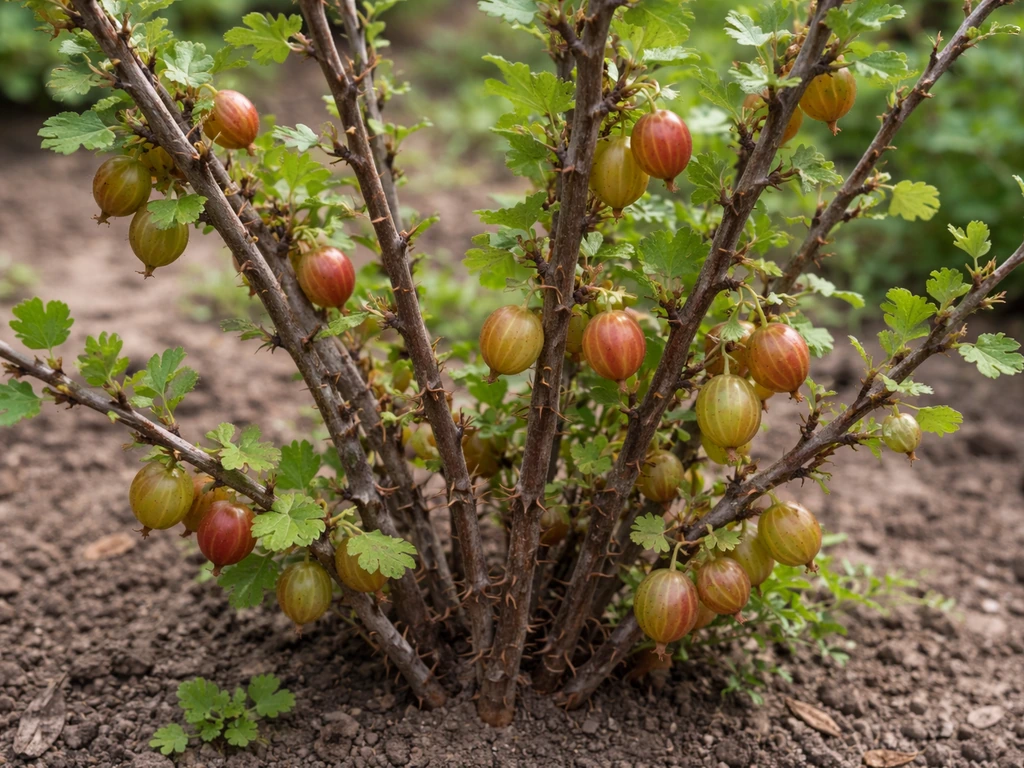
Gooseberries (Ribes uva-crispa for the European types, and Ribes hirtellum for American varieties) are classified botanically as armed shrubs. That means they're woody, multi-stemmed, and covered in spines. They're in the same genus as currants, and if you've grown black or red currants before, you already have a good mental picture of the overall growth habit, just spikier.
The plant produces new canes from the base each year, which is the key to understanding both how it fruits and how to prune it. It's a true shrub in every sense, not a tree, not a vine, and not a ground cover. When you walk into a nursery and ask for a gooseberry, you'll be handed a potted or bare-root shrub, usually small enough to carry under one arm.
So where does the 'tree' idea come from?
The tree-like gooseberry you might have seen in a photo or at a garden show is almost certainly a standard-trained plant. Horticulturalists (especially in the UK, where gooseberry culture has been refined over centuries) train young plants onto a single tall stem, then allow a head of fruiting branches to develop at the top. The result genuinely resembles a small ornamental tree with fruit dangling underneath the canopy. The Royal Horticultural Society notes that buying a pre-grafted standard is much easier than training one from scratch, since creating the form yourself takes years of patience.
That said, for most home gardeners in North America, the standard form is more of a novelty than a practical choice. A regular free-standing bush or a cordon (single-stem trained against a fence or trellis) will give you more fruit with less effort.
How gooseberries actually grow in your yard
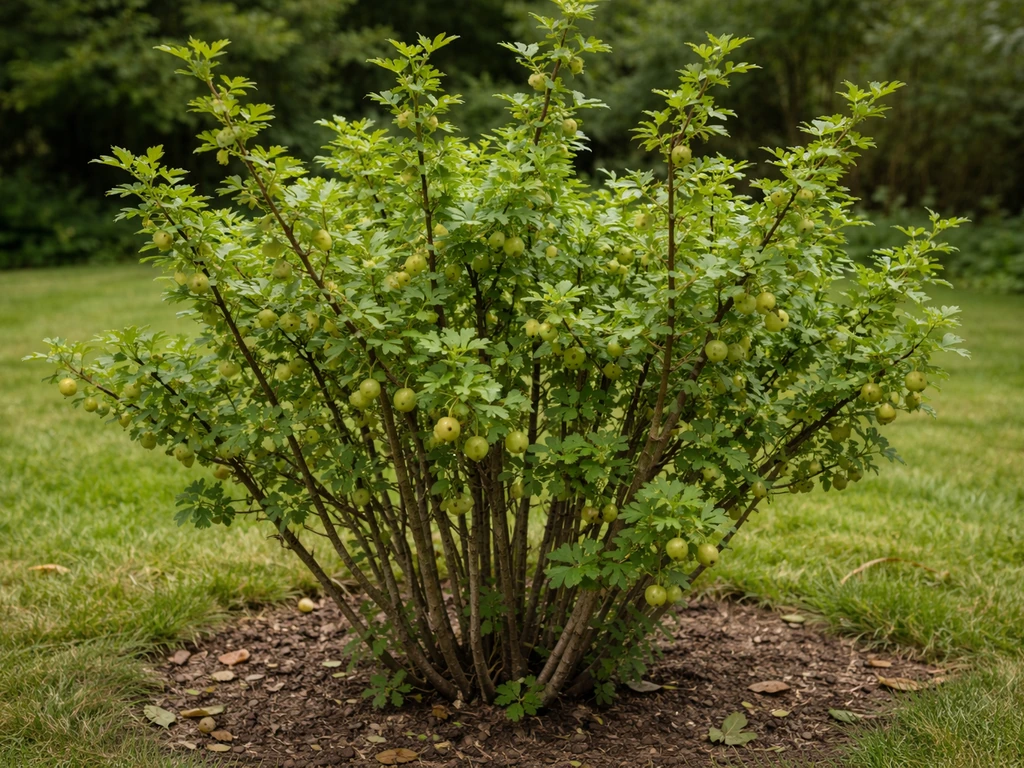
A mature gooseberry bush sits at roughly 3 to 5 feet tall and about the same width, though some varieties push closer to 8 feet in ideal conditions. The plant has a spreading, somewhat arching habit, and without any training the branches will tangle into each other and occasionally dip toward the ground. That's not just an aesthetic problem; congested branches trap moisture and invite disease, so some management is always worth it.
Fruit forms on one-, two-, and three-year-old wood, with the heaviest crops coming from two- and three-year-old shoots. Four-year-old and older shoots decline in productivity and should eventually be removed. This is why gooseberry pruning isn't optional if you want consistent harvests. Iowa State University Extension recommends keeping about 9 to 12 shoots total on a mature plant: roughly 3 to 4 canes each of one-, two-, and three-year-old growth. That structure keeps the plant open, productive, and manageable.
Plan to space plants at least 4 to 5 feet apart from each other, and keep them at least that far from other shrubs or structures. Airflow through and around the bush is one of your best defenses against powdery mildew, which gooseberries are famously prone to.
Where gooseberries grow best
Climate and USDA zone compatibility
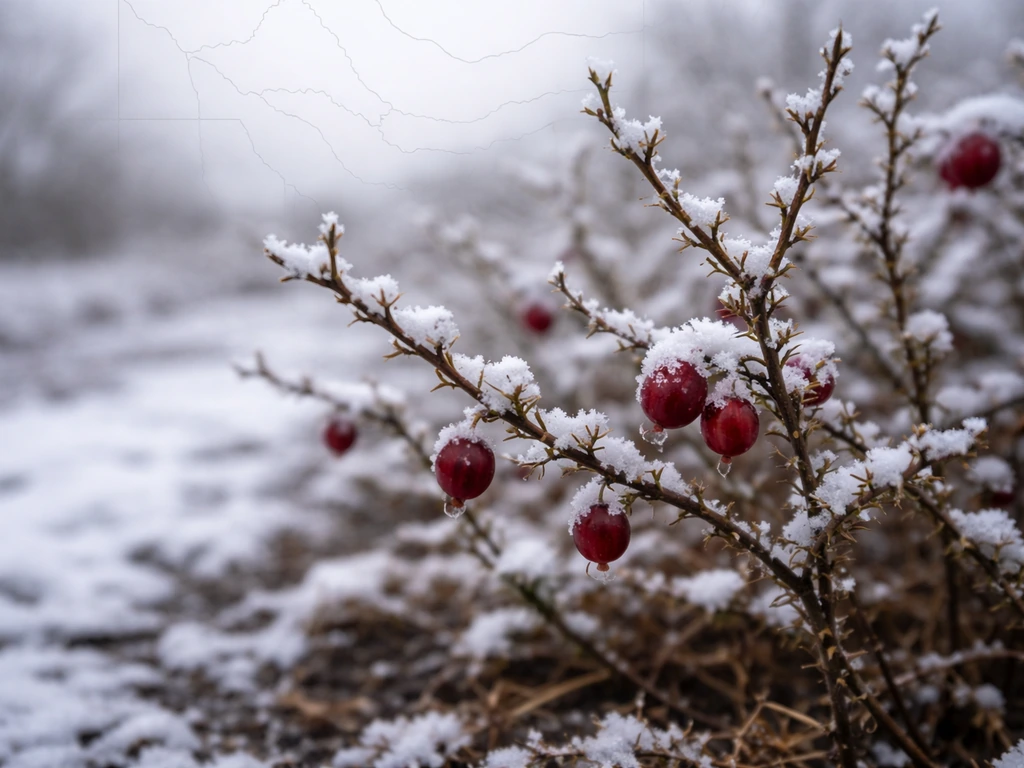
Gooseberries are cool-climate plants, and that's not a minor detail. They're cold-hardy down to USDA Zone 3, which means they can handle brutal winters without protection. The issue is heat, not cold. Gooseberries genuinely struggle in climates with long, hot summers. They're happiest in Zones 3 through 6, and in parts of Zone 7 if you give them afternoon shade and consistent moisture. If you are comparing it with honeyberries, you can also look at where honeyberries grow and what climate they prefer before you decide which berry to plant where do honeyberries grow. If you're gardening in the Deep South, the Southwest desert, or anywhere with sustained summer temperatures above 90°F, gooseberries will be an uphill battle.
The Pacific Northwest, New England, the upper Midwest, and much of Canada are ideal territory. Cape gooseberries grow best in warm, frost-free conditions, so they do much better in climates that can support their longer growing season where do cape gooseberries grow. In those regions, gooseberries practically grow themselves. If you want to know where gooseberries grow best, focus on cool climates and zones roughly 3 through 6 with some afternoon shade in the warmest areas gooseberries practically grow themselves. Colorado and Utah gardeners can succeed too, especially at higher elevations where summer nights cool down, and both Utah State and Colorado State University extensions have solid gooseberry growing resources specific to those areas.
One thing worth knowing if you're in the US: some states have historically restricted Ribes growing because the plants can host white pine blister rust, a disease harmful to certain pine trees. In the US, where gooseberries grow best depends a lot on your state’s climate and whether local rules allow Ribes varieties where do gooseberries grow in the us. Regulations have loosened considerably and vary by state, but it's worth checking your local rules before planting. In parts of the US and Canada, that disease risk is why rules can restrict gooseberries, which leads to the question, why are gooseberries illegal to grow restrict Ribes growing. This is related to why gooseberries have a complicated legal history in parts of the country. Some states have also flagged certain berries, so you may want to look up what berry is illegal to grow in your area.
Soil requirements
Gooseberries want fertile, loamy soil with good drainage and consistent moisture. They don't like sitting in waterlogged ground, but they also won't forgive you for letting them dry out completely during summer. Think 'evenly moist, not soggy.' A soil pH between 6.0 and 6.5 is ideal, though they'll tolerate a range from about 5.5 to 7.0. If your soil is compacted, sandy, or very alkaline, amend before planting: work in compost generously and consider a soil test to confirm your pH.
How to grow gooseberries: a practical step-by-step
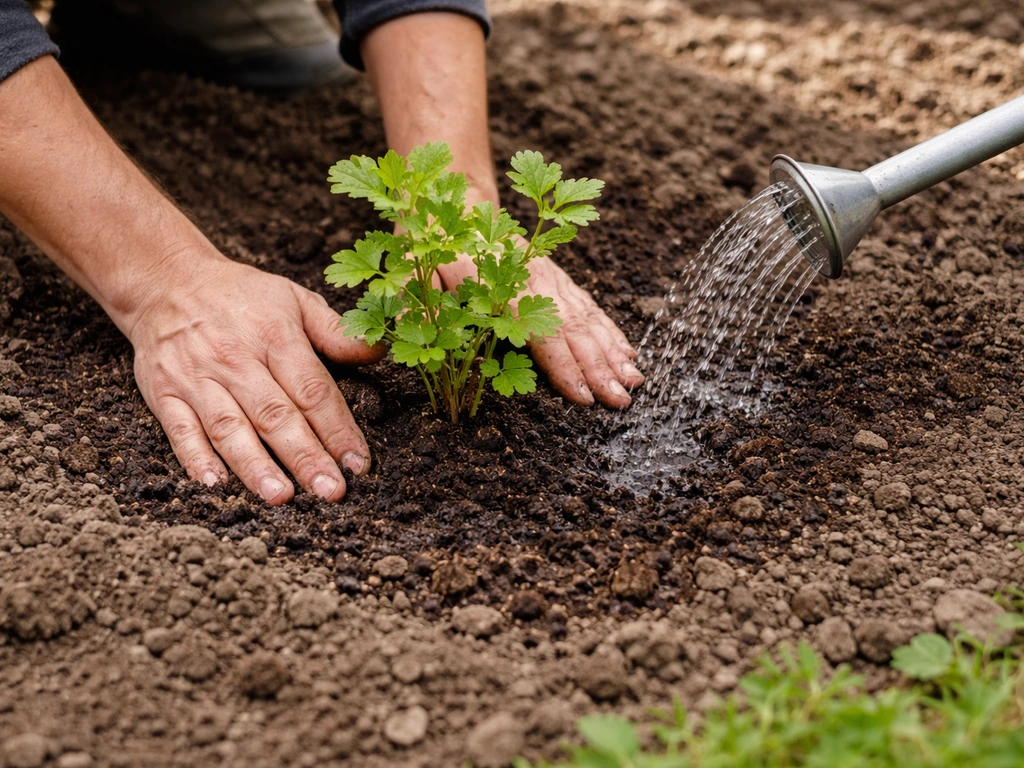
- Choose your variety first. For American growers, disease-resistant varieties like 'Invicta,' 'Hinnonmaki Red,' or 'Pixwell' are popular and easier to manage than older European cultivars that are more powdery mildew-prone. Buy from a reputable nursery as a potted plant or bare-root stock in early spring.
- Pick your spot. Full sun is ideal, but afternoon shade in hotter climates will help reduce heat stress. Avoid low-lying frost pockets or areas with poor air circulation.
- Prepare the soil. Dig in a generous layer of compost (3 to 4 inches worked into the top 12 inches of soil). Test your pH and correct if needed: sulfur to lower, lime to raise. Aim for 6.0 to 6.5.
- Plant at the right depth. For bare-root plants, align the plant so the soil mark on the stem sits at ground level. Do not bury the crown. Space bushes 4 to 5 feet apart.
- Water thoroughly after planting and keep the soil consistently moist through the first growing season. Once established, gooseberries are reasonably drought-tolerant but fruit better with regular moisture, especially as berries swell.
- Mulch around the base with 2 to 3 inches of wood chips or straw to retain moisture, regulate soil temperature, and suppress weeds. Keep mulch a few inches away from the main stems.
- Fertilize lightly in early spring each year with a balanced fertilizer or a top-dressing of compost. Gooseberries don't need heavy feeding. Over-fertilizing with nitrogen pushes lush leafy growth that attracts pests and increases mildew risk.
- Prune annually in late winter or very early spring before buds break. Remove any shoots older than three years, any crossing or rubbing branches, and anything growing toward the ground. Aim for that open, airy structure of 9 to 12 canes in mixed ages.
Growing gooseberries in containers and small spaces
Good news for small-space gardeners: gooseberries adapt surprisingly well to containers, and cordon training against a fence or wall is one of the most space-efficient ways to grow them. A cordon is essentially a single stem trained vertically or at a diagonal, with short fruiting spurs growing off it. One cordon plant takes up maybe 18 inches of horizontal space, which makes them practical even on a narrow patio or along a fence line.
For containers, use a pot at least 18 inches (45 cm) in diameter with good drainage holes. Homes & Gardens recommends using at least an 18-inch pot for gooseberries grown in containers, with a good-quality potting mix at least 18 inches (45 cm) in diameter. A quality potting mix with added compost works well. Container plants dry out faster than in-ground plants, so check soil moisture more frequently and water before the top inch dries out completely. Feed container gooseberries with a balanced liquid fertilizer every few weeks through the growing season since nutrients deplete faster in pots.
You can also train a container plant as a standard if you want that tree-like look on a deck or patio. Just understand it takes a few seasons to develop the form, or you can buy a pre-trained grafted standard from a specialty nursery and skip the waiting game.
Common problems and how to fix them fast
| Problem | What you'll see | Quick fix |
|---|---|---|
| Powdery mildew | White powdery coating on leaves, shoots, and young berries | Improve airflow with pruning; apply a potassium bicarbonate or neem oil spray; choose mildew-resistant varieties next time |
| Gooseberry sawfly | Leaves stripped from the inside of the bush outward; small greenish caterpillar-like larvae on undersides of leaves | Inspect plants from late spring onward; treat with insecticide or pick larvae off by hand as soon as you spot them; early action is critical |
| Leaf yellowing (chlorosis) | Pale or yellow leaves, often starting between the veins | Check soil pH and drainage; amend with compost; a balanced fertilizer application in spring often resolves mild cases |
| Frost damage on new growth | Blackened or wilted new shoots after a late spring frost | Cover plants with horticultural fleece when frost is forecast in spring; most plants recover and push new growth |
| Branches trailing on the ground | Outer canes drooping to soil level | Prune out the longest arching canes or stake them; without intervention, ground contact spreads disease and attracts slugs |
Winter care
In Zones 3 through 6, established gooseberry bushes need virtually no winter protection. They're built for cold. Container plants are the exception: the roots of a potted plant are more exposed than in-ground roots, so move containers into an unheated garage or shed in Zone 5 and colder to prevent the root ball from freezing solid. A layer of mulch over the root zone of in-ground plants doesn't hurt, especially for newly planted first-year bushes that haven't fully established.
If you're gardening at the warmer edge of gooseberry's range (Zones 7 and above), summer heat is a bigger concern than winter cold. Afternoon shade cloth during heat waves, consistent watering, and heavy mulching to keep roots cool will do more for your plants than anything you do in winter.
The bottom line for your garden
Gooseberries are shrubs, not trees, and once you set that expectation you'll find them much easier to picture and plan for. A mature bush gives you a manageable 3 to 5-foot plant that fruits heavily on two- and three-year-old wood, thrives in cool climates from Zone 3 upward, wants well-drained loamy soil around pH 6.0 to 6.5, and responds well to annual pruning that keeps the structure open and productive. Whether you've got a full garden bed, a fence line for cordons, or just a large container on a patio, there's a gooseberry setup that works. The main thing is to start with a disease-resistant variety suited to your region and get the pruning rhythm established early.
FAQ
How do gooseberries “look like” they’re growing on trees in photos?
Those photos are usually standard-trained gooseberries. A nursery trains a single tall stem first, then prunes to keep only a fruiting canopy on top. Without that long-term training and selective pruning, gooseberries naturally form a low, multi-stem bush.
If gooseberries are shrubs, can I grow them as a single-stem “tree” long-term?
Yes, but it’s maintenance-heavy. You have to keep removing new shoots from the base so the plant stays on one trunk, and you still need the usual pruning logic for fruiting wood (you cannot skip removing older, low-producing canes). Many gardeners find cordons or free-standing bushes give more fruit with less work.
Do I need to prune my gooseberry if I only want a few berries?
Pruning affects fruiting more than people expect. Gooseberries produce best on one-, two-, and three-year-old wood, with the heaviest crop on two- and three-year-old shoots, so an unpruned bush eventually becomes crowded and less productive even if it still flowers.
What’s the easiest pruning “mistake” to avoid for gooseberries?
Removing too much new growth. If you cut away most young canes each year, you remove the wood that will produce the next season’s berries. Instead, aim to renew the structure by thinning older decline canes and maintaining a mix of cane ages.
My gooseberry branches keep touching the ground. Should I pull them up or prune differently?
Prune to open the center and thin overlapping canes, rather than just lifting branches. Lowering airflow and trapping moisture inside the bush increases powdery mildew risk, and contact with soil can also raise disease pressure.
Will gooseberries self-pollinate, or do I need more than one plant?
Many gooseberry varieties can set fruit with their own pollen, but yields are often better with cross-pollination from another compatible variety nearby. If you want maximum berry size and quantity, plan for two varieties rather than relying on a single plant.
Why do my gooseberries get mildew even when I water correctly?
Crowding is a common hidden cause. Even with good watering and fertile soil, dense branches reduce airflow and keep leaves wetter longer, which favors mildew. Spacing, thinning shoots, and staying consistent with pruning usually matter as much as watering.
How often should I water gooseberries in containers compared with in-ground?
Containers dry out faster, so you typically need more frequent checks. A good rule is to water when the top inch of mix starts drying, not on a strict calendar, and don’t let pots swing between bone-dry and waterlogged conditions.
What soil pH should I target if my garden is very alkaline?
The ideal range is around pH 6.0 to 6.5, and gooseberries tolerate roughly 5.5 to 7.0. If your soil is consistently above 7, amend before planting and consider testing again after amendments, because correcting pH is easier when you address it early rather than trying to “fix it” after years of growth.
Are gooseberries illegal to grow everywhere in the US?
No, restrictions vary by state and have changed over time. Gooseberries (Ribes) can host white pine blister rust, which has led to historical bans or limitations in some places. Check your local or state regulations before planting, especially if you are near areas with susceptible pine species.
Can I grow gooseberries in Zone 7 if summers are hot?
Sometimes, but you need heat strategies. Afternoon shade, consistent moisture, and heavy mulching to cool the root zone are the key adjustments. If your summers regularly run very hot and last long, you may have better success with another berry or a more heat-tolerant planting plan.
What’s the safest winter approach for potted gooseberries?
In colder regions, the root ball is the main risk because it freezes more readily in pots. For Zone 5 and colder, move containers into an unheated garage or shed to prevent the mix from freezing solid, and add a protective mulch layer on the root zone if you’re leaving containers outside when temperatures are mild.