
Gooseberries are not universally illegal to grow in the United States, but they are genuinely restricted or banned in several states and specific local zones, mostly because of one disease: white pine blister rust. The rules vary a lot by state and even by township, so whether you can legally plant a gooseberry in your backyard today depends almost entirely on where you live and which species you want to grow.
Why Are Gooseberries Illegal to Grow? State Rules and Checks
Marcus Holloway
23 Apr 2026
How 'illegal' actually works with gooseberries
When people say gooseberries are 'illegal,' they usually mean one of three different things: a statewide ban, a quarantine zone restriction, or a permit requirement. These are not the same thing, and the distinction matters a lot for home gardeners.
A statewide ban means no planting, period. North Carolina is a clean example: the state says that currant and gooseberry plants (the whole genus Ribes) cannot be legally imported into or grown in the state at all. That is a hard stop regardless of your zip code.
A quarantine zone restriction is more targeted. States like Maine and Michigan designate specific townships, counties, or control areas where possession, transport, sale, or planting of Ribes plants is prohibited. If you live outside those zones, you may be completely fine. If you are inside one, the same actions that are legal elsewhere become violations.
A permit requirement means you can grow gooseberries but you have to get official approval first. Delaware requires residents who possess any Ribes plant to obtain a permit. Massachusetts lets you apply for a permit to plant red currants or gooseberries after checking a municipal list, while black currants (Ribes nigrum) are prohibited statewide outright. These are enforcement models built around controlled oversight rather than a blanket prohibition.
The enforcement actions can also vary by what you do with the plant. Maine's quarantine rules specifically target possession, transport, and sale in regulated townships. Michigan's statutes cover planting, possession, import, and sale depending on the species and the zone. So a plant sitting in your yard might be treated differently than the same plant being transported or sold at a farmers market.
Where gooseberries are restricted: a state-by-state picture
Here is a working snapshot of known state-level restrictions as of 2026. This is not a complete legal reference, but it gives you a realistic map of the landscape before you dig deeper for your specific address.
| State | Restriction Type | What's Covered | Black Currant (Ribes nigrum) |
|---|---|---|---|
| North Carolina | Statewide ban | Cannot import or grow any Ribes | Banned |
| Michigan | Control area zones + statewide rule | Planting/possession prohibited in control areas; black currant banned statewide except under permit | Banned statewide (permit exception) |
| Massachusetts | Statewide + permit system | Black currant banned statewide; red currant/gooseberry require permit by municipality | Banned statewide |
| Maine | Quarantine townships | Possession, transport, sale illegal in regulated townships; updated map available (March 2024) | Restricted statewide |
| West Virginia | Quarantine | European black currant may not be moved to any destination in-state; destruction requirements in control zones | Banned movement/possession |
| Delaware | Permit requirement | Residents must hold a permit to possess any Ribes plant | Restricted (permit needed) |
| New York | Control district rules | Regulated by district; permitted/prohibited varieties and possession rules apply | Restricted in districts |
States not on this list are not necessarily restriction-free. New Hampshire, Connecticut, and other northeastern states have documented the disease risk and may have local or county-level rules. The Pacific Northwest and Great Lakes regions have historically been the most active in enforcement because of their high-value white pine timber. If your state is not listed above, that is a reason to verify, not a reason to assume you are clear.
The real reason behind the restrictions: white pine blister rust
All of these laws trace back to a single fungal disease: white pine blister rust, caused by Cronartium ribicola. Understanding why it targets gooseberries explains why the restrictions exist and why they are shaped the way they are.
blank" rel="noopener noreferrer">Cronartium ribicola needs two completely different host plants to complete its life cycle. It infects five-needle pines (most importantly eastern white pine, Pinus strobus) and it also must infect a Ribes plant, which includes currants and gooseberries. Without both hosts available in proximity, the disease cannot spread. The rust cannot jump from pine to pine directly. It has to cycle through a currant or gooseberry first.
This is the biological lever regulators pull. If you eliminate Ribes plants near high-value white pine forests, you interrupt the disease cycle. The USDA Forest Service notes that high-risk sites are sometimes defined partly by Ribes density, for example over 100 Ribes plants per acre near infected host trees. Removing or controlling that alternate host population can dramatically reduce spread.
The history here matters too. White pine blister rust was introduced to North America from Europe in the early 1900s and spread rapidly, threatening one of the most economically important timber species on the continent. The federal government responded with an aggressive quarantine system, and many states followed with their own laws. That regulatory architecture, built nearly a century ago, is the direct ancestor of today's state-level restrictions. Ribes production in North America remained historically low largely because of this combined scientific and regulatory pressure.
The disease transmission dynamic is also why European black currant (Ribes nigrum) tends to face the hardest restrictions. It is considered a more susceptible and effective host compared to many gooseberry species, which is why even states with permit-based systems for gooseberries often draw a harder line on black currants specifically.
What the current rules actually say: banned vs. allowed vs. permitted
Regulations are not static and they are not uniform, so here is a clearer breakdown of how today's rules typically work in the most active states.
Outright bans
North Carolina prohibits the import and cultivation of all Ribes, full stop. West Virginia prohibits moving European black currant to any destination within the state. In Massachusetts, Ribes nigrum (black currant) is banned for planting statewide under 330 CMR 9.00. Michigan bans black currant statewide except under a specific permit.
Zone-based restrictions
Maine is the clearest example of geography-based enforcement. The state maintains a control program list, updated as recently as March 2024, that identifies specific regulated townships where it is illegal to possess, transport, or sell Ribes plants. If your Maine township is not on the list, you are operating under different rules. If it is, all three of those actions become violations. Maine also separately restricts planting European black currant statewide. Michigan's white pine blister rust control areas work similarly: inside a designated control area, planting and possession of currant and gooseberry plants is prohibited, and infected plants can be declared a public nuisance and destroyed by state order.
Permit systems
Massachusetts requires a permit to deliver any Ribes plant, root, scion, seed, or cutting into the state from outside its borders. For in-state planting, red currants and gooseberries require checking a municipal list and applying for a control area permit. Delaware requires a possession permit for any Ribes plant. Michigan's MDARD materials indicate that gardeners in control zones may be eligible for a permit if they want to plant. Permits are typically issued with conditions: a specified area, approved varieties, and sometimes an inspection requirement.
How to check your legality fast

The fastest path to a clear answer is a two-step check: your state department of agriculture, and your local cooperative extension office. Here is the most efficient way to do it.
- Search your state department of agriculture website for 'white pine blister rust' or 'Ribes quarantine.' Most states with active restrictions have a dedicated page or PDF. Look specifically for a quarantine map, a regulated area list, or a permit application.
- If your state has zone-based restrictions (like Maine or Michigan), find the official regulated area map or township list. Maine's is updated regularly and is available as a PDF from the Maine Forest Service. Michigan's MDARD publishes a resistant variety map for control zones.
- Call or email your local cooperative extension office. Extension agents know state plant regulations and can tell you quickly whether your county or township falls under any active Ribes restriction. They often know about local variations that aren't obvious on state websites.
- If you are buying plants from a nursery, ask the nursery whether they ship Ribes to your state and whether they require permit documentation. Reputable nurseries operating in regulated states will know the rules and may already require proof of permit.
- For Delaware specifically, go directly to the Delaware Department of Agriculture licenses and permits page and look under Ribes Permits before you buy or accept any plant.
This whole process typically takes less than 30 minutes if you start with the right search terms. The most common mistake is searching only for 'gooseberry laws' or 'can I grow gooseberries' and getting generic results. Use 'white pine blister rust' plus your state name as the anchor search term, and you will land directly on the regulatory documents.
Legal ways to grow and smart alternatives if you are restricted
If you are in a restricted zone or state, you have a few realistic paths forward. None of them require giving up on growing interesting fruit bushes.
Disease-resistant cultivars and approved varieties
Plant breeders have developed Ribes varieties with significantly improved resistance to white pine blister rust. USDA ARS has been actively working on resistance breeding for decades. Some of these resistant cultivars may be specifically approved or exempted in states that otherwise restrict standard varieties. In Michigan, for example, the MDARD resistant variety map is directly relevant to what a gardener in a control zone can plant. Before assuming you cannot grow anything, check whether your state has an approved or low-risk variety list. This is worth a call to your extension office because these lists do get updated.
Container growing as a strategic option
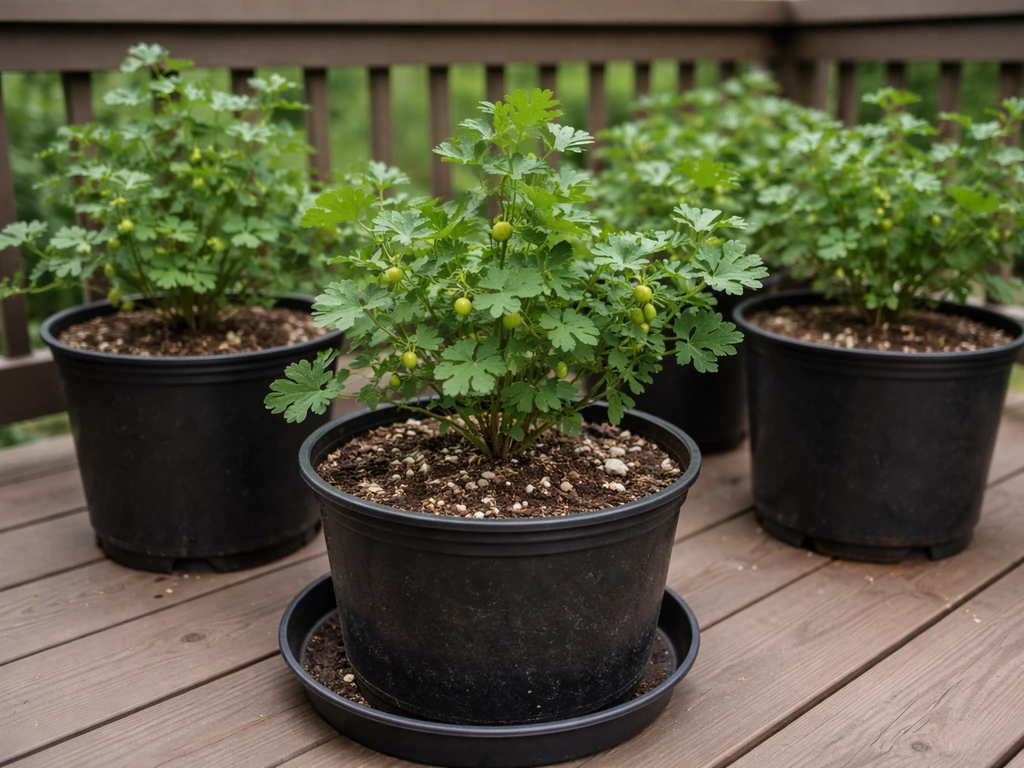
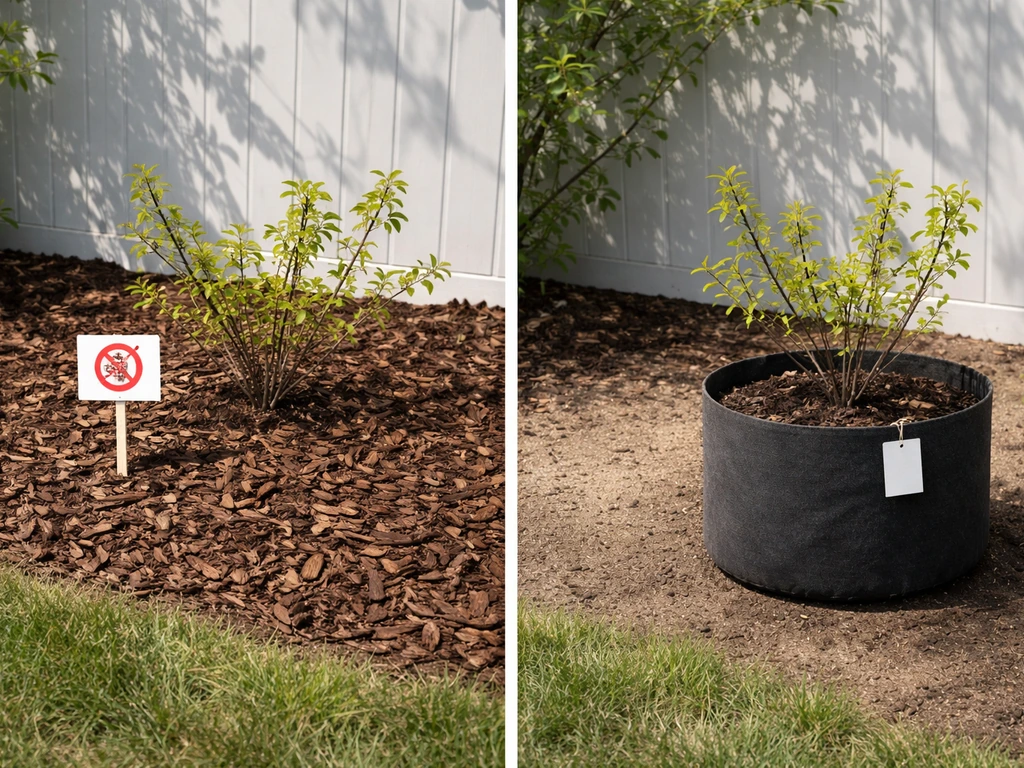
In some quarantine frameworks, the restriction is tied to planting in the ground within a control zone. Container growing is not automatically exempt, but it does give you more flexibility: you can move plants indoors or relocate them, and a container-grown plant may be easier to remove quickly if regulations change or if you move. Check your specific state rule before relying on this, but it is a practical consideration, especially for gardeners in marginal zones.
Fruit substitutes worth growing instead
If your state has a hard ban and no permit path, there are excellent alternatives that produce similar tart, complex fruit without the regulatory headache. Honeyberries (haskap) are a fantastic option: they are cold-hardy, produce tart blue fruit that tastes something like a blueberry-raspberry hybrid, and have no disease-host concerns tied to white pine blister rust. If you are wondering where honeyberries grow, focus on cool climates and give them well-drained soil and enough sun where do honeyberries grow. Elderberries are another strong substitute for jam and juice applications. Jostaberries, a hybrid of black currant and gooseberry, appear on some regulated lists, so check before planting those. For the sour, jam-ready flavor profile that draws people to gooseberries, Nanking cherries and some tart plum varieties can fill a similar culinary role.
Cape gooseberries are not the same plant
One thing worth clarifying: cape gooseberries (Physalis peruviana) are completely unrelated to true gooseberries (Ribes uva-crispa). They belong to the nightshade family and have no role in the white pine blister rust disease cycle. Cape gooseberries are not subject to Ribes quarantine rules and can be grown legally anywhere you can grow tomatoes. Cape gooseberries are also known for doing well in warm, sunny conditions, so you can usually grow them successfully in many regions if you provide good drainage Cape gooseberries are not subject to Ribes quarantine rules. Where do gooseberries grow? Do gooseberries grow on trees? No, they are shrubs, and their legal status is tied to Ribes quarantine rules rather than where they sit Where do gooseberries grow?. Where do gooseberries grow? In the U.S. If you are wondering what berry is illegal to grow, the answer depends on whether it is treated as a Ribes plant under your state’s quarantine rules Ribes quarantine rules. , true gooseberries are subject to state and local restrictions based on white pine blister rust risk. In short, true gooseberries (Ribes) are subject to Ribes quarantine and restriction rules, while cape gooseberries can be grown much more widely Ribes quarantine rules. If you just want a sweet-tart berry for snacking, cape gooseberries are an easy, unrestricted option in most climates.
Already planted? Here is how to get compliant now
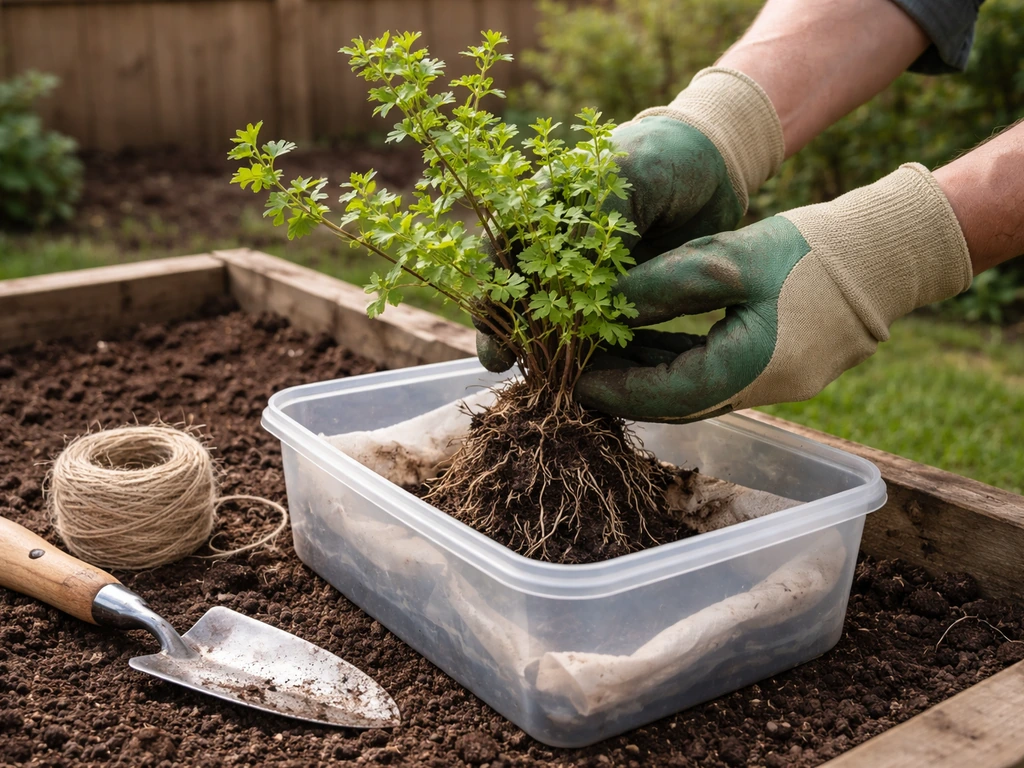
If you have already put gooseberry or currant plants in the ground and you are not sure whether they are legal where you are, the best move is to act quickly rather than hope nothing comes of it. In states like Michigan, infected Ribes plants can be declared a public nuisance and ordered destroyed by state agents. That is a much worse outcome than handling it yourself on your own timeline.
- Identify exactly what you have planted. Gooseberry (Ribes uva-crispa or Ribes hirtellum) and black currant (Ribes nigrum) are treated differently in most regulatory frameworks. Knowing your species helps you understand which rules apply.
- Check your state's quarantine map or regulated area list immediately. If your location is not in a restricted zone, you may not need to do anything. Document that check for your own records.
- If you are in a restricted zone, contact your state department of agriculture or local extension office and explain the situation honestly. Many states with permit systems will allow retroactive permitting if the plant is a low-risk variety and the site is appropriate. Getting ahead of it is almost always better than waiting.
- If removal is required, do it cleanly and completely. Ribes roots can resprout, so full removal including the root mass matters. Do not compost plants that may be infected with blister rust.
- Once you are compliant, ask your extension office about approved alternatives or resistant varieties you can plant legally in your location so you do not end up in the same situation again.
The good news is that enforcement of Ribes restrictions for home gardeners is generally focused on commercial or large-scale violations, or on cases where infected plants near protected forest land pose a real risk. If you are a backyard grower who gets compliant quickly and demonstrates good faith, the regulatory outcome is almost always manageable. The people who run into serious problems are typically those who ignore notices or persist after being contacted by state officials.
The bottom line: gooseberries occupy a genuinely unusual legal space in American gardening. The restrictions are real, they have a solid scientific basis, and they vary significantly by state and location. But they are also navigable once you know the framework. A quick check with your state ag department and extension office will tell you everything you need to know for your specific address, and if growing gooseberries is not an option where you are, there are excellent alternatives that will thrive in the same conditions without the regulatory complexity.
FAQ
If I buy “gooseberry” plants at a nursery, how can I tell whether the law applies to that specific plant?
Most “gooseberry” legal questions are actually about whether your plant is classified as a Ribes species under your state’s rules. Cape gooseberry (Physalis peruviana) is not a Ribes plant, so it is generally not covered by the same white pine blister rust quarantine framework.
Could I legally grow gooseberries at home but still get in trouble for transporting plants or buying them from out of state?
It depends on the action. In many control-zone systems, planting and possession are restricted inside the designated areas, while transport or sale can be restricted even if you personally grow the plant. That means you can be compliant in your yard but still violate the rules if you bring plants from outside a restricted zone.
If I choose a rust-resistant gooseberry, does that automatically make it legal where gooseberries are restricted?
Variety resistance rules vary by state, and some permits only apply to named approved cultivars. Even if a breeder claims resistance, you should verify that the exact cultivar you intend to plant appears on your state’s “allowed” or “low-risk” list, or is covered by a permit condition.
If I grow gooseberries in containers instead of planting in the ground, do the bans or quarantine rules still apply?
Container growing is not automatically exempt in quarantine programs. Some states still regulate possession or movement of Ribes within control zones, regardless of whether plants are in the ground. If a rule includes possession restrictions, a container can still be covered.
What’s the biggest legal mistake, is it planting only, or can I be cited just for having plants?
“Not universally illegal” does not mean “no paperwork.” If your state requires permits for any Ribes possession, you can be in violation just by having the plants, even if you never transplant or sell them. Check whether your state regulates possession separately from planting.
I already planted gooseberries, what should I do first if I think I might be in a restricted zone?
If you discover you may be in a restricted area, the safer approach is to contact your state department of agriculture or extension office immediately and ask whether self-removal is allowed before any enforcement action. Leaving plants in place can raise the odds of a formal order, especially if officials consider the site near high-value pine or in a designated control area.
How accurate do the maps have to be, if I’m “near” a control zone, am I automatically covered by the restrictions?
The most practical metric is proximity to regulated host areas as defined by your state or township list. Disease risk is not evenly distributed, so even nearby neighborhoods can have different compliance requirements. Use your address with the state’s control-zone map or township list instead of relying on general regional assumptions.
If enforcement does happen, what typically determines whether it’s a warning versus an order to destroy plants?
Enforcement outcomes often depend on whether the violation involves infected plants or ongoing movement. In some jurisdictions, infected Ribes can be treated as a nuisance, but most backyard gardeners avoid serious consequences when they act quickly, stop propagation, and comply with removal or permit instructions.
Why do some rules seem to target black currants more than gooseberries or red currants?
Different states treat Ribes subtypes differently. Black currant (Ribes nigrum) often faces harsher restrictions than many gooseberry or red currant varieties, and some states allow certain red currants while banning others statewide. Always check the rules by the exact Ribes species, not just “gooseberry.”
If I can’t grow gooseberries legally, what berry replacements are usually the safest in restricted areas?
If you are trying to replace gooseberries, don’t assume any tart berry is safe from the regulatory issue. Honeyberries (haskap) are typically a clean alternative because they are not part of the Ribes host network tied to white pine blister rust. Still, confirm local planting rules for the substitute berry if your area has separate invasive species or nursery regulations.