
Gooseberries grow wild across Europe, northwestern Africa, and southwestern Asia, and they thrive in cultivated gardens across a huge swath of the Northern Hemisphere, from USDA Zone 3 all the way to Zone 9 depending on the cultivar. The short answer for most home gardeners in the US, UK, or northern Europe: yes, gooseberries will almost certainly grow in your yard, and in many regions they grow so well that finding them growing feral in old hedgerows is completely normal.
Where Do Gooseberries Grow Best and Where They Grow Wild
Marcus Holloway
6 Apr 2026
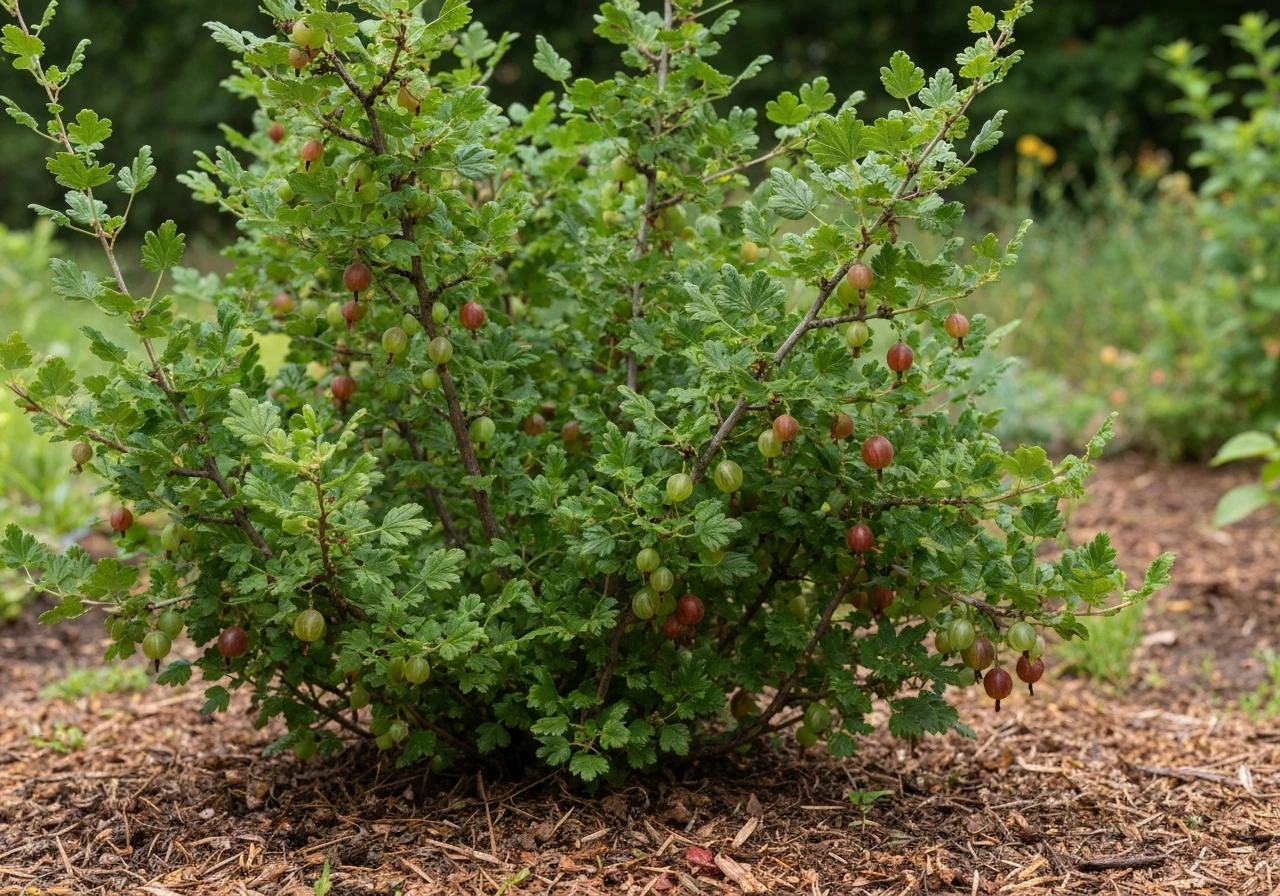
Where gooseberries grow in the wild
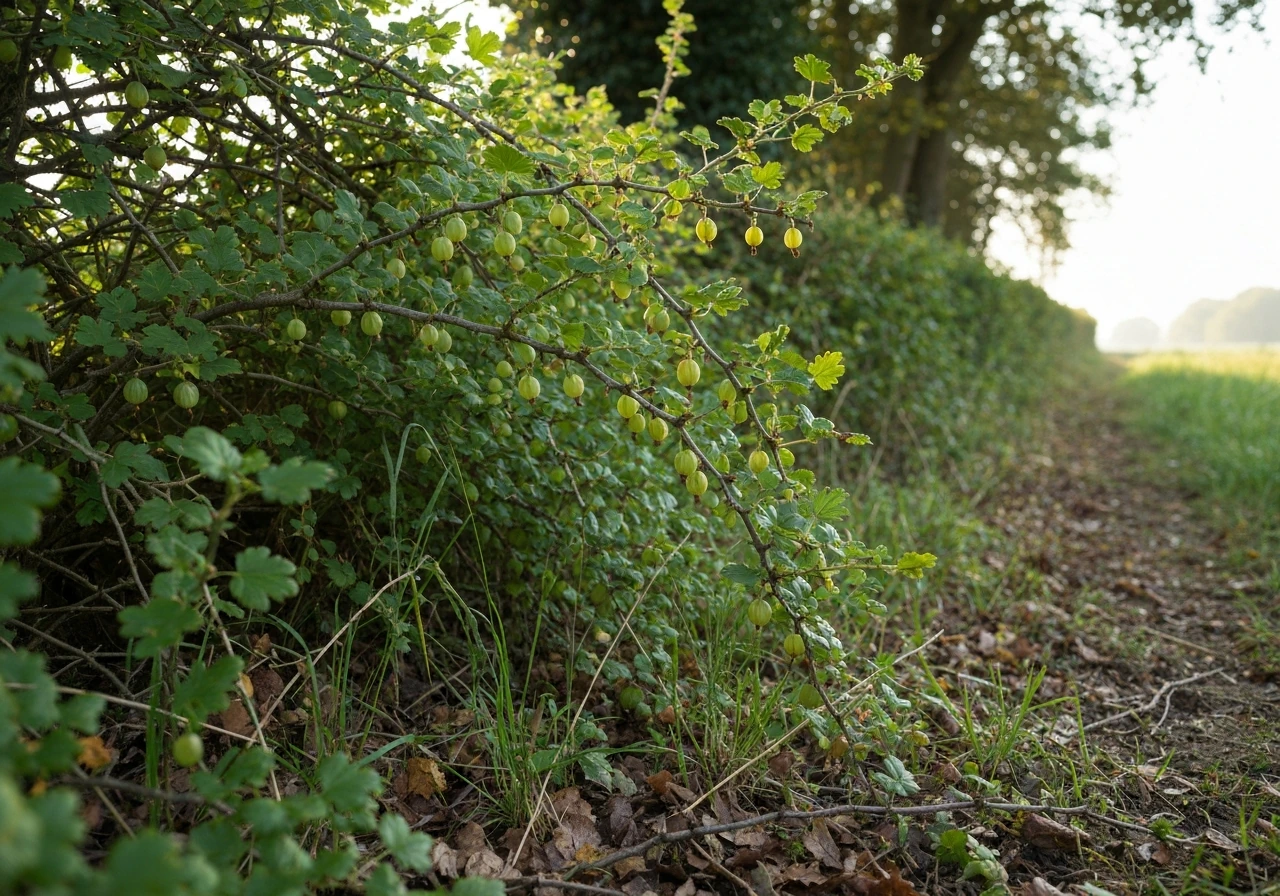
The European gooseberry (Ribes uva-crispa) is native to Europe, northwestern Africa, and southwestern Asia. In the UK, it's described as fairly frequent throughout Britain (less common in northern Scotland) and turns up naturalized in hedges, stream sides, scrub, and deciduous woodland edges. The honest truth is that in parts of Britain it's genuinely hard to tell whether a gooseberry bush in a hedgerow is a true wild plant or a long-escaped cultivated one. That blurriness tells you something useful: gooseberries are tough enough to persist on their own once established.
In North America, most cultivated gooseberries are hybrids of European Ribes uva-crispa and the native swamp gooseberry (R. hirtellum), which helped breeders produce disease-resistant varieties better suited to American conditions. Wild or feral Ribes bushes can be found across the northern US and Canada, particularly in cool, moist woodland margins and ravines. If you want more detail on specifically where they pop up across American states and climate zones, there's a dedicated breakdown on where gooseberries grow in the US that covers this region by region.
One thing worth noting: gooseberries are not trees. They're thorny, bushy shrubs that top out around 3 to 5 feet high and wide. If you've ever wondered about this, the article on whether gooseberries grow on trees clears up that confusion fast. The wild habitat clue here is that they grow as understory or edge-of-woodland shrubs, not canopy plants, which shapes everything about how you site them in your garden.
Climate and soil: what 'best' actually means
Gooseberries favor cool, moist conditions. That's the single most important thing to internalize. They're less suited to hot, dry summers, which is why you'll see them thriving in the UK, the Pacific Northwest, the upper Midwest, and New England rather than in Texas or Arizona. The University of Idaho Extension is pretty direct about this: Ribes do best in cool, moist environments, and if your summers regularly exceed 90°F for long stretches, you'll be fighting the plant more than growing it.
For soil, you have more flexibility than you might expect. Gooseberries can grow on a wide range of soil types as long as drainage is good. The sweet spot for soil pH is around 6.0 to 6.5, with CSU Extension recommending an ideal of about 6.5 and GrowVeg putting the range at 6.0 to 6.5. University of Idaho Extension notes that soil pH isn't hypercritical for Ribes specifically, so don't stress if you're slightly outside that range. What matters more is that you're not planting into waterlogged clay that stays saturated after rain. If that's what you have, raised beds or amended soil will fix it.
One location constraint that doesn't get enough attention in beginner guides: white pine blister rust. This fungal disease uses Ribes (including gooseberries) as an alternate host. On Ribes (alternate hosts), white pine blister rust causes leaf- and stem-related symptoms on currant and gooseberry plants white pine blister rust uses Ribes as an alternate host. If you live in an area with significant white pine populations and humid conditions, planting rust-resistant varieties isn't optional, it's the move you make before you put a shovel in the ground. Penn State Extension and Pacific Northwest disease handbooks are both clear that disease pressure from blister rust is a real 'where you grow' constraint, not just a growing technique issue.
Geographic zones: where gooseberries grow well by region
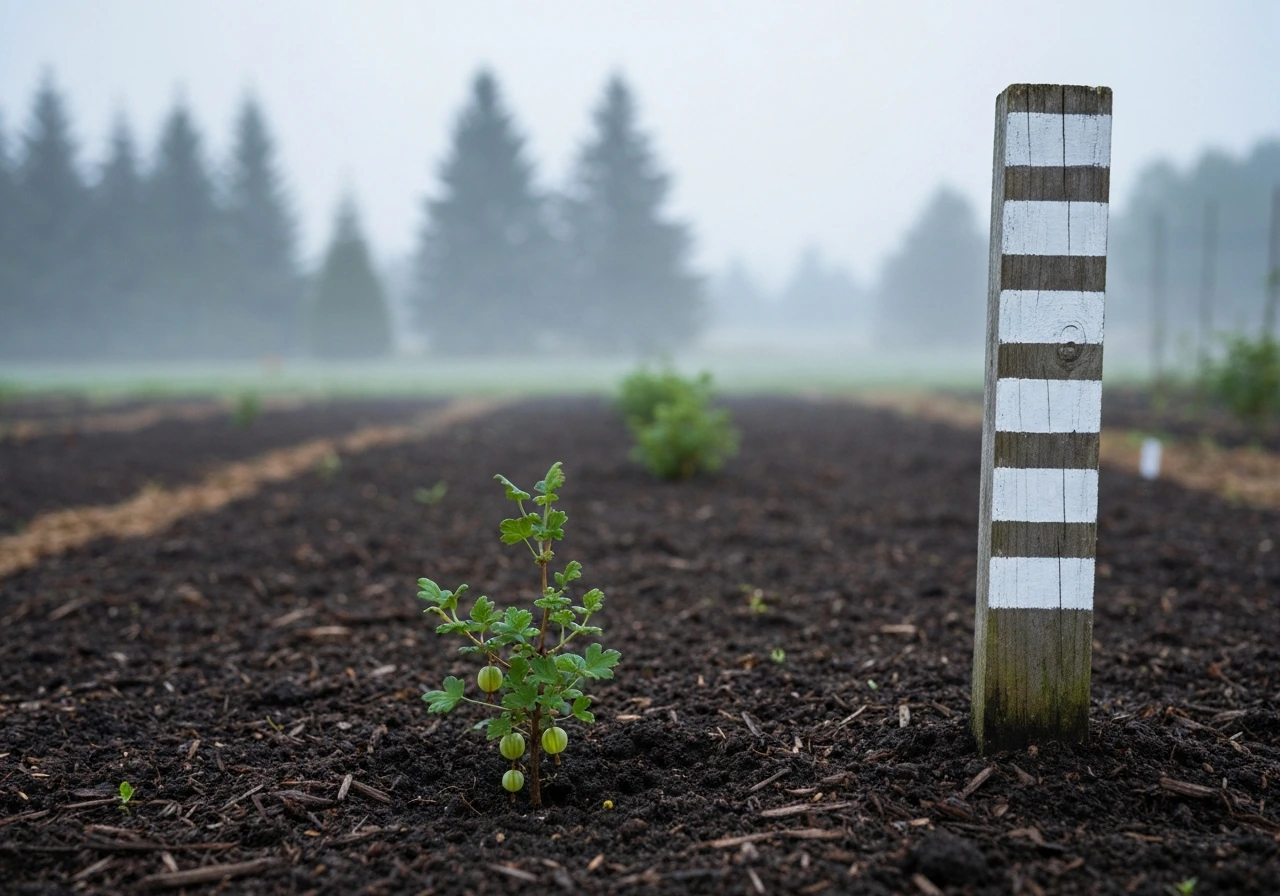
Cold hardiness is one of the gooseberry's strongest selling points. Ribes uva-crispa is hardy to USDA Zone 3a, and cultivars like 'Red Jacket' are rated for Zones 3 through 9. That's an enormous usable range. North Dakota State University includes gooseberries in their northern-hardy fruit evaluation programs, which tells you these plants can handle serious prairie winters. The table below gives a practical snapshot by region.
| Region | USDA Zones | Suitability | Notes |
|---|---|---|---|
| Pacific Northwest (WA, OR) | 6–9 | Excellent | Cool, moist summers ideal; watch for blister rust near pines |
| Upper Midwest / Great Plains | 3–6 | Excellent | Hardy varieties essential; cold winters are not a problem |
| New England / Northeast US | 4–7 | Very good | Traditional growing region; use rust-resistant varieties |
| UK and Northern Europe | Equivalent to Zones 5–8 | Excellent | Native habitat; thrives in hedgerows and garden borders |
| Mountain West (CO, ID, UT) | 4–7 | Good | North-facing slopes and part shade help in dry climates |
| Southeast US | 7–9 | Marginal | Heat and humidity are the main obstacles; choose heat-tolerant cultivars |
| Southwest US / Desert | 8–11 | Poor | Too hot and dry; not a practical choice without significant intervention |
If you're in the Mountain West, the University of Idaho Extension has a useful tip: cool, moist north-facing slopes are the ideal placement for currants and gooseberries in drier climates. That's a practical workaround when you can't change your climate but can choose which side of your yard to plant on.
In-ground vs. container growing: where in your actual yard
In most temperate zones, in-ground is the preferred approach. Gooseberries develop a robust root system and can live and produce for 20 years or more when planted well. Choose a spot with full sun to partial shade (partial shade is actually a plus in warmer zones), good air circulation, and soil that drains after rain. Avoid frost pockets, which are low spots in the yard where cold air settles, because gooseberries flower early and a late frost can wipe out your crop for the year.
Containers are a legitimate option, especially if your native soil is heavy clay or if you're in a borderline zone and want to move the plant to a sheltered spot in winter. Use a large pot (at least 15 to 20 gallons), a well-draining potting mix with added compost for moisture retention, and plan to water more frequently than you would in-ground. Container gooseberries won't get as large and may need more feeding, but they work. I've had a 'Invicta' bush in a half-barrel planter for three seasons and it still fruits reliably, though it noticeably dips in production during hot stretches compared to my in-ground plants.
One creative option the University of Idaho Extension mentions is training gooseberries against a wall or trellis (keeping the trained form to about 6 to 12 inches wide). This works well for narrow garden spaces and north- or east-facing walls, where the reflected cool keeps the plant happier in warmer climates. It's not the most common approach, but it's worth knowing it exists if your yard is tight.
How gooseberries actually grow (what this means for placement)
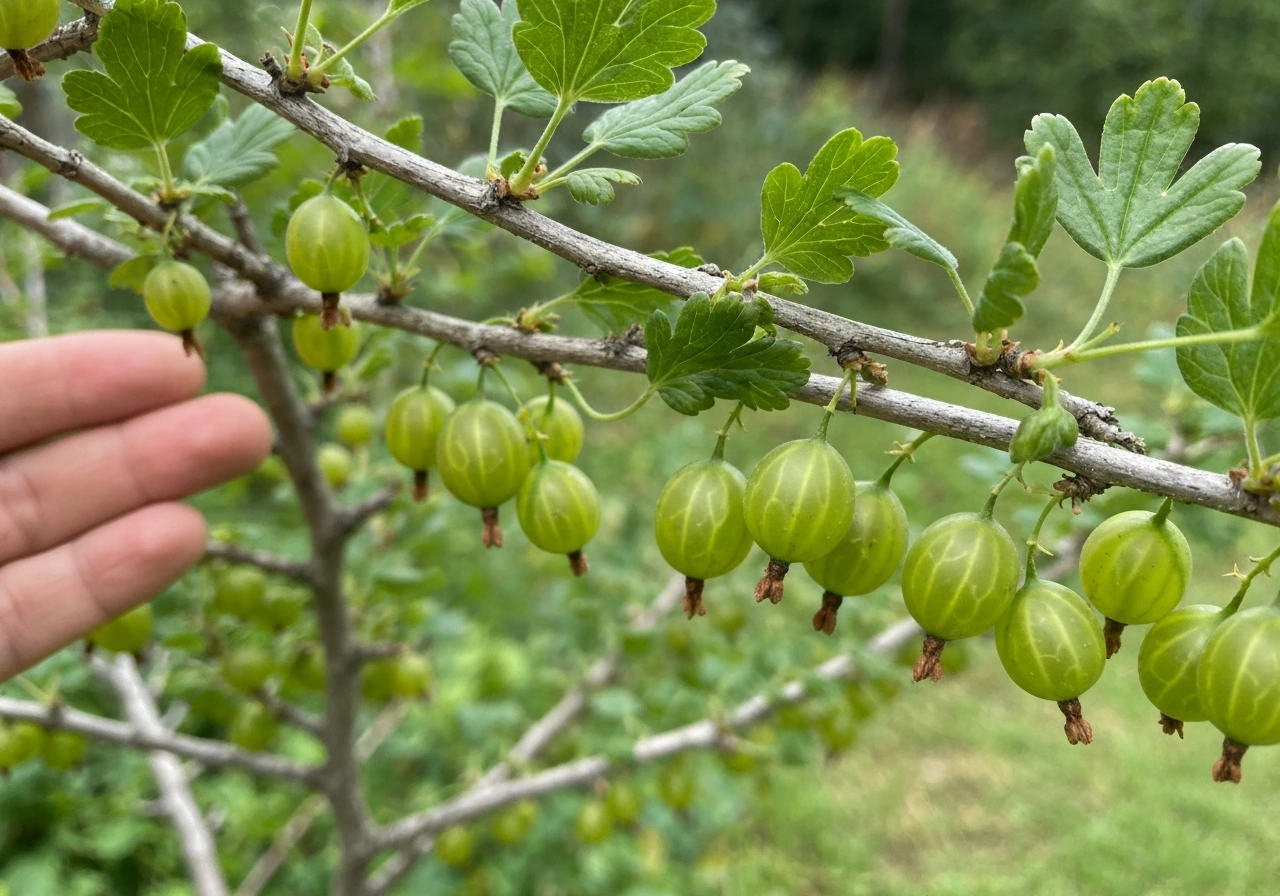
A mature gooseberry bush reaches roughly 3 to 5 feet high and about as wide, though Wikipedia describes the wild form as a straggling bush of about 1.5 meters (just under 5 feet). The stems are thickly set with sharp spines, which is useful to know before you site one next to a path you walk daily or anywhere kids play. Give each plant about 4 to 5 feet of space in all directions to allow for air circulation and mature spread.
Gooseberries fruit on older wood, so the plant needs a few years to build up productive canes before you get a real harvest. Don't judge the plant by its first season. By year three, a well-sited bush should be producing noticeably, and by year five it becomes a serious producer. Sunlight needs are modest compared to many fruits: at least 6 hours of direct sun is ideal, but they'll still fruit in part shade, just less prolifically. In warmer zones, afternoon shade is genuinely beneficial rather than a compromise.
It's also worth briefly noting that not all "gooseberries" are the same plant. Where cape gooseberries grow is a completely different question, because cape gooseberry (Physalis peruviana) is an unrelated plant from South America that grows as an annual or short-lived perennial in warm climates. If you've seen both and wondered why the growing advice seems contradictory, that's why. Similarly, if you're curious about how gooseberry growing compares to other cold-hardy shrub fruits, it's worth reading about where honeyberries grow, since they share a lot of the same regional range and site preferences.
How to find and identify wild gooseberries near you
If you want to find wild or feral gooseberries in your area, the best spots to check are woodland edges, hedgerows, stream banks, and scrubby disturbed areas in cool, moist regions. In the UK, look along old field boundaries and country lane hedges, especially in the Midlands and northern England. In the US, look along forest margins in New England, the Great Lakes region, the Pacific Northwest, and the northern Rockies.
Identifying them in the field is straightforward once you know the key traits. The reliable way to distinguish a gooseberry from a currant in the wild is to look at the stems: gooseberry canes have a spine at each leaf node, while currant canes lack spines entirely. Gooseberries also tend to bear larger, grape-sized berries singly or in small clusters rather than the long clusters (strigs) you see on currants. A Maine Department of Agriculture identification guide for Ribes shrubs lays out these traits clearly and is worth bookmarking if you're doing field identification. The spines are really the clincher, as observations from naturalists tracking Ribes in the Bodie Hills confirm: nodal spines on the stem, gooseberry; no spines, currant.
One thing to check before you plant
Before you order bare-root plants or clear a bed, it's worth knowing that Ribes cultivation is legally restricted in some US states due to the white pine blister rust issue. The restrictions have loosened significantly over the decades, and most states now allow growing of rust-resistant varieties, but the rules vary. There's a detailed breakdown on why gooseberries are illegal to grow in certain areas that explains the history and current status. Related, if you want to know which specific berries carry legal growing restrictions more broadly, the article on what berry is illegal to grow covers that wider picture. Check your state's current rules before planting, especially if you're in the Northeast or Pacific Northwest where blister rust management has historically been most active.
Choose your best spot: a quick walkthrough
Here's how I'd walk through the site-selection decision if I were starting from scratch today:
- Check your USDA zone. If you're in Zones 3 through 7, you have a wide cultivar selection and excellent odds of success. Zones 8 to 9 are workable with the right variety and site choices (shade, moisture). Zone 10 and above: gooseberries aren't your plant.
- Look at your yard for the coolest, best-drained spot with at least 6 hours of sun. A north- or east-facing slope, or a spot that gets afternoon shade in summer, is a bonus in Zones 7 and warmer.
- Avoid frost pockets (low-lying areas where cold settles). Early spring frost on the flowers is the most common cause of a zero-harvest year.
- Do a basic soil drainage test: dig a hole about 12 inches deep, fill it with water, and see how long it takes to drain. If water is still sitting after an hour, amend with compost and grit or build a raised bed.
- Check your soil pH if you can. Target 6.0 to 6.5. If you're between 5.5 and 7.0, you're probably fine without amendment.
- If you're in the eastern US, check whether your state has any Ribes planting restrictions and choose a rust-resistant variety like 'Invicta', 'Pixwell', or 'Hinnomaki Red' to reduce disease pressure.
- If you're tight on space or have poor native soil, commit to a large container (15 gallons or more) with a well-draining mix rich in compost. Plan to water more and fertilize lightly each spring.
- Plant in early spring or fall. Give each bush 4 to 5 feet of clearance. Expect light harvests in years one and two, real production by year three.
Gooseberries reward growers who pick the right spot far more than they reward those who try to correct a bad one with extra care. Get the site right, choose a rust-resistant variety if you're in a humid region, and these shrubs will largely look after themselves. In the right climate zone, they're one of the most low-maintenance productive fruits you can put in a garden.
FAQ
What’s the best way to grow gooseberries if my area is warm or drought-prone?
If your summers are borderline, pick a north-facing or east-facing spot and prioritize morning sun with afternoon relief. Gooseberries can survive in warm areas, but they fruit less consistently when heat lasts all day and the soil never really cools down between irrigations.
How do frost pockets specifically affect gooseberries, and what should I look for in my yard?
Avoid low, cold-sink areas not only because of spring frost, but also because cold air plus humidity can raise disease risk. Choose slightly higher ground with airflow, and if you must plant near a slope, keep the bush off the very bottom of the drainage line.
Can gooseberries do well in containers, and what are the most common container mistakes?
In containers, drainage and watering frequency matter more than pot size alone. Use pots that are truly large enough (about 15 to 20 gallons), add a well-draining mix, and expect to water more often than you would in-ground, since roots cool and dry faster in a container.
What should I do about white pine blister rust if I live near white pines?
White pine blister rust pressure can be reduced by choosing rust-resistant cultivars, but it cannot be ignored if your location is consistently humid and near white pines. A practical next step is to check whether white pines are common within a few hundred feet and then plan to buy varieties labeled as resistant for your region.
Why do gooseberries sometimes produce less even when they’re planted in the right climate?
When growing conditions are right, you can still get disappointing yields if you plant too close to obstacles. Give each bush about 4 to 5 feet in all directions for mature spread and air movement, otherwise mildew and poor flowering are more likely, especially in damp edges like woodland margins.
Can I prune gooseberries aggressively to keep them small, and how does pruning affect where they grow and fruit?
Yes, but only with the right expectations: gooseberries fruit on older wood, so you may get little or no harvest after a heavy pruning or training change. If you need to reshape, prune lightly and spread major cuts over multiple seasons.
How can I tell gooseberries from currants if I’m looking for wild plants?
You can, but don’t confuse the result with true “wild” gooseberries. In the field, the easiest giveaway is the spiny cane at each leaf node for gooseberry, while currants lack spines entirely, even when they look similar in hedgerows.
What should I check before ordering bare-root gooseberries if I’m in the Northeast or Pacific Northwest?
In many places, the biggest “where they grow” limitation is actually legality and disease management, not climate alone. If your state restricts Ribes, the safe move is to confirm your local rules before buying plants or propagating, even if rust-resistant varieties are widely available.