
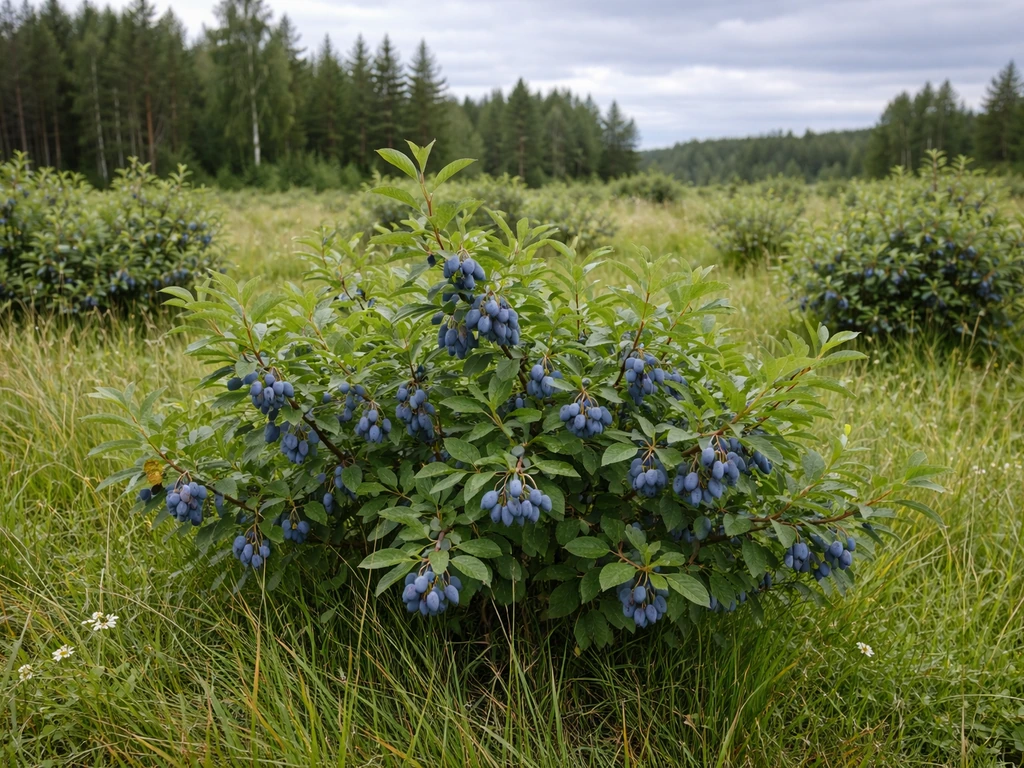
Honeyberries grow naturally across the cool temperate regions of the Northern Hemisphere, from boreal forests in Japan and Siberia to montane zones in central Europe and right across northern North America, including Alaska, British Columbia, Alberta, and Manitoba. In the garden, that translates to USDA Hardiness Zones 1 through 8, with the sweet spot being Zones 2 to 6. They are deciduous shrubs, not vines, and they thrive in the kind of moist, slightly acidic, organically rich soil you would find at the edge of a northern bog or forested wetland. If you can match those basic conditions, or get close, you can almost certainly grow honeyberries wherever you live.
Where Do Honeyberries Grow? Native Range and Growing Zones
Marcus Holloway
13 May 2026
Where honeyberries come from: native range and natural habitat
Lonicera caerulea, the botanical name behind everything sold as honeyberry or haskap, is a blank" rel="noopener noreferrer">circumpolar species. That means its native range wraps around the top of the Northern Hemisphere across three continents. In Asia, it grows wild from Japan's Hokkaido island through Siberia. In Europe, populations occur through Russia and scattered montane areas. In North America, Kew's Plants of the World database records native occurrences in British Columbia, Alberta, Manitoba, Montana, Alaska, and several other northern territories.
The habitat it calls home in the wild is telling. Missouri Botanical Garden describes honeyberry as native to moist boreal forest areas, mostly in peaty soils. Wikipedia flags it as primarily found in or near wetlands of boreal forests, and that circumpolar, peaty-wetland origin shapes every practical decision you make when you bring one into your garden. It is a plant built for cold winters, cool summers, and soil that holds moisture without going bone dry.
Cold hardiness and the zones where honeyberries thrive
Honeyberries are exceptional cold-weather performers. They are rated cold-hardy down to around negative 47°C, and cultivars like 'Borealis' are listed as suitable for USDA Zone 2 winter lows. Across the board, the plant grows well in Zones 1 through 8 according to most extension guidance, though some sources put the practical ceiling at Zone 7 because of a chilling-hour requirement. South of Zone 7, plants often do not accumulate enough winter chilling to grow well and produce abundant fruit. That is the real limiting factor at the warm end, not heat tolerance per se, but a lack of the cold they need to break dormancy properly.
The other constraint worth knowing: honeyberries wake up very early in spring, breaking dormancy at soil temperatures around just 0 to 2°C (32 to 36°F). That is earlier than almost anything else in your garden. So in Zones 7 and 8, the issue is usually warm winters cutting into chilling hours, not hot summers burning them out. If you are on the warm edge of the range, look for cultivars specifically selected for lower chilling requirements rather than trying to make do with a cold-climate variety.
Honeyberries by region: North America, Europe, and Asia
North America
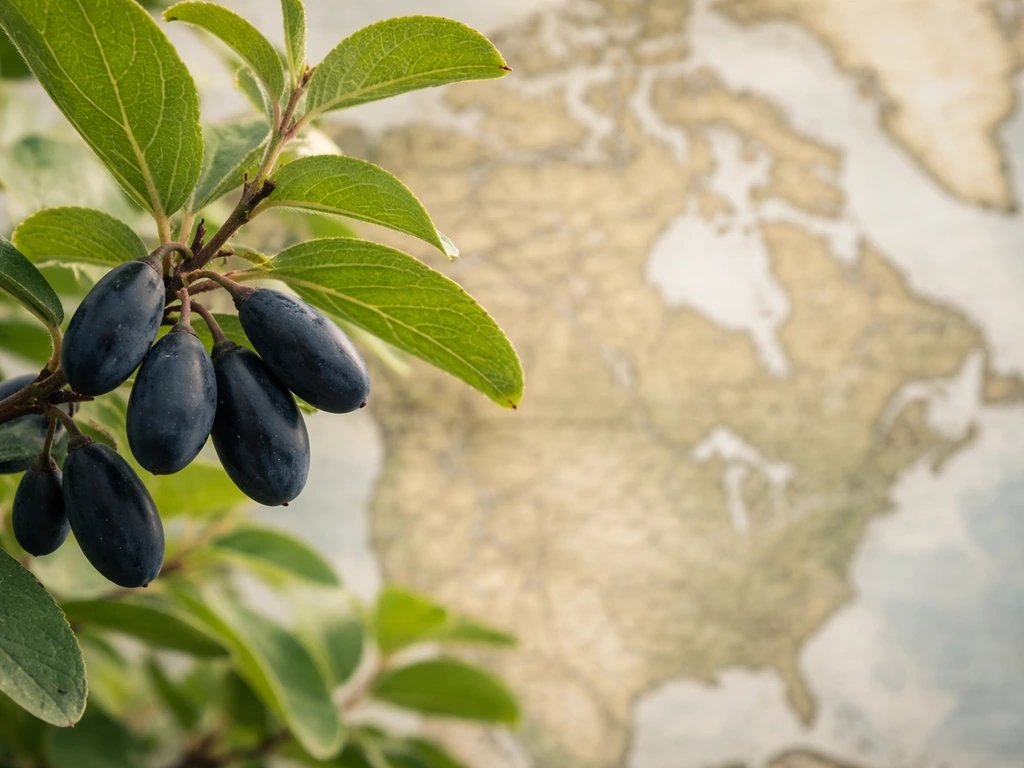
In North America, honeyberries are at their best across Canada and the northern United States. The prairie provinces of Alberta, Saskatchewan, and Manitoba have a long history with the plant, and the University of Saskatchewan has done serious cultivar development work there, giving us many of the named varieties now sold commercially. In the US, the cold northern states are the core territory: Alaska, the upper Midwest, the Pacific Northwest, New England, and upstate New York (Cornell Cooperative Extension specifically flags zones 3 to 5 as reliable territory). Zones 3 to 5 are where the plant is most productive and easiest to manage. Zone 6 works well with the right cultivar selection. Zones 7 and 8 are the edge cases where chilling-hour limitations become a real issue.
Europe
In Europe, honeyberry cultivation has grown steadily in countries like Poland, Russia, Latvia, and parts of Scandinavia, regions where the climate maps closely to the plant's native Siberian and montane habitats. The RHS in the UK lists and grows Lonicera caerulea, and it is a viable garden plant across most of the British Isles. Northern and central Europe are the comfortable zones. Southern Europe gets challenging for the same chilling-hour reason that limits Zone 7 and 8 gardeners in North America.
Asia
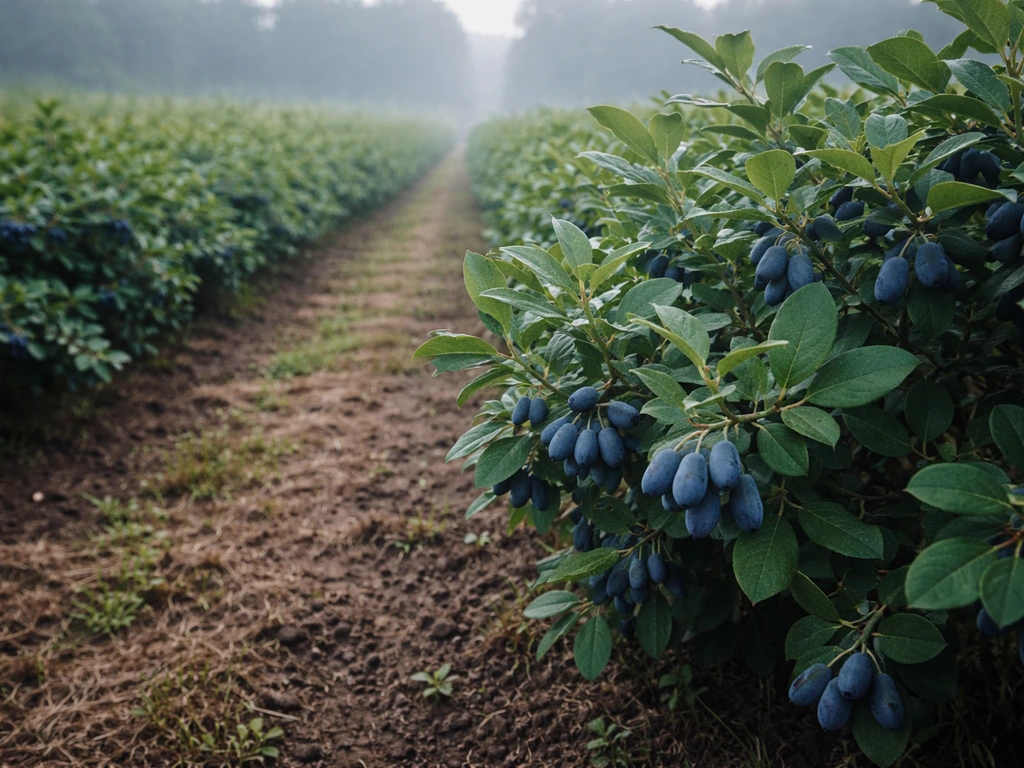
Japan is where the word 'haskap' originates, from the indigenous Ainu language, and Hokkaido remains a center of commercial honeyberry production. Across northern Japan, Siberia, and northeastern China, the plant grows both wild and cultivated. It is well established in Asian horticultural traditions, and many of the early genetics used in Canadian and North American breeding programs trace back to Japanese and Russian selections.
Soil, moisture, and sun: matching wild conditions in your garden
Honeyberries tolerate a surprisingly wide soil pH range, from as low as 3.9 up to 7.7, but their optimum is in the slightly acidic band of roughly pH 5.5 to 6.5. If your soil sits in that range, you are already ahead. The organic matter content matters more than most gardeners expect: the plant naturally grows in peaty, organic soils, so if you are working with sandy or clay-heavy ground, amending with compost before planting makes a real difference.
On drainage, there is a nuance worth understanding. Honeyberries are more tolerant of wet conditions than most fruit shrubs, and in the wild they frequently grow near wetlands. But cultivars bred for garden and farm use still want well-drained soil for best productivity. Think of it this way: they can survive brief waterlogging that would kill a blueberry, but they will not produce their best fruit in chronically soggy ground. Moisture-retentive but not waterlogged is the target.
Sun requirements shift depending on where you are gardening. In northern zones, full sun (6 to 8 hours minimum) is ideal and pushes the best fruit production. The RHS notes they fruit best in full sun, and HoneyberryUSA puts it simply: honeyberries bear best in sun in the north. The caveat is the south. In warmer zones or humid summer climates, some afternoon shade actually helps, reducing heat stress and, as the RHS notes, potentially lowering aphid pressure. Edible Landscaping goes further and recommends partial to full shade in most regions except the far north, where full sun is fine. If you are in Zone 6 or warmer, east-facing exposure with morning sun and afternoon shelter from peak heat is often the sweet spot.
Growth habit, spacing, and how to place honeyberries in your garden
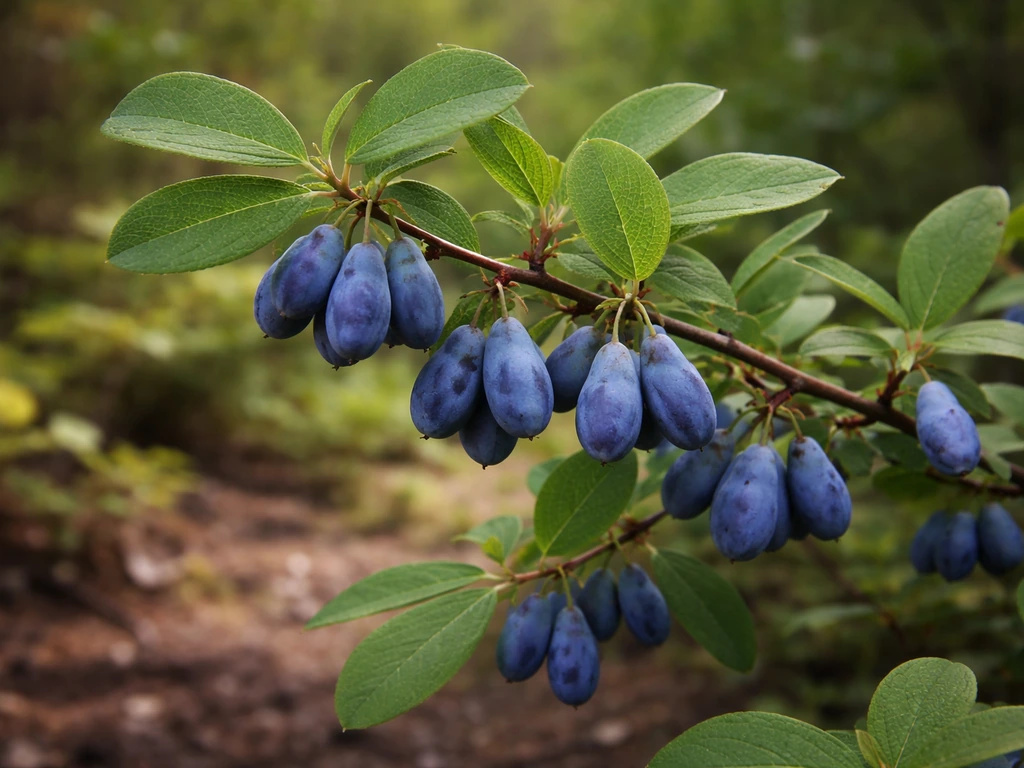
Honeyberries are upright deciduous shrubs, not vines, not ground covers, not trees. They grow to around 2.5 metres (roughly 8 feet) at full maturity for the species, though many named garden cultivars like 'Borealis' mature more compactly at around 90 to 100 cm. They are tidy, manageable shrubs that fit into a mixed edible border or a dedicated berry bed without taking over.
The most important thing to know about placement: you need at least two different varieties for fruit set, because honeyberries require cross-pollination. One plant alone will give you almost nothing. HoneyberryUSA recommends planting a pollenizer variety for best results, and Stark Bro's advises keeping your paired plants within about 50 feet (15 metres) of each other so insects and wind can reliably carry pollen between them. For row planting, spacing of roughly 1.3 to 2 metres (4.5 to 6 feet) within a row and 2.5 to 3 metres (8 to 10 feet) between rows is a solid starting framework.
Because honeyberries break dormancy so early, microclimate placement matters more than it might with other shrubs. Avoid south-facing spots that warm fast in late winter, which can trigger early growth that then gets hit by a late frost. A north or northeast-facing slope or a spot with some canopy shelter from afternoon sun actually keeps them dormant longer and protects those early blossoms. In warmer zones, this kind of sheltered placement is almost essential.
| Factor | Ideal Conditions | Tolerated Range | Watch Out For |
|---|---|---|---|
| Hardiness Zone | Zones 2 to 6 | Zones 1 to 8 | Below Zone 7: chilling-hour gaps |
| Soil pH | 5.5 to 6.5 | 3.9 to 7.7 | Alkaline soils above pH 7.5 |
| Moisture | Moist, retentive but drained | Tolerates brief waterlogging | Chronically waterlogged root zones |
| Sun (northern zones) | Full sun, 6 to 8 hours | Partial shade acceptable | Deep shade reduces fruit set heavily |
| Sun (southern/warm zones) | Partial shade, morning sun | Full sun with extra moisture | Hot afternoon sun in humid climates |
| Soil organic matter | High (peaty, compost-rich) | Average garden loam with amendment | Poor sandy or compacted clay soils |
Finding honeyberry plants near you and what to do if they are hard to source
Honeyberry availability has improved a lot in the last decade, but it is still not something you will find at every big-box garden center. Your best starting points are specialty fruit nurseries and mail-order sources that focus on cold-hardy edibles. In North America, online nurseries like HoneyberryUSA, Logee's, Stark Bro's, and regional operations like Columbia Falls Nursery carry named cultivars with zone-specific guidance. Logee’s “Blue Velvet” honeyberry cultivar listing includes hardiness-zone information for that specific cultivar, which can help match it to your local climate Logee's. For zones 3 to 5, well-tested varieties include 'Aurora,' 'Borealis,' 'Honeybee,' and 'Tundra.' Remember that you need at least two compatible varieties, so buy a pair from the start.
Timing matters with honeyberries. Because the plants wake up so early in spring, fall planting is often recommended to give roots time to establish before that first early-spring push. Alaska Haskap Farm explicitly warns against spring and summer planting for this reason: root disturbance at or near dormancy break can compromise the season's stem growth. If you can only get plants in spring, do it as early as the ground is workable and disturb the roots as little as possible.
If you are in a zone where honeyberries are marginal, say Zone 7 or 8, look for cultivars bred specifically for lower chilling requirements or warmer climates rather than defaulting to cold-climate selections like 'Borealis.' Extension resources from Utah State University and Cornell are good places to cross-check cultivar suitability for your specific area before you buy.
If your climate is genuinely too warm for honeyberries (Zone 9 and above), or you simply cannot source them locally, gooseberries are worth considering as a partially comparable shrub for cool, moist conditions in a similar part of the garden. Cape gooseberries can also be grown in warm, frost-free climates with plenty of sun gooseberries are worth considering. Laws can also restrict which berry species are legal to plant in your area, so check local rules before you buy illegal to grow. If you are wondering about gooseberries, it helps to know their growth habit and whether they actually grow on trees or as shrubs gooseberries are worth considering. If you are wondering where do gooseberries grow in the US, they generally do best in cool, temperate regions with adequate moisture gooseberries are worth considering. In many places, gooseberries face restrictions, which is why some gardeners need to look into why gooseberries are illegal to grow before planting why are gooseberries illegal to grow. Gooseberries grow best in cool to temperate climates with evenly moist, well-drained soil, often in USDA Hardiness Zones 3 through 7. They are not the same plant, but they occupy a similar growing niche in terms of soil and climate preference, and they are often easier to source in transitional zones.
Quick checklist before you plant
- Confirm your USDA hardiness zone is between 1 and 8, with zones 2 to 6 being the most reliable.
- Test your soil pH and aim for 5.5 to 6.5; amend with sulfur to lower pH or compost to add organic matter.
- Choose a spot with moisture-retentive but well-drained soil, avoiding chronically wet low spots.
- In northern zones, site in full sun. In Zone 6 and warmer, plan for morning sun with afternoon shade.
- Buy at least two different compatible varieties so cross-pollination can happen.
- Plant them within 50 feet of each other, spaced 4.5 to 6 feet apart within a row.
- Avoid placing them in south-facing microclimates that warm quickly in late winter.
- Plan to plant in fall if possible, or very early spring if fall is not an option.
FAQ
Where do honeyberries grow best if my area is “on the edge” of the zones (like USDA 7 or 8)?
In marginal zones, success usually comes down to winter chilling, so prioritize cultivars marketed for low-chill or warmer climates, and plant in a location that stays cooler in late winter (north or northeast slope, or morning sun with afternoon shelter). Avoid south-facing walls or heat-retaining slopes, since honeyberries can wake up early and get damaged by late frost even when winters are generally mild.
If I live in a warmer climate, can I grow honeyberries successfully with extra shade or mulch?
Shade and mulch can reduce stress, but they do not fix the main limiting factor for warm areas: insufficient winter chilling. Mulch helps stabilize soil temperatures around dormancy and can limit root heave, yet if your winters do not provide enough chill to break dormancy properly, yields may be weak or absent. The best approach is to verify chilling suitability for the exact cultivar before planting.
How much morning sun versus afternoon sun is ideal for honeyberries?
In cooler climates, full sun (roughly 6 to 8 hours) generally gives the best fruit set. In Zone 6 and warmer, a practical target is morning sun with afternoon protection from peak heat, such as an east-facing exposure or filtered light under light canopy. This can also help reduce stress during humid summers.
Can I grow honeyberries in containers, and where would they “fit” in terms of where they grow?
Yes, but containers are most realistic for people in marginal zones because you can manage microclimate and soil pH more precisely. Use a large pot (wide is better than narrow), a peat-based, slightly acidic growing mix, and keep drainage excellent. Container plants also warm and cool faster than in-ground shrubs, so they may need extra protection in late freezes to avoid premature spring growth.
What soil pH should I aim for, and how do I adjust if my soil is too alkaline?
Honeyberries perform best around slightly acidic soil, roughly pH 5.5 to 6.5, though they can tolerate a broader range. If your soil is too alkaline, the most reliable fix is to incorporate an acidic organic amendment (like composted leaf mold) and, if needed, use a soil sulfur product according to test results. Re-test after amendments, since pH changes can lag behind your first growing season.
How wet can the soil be without harming honeyberries?
Honeyberries tolerate more moisture than many fruit shrubs, but they still need drainage for peak productivity. If water stands for long periods after rain or irrigation, fruiting often drops and root health can decline. A simple check is whether the planting area stays soggy for days, if yes, improve drainage with raised beds or amended soil to keep it consistently moist but not chronically waterlogged.
Do honeyberries need two varieties, or will one plant set fruit?
You generally need at least two compatible varieties for meaningful fruit set because honeyberries are cross-pollinated. Buying two of the same cultivar usually is not enough unless that pair is specifically described as compatible. When ordering, confirm that the second variety is a recognized pollenizer for the first.
How close do honeyberry plants need to be for pollination?
A practical guideline is keeping paired plants within about 15 meters (50 feet) so insects and wind can move pollen effectively. Larger distances can still work in some gardens if pollinator activity is high, but fruit set commonly decreases when plants are widely separated or blocked from airflow.
What is the most common mistake people make when trying to grow honeyberries in the wrong place?
The most frequent issue in warm or transitional areas is treating early spring emergence as if it is just a “growth start” problem. Honeyberries wake up around very cool soil temperatures, so they are vulnerable to late frosts, especially when planted in south-facing, rapidly warming microclimates. The cure is cultivar choice (for chilling) plus sheltered siting (for frost protection).
When should I plant honeyberries if I’m trying to get them established reliably?
Fall planting is usually preferred because it lets roots establish before the first early-spring push. If you must plant in spring, do it as early as the ground is workable and minimize root disturbance, since plants that go into the season right at dormancy break may prioritize stress response over strong stem growth.