
Yes, you can absolutely grow goji berries in Canada. Lycium barbarum is cold-hardy to around USDA zone 5, and Lycium chinense pushes that even further, surviving in zones 3 to 4. That covers a huge swath of Canada, from southern British Columbia and Ontario all the way through much of the Prairies with the right microclimate and site prep. Plants typically start fruiting in their second year and hit peak yields by years four to five.
Can You Grow Goji Berries in Canada? How-To Guide
Marcus Holloway
21 Jun 2026
This is not a difficult berry to grow once you understand what it needs, and what it needs is actually pretty forgiving. Juniper berries are different from goji, but they also grow in many parts of Canada depending on the specific juniper species and local conditions where does juniper berries grow.
Do goji berries grow in Canada? Here's the honest answer
Goji berries are native to East Asia, but they have one of the widest cold-hardiness ranges of any fruiting shrub you can grow. Lycium barbarum handles USDA zone 5 reliably, which maps to parts of southern Ontario, southern Quebec, coastal BC, and the milder pockets of the Prairies. Lycium chinense is even tougher, rated to zone 3 in some seed listings, which opens the door to most of Alberta, Saskatchewan, and Manitoba if you pick the right site. Small Farm Canada puts it plainly: gojis work here if you're in Soil Zone 3 or better. Ontario's OMAFRA has been tracking goji as a specialty crop for the province, which is about as official a green light as you'll get.
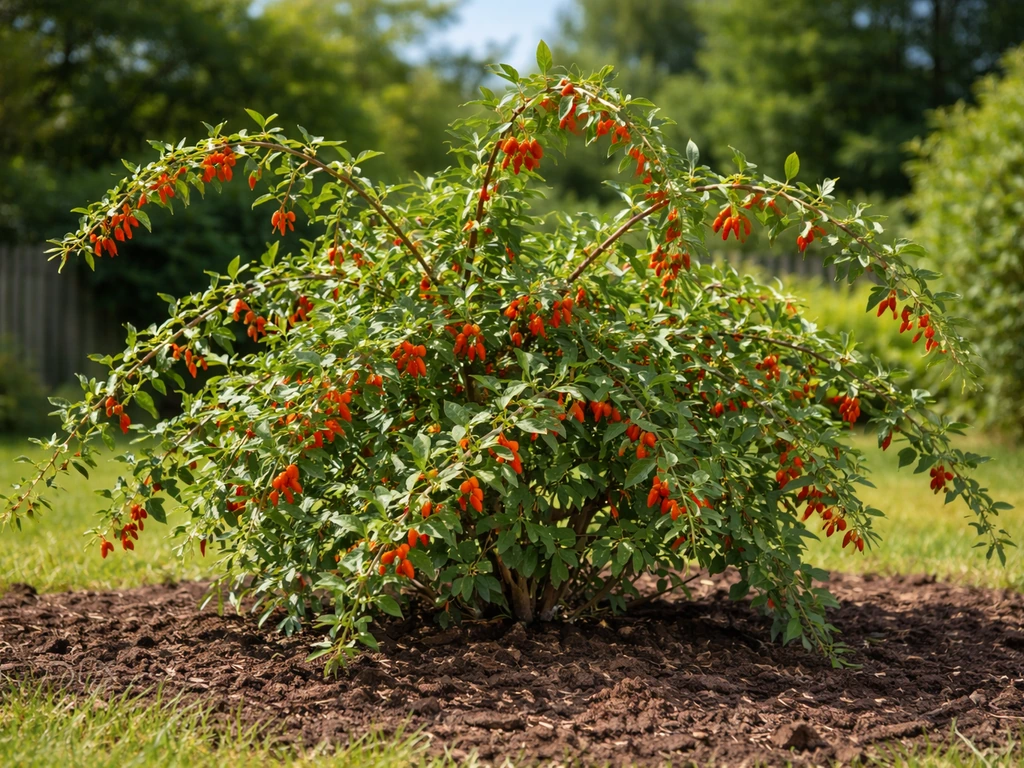
The plant itself is a thorny, arching shrub that behaves a bit like a cross between a vine and a sprawling bush. It can reach 2 to 3 metres if left unpruned, and it flowers and fruits continuously from mid-summer into fall. Even when Canadian winters cause some winter injury to the upper canes, the plant almost always regrows from buds near the base, so a bad winter rarely kills the whole plant.
Best Canadian regions and growing conditions
The regions with the strongest track record for in-ground goji growing are southern Ontario, the Okanagan valley in BC, southern Quebec, and the warmer urban pockets of the Prairies. Goji berries are grown in parts of Canada, especially where cold-hardiness and the right microclimate meet. That said, with a smart microclimate setup, growers in zone 4 and even marginal zone 3 locations have succeeded. The key factors are sun exposure, wind protection, and reflected heat.
- Full sun is non-negotiable: goji needs at least 6 to 8 hours of direct sun daily for good fruiting. South or southwest-facing spots are ideal.
- Wind protection makes a real difference in colder zones. A fence, wall, or hedge on the north and northwest sides buffers desiccating winter winds that kill canes even when temperatures are survivable.
- South-facing walls and masonry surfaces create a thermal microclimate that bumps your effective hardiness up by half a zone or more. Urban heat islands in cities like Toronto, Vancouver, Montreal, and Calgary provide similar benefits.
- Avoid low-lying frost pockets. Cold air drains downhill and settles in depressions. Planting on a slight slope or raised area helps prevent late-spring frosts from damaging new growth and flower buds.
Soil, site prep, and planting setup
Goji's soil preference is one of the most misunderstood things about this plant. It actually prefers relatively infertile, slightly alkaline soil, specifically in the pH range of 6.8 to 8.1. This runs counter to what most berry growers expect because plants like blueberries want acidic conditions. If your Canadian soil is on the acidic side (common in Ontario and BC), adding garden lime before planting will bring the pH up. Get a soil test first so you're not guessing. Drainage is just as important as pH: goji absolutely cannot tolerate waterlogged roots, which is one of the main causes of root rot, a documented production problem for this species.
- Test your soil pH and adjust toward 7.0 to 8.0 with agricultural lime if needed.
- Choose a site with well-draining soil, or build a raised bed or mound 20 to 30 cm high to guarantee drainage.
- Work compost into the planting area lightly but don't over-enrich the soil. Goji does better in lean conditions than in heavily amended garden beds.
- Space plants about 60 cm apart for high-density planting, or 90 cm to 1.5 m apart for a more relaxed setup with better airflow.
- Install a simple trellis, fence, or post-and-wire system before planting. Goji's arching canes need support and training to stay productive and manageable.
- Plant in spring after your last frost date, or in early fall at least 6 weeks before freeze-up to allow root establishment.
If you're starting from seed, Canadian suppliers like The Incredible Seed Company carry goji seeds rated to zones 4 to 9. Sow indoors 6 to 8 weeks before your last frost. If you prefer transplants, BambooPlants. ca and Planteia both ship goji plants across Canada.
Propagation from cuttings is also very doable: take softwood cuttings in summer from new growth, strip the lower leaves, dip the cut end in rooting hormone, and root in a perlite and peat mix. WSU Extension notes that basic stem-cutting propagation often includes using a [rooting hormone](https://pubs. extension. wsu.
edu/product/propagating-deciduous-and-evergreen-shrubs-trees-vines-with-stem-cuttings/), and that the best timing depends on the plant species and the type of cutting such as softwood versus hardwood. If you're also wondering can you grow juniper from berries, the same idea of starting with seed and using the right conditions applies, but juniper has its own timing and setup needs. Hardwood cuttings taken in winter work as well.
How to grow goji berries: care, training, and pruning
Once established, goji is genuinely low-maintenance compared to many fruiting shrubs. The main jobs are watering consistently during fruit development, fertilizing at the right times, and training the canes so the plant stays productive rather than just growing into a thorny tangle.
Watering
Water deeply but infrequently. Goji is more drought-tolerant than most fruiting shrubs, but during active growth and fruiting in summer, consistent moisture helps berry development. You may even be able to grow goji in parts of India, but the specific viability depends on local climate and conditions similar to the ones goji needs elsewhere drought-tolerant. The biggest mistake I see is overwatering in cool, wet springs, which encourages the root rot and powdery mildew problems covered later. Water at the base, not overhead.
Fertilizing
OMAFRA recommends a split nitrogen program for goji in Ontario: apply nitrogen in spring at bud break, again about two months later, and a third time roughly three and a half months after planting. For home gardeners, a balanced slow-release fertilizer in spring and a lighter mid-summer application of a balanced or low-phosphorus fertilizer works well. Avoid heavy feeding late in the season as it pushes soft growth that won't harden off before freeze-up.
Training and pruning
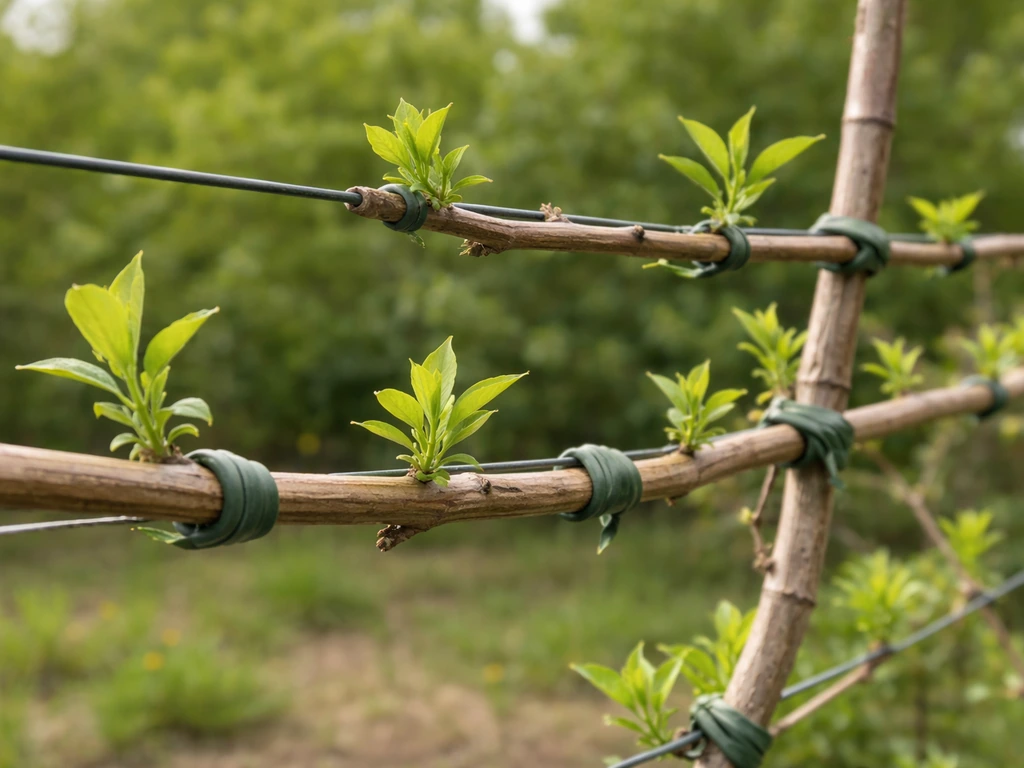
Goji fruits on new growth produced from one-year-old canes, so pruning strategy matters. Train a few main framework canes along your trellis in the first year and keep them tied in. Prune in late winter or very early spring before new growth breaks, which preserves the flower buds that formed on last year's canes.
Avoid heavy pruning in fall, because as CSU Extension notes for flowering shrubs generally, cutting in fall or winter before dormancy is complete removes flower buds and reduces the following year's bloom and fruit set. Colorado State University Extension explains that pruning in fall or winter before dormancy is complete can remove flower buds and reduce the following spring’s bloom and fruit set pruning in fall or winter can remove flower buds and reduce next spring’s blooms.
Pinch or head back the tips of canes in the first season to encourage side branching, which is where most of the fruit load will come from in subsequent years.
Winter survival: in-ground vs container overwintering
This is where Canadian growers have to make a real decision based on their zone. Here's how the two main approaches compare:
| Approach | Best for | Winter prep needed | Risk level |
|---|---|---|---|
| In-ground planting | Zone 5+ (reliable); zone 4 with microclimate | Mulch 10–15 cm deep over root zone; burlap wrap in windiest spots | Low to moderate in zone 5+; moderate to high in zone 4 |
| Container overwintering | Zone 3–4, or wherever in-ground is risky | Move pots to unheated garage or cold room (above -5°C) before hard freeze | Low if brought indoors; plant stays dormant all winter |
| In-ground with heavy mulch + windbreak | Zone 4 marginal sites | Mulch heavily, add burlap or frost cloth, shelter from north wind | Moderate; expect some cane dieback but root survival likely |
For in-ground plants, apply a thick mulch layer of 10 to 15 cm around the root zone in late fall after the ground has started to cool but before it freezes solid. Straw, shredded leaves, or wood chips all work. Small Farm Canada specifically recommends mulching heavily or moving potted plants to a frost-free environment as the two main winter survival strategies. The good news is that even when above-ground canes suffer winter dieback, goji almost always regrows from buds at the base, so a harsh winter sets you back a season rather than killing the plant outright.
Container growing opens up goji to growers across the country who can't rely on in-ground survival. If you’re wondering where wolfberries grow, container growing is also a way to extend the growing range beyond what your local climate supports for in-ground plants where do wolfberries grow. Use a container at least 40 to 50 cm wide and deep, ensure drainage holes, and grow in a slightly alkaline potting mix.
In fall, once the plant has gone dormant, move the container to an unheated but frost-protected space like a garage or cold cellar that stays between -5°C and +5°C. Water very lightly once a month to keep the roots from completely desiccating. Bring back outside in spring after the last hard frost.
Harvest timing and what to expect over the years
Be patient with goji. Most Canadian gardeners can expect their first meaningful fruit in year two, with yields ramping up steadily through years three and four. If you are wondering where Juneberries grow, location, sunlight, and cold tolerance play a big role where do juneberries grow. OMAFRA confirms that maximum yields typically arrive by years four to five. Don't be discouraged by a light first harvest or even none at all in year one.
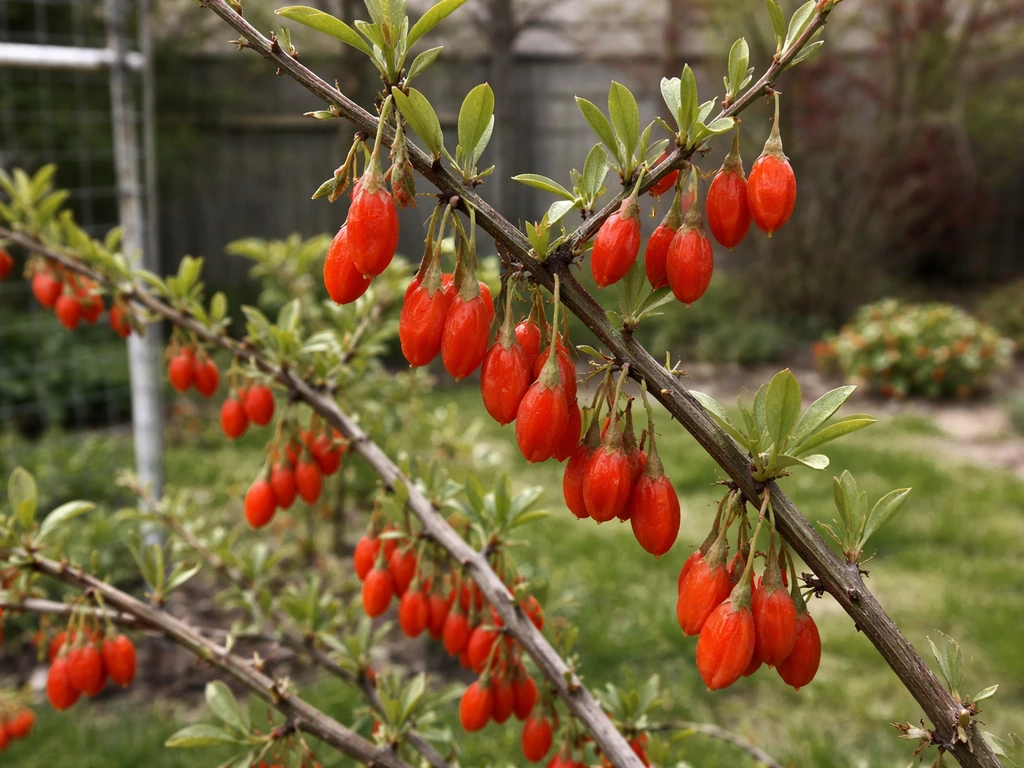
Goji flowers and fruits continuously from mid-summer into early fall, which means you're not picking one big harvest all at once. OMAFRA notes a harvest window of about 35 to 40 days after flowering, timed when 80 to 90 percent of the berries on a cluster have turned fully red. The University of Wyoming extension confirms this continuous flowering and fruiting habit, so expect to pick over several weeks. Berries should be a deep red-orange, about the size of a small raisin, and they come off the cane easily when ripe. Fresh goji berries have a mild, slightly sweet and herby flavour quite different from the dried version most people know.
A few practical harvest notes: pick by rolling the berries off gently rather than pulling to avoid bruising. The canes are thorny, so light gloves are a good idea. Fresh berries last about a week refrigerated, or you can dry them easily on a screen or in a dehydrator set to 50 to 55°C.
Common problems in Canada and how to prevent them
Powdery mildew
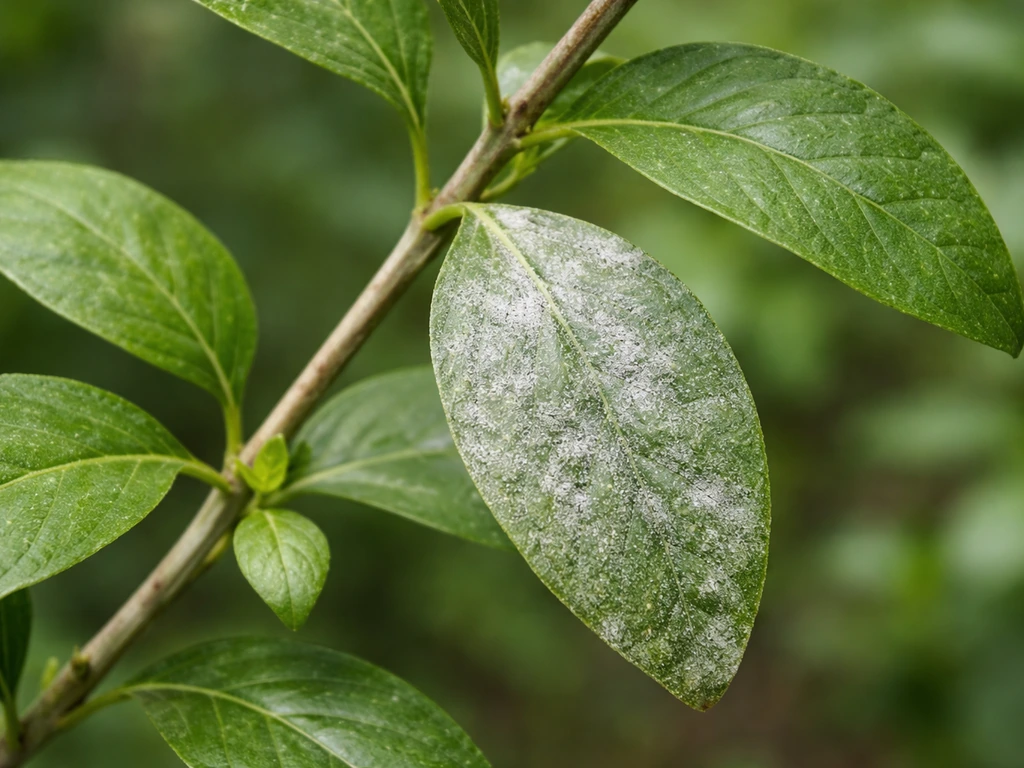
Powdery mildew caused by Arthrocladiella mougeotii and related fungi is a documented and fairly common problem on both Lycium barbarum and Lycium chinense. In Canadian gardens it tends to show up in humid, warm spells in mid to late summer, especially when airflow around the plant is poor. Prevention is straightforward: train canes on a trellis with space between them, avoid overhead watering, and don't crowd plants. If you do spot the characteristic white coating on leaves, remove affected growth and treat with a dilute baking soda spray or a sulfur-based fungicide. Improving airflow almost always reduces recurrence.
Aphids
Aphids are probably the most common insect pest you'll deal with. They tend to cluster on new shoot tips and the undersides of young leaves. A strong blast of water from the hose knocks most colonies off and is usually enough for small infestations. Neem oil spray or insecticidal soap work well for heavier infestations. Check regularly during the flush of new growth in spring and early summer.
Root rot
Root rot is one of the most serious threats to goji production, and peer-reviewed research links it directly to poor soil microbial conditions driven by waterlogged or compacted soil. The best prevention is the site and drainage work you do before planting: raised beds, well-draining soil, and careful watering. If a plant shows wilting despite adequate water, yellowing from the base up, or stunted growth, suspect root rot. There is no effective cure once it takes hold, so prevention at planting is everything. UMass Amherst CAFE notes that Verticillium wilt is a damaging vascular disease of woody plants and that its impact depends on host susceptibility and environmental stress, so reducing winter stress can help lower disease risk (see UMass Verticillium wilt fact sheet) Verticillium wilt fact sheet — UMass Amherst CAFE.
Verticillium wilt
Verticillium wilt is a soil-borne fungal disease that can affect goji, particularly plants already stressed by drought or winter injury. The Chicago Botanic Garden is blunt about this one: once Verticillium is in your soil, it can't be eradicated, and fungicide treatment is ineffective on infected plants. Your best protection is keeping plants healthy and unstressed, avoiding planting goji where tomatoes, peppers, or potatoes have grown recently (all Verticillium hosts), and removing and disposing of any severely infected plants rather than composting them.
Winter cane dieback
Not a disease, but a real issue in colder zones. Expect some degree of tip dieback in most Canadian winters, especially in zones 4 and colder. Prune out dead wood in early spring before growth begins. As long as the root system survives, the plant will push new growth from the base. Selecting cold-hardy cultivars like 'Dynamite' (available from Canadian suppliers) gives you better odds in marginal zones.
Your next steps as a Canadian grower
If you're in zone 5 or warmer, pick a south-facing, wind-sheltered spot, sort out your soil drainage and pH, and plant this spring or early fall. If you're growing goji in India, choose a similar sunny, sheltered location that suits the local climate and provides good drainage south-facing, wind-sheltered spot. Order transplants from a Canadian supplier if you want to skip the seed-starting step and get a year or two head start.
If you're in zone 3 or 4, container growing with garage overwintering is genuinely worth it and not much extra work once you have the system set up. Either way, goji is a long-term planting: get it established in the right spot, give it a trellis to climb, and by years three to four you'll have a productive, low-maintenance fruiting shrub that handles Canadian winters better than most people expect.
FAQ
If I start goji from seed in Canada, when can I realistically expect my first meaningful harvest?
You can, but plan for a longer wait if starting from seed. Seed-grown plants often need extra time to build a strong cane framework before you see reliable fruit, so if you want faster harvests, start with transplants or rooted cuttings and train 3 to 5 main canes in year one.
Can you grow goji berries in containers in Canada, and how should container watering be handled?
Yes, but goji tends to do better with a slightly alkaline container mix and very consistent drainage. Use a potting mix amended for drainage, keep the potting media on the drier side in late fall, and empty any saucers so roots never sit in runoff.
Do I need more than one goji plant in Canada to get berries?
Goji is not a true “berry” in the same sense as some cane berries, and pollination can vary by cultivar and climate. In practice, many home gardens still set fruit with just one plant, but having two compatible plants (or one plant plus a known fruiting variety nearby) increases odds in areas with cool springs or weak insect activity.
When should Canadian gardeners mulch goji for winter, and how thick is too thick?
Mulch is helpful, but too much or too early can keep the root zone wet and cool. Wait until the ground has started to cool, then apply 10 to 15 cm, and keep mulch pulled back slightly from the crown to reduce the chance of stem issues in persistent fall moisture.
What’s the best watering approach to prevent powdery mildew on goji in Canadian gardens?
Overhead watering is a common cause of powdery mildew flare-ups and leaf spotting, especially in humid spells. Water at the base, morning is best if you must irrigate overhead, and make sure the trellis training leaves airflow gaps between canes.
How do I adjust watering for goji planted in the ground versus in pots?
Goji can handle drought better than many shrubs, but containers are different. In containers, wind and pot size dry roots faster, so check moisture weekly by feeling the media, and water only when the top few centimetres start to dry, even if your outdoor in-ground schedule would be less frequent.
What pruning mistakes most often reduce next year’s goji fruiting in colder Canadian zones?
Yes, but treat the main canes like a permanent structure. In late winter or very early spring, prune out dead wood and avoid cutting back the one-year-old canes that formed flower buds, then shorten tips only to encourage side branching.
What should I do if my goji wilts even though I watered it, could it be root rot?
If you notice wilting with yellowing starting from the base up, suspect root rot, especially after wet, cool weather. The fix is usually prevention rather than cure, but if the plant is newly affected, check drainage immediately and consider lifting and replanting into amended, fast-draining soil after trimming any obvious dead roots.
What are the key overwintering rules if I can’t overwinter goji in-ground in my Canadian climate?
Container overwintering is safer in zone 3 to 4, but it still needs dormancy management. Keep the space unheated and frost-protected, target roughly -5°C to +5°C, and water lightly about once a month, only enough to prevent the root ball from drying out completely.
Will goji take over my garden in Canada, and how can I keep it contained?
Yes. Goji can be invasive-looking because it sends up vigorous shoots, especially when stressed or when canes are not managed. Use trellis training, prune annually, and keep an eye on suckers or stray shoots so growth stays contained within your planned area.
How do I know when goji berries are ripe, and should I harvest all clusters at once?
You generally want to harvest over several weeks, not all at once, because berries ripen unevenly on the cluster. Pick when 80 to 90 percent of the berries on a cluster are fully red-orange, and handle gently with light rolling so you do not bruise the thin skins.