
Goji berries grow naturally in northwestern China, specifically in the Ningxia, Gansu, and Qinghai regions. From there, they've naturalized across much of Asia and into southeast Europe over centuries of cultivation. In your garden, they can thrive across a pretty wide range of climates, from USDA Hardiness Zone 5 all the way to Zone 9 (and some sources push that up to Zone 11a with the right conditions). If you're in that range, there's a good chance you can grow them. If you're on the colder or hotter edges, keep reading because there are ways to make it work.
Where Do Goji Berries Grow? Native Range and How to Grow
Marcus Holloway
16 Apr 2026
Natural range and typical growing conditions
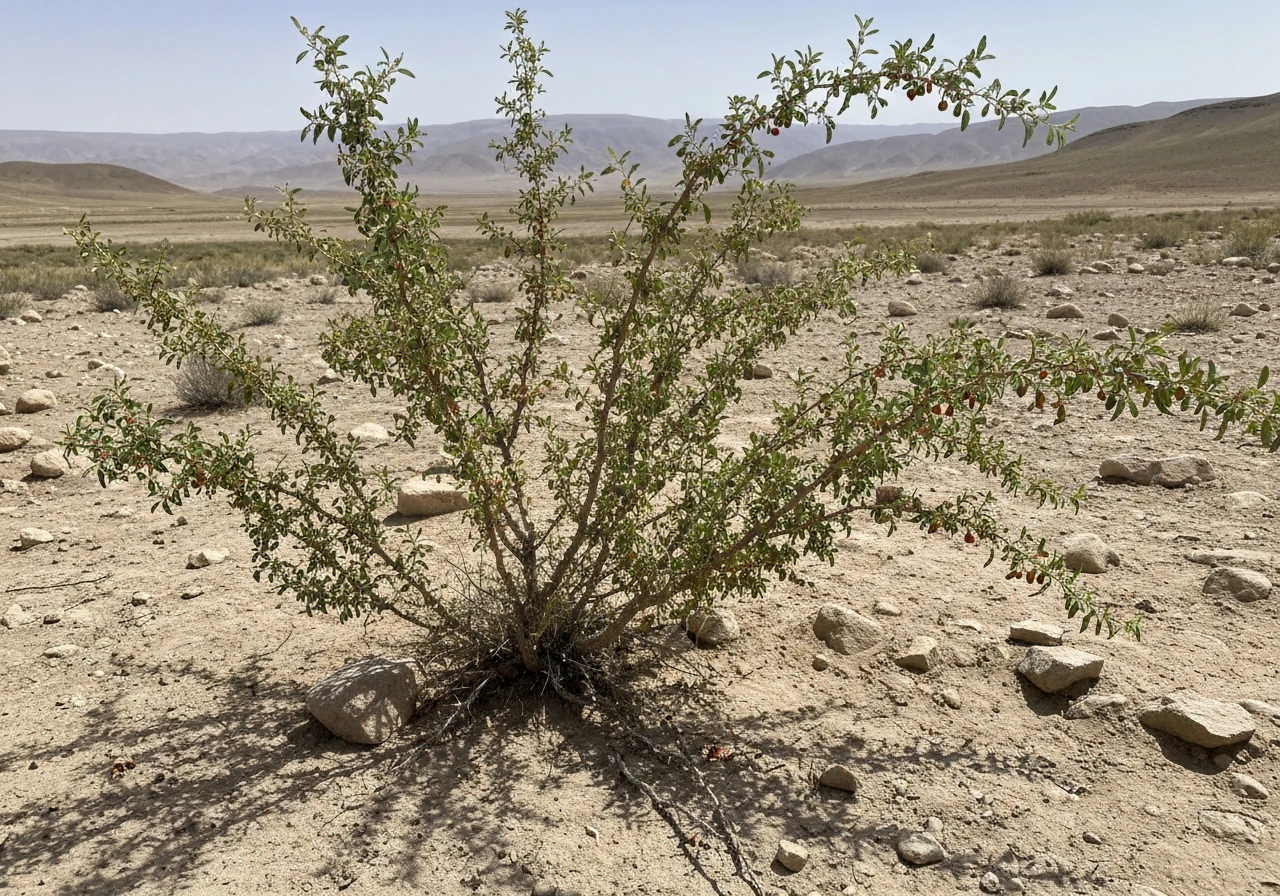
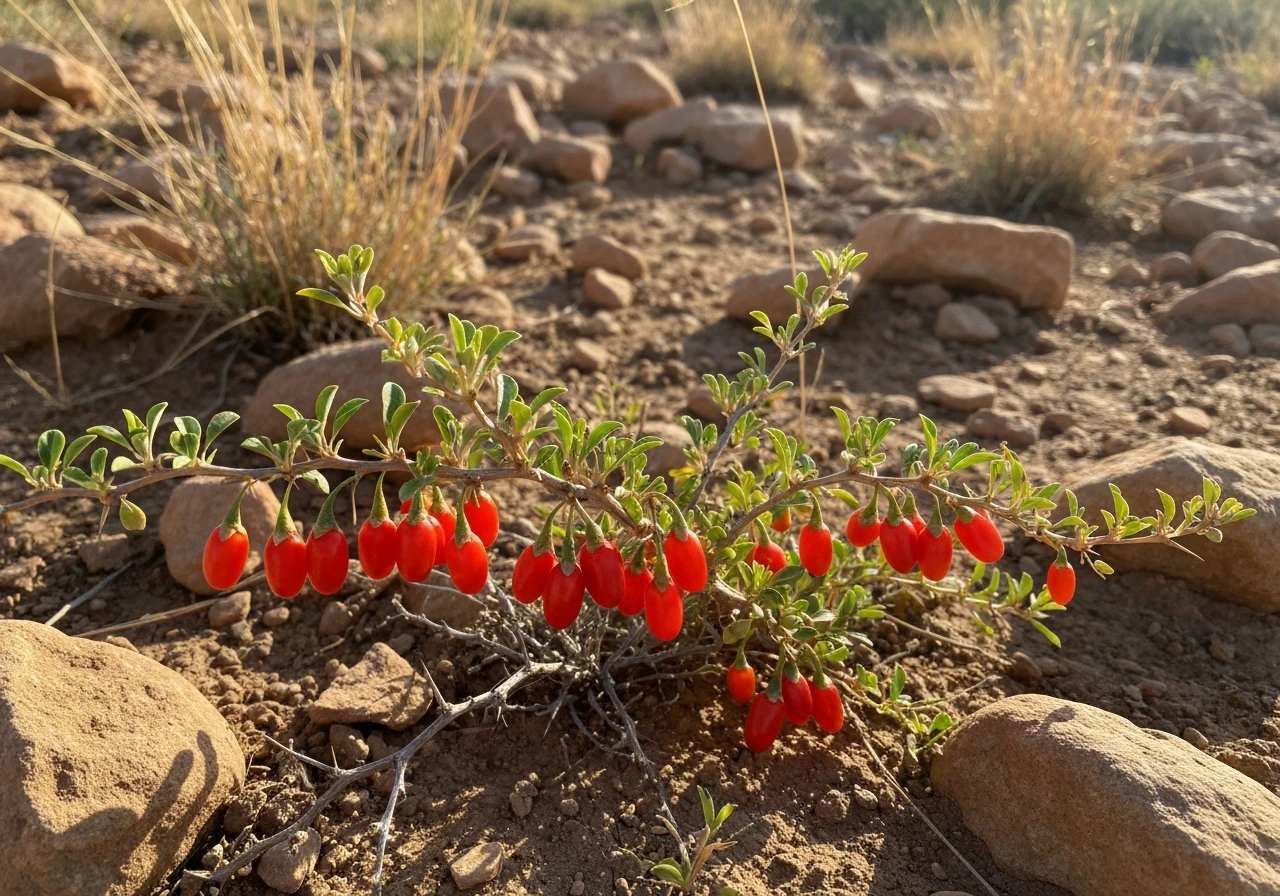
Lycium barbarum, the species behind most commercial and home-grown goji berries, is native to China. It's closely tied to the high, semi-arid plateaus of Ningxia and the surrounding northwestern provinces, places where summers are hot and dry, winters are cold, and the soil tends toward alkaline. The plant was introduced to Europe in the 18th century and has since naturalized across parts of Asia and southeast Europe. Understanding that native context matters a lot when you're trying to figure out where to put it in your yard.
In the wild, goji grows as a sprawling deciduous shrub that can reach 6 to 10 feet tall and wide if left unmanaged. It's not a vine, and it doesn't need a bog or acidic soil like blueberries do. It wants the opposite: lean, well-drained, alkaline to neutral ground with lots of sun and relatively low humidity. Where wolfberries grow naturally overlaps almost entirely with this profile, which makes sense because wolfberry and goji are essentially the same plant, just with different common names used in different contexts.
Where goji berries grow best (climate and exposure)
Goji berries are genuinely tough. They can tolerate temperatures from -23°C to 37.8°C (that's roughly -9.4°F to 100°F), which is an impressively wide range. That cold tolerance is what allows them to survive Zone 5 winters without much fuss. The upper heat tolerance means they won't cook in a hot southern summer either, though humidity is a different story. Hot and dry is their sweet spot. Persistent dampness, especially around the roots, is where things go wrong.
For sun exposure, full sun is non-negotiable if you want fruit. The PVAMU fact sheet is clear on this: full sun and hot, dry conditions produce the best berry yields. Partial shade will keep the plant alive, but you'll get weak growth and minimal fruiting. I've seen gardeners tuck goji into a semi-shaded corner thinking it was flexible on this, and the plant survived but barely produced. Give it the sunniest spot you have.
Zone 5 through 9 is the standard guidance from MSU Extension, but a broader interpretation based on cultivar and microclimate can push that to Zone 11a on the warm end. If you're in Zone 4 or colder, outdoor growing is risky. If you're in Zone 10 or warmer with high humidity year-round, fungal pressure becomes your biggest obstacle. Those in the middle of that range, especially the drier parts of Zones 6, 7, and 8, will find goji berry one of the easier fruiting shrubs to establish.
How to choose a planting spot in your yard or farm
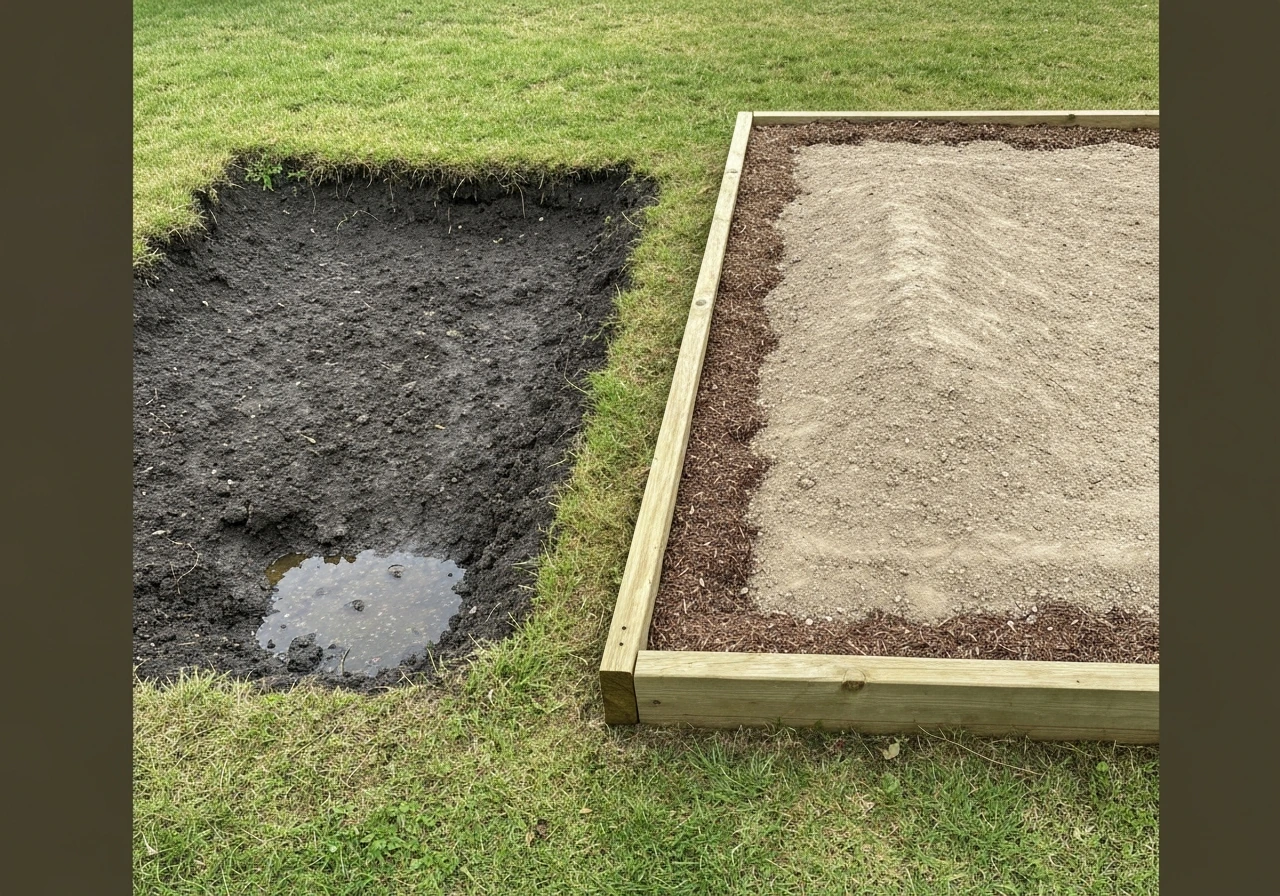
The single most important factor when siting a goji plant is drainage. Root rot from waterlogged soil will kill it faster than any pest or disease. Avoid low spots, clay-heavy areas, or anywhere water pools after rain. Raised beds, slopes, and the high side of a grade all work well. If your soil drains reasonably and the pH sits between 6.8 and 8.1, you're starting from a strong position.
For spacing, UF/IFAS recommends 3 to 5 feet between plants within a row and 6 to 8 feet between rows. That might seem generous, but goji spreads and you want airflow around the plants to reduce fungal pressure. On a home scale, if you're planting one or two shrubs in a mixed border, plan for a mature footprint of up to 10 feet across unless you commit to regular pruning to keep it smaller.
South-facing walls and fences are excellent locations in Zones 5 and 6. The reflected heat and protection from cold northerly winds gives the plant a meaningful boost, effectively bumping your microclimate up half a zone or more. This is where a slightly marginal goji planting can genuinely succeed. Growing goji berries in Canada is a similar situation, where microclimate selection and wall protection become critical tools for pushing the limits of what's possible.
How to grow goji berries (soil, watering, support, and care)
Soil and planting
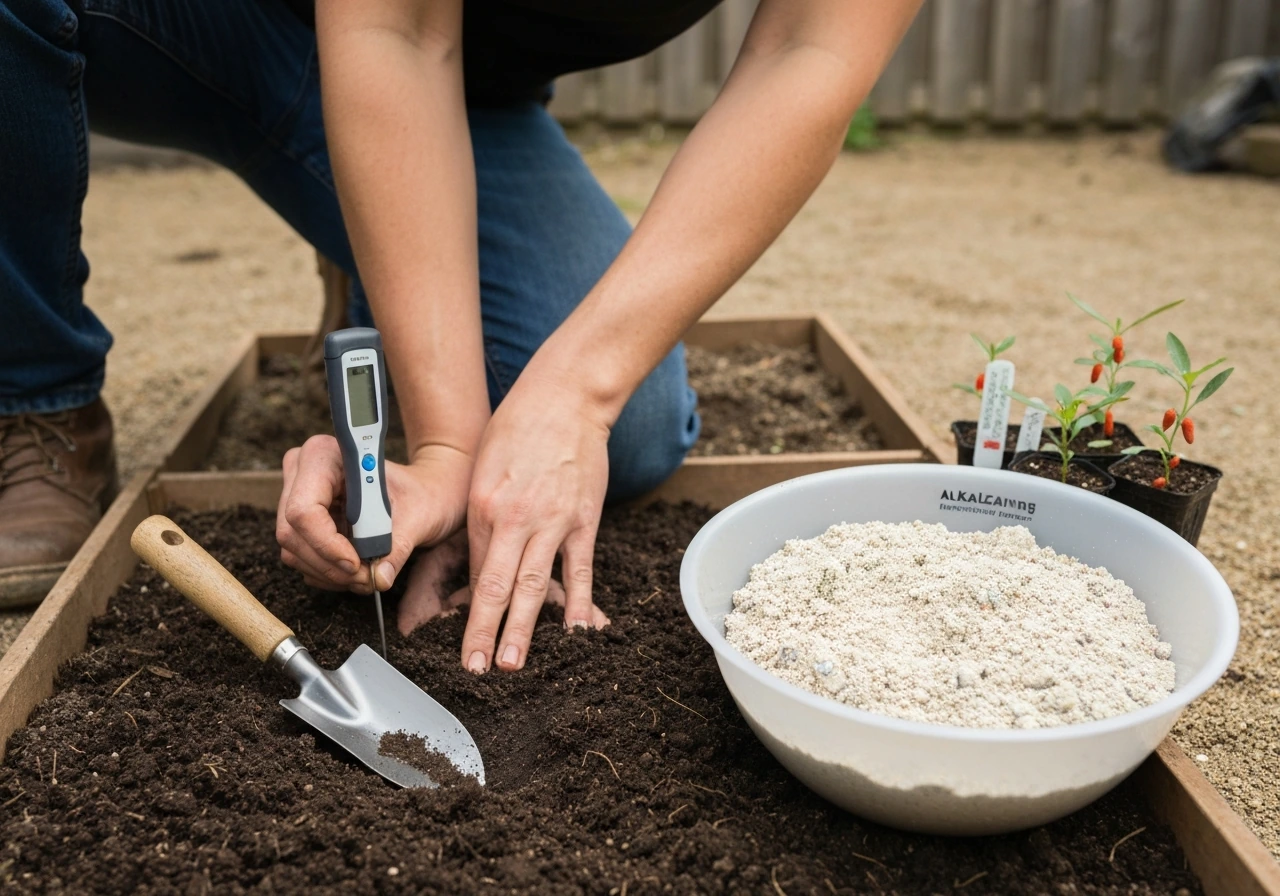
Goji berries prefer a soil pH of 7 to 8, though UF/IFAS shows production is viable from 6.8 to 8.1. MSU Extension suggests a slightly narrower target of 6.5 to 7.0 for optimal performance, so splitting the difference and aiming for neutral to slightly alkaline soil is a safe bet. If your soil is acidic, adding garden lime before planting will bring pH up gradually. You can start plants from seeds or cuttings, but cuttings are the easier and faster route. According to UF/IFAS, cuttings are the most common propagation method and produce true-to-type plants more reliably.
Watering
Water deeply after planting and then allow the soil to dry slightly between waterings. MSU Extension is specific about this: deep, infrequent irrigation is better than frequent shallow watering. Deliver water gently to the root zone rather than overhead, which reduces leaf wetness and fungal risk. Once established, goji is quite drought-tolerant. Overwatering is a far more common mistake than underwatering with this plant.
Support and pruning
Goji grows as a sprawling shrub with arching canes, and without some structure it can become a tangled mess. A simple fence, trellis, or wire support system helps keep canes upright and improves airflow. Pruning is important both for plant shape and for productivity. UF/IFAS emphasizes pruning for canopy formation and fruit production. A well-pruned goji with open structure fruits better and is less prone to disease than a dense unpruned one. Remove crossing canes, thin the center, and cut back hard in late winter before new growth starts.
Pests and diseases to watch for
Aphids are the pest you'll see most often, especially on tender new growth. A strong blast from a garden hose is often enough to knock them off and disrupt colonies before they establish. Powdery mildew is the main fungal concern: it shows up as a white powdery coating on leaves and stems, and it tends to flare in humid conditions with poor airflow. Goji gall mite (Aceria kuko) is a more serious pest identified by Utah State University Extension that causes abnormal galls on leaves and stems. Good airflow through pruning and avoiding overhead irrigation are your best defenses against both mildew and mite pressure.
Can you grow goji berries where you live? (quick compatibility check)
Here's a straightforward zone-by-zone breakdown to help you figure out where you stand:
| USDA Zone | Outdoor Viability | Key Consideration |
|---|---|---|
| Zone 4 and colder | Risky without protection | Likely to die back severely in hard winters; container and overwinter indoors is safer |
| Zone 5 | Viable with care | Hardy but benefits from wall protection or heavy mulch; try Sweet Lifeberry or other cold-hardy cultivars |
| Zone 6–7 | Excellent | Ideal range; plant in well-drained soil, full sun, and expect strong performance |
| Zone 8–9 | Good in drier climates | Watch for fungal pressure in humid areas; excellent in arid and semi-arid regions |
| Zone 10–11 | Marginal to possible | Fruiting can be inconsistent; heat and humidity stress are bigger concerns than cold |
If you're in India, the situation varies a lot depending on elevation and region. Growing goji berries in India tends to work best in cooler, drier highland areas rather than tropical lowland climates, for exactly the same reasons the native range is a dry plateau rather than a monsoon zone.
For comparison, some other berry shrubs handle cold and heat edges differently. Juneberries, for example, handle much colder conditions than goji and can be a better fit for gardeners in Zones 3 and 4 who still want a productive fruiting shrub. And if you're exploring other native, cold-hardy shrubs, it's worth knowing where juniper berries grow, since junipers thrive in many of the same dry, alkaline, full-sun conditions that goji prefers and can give you a sense of whether your site is a natural match.
Container and small-space options for growing goji
Goji can absolutely be grown in containers, and this is a legitimate strategy rather than a compromise. It's particularly useful if you're in Zone 4 or colder (where you can overwinter the container indoors), if your in-ground soil is heavy clay with poor drainage, or if you simply don't have the garden space for a 10-foot-wide shrub.
Proven Winners' Sweet Lifeberry is one of the better-documented container cultivars, rated hardy to Zone 5 and well-suited to managed container culture. For container growing, Proven Winners recommends applying a 2 to 3 inch layer of shredded bark mulch over the root zone to regulate soil temperature and retain moisture. This matters more in containers than in the ground because container soil heats and dries out faster.
Choose a container that's at least 15 to 20 gallons to give the root system adequate room. Goji can reach 6 to 10 feet naturally, so expect to prune more aggressively in a container setting to keep the plant at a manageable size. Use a well-draining potting mix and add perlite if needed to prevent compaction. Container plants need more frequent fertilizing than in-ground plants since nutrients wash out with regular watering.
One honest note on containers: you'll get fruit, but generally less than from a well-established in-ground plant. The root restriction limits overall vigor. If your goal is a meaningful berry harvest rather than just exploring the plant, a raised bed with excellent drainage is a better middle ground than a standard pot. That said, container goji on a sunny deck or patio is a perfectly enjoyable and productive plant if you go in with realistic expectations.
If you're curious how other small-seeded, dry-climate berry plants handle container or limited-range growing, it's worth reading about whether juniper berries grow in India for a similar zone-boundary discussion, or exploring growing juniper from berries if you're interested in propagating other drought-tolerant shrubs from seed in comparable dry, alkaline conditions.
Your next steps, based on where you are
- Check your USDA hardiness zone and annual rainfall. If you're in Zones 5–9 with moderate to low humidity, you're in the prime growing window.
- Test your soil pH. Aim for 7 to 8. If you're below 6.5, add lime and retest in a few weeks before planting.
- Pick the sunniest, best-draining spot in your garden. South-facing and slightly elevated is ideal. Avoid anything near downspouts or areas that hold standing water.
- Start with a named cultivar like Sweet Lifeberry rather than unnamed seedlings. Named varieties have more predictable cold hardiness and fruit quality.
- Plan for a support structure before you plant. A simple trellis or fence wire at 3 and 5 feet high is enough to keep canes tidy.
- In the first season, focus on establishment rather than harvest. Water consistently, prune lightly to shape, and don't expect significant fruiting until year two or three.
- If you're in a marginal zone or have heavy clay soil, start in a large container using a gritty, well-draining mix while you work on improving your in-ground conditions.
FAQ
Can I grow goji berries if my location is slightly outside the recommended zones?
Yes, goji can handle colder winters than Zone 5 suggests if you protect the crown from standing water. The key is preventing freeze-thaw damage from waterlogged soil, so mulch lightly only after the ground is fully cold, and keep the planting spot slightly mounded or on a slope. Avoid heavy, wet mulch that stays soggy through winter.
How much fertilizer do goji berries need for good fruit?
Goji usually will not need a fertilizer-heavy approach. If your soil is already neutral to alkaline, focus on establishing strong roots with compost at planting (or a light top-dress), then fertilize sparingly in spring. Overfertilizing often leads to lots of leafy growth with fewer berries and can also worsen aphid activity.
What should I troubleshoot if my goji plant is not fruiting?
If your goji is alive but producing little, two common causes are too little sun and overly wet soil, even if the plant seems to tolerate it. Check that it gets full sun for most of the day, then confirm drainage by digging a test hole and filling it with water, it should drain within a couple hours. Also ensure you prune to open the canopy, dense growth dramatically reduces fruiting.
When is the best time to prune goji, and how hard should I cut back?
Start pruning for shape and airflow in late winter, once you can see the dormant structure and before new shoots break. When cutting back, remove crossing canes and thin the center, avoid leaving thick, tangled interior branches, and limit pruning right after heat waves because stressed plants may respond slowly.
How can I prevent powdery mildew on goji without relying on chemicals?
Powdery mildew is usually a sign of prolonged leaf wetness or poor airflow, not a lack of watering. Move the plant into a sunnier spot if possible, thin the center more aggressively next pruning, and water at the root so leaves stay dry. For quick improvement, remove heavily infected leaves early rather than waiting until the end of the season.
What do I do if I suspect goji gall mite damage?
If goji gets galls from goji gall mite, you generally cannot “fix” the issue on existing growth. Remove and discard infested leaves or stems during the dormant period and again when symptoms appear, then improve airflow and avoid overhead irrigation. Since mite pressure can recur, expect to manage it season to season rather than treating once.
How should I overwinter goji berries in a container?
Overwintering container goji indoors works best when you keep it cool and mostly dry, you do not need to keep it actively growing. Water lightly only to prevent the potting mix from fully drying out, then return it outside after hard frost risk passes. If you leave it outdoors in a pot in very cold climates, wrap the container and keep it away from puddling snowmelt to protect roots.
If I have limited space, can I plant goji closer together than recommended?
For goji, spacing is less about initial size and more about preventing the dense interior growth that leads to mildew and reduced fruit. If you plant closer than recommended, you will likely need more frequent thinning and more aggressive pruning to keep airflow. A simple rule is to plan for a mature, unmanaged spread approaching 8 to 10 feet, then design support and maintenance around that.