
Cranberries do not naturally grow in dry areas, and if you try to plant them in well-drained, low-moisture soil without a serious intervention strategy, they will struggle and likely die. That said, "dry" can mean two different things in a garden context, and one of those situations is workable with the right setup. If your climate is dry but you can control moisture at the bed level, you have a real shot. If your soil is free-draining and you cannot maintain consistent soil moisture, cranberries are the wrong berry for your space.
Do Cranberries Grow in Dry Areas? Requirements and How
Marcus Holloway
25 Jun 2026
What "dry" actually means here (and why the distinction matters)
When gardeners ask whether cranberries grow in dry areas, they usually mean one of two things: a dry climate with low annual rainfall, or dry, free-draining soil that does not retain moisture. These are very different problems with very different solutions.
A dry climate (think parts of the American Southwest, the Mediterranean, or low-rainfall inland zones) does not automatically rule out cranberries, but it puts the entire burden of moisture management on you. You need to supply what the sky won't. A dry, free-draining soil is the more serious problem, because cranberries need a specific bed structure that actively slows vertical water movement. Sandy loam, gravelly soil, or raised beds without a moisture-retaining base layer will drain too fast no matter how much you water.
The bottom line: climate dryness is a management challenge. Soil dryness caused by poor water retention is a structural problem that needs to be corrected before you plant anything.
Where cranberries naturally grow and what they actually need
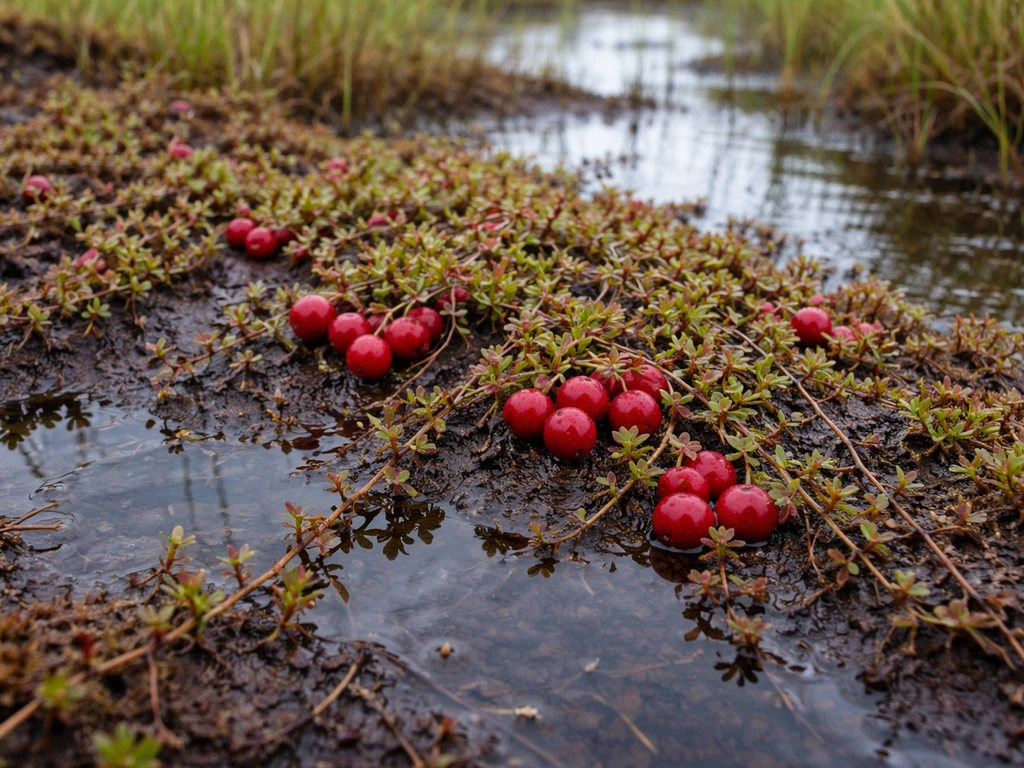
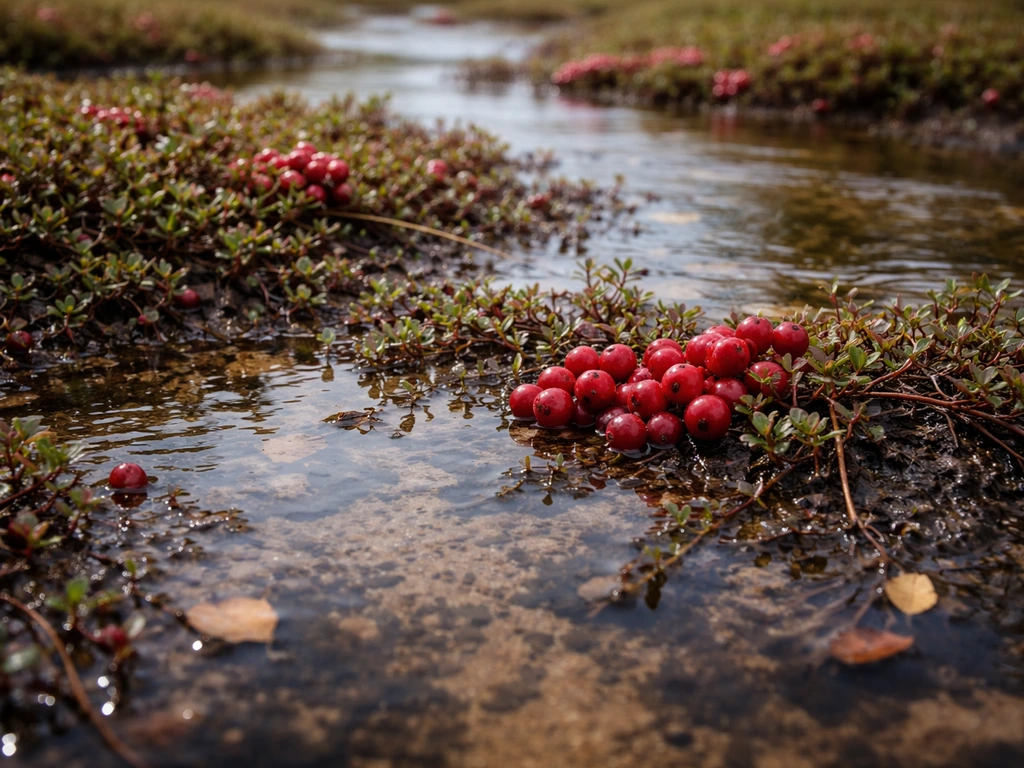
Cranberries are native to boggy, wetland environments across the northern United States and Canada. They grow naturally in places like Wisconsin, Massachusetts, New Jersey, Oregon, Washington, and across large parts of Canada, typically at the edges of wetlands, peat bogs, and glacial lake plains. These are cool, humid regions with acidic, peat-based soils and a high, consistent water table.
One important thing to clear up: cranberries are not actually grown underwater. The flooded cranberry bogs you see in harvest photos are a management tool, not the growing environment. If you are asking about the place where cranberries grow crossword-style, it is usually these bogs where seasonal flooding is used as part of the growing method flooded cranberry bogs. Cranberries grow on low perennial vines in sandy beds, and flooding is used seasonally for frost protection and to make harvesting easier. The actual growing medium is more nuanced than "a swamp."
What cranberries do need, non-negotiably, is this: In India, cranberry growth depends on cool, temperate conditions and consistently managed moisture where does cranberry grow in india.
- Consistently moist (not waterlogged) soil throughout the growing season
- A water table maintained roughly 6 to 12 inches below the surface during active growth
- Strongly acidic soil in the pH range of 4.0 to 5.5
- A bed base that slows vertical drainage (peat, clay, or compacted loam under a sand layer)
- Full sun, at least 6 hours daily
- Cool to moderate temperatures, with reliable cold winters in USDA Zones 2 through 7
- Cross-pollination from bees or other pollinators, since cranberry flowers cannot self-fertilize
The cool climate piece matters more than most people realize. Cranberries need winter dormancy to fruit well, and they do not handle sustained heat or drought stress during the growing season. If you are gardening in Zones 8 and above, especially in hot, arid climates, the challenge doubles: you are fighting both heat and moisture issues at once.
Can cranberries actually grow in a dry region? The honest answer
Yes, but only if you are willing to engineer the moisture environment yourself. Cranberries grown commercially in places like Wisconsin and Oregon do not just happen to sit next to natural bogs. If you are wondering what states grow cranberries, the key idea is that growers rely on engineered water management and the right cool-climate conditions Wisconsin and Oregon. Growers invest heavily in water management systems, including reservoirs, ditches, and irrigation monitoring. USGS’s long-term research on the Cranmoor area shows that blank" rel="noopener noreferrer">reservoirs, ditches, and monitored seasonal water use are a core part of cranberry culture in Wisconsin. For a home gardener in a dry climate, the same principle applies at a smaller scale.
If you are in a cooler dry climate (say, high-altitude Colorado, inland Pacific Northwest, or parts of northern Europe with dry summers), cranberries are genuinely achievable with a proper bed setup and drip or overhead irrigation. If you are in a hot, low-humidity climate like Arizona, Texas, or Southern California, the combination of heat stress and moisture management difficulty makes cranberries a very uphill battle. In those conditions, you would be better off with blueberries, gooseberries, or other berries better suited to your zone.
The realistic bar for success in a dry area is this: you need to maintain soil moisture tension in the root zone around negative 4 to 7 kPa (or roughly 4 to 8 centibars on a tensiometer reading). That is the sweet spot where cranberry growth and berry size are maximized. Let it dry out beyond that range and vines stress. Keep it too wet and roots suffocate. That level of precision is what commercial growers use, and it gives you a sense of what you are taking on.
How to replicate wetland conditions in a dry garden
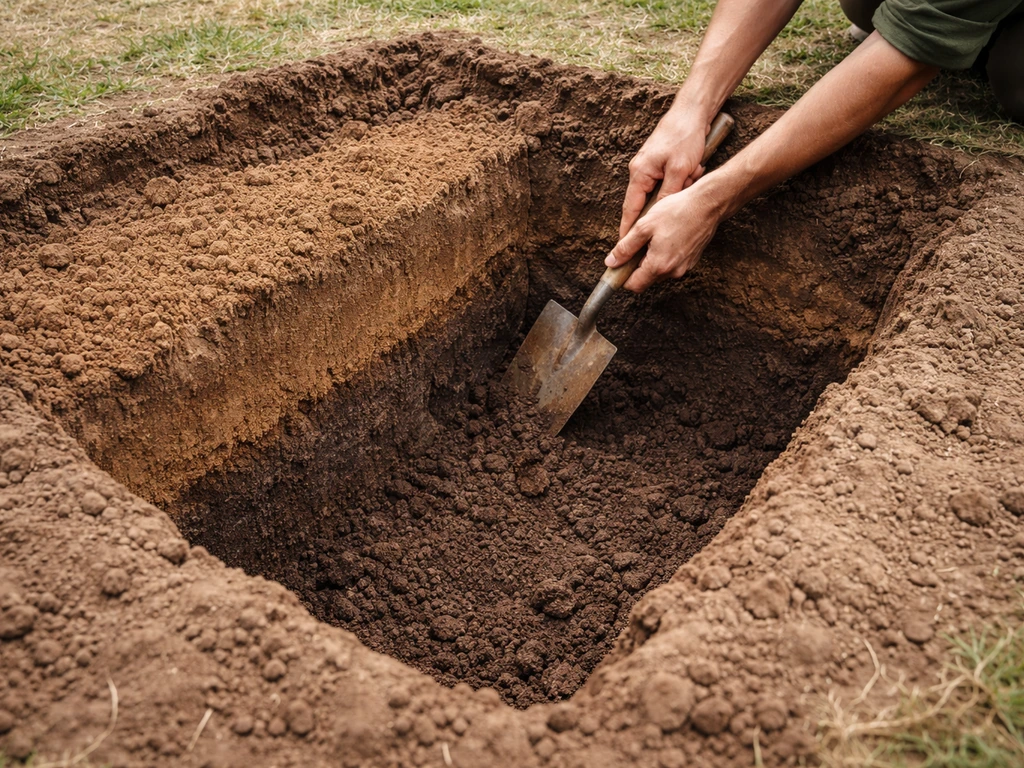
The key is building a bed that mimics the layered structure of a natural cranberry bog, with a moisture-retaining base that slows drainage and a sandy top layer that gives the roots oxygen and good structure. A swampy area where cranberries grow naturally, like a bog, is the model you are trying to replicate cranberry bog.
- Excavate a bed at least 12 to 18 inches deep. Slope the base very slightly to allow drainage control, not free drainage.
- Line the base with a water-retarding layer: compacted clay, heavy loam, or a thick layer of peat. This is the layer that keeps moisture from just running straight down and away.
- Add at least 4 inches of coarse sand above the base layer. This is the actual planting medium and it needs to drain well at the top while retaining moisture lower down.
- Incorporate peat moss into the top 2 to 3 inches to boost acidity and moisture retention near the surface.
- Install a drip irrigation line or overhead sprinkler on a timer. In a dry climate, you will be irrigating frequently, especially in summer. The goal is moist but not puddling soil. If you see consistent standing water, the bed is too wet.
- Consider installing a simple water level indicator or use a basic tensiometer to track soil moisture tension. This removes the guesswork and saves water in dry climates where every drop counts.
I will be honest: I tried growing cranberries in a dry, rocky garden without lining the bed first. The vines established slowly, then basically stalled during a dry July stretch. Once I rebuilt the bed with a clay base and added a proper peat-sand mix, the difference was immediate. Moisture stayed consistent, the vines spread, and I actually got fruit by year three. The bed structure is not optional.
Container and raised-bed options for drier gardens
Containers are actually a great option for dry-climate cranberry growing because you control every variable: moisture, soil mix, drainage, and pH. Cranberry roots are shallow, around 6 inches deep, so you do not need a massive container. A wide, shallow pot (at least 12 inches in diameter and 8 to 10 inches deep) works well. Avoid pots with large drainage holes at the bottom if you are in a very dry climate; a single small hole slows drainage enough to keep the mix moist longer.
Fill the container with a mix of coarse sand and peat moss at roughly a 50/50 ratio. Place the pot in a saucer or tray and keep water in the saucer so the bottom of the mix stays consistently damp. The soil should never fully dry out, but it should not be waterlogged either. This saucer method is a simple, low-tech way to maintain the kind of steady base moisture that cranberries want without building a whole bed system.
For raised beds in dry gardens, the same principle applies as an in-ground bed: use a liner or a compacted base to slow drainage, fill with a peat-sand mix, and irrigate regularly. A raised bed actually gives you a slight advantage over a full in-ground bed in a dry climate because you can customize the substrate completely rather than amending existing soil.
Soil, sun, spacing, and pollination basics
Soil pH: this one is non-negotiable
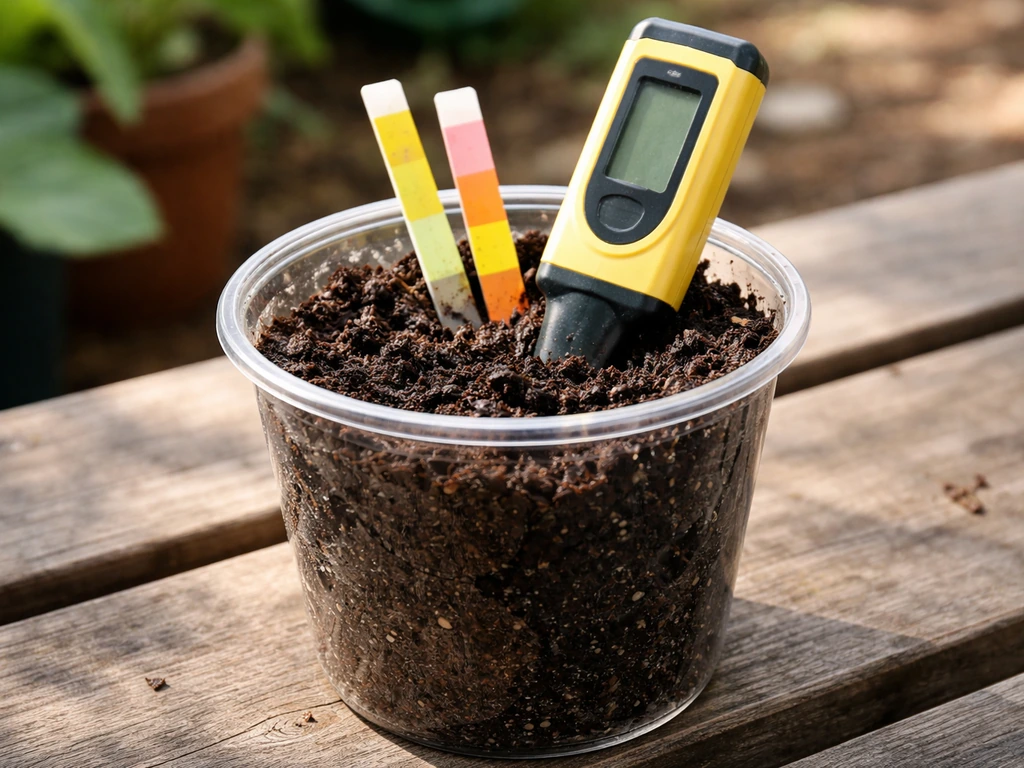
Cranberries need strongly acidic soil, in the range of pH 4.0 to 5.5. If your soil or growing mix is outside that range, the plants will not absorb nutrients properly no matter how well you manage moisture. Test your pH before planting and adjust with powdered sulfur if needed. A common dry-climate mistake is skipping the peat amendment (because it is expensive or not locally available) and then wondering why the vines look pale and stunted. Peat does two jobs at once: it retains moisture and acidifies the soil. You need both.
Sun and spacing
Cranberries need full sun, at least 6 hours of direct light per day. They spread as low-growing vines, and in an established bed they will fill in like a groundcover over time. Space new plants about 12 inches apart. They will spread naturally via runners and fill the bed within a few seasons. Do not plant in partial shade thinking it will reduce moisture stress in a dry climate; the reduced light just reduces yield without meaningfully helping the moisture situation.
Pollination: you need bees
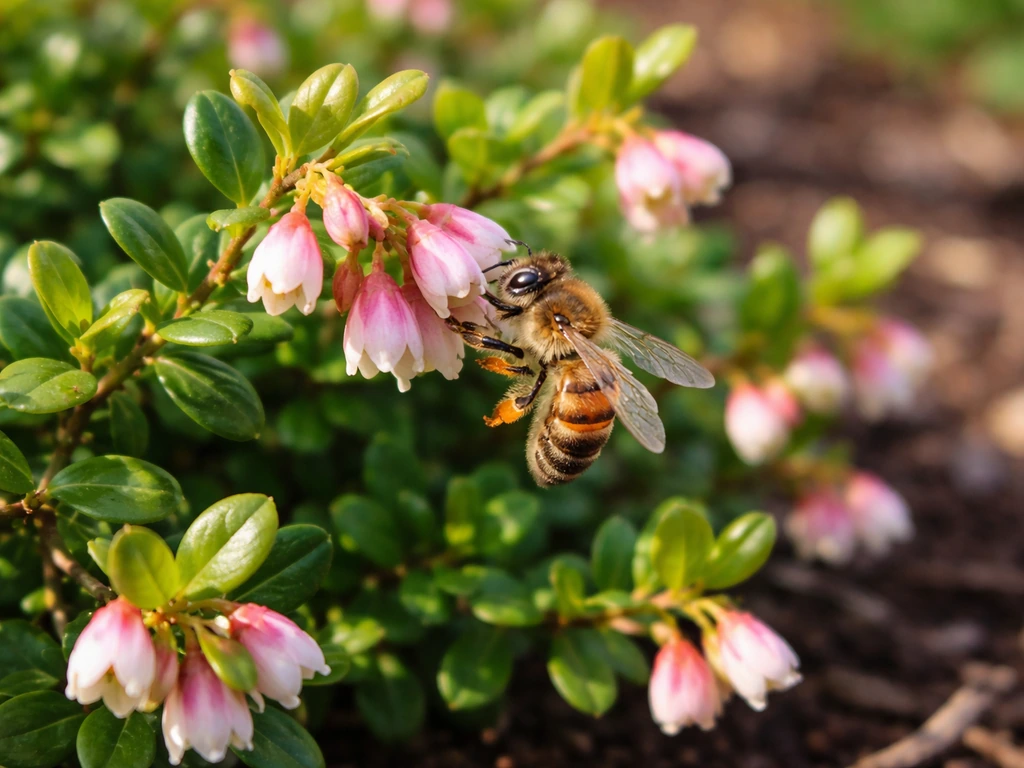
Cranberry flowers cannot self-fertilize, so you need pollinators to get fruit. In a home garden, native bees, bumblebees, and honeybees will usually do the job if they are present in your area. If you are in a very isolated dry garden setting or an urban container situation with limited bee activity, fruit set will be poor. Commercial operations often rent honeybee hives specifically for cranberry pollination. For a home gardener, planting nearby pollinator-attracting flowers is a simple way to boost bee traffic.
Ongoing care, common problems, and what to expect
Timeline and yield
Set realistic expectations before you start. Cranberry plants are typically put in the ground between March and May. New beds take about 3 years to reach first meaningful production and peak at around 4 to 6 years in. The fruit cycle itself is long, with buds set one season and berries harvested the next, in a roughly 16-month development window. This is not a quick payoff crop. If you want fruit in year one, cranberries are not it.
Troubleshooting dry-area failures
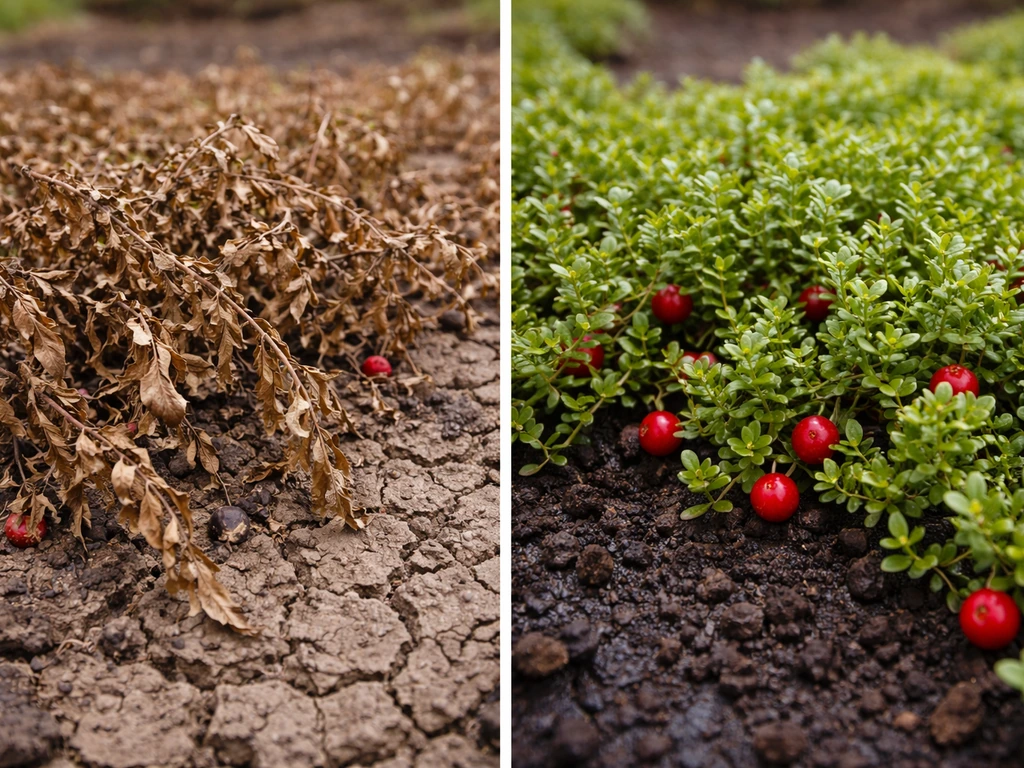
Here are the most common reasons cranberries fail in dry or low-moisture gardens, and what to do about them:
| Problem | Likely Cause | Fix |
|---|---|---|
| Vines wilt or go brown in summer | Soil drying out between waterings | Increase irrigation frequency; check tensiometer or do a feel test; consider a saucer reservoir for containers |
| Poor or no fruit set | Lack of pollinators or cross-pollination failure | Plant pollinator-attracting flowers nearby; check for bee activity during bloom |
| Pale, yellowish leaves | pH too high or nutrient lockout | Test soil pH; amend with sulfur to bring into 4.0 to 5.5 range; peat helps both pH and moisture |
| Fruit rot or grey mold on berries | Moisture imbalance or poor air circulation | Reduce watering slightly; avoid consistently waterlogged conditions; fungal rot increases when the bed stays too wet without drainage |
| Slow or no growth after establishment | Waterlogged base layer or wrong soil mix | Check drainage; if bed puddles constantly, rebuild with better drainage in the sand layer; too much moisture retards root development |
| Winter dieback in cool-dry zones | Freeze damage without insulating snow cover | Mulch lightly over vines before first hard frost; cranberries are cold-hardy to Zone 2 but exposed container plants are more vulnerable than in-ground beds |
One thing I see happen often with first-time cranberry growers in dry climates is overcorrection: they hear "cranberries need moisture" and keep the bed so wet that the roots rot. The rule is moist but well-aerated, not waterlogged. If you have puddles sitting on the surface for more than a day, dial back the water. The bed base slows drainage; it does not stop it entirely, and that is by design.
When to choose a different berry instead
If you are in a hot, dry climate (Zones 8 to 10) and cannot commit to a built bog bed with consistent irrigation, cranberries will frustrate you. Some growers in naturally cold, wet regions like the Pacific Northwest also benefit from similar moisture-and-acid conditions when they produce cranberries where does ocean spray grow their cranberries. Blueberries share the acidic soil requirement and are far more drought-tolerant once established. Gooseberries and currants handle dry, cool climates well.
Even lingonberries, a close cranberry relative, are more forgiving in marginally dry conditions. The effort of replicating cranberry bog conditions in a genuinely dry, hot location is real, and it is worth asking honestly whether the investment makes sense for your garden before you start.
If you are in a cooler dry zone, in Zone 3 through 7 with cold winters and manageable summers, and you are willing to build the right bed structure and manage irrigation carefully, cranberries are absolutely worth attempting. They are slow, but a well-established cranberry bed is genuinely rewarding and can produce for decades. Just go in with a clear plan and the right soil setup from day one. If you are wondering where do cranberries grow in Canada, focus on cool regions and aim to recreate bog-like moisture conditions.
FAQ
Can I grow cranberries in a naturally dry climate if I water often?
Yes, but only if the “dry area” still lets you keep the root zone consistently moist and acidic. In practice, that usually means building a bog-mimic bed with a moisture-retaining base (like a clay/liner layer) plus a sandy top, or using a container with a saucer/tray that keeps the base damp. If you cannot maintain steady moisture during hot spells, cranberries are much more likely to stall than to rebound.
How do I know when my cranberry bed needs water in a dry area?
“Often” is not the same as “on target.” For cranberries, you need to avoid both extremes: let the bed dry just enough to stay aerated, but not so far that vines experience drought stress. A practical way to manage this is to check moisture at the root-zone depth and adjust irrigation based on how quickly the bed dries, especially after a week without rainfall.
Is there a reliable way to measure whether my soil is in the right moisture range?
Tensiometers are helpful if you are serious about accuracy because cranberries perform best when soil moisture tension is kept in the narrow sweet spot (roughly negative 4 to 7 kPa). If you do not have one, you can still use a simpler approach, such as monitoring how long it takes the bed to lose dampness after watering, but expect more trial and error.
What signs mean I am keeping cranberries too wet?
Puddling or standing water for more than a day is a red flag. Cranberries need moisture that is maintained without letting roots sit in low-oxygen conditions. If you see puddles, improve the bed structure (better base that slows drainage) and reduce watering frequency, because excessive surface water can lead to root suffocation and rot.
Are containers better than raised beds for dry climates, and what setup actually works?
Use the pot and saucer method when you want tight control without rebuilding ground beds. Choose a wide, shallow container (about 12 inches across or more, and 8 to 10 inches deep), use a peat and coarse sand mix (around 50/50), and keep water in the saucer so the bottom remains damp. Avoid giant pots with very free drainage, they dry unevenly and are harder to keep steady in dry weather.
Why do cranberries sometimes fail in raised beds even though raised beds drain well?
Be careful with “good drainage” advice from other crops. For cranberries in dry areas, you generally need slow vertical water movement and a moisture-retaining base layer. If you use a raised bed and fill it only with well-draining amended soil, you are likely to recreate the same problem as in-ground sandy soils, the bed will dry too fast.
How important is pH in dry-area growing, and can I adjust it after planting?
It is possible to correct pH, but timing matters. Test before planting, then incorporate the needed amendments (like powdered sulfur) and retest after you have allowed time for pH to shift. If you plant first and then try to fix pH later, you can end up with pale, stunted growth that takes longer to recover.
Will partial shade help cranberries in hot dry areas?
Yes, but it is risky in very hot, dry summers. Cranberries need winter dormancy and do not handle sustained heat well during the growing season, even if you keep moisture perfect. In zones around 8 to 10, success depends heavily on shade management (not just partial shade, but reducing peak heat) and very consistent irrigation, so you may be better off with a more heat-tolerant acidic berry.
What can I do if my cranberry plants leaf out but do not fruit in my dry garden?
Fruit set can be limited even when the plant grows well. Cranberries have flowers that do not self-fertilize, so you need bee activity. In a home garden, you can improve odds by planting nearby nectar and pollen sources that bloom around the cranberry flowering period, rather than relying only on occasional visits.
Should I mulch cranberries to cope with dry conditions?
Mulch can help reduce surface drying, but it should not replace the bog-mimic bed structure. Use mulch in moderation and keep it from creating a waterlogged layer at the surface. If your bed already loses moisture too quickly, focus first on the base and substrate design, then use mulching as a secondary moisture stabilizer.
Can I add compost or extra organic matter to help cranberries in dry soil?
Yes, but do it selectively. If you want to maintain the exact moisture tension range, avoid adding a lot of organic matter on top that can create uneven wetting. Most growers keep the top in a sandy, oxygen-friendly layer and rely on the base layer to slow drainage, then adjust irrigation to control moisture rather than changing the entire texture profile mid-season.