
Cranberries grow naturally across much of Canada wherever cool, wet, acidic peatlands exist, especially in the Atlantic provinces, Quebec, Ontario, and British Columbia's Fraser Valley for commercial production. Wild cranberries (Vaccinium oxycoccos) thrive in boggy muskeg conditions from Newfoundland to the Rocky Mountain foothills, while large-scale commercial farms are concentrated in British Columbia, Quebec, and Ontario. If you're a home gardener, the good news is: you don't need to live next to a bog. As long as you can replicate the core conditions (acidic, consistently moist soil, full sun, and cold hardiness), you can grow cranberries in most Canadian provinces.
Where Do Cranberries Grow in Canada? Regions and How to Grow
Marcus Holloway
4 Jul 2026
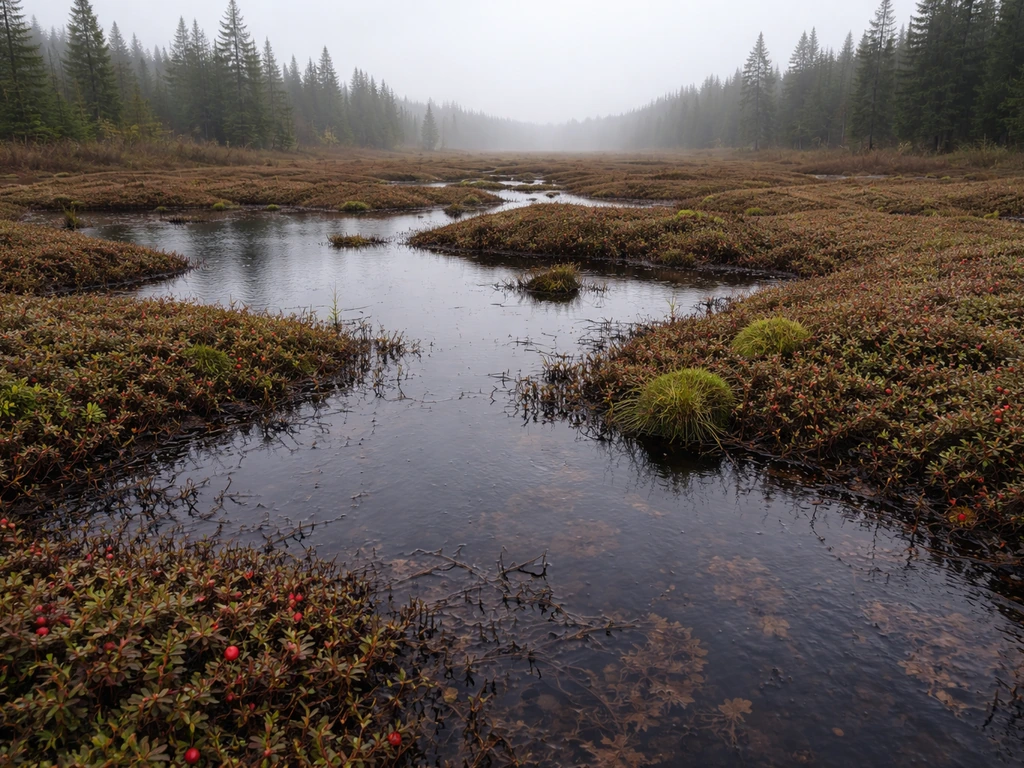
What a cranberry bog actually looks like in Canada
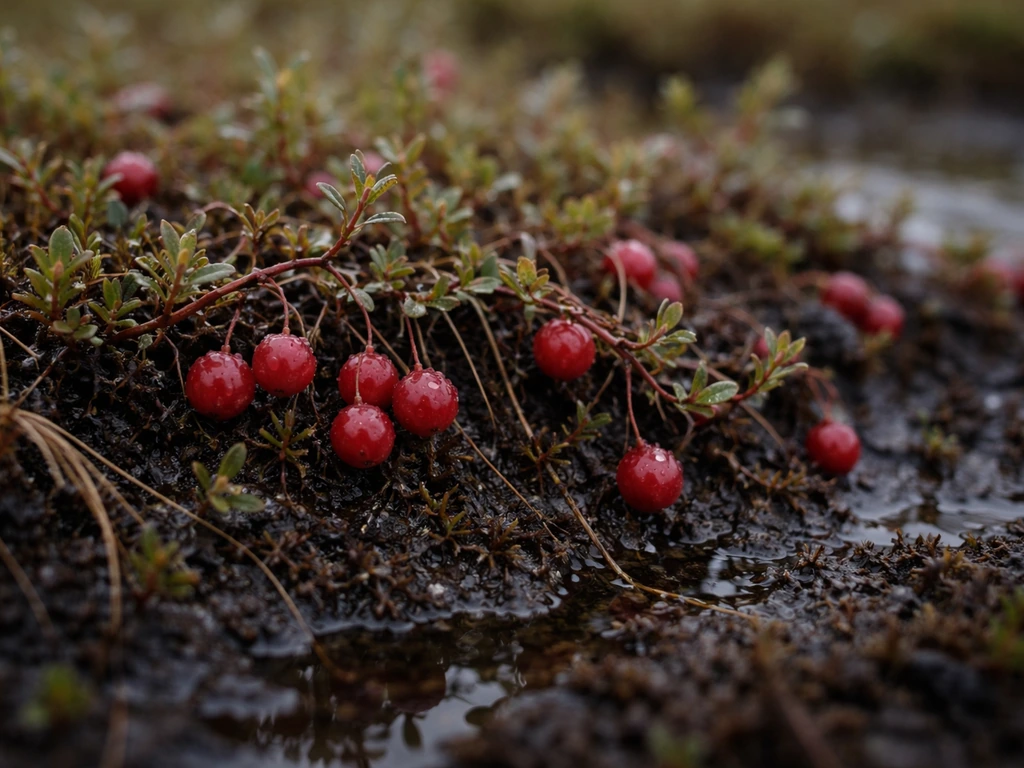
Canadian bogs are a very specific kind of wet environment, and understanding them is the key to understanding cranberries. These are ombrotrophic wetlands, meaning they get their water almost entirely from precipitation rather than groundwater. That's why they're so acidic: there's no mineral-rich groundwater buffering the pH. The water sits on thick layers of peat, which breaks down slowly and creates an environment that is both waterlogged and almost entirely nutrient-poor. Muskeg (muskeg-type) bogs are drainage-poor wetlands with strongly acidic water and dense mats of peat, where peat accumulation creates nutrient-poor acidic bog conditions blank" rel="noopener noreferrer">muskeg bogs are drainage-poor wetlands with strongly acidic water and dense peat mats. blank" rel="noopener noreferrer">Soil pH in a true Canadian bog typically hovers around 3.2, and wild cranberry patches grow on peat mats where the pH can range anywhere from 2.9 to 4.7.
Muskeg is the informal term most Canadians know for this type of terrain. It's the spongy, slightly treacherous ground common across the Canadian Shield, northern Ontario, much of Manitoba and Saskatchewan, and large swaths of British Columbia's interior. Walk through it and you'll sink. The peat layer can be several meters deep. Wild cranberries grow on top of that peat in dense low mats, their trailing vines weaving through sphagnum moss. If you've ever come across small, tart cranberries while hiking in the boreal belt, that's exactly the habitat they came from.
The Canadian regions where cranberries actually grow
Canada is one of the world's top cranberry producers, and the growing regions split into two categories: wild/naturalized habitat and commercial cultivation. If you are curious about where cranberries grow in other places, see where does cranberry grow in india for a quick country-specific overview.
Wild cranberry habitat
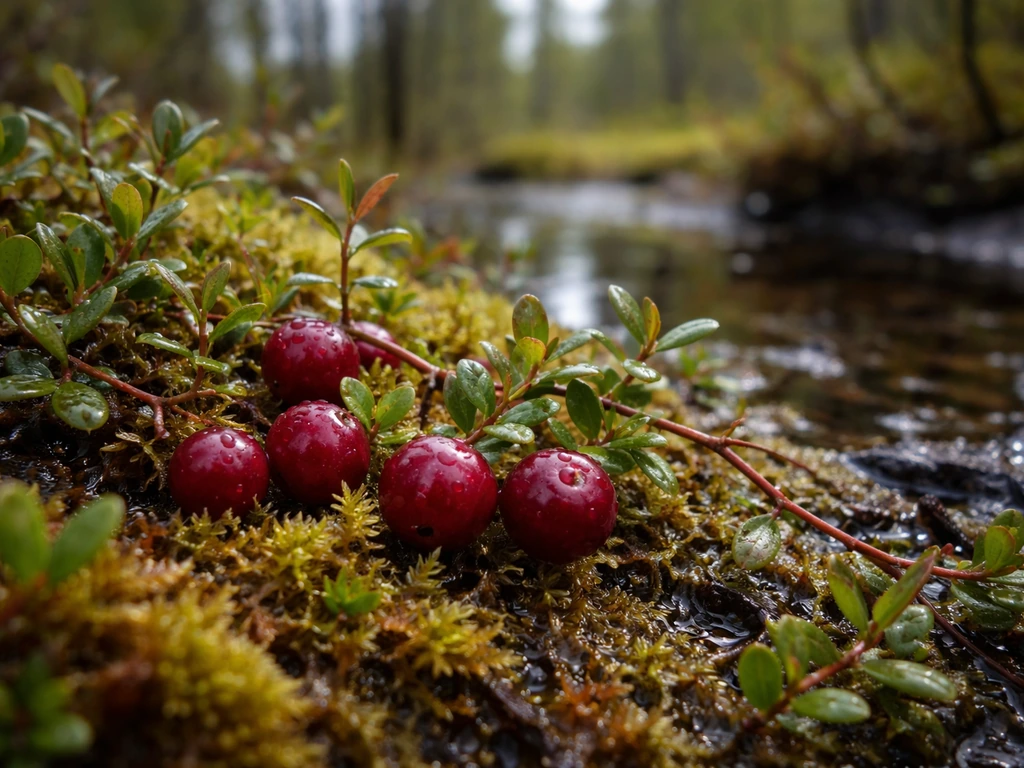
Wild small cranberry (Vaccinium oxycoccos) is found from Newfoundland and Labrador across the boreal forest all the way into northern British Columbia and the Yukon. Ocean spray is grown in the same general cranberry-bog regions of Canada, such as the Atlantic provinces and parts of Quebec and Ontario. The Atlantic provinces, especially Newfoundland, have some of the densest wild populations because the climate is cool, wet, and naturally boggy. Quebec and northern Ontario have enormous tracts of wild cranberry habitat across the Laurentian and Canadian Shield landscapes. If you've ever seen a topographic map of Canada's northern wetlands, much of that territory is potential cranberry country.
Commercial cranberry production
On the commercial side, British Columbia's Fraser Valley (especially Richmond, Delta, and the Pitt Meadows area) produces the largest share of Canada's commercial cranberry crop. Quebec is the second-biggest player, with most farms clustered in the Montérégie and Saguenay-Lac-Saint-Jean regions. Ontario has commercial operations in areas like Norfolk County and eastern Ontario. Nova Scotia also has a meaningful commercial and wild-harvest industry. These farms grow large-fruited American cranberry (Vaccinium macrocarpon), which is what you're buying at the grocery store.
| Region | Cranberry Type | Growing Conditions |
|---|---|---|
| British Columbia (Fraser Valley) | Commercial V. macrocarpon | Mild winters, high rainfall, constructed bog beds |
| Quebec (Montérégie, Saguenay) | Commercial V. macrocarpon | Cold winters, acidic lowlands, managed flooding |
| Ontario (Norfolk, eastern ON) | Commercial V. macrocarpon | Sandy-loam lowlands, moderate precipitation |
| Atlantic provinces (esp. Newfoundland, Nova Scotia) | Wild V. oxycoccos + some commercial | Cool, wet, naturally boggy and peaty terrain |
| Manitoba, Saskatchewan, northern ON/QC | Wild V. oxycoccos | Muskeg, boreal peatlands, very high water table |
| Alberta, interior BC | Wild V. oxycoccos | Muskeg and boreal wetlands, acidic drainage-poor soils |
What cranberries need: climate and site requirements
Cranberries are cold-hardy perennials that actually need a proper winter dormancy. They handle temperatures well below -20°C, which is genuinely good news for Canadian growers. What they can't handle is dry soil, alkaline pH, or shade. Here's what the plant needs to thrive:
- Soil pH of 4.0 to 5.0 (commercial operations often target 4.5; wild plants tolerate as low as 3.2)
- Consistently moist to wet soil, never fully dry, but also never in standing water year-round (cranberries need drainage in the growing season, flooding is used as a management tool on farms, not a permanent condition)
- Full sun, at least 6 to 8 hours per day
- Cool summers with average temperatures below 25°C for best fruiting (hot, dry summers are the biggest challenge)
- A late spring frost is tolerable at the dormant stage, but blossoms are frost-sensitive in late May and June
- Peaty or sandy-peaty soil with excellent water retention but not heavy clay
These requirements align almost perfectly with the natural Canadian climate across most of the country. That's why wild cranberries grow so broadly here. The Atlantic coast, the boreal zone, and the Pacific coast of BC all hit most of these marks naturally. The Prairie provinces (Alberta, Saskatchewan, Manitoba) are trickier for home gardeners because of lower summer rainfall and more intense heat spells, but the cold hardiness is there. Southern Ontario and the BC interior can work well with the right setup.
How to figure out if your property can grow cranberries
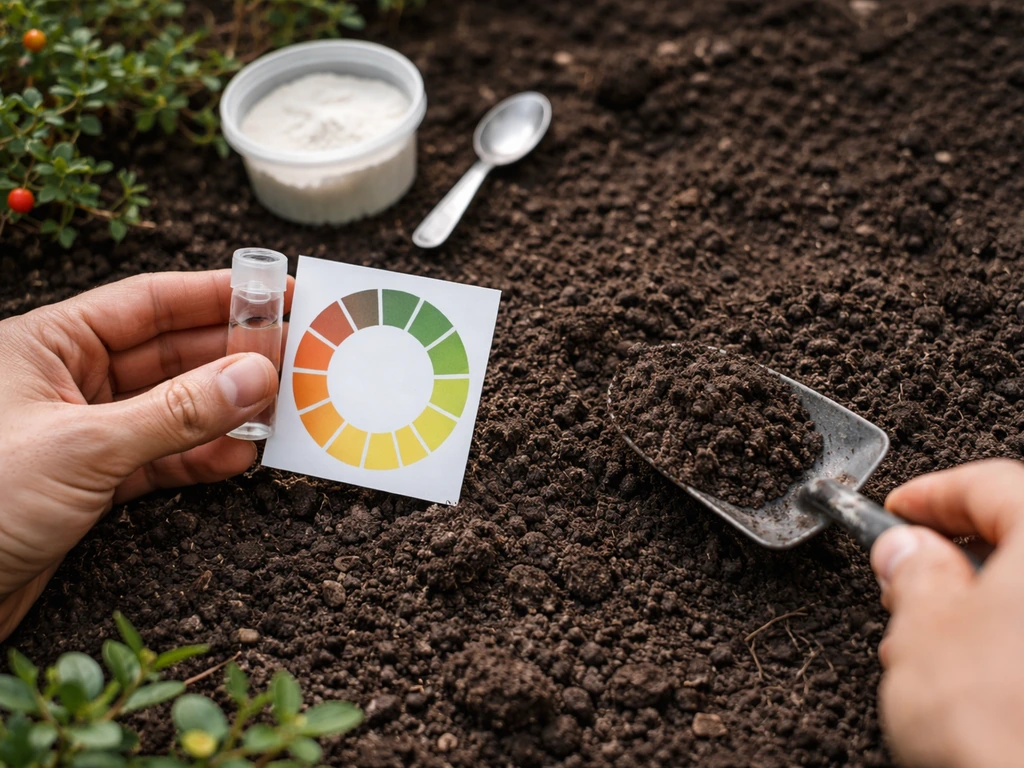
Before you order plants or start digging, do a quick assessment of your site. You only need to check three things: pH, moisture, and sun. Here's how to work through each one practically.
- Test your soil pH. Grab an inexpensive test kit from any garden centre or send a sample to your provincial agricultural lab. You're looking for a reading between 4.0 and 5.0. If your soil comes back at 6.0 or higher, you'll need significant amendment with sulfur, acidic peat moss, or pine needle mulch before planting directly in the ground. Most Canadian garden soil falls between 6.0 and 7.0, so some amendment is almost always necessary.
- Check your moisture situation. Walk your yard after a heavy rain. Does water pool for more than a few hours? That's a promising sign. Does it drain away within 30 minutes completely? You'll need to build moisture retention into your setup. True bog conditions aren't required, but the root zone should stay consistently damp from spring through fall.
- Assess sun exposure. Pick your site on a sunny July day and count the hours of direct sun. Six hours is the minimum; eight or more is ideal. Cranberries grown in part-shade will survive but fruit poorly.
- Check for any clay hardpan. Dig down about 30 cm. If you hit heavy, poorly draining clay, that's actually workable for cranberries if you amend the top layer, since it will hold moisture. But if you're in sandy, fast-draining prairie soil, you'll lose moisture too quickly without intervention.
- Consider your microclimate. In the Prairie provinces, watch for summer heat pockets (south-facing spots against walls heat up fast). Choose a slightly cooler, north-facing or partially sheltered site if your summers regularly hit 30°C or above.
Growing cranberries where they wouldn't normally grow: the mini-bog approach
Even if your property has sandy prairie soil or you're gardening on a Toronto balcony, you can still grow cranberries with a container or raised-bed mini-bog. I've seen this work well in Alberta and even in a heated greenhouse environment. The principle is simple: you're creating an artificial bog that mimics the waterlogged, acidic peat conditions the plant loves.
Container mini-bog setup
- Choose a large, non-draining or slow-draining container. A half-barrel, a plastic storage tote, or even an old kiddie pool works. You want something at least 40 to 50 cm deep and as wide as you can manage. Drill just one or two small drainage holes near the midpoint of the container (not the bottom) to prevent complete waterlogging while keeping moisture high.
- Fill with a mix of 70 to 80% sphagnum peat moss and 20 to 30% coarse sand or horticultural perlite. Do not use regular potting mix, garden compost, or topsoil. Sphagnum peat creates the acidic, nutrient-poor conditions cranberries expect.
- Acidify to the right pH. Mix the peat thoroughly, water it in, then test the pH. Canadian tap water is typically pH 7 to 8, so watering with it over time will gradually raise the pH. Add powdered sulfur or use rainwater harvesting to keep acidity up. A target of 4.0 to 4.5 is ideal.
- Plant cranberry starts (rooted cuttings) about 30 cm apart. Water thoroughly at planting.
- Mulch the surface with a thin layer of sand or additional sphagnum moss to retain moisture and suppress weeds.
- Keep the container consistently moist throughout the growing season. In hot Prairie summers, you may need to water daily.
Raised bed mini-bog
For a larger planting (1 to 3 square meters), line a raised bed frame with heavy-duty pond liner, leaving a few holes partway up the sides (not the bottom) for overflow drainage. Fill with the same peat-and-sand mix. This scales up the container method and can support a real producing cranberry patch. I've seen Atlantic province gardeners do this in their backyards when their native soil is too rocky or too well-drained for in-ground planting. The liner is doing the work of the natural clay hardpan that holds water in wild bogs.
Practical planting and early care for Canadian gardeners
Timing your planting right matters a lot in Canada. Cranberries go in the ground (or container) in spring, after the last frost date for your region. Cranberries are grown in several countries, including Canada, the United States, and parts of northern Europe Cranberries go in the ground (or container) in spring. In BC's Fraser Valley, that's typically late March to April. In Ontario and Quebec, mid-May is usually safe. In the Atlantic provinces, late May is a safer bet. In Alberta and the Prairie provinces, wait until late May or even early June to avoid a hard frost killing newly established roots.
- Buy rooted cuttings or plugs from a reputable Canadian nursery rather than starting from seed. Seed-grown plants take years to produce; rooted cuttings can begin fruiting in two to three seasons.
- Plant in full sun with 30 cm spacing. Cranberries spread via runners, so space is fine to leave between plants initially, as they'll fill in.
- Water deeply at planting, then maintain consistent soil moisture through the whole growing season. A drip line or soaker hose works better than overhead watering.
- Mulch with a 1 to 2 cm layer of coarse sand annually in spring. Commercial growers use sand top-dressing every few years to encourage rooting of surface runners. It also helps maintain the acidic, low-fertility environment.
- Fertilize sparingly. Cranberries grow in nutrient-poor bogs naturally. A diluted acidic fertilizer (formulated for blueberries and other ericaceous plants) applied once in early spring is plenty. Over-fertilizing causes lush vines with poor fruit set.
- Avoid lime in any form anywhere near your cranberry bed. Even calcium carbonate-based soil amendments used elsewhere in your garden can raise pH and harm your plants.
- In Prairie provinces and cold interior BC, mulch over the crowns with dry straw or pine boughs in late fall to protect against the freeze-thaw cycles that can heave shallow root systems.
What to realistically expect: hardiness, yield, and regional quirks
Cranberries are genuinely tough plants once established, and the cold-hardiness question that worries many Canadian gardeners is actually not the issue. Established cranberry vines handle winters down to at least -20°C to -25°C with no problem, especially under a snow layer. The more honest challenge is getting the establishment right in years one and two, and maintaining soil conditions over time.
Atlantic provinces and Quebec
These are the easiest regions to grow cranberries in Canada. Your climate, rainfall, and natural soil chemistry already line up closely with what cranberries want. If you have even a slightly boggy corner of your property, you may find wild cranberries are already there. A swampy area where cranberries grow often forms naturally in parts of Canada where conditions stay waterlogged and nutrient-poor boggy corner. For garden cultivation, expect fruiting by year two or three from rooted cuttings and reasonably good yields by year four or five with minimal intervention beyond pH maintenance and moisture.
Ontario and BC's Fraser Valley
Southern Ontario and coastal BC are good cranberry territory with proper soil preparation. The main work is acidifying native soil and building in reliable moisture. If you're in the Fraser Valley, you're literally down the road from major commercial operations, so conditions are very favorable. Expect similar timelines to Atlantic Canada: fruiting in two to three years, good yields by years four to five.
Prairie provinces (Alberta, Saskatchewan, Manitoba)
This is where I'd push you hardest toward the mini-bog container approach. Prairie summers are hot and often dry, which is the opposite of what cranberries want. The cold hardiness is fine, but the combination of alkaline soils and low rainfall makes in-ground planting an ongoing fight. A lined raised bed or large container with peat moss and consistent irrigation makes the difference. Yields will be lower than in eastern Canada or BC, and you'll need to be more diligent about watering and pH monitoring, but it's absolutely doable.
Northern Canada (boreal and subarctic zones)
If you're in the Yukon, NWT, northern Quebec, or northern Ontario, wild V. oxycoccos may already be growing on your property or nearby. For deliberate cultivation, the short growing season is the main constraint. Fruiting takes the same years to establish, but your frost-free window is narrow, so choose early-ripening varieties and focus on sun-maximizing site selection.
Common problems across all regions
- pH creep upward: Canadian tap water and nearby garden amendments will slowly raise pH over years. Test your cranberry bed's pH every spring and add sulfur as needed to keep it below 5.0.
- Poor fruit set: usually a pollination issue (add more flowering plants nearby to attract bees) or excessive nitrogen (cut back fertilizer).
- Fungal issues: cranberries can get fruit rot in wet, warm conditions. Ensure some air movement and avoid overwatering in late summer.
- Slow establishment: don't panic if year one produces almost nothing. Cranberries put their energy into vine establishment first. Resist overwatering out of worry or fertilizing to push growth.
- Winter heaving in freeze-thaw zones: mulch crowns in late fall, especially in regions with inconsistent snow cover like southern Ontario and parts of BC.
The distinction between 'where cranberries grow naturally' and 'where you can grow them' is worth holding onto. Canada's natural cranberry habitat is vast and boreal, from the Atlantic coast across the northern peatlands and into the Pacific. But the garden version of cranberry growing is much more flexible than that geography suggests, because you're recreating the soil conditions rather than needing to live in a bog. If you've been curious about what countries grow cranberries beyond Canada, the answer is a short list: the US (Wisconsin, Massachusetts, and other northeastern and Pacific Northwest states), Chile, and parts of northern Europe. Canada stands out as one of the most naturally compatible cranberry-growing countries on earth, which makes it a genuinely good project for Canadian home gardeners willing to give the soil conditions the attention they need.
FAQ
Do cranberries grow all over Canada, or only in bogs like Newfoundland and the Shield?
They occur widely because the climate plus peatlands are widespread, but “natural” cranberry patches are still tied to bog or muskeg-like conditions. Outside those areas, you can grow them, but only if you build a consistently acidic, moisture-retentive rooting zone (often with peat and a lined container or raised bed).
What’s the easiest way to tell if my land is already close to cranberry habitat?
Look for long-lasting damp spots, mossy or sphagnum-like growth, and water that pools during rainy periods but doesn’t flush away quickly. If you can confirm the soil or peat pH is near acidic (roughly in the same ballpark as bogs) and you can keep it wet without turning it alkaline, you’re much closer than a dry, fast-draining yard.
Can I grow cranberries in Alberta or the Prairies without a raised bed?
In-ground planting is usually the hardest part, because many prairie soils are higher pH and seasonal drying is common. If you want to try anyway, you’ll need aggressive irrigation plus regular pH testing and correction, and you may still end up with poorer fruiting than the lined mini-bog approach.
Are the cranberries I buy in stores from Canadian wild bogs?
No, most grocery cranberries sold in Canada are large-fruited American cranberries grown on farms. The wild small cranberry exists in boreal and peatland habitats, but it is not the main fruit type used for most commercial processing.
Can I grow cranberries in containers on a balcony or patio year-round?
You can use large containers or mini-bogs on patios, but full winter exposure needs planning. Use a large, insulated container setup and keep roots protected, because drying in wind-exposed spots can still hurt newly established plants even if established vines tolerate winter cold well.
How do I keep soil acidic over time in a non-bog garden?
Plan on ongoing pH checks, not just a one-time amendment. Even if you start with peat, alkaline irrigation water, fertilizer salts, or natural mineral content from surrounding soil can push pH upward, so you may need periodic acidification and careful avoidance of lime-based products.
Do cranberries need standing water like some bog gardens show?
They prefer consistently moist conditions, but “flooded all the time” is mainly a farm practice. For home growing, prioritize a peat-based medium that stays wet, and ensure you have controlled overflow in a lined bed so the root zone doesn’t turn oxygen-starved or wash out.
What’s the biggest mistake first-time growers make?
Overestimating how well ordinary yard soil will work. Most failures come from pH drift (too alkaline) or inconsistent moisture, especially during hot spells. If you can’t measure pH and maintain steady moisture, start with a lined raised bed or container system.
If I find wild cranberries nearby, can I transplant them directly?
It’s possible but often difficult. Wild patches are adapted to very specific peat chemistry and wetness, and transplant shock can be high. If you do it, take care to replicate the soil acidity and moisture conditions closely, and consider using rooted cuttings or nursery plants for a more predictable start.
When should I expect fruit if I’m in a short season area like the Yukon or northern Ontario?
The establishment timeline is similar, typically fruiting around year two to three once the plants root in reliably. The difference is the frost-free window, so choose earlier-ripening varieties and maximize sun, then be prepared for lighter early harvests.