
Oregon is one of the best places in the country to grow berries, and that goes for wild ones too. The state supports a remarkable range of species across its wet coastal forests, open meadows, riparian corridors, and valley floors. For home gardeners, the practical shortlist includes blueberries, blackberries, raspberries, and strawberries, all of which have cultivars specifically suited to Oregon's climate. Wild, you'll find salal, salmonberry, thimbleberry, and trailing blackberry growing without any help from anyone. Whether you want to forage or grow your own, Oregon gives you real options.
What Berries Grow in Oregon: Wild and Best to Plant
Marcus Holloway
2 Jun 2026
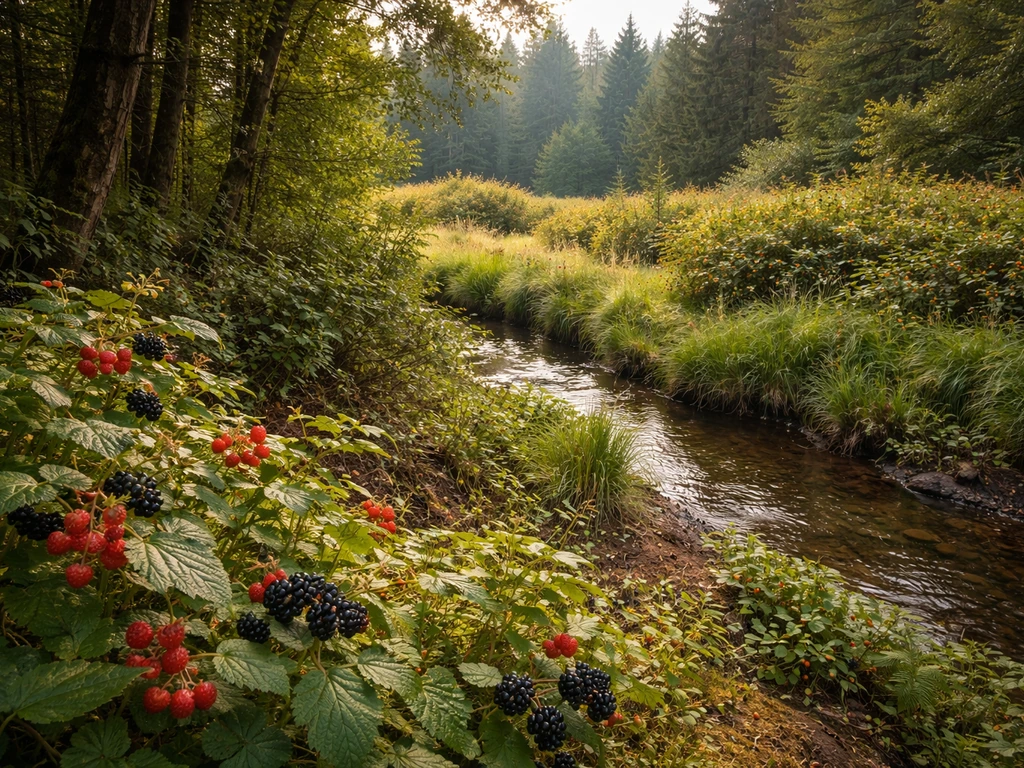
Wild Oregon berries by habitat
Oregon's wild berries don't spread evenly across the landscape. Each species has a habitat it prefers, which is genuinely useful to know whether you're foraging or trying to recreate those conditions in your own yard.
Forest understory
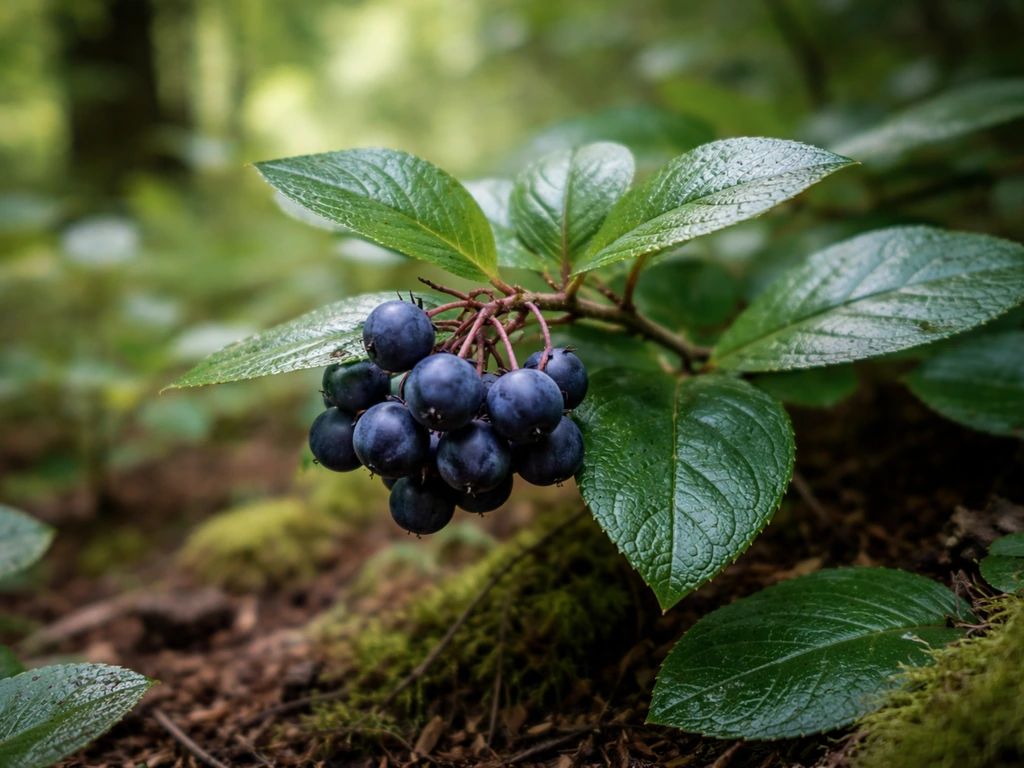
Salal (Gaultheria shallon) is the definitive forest-understory berry in western Oregon. Walk into any second-growth Douglas-fir stand along the coast and you'll almost certainly brush past it. It forms dense, waxy-leaved thickets and produces clusters of small, dark blue-purple berries in late summer. The berries are edible but mealy, so they're better cooked into jelly than eaten raw. Salal is hardy to USDA Zone 6 and naturally co-occurs with salmonberry and wild blueberries (Vaccinium spp.) in those shaded, acidic forest soils. If you've got a shady, humus-rich corner of the garden, salal is one of the easier native shrubs to establish.
Riparian areas and wet edges
Salmonberry (Rubus spectabilis) is almost impossible to miss along stream banks, wetland margins, and any consistently moist slope in western Oregon. Salmonberry is distributed in wetland and riparian habitats at elevations under about 1,400 meters, according to the USA National Phenology Network blank" rel="noopener noreferrer">wetland and riparian habitats under about 1,400 meters. It's hardy to Zone 5 and spreads aggressively in wet ground. The berries ripen in early summer, ranging from yellow to deep salmon-orange, and they look like a soft, oversized raspberry. They're mild in flavor and best eaten fresh. Thimbleberry (Rubus parviflorus) also appears in blank" rel="noopener noreferrer">moist, shaded ravines and riparian corridors, especially in the Coast Range and the Cascades. Its berries are bright red, very soft, almost impossible to transport without squishing, and genuinely delicious straight off the cane. Both species spread by root suckering, so if you're tempted to plant them, give them space or a hard barrier.
Meadows and disturbed ground
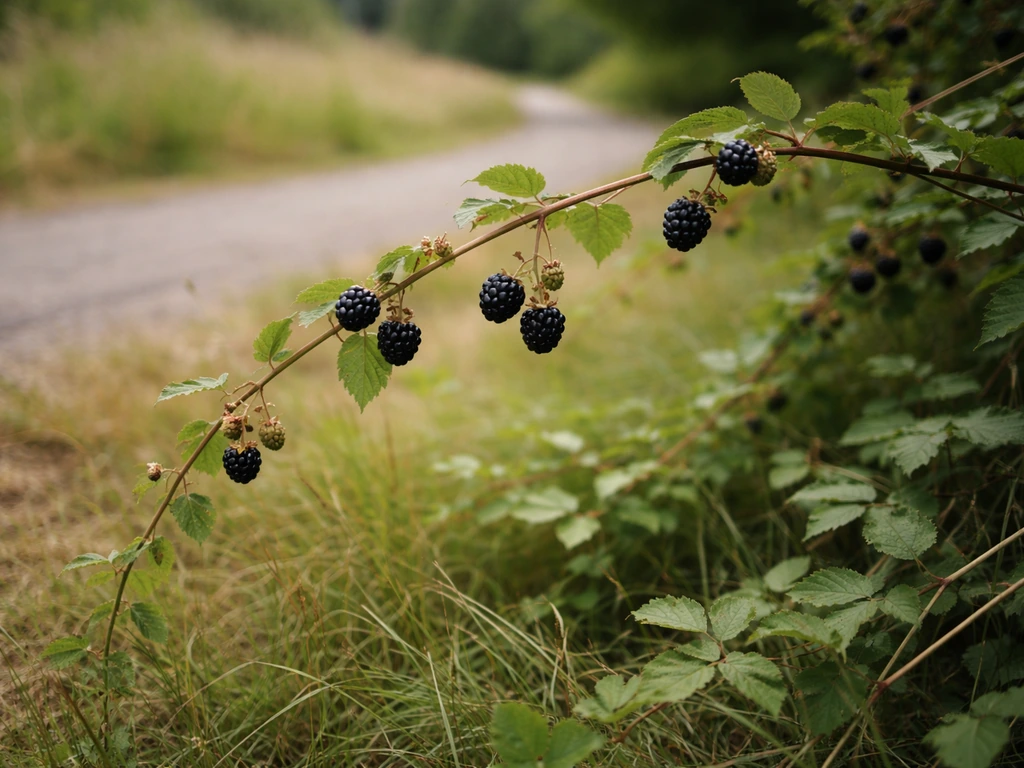
Trailing blackberry (Rubus ursinus) is Oregon's native blackberry and it shows up in meadow edges, roadsides, and forest clearings across much of the state. This is the wild ancestor behind most commercial trailing blackberry cultivars. The berries are smaller than the invasive Himalayan blackberry most Oregonians have battled with, but the flavor is noticeably better, sweeter and more complex. If you're walking a forest edge or an open hillside and you see low, arching canes with small, glossy black fruit, you've probably found it. It's worth knowing the difference between this native species and the invasive Himalayan blackberry (Rubus armeniacus), which dominates disturbed ground throughout western Oregon and is technically edible but aggressively displaces native plants.
The best berries to grow in Oregon home gardens
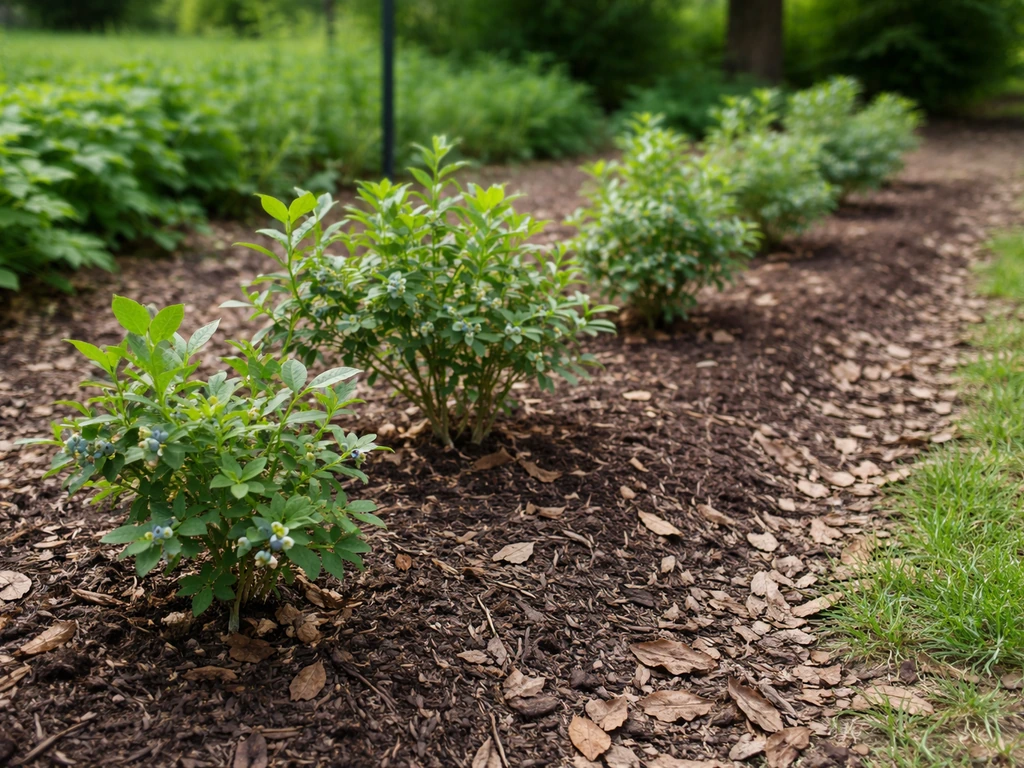
For a home gardener or hobby farmer, the practical focus should land on four well-supported crops. Oregon's growing conditions are genuinely well-matched to all of them, and OSU Extension has done decades of research specifically on Pacific Northwest cultivars.
- Blueberries: Northern highbush cultivars are the standard for the Willamette Valley and most of western Oregon. Coastal growers should look at coast-adapted varieties with attention to soil pH.
- Blackberries: Three types work in Oregon: trailing (the best flavor), erect (easier to manage), and semierect (most productive, needs strong trellising). Trailing types need a trellis and a warmer, drier site than the coast.
- Raspberries: Summer-bearing red raspberries are the workhorses for Oregon. Summer-bearing types give a concentrated crop good for freezing and jam. Primocane-fruiting types offer a fall harvest but need careful cultivar selection for the PNW.
- Strawberries: Day-neutral cultivars like 'Albion' and 'Seascape' work well on the Oregon Coast and produce through a long season. June-bearing types like 'Hood', 'Totem', and 'Tillamook' are beloved in the Willamette Valley for their flavor and jam quality.
Oregon's climate and what it means for berry growing
Oregon is not one climate. The Willamette Valley, the Coast, the high desert east of the Cascades, and the Rogue Valley all behave differently, and that matters enormously when you're picking a berry to grow.
Most of western Oregon falls in USDA Zones 7 to 9, with the coast sitting in the warmer and wetter end of that range. Eastern Oregon drops into Zones 4 to 6, with colder winters and far less rainfall. The coast is reliably cool and wet, which suits strawberries and blueberries well but can create disease pressure for some cane fruits. The Willamette Valley gets warm, dry summers that push blackberry and raspberry quality up, while the Rogue Valley runs hotter and needs some shade management in peak summer.
Chill hours are a real consideration for blueberries. Northern highbush types need 800 to 1,500 hours of temperatures between 32 and 45 degrees Fahrenheit to fruit properly. The Willamette Valley delivers this comfortably most years. Southern highbush and rabbiteye types need only 200 to 600 chill hours, which makes them better fits for the milder coastal zones or the warmer parts of the Rogue Valley. East of the Cascades, cold hardiness becomes the main concern, and you'd focus on Zone 4 or 5-rated northern highbush cultivars.
Soil is where a lot of Oregon berry gardens succeed or fail. Blueberries need acidic soil at pH 4.5 to 5.5. A lot of Oregon soils are naturally on the acidic side, but many valley clay soils and some amended garden beds drift too high. Adding peat moss helps on a small scale because it's naturally acidic, though it gets expensive over large areas. Testing your soil pH before planting blueberries is not optional. For strawberries, blackberries, and raspberries, good drainage matters most. Heavy clay soils in the valley need amendment or raised beds.
How each berry type actually grows
Knowing the growth habit of each berry helps you plan your space and set realistic expectations. These are not all the same kind of plant.
| Berry | Plant Form | Spacing | Years to First Harvest | Key Care Note |
|---|---|---|---|---|
| Northern Highbush Blueberry | Multi-stem deciduous shrub, 4–6 ft | 4–5 ft apart, rows 10 ft | 2–3 years (first small crop) | Plant 2+ cultivars for cross-pollination; prune in late winter |
| Trailing Blackberry | Long arching canes, needs trellis, 10–20 ft canes | 8–10 ft apart | 2 years (floricanes fruit year 2) | Train canes to wire trellis; remove floricanes after fruiting |
| Erect Blackberry | Upright canes, self-supporting, 4–6 ft | 3–4 ft apart | 2 years | Tip new primocanes in summer to encourage branching |
| Summer-bearing Red Raspberry | Upright canes, 4–6 ft, needs trellis or post support | 2–3 ft apart, rows 8–10 ft | 2 years (floricanes fruit year 2) | Remove spent floricanes to ground after harvest each year |
| Strawberry (Day-neutral) | Low groundcover, runners spread | 12–18 in apart | First season (plant spring, fruit summer–fall) | Renovate beds annually; remove runners to keep plants productive |
| Strawberry (June-bearing) | Low groundcover, heavy runner production | 12–18 in apart | First full season | Plant early spring or fall in mild zones; 'Hood' is the Oregon flavor benchmark |
Blueberries are the long-game plant here. They take real patience: you'll get a small crop in year two or three, but a well-managed bush won't hit full production for five to six years. That said, they live for decades, so the investment pays off. Plant at least two cultivars with overlapping bloom times for cross-pollination. OSU Extension recommends fall planting in the Willamette Valley (early October works well) or spring planting across all Oregon regions. Prune in late winter before bud break if you planted in fall.
Blackberry types behave differently enough that it's worth choosing deliberately. Trailing blackberries, including named cultivars like 'Marion' (the famous marionberry), 'Obsidian', and 'Black Diamond', produce the best-flavored fruit but need serious trellis infrastructure and are less cold-hardy, making them a western Oregon crop. Erect and semierect types are more manageable for smaller gardens and tolerate colder winters better. Primocane-fruiting erect blackberries can produce on first-year canes in fall, extending the season.
Raspberries are susceptible to several virus diseases in the Pacific Northwest, including Raspberry bushy dwarf virus. Choosing certified virus-free planting stock and disease-resistant cultivars isn't just good practice, it can be the difference between a productive planting and one that declines within a few years. Watch for pale green or yellow leaves, which are an early sign of nutrient problems or virus stress. OSU Extension's raspberry guides are worth reading before you pick your cultivars.
Container, raised bed, or in-ground: which works for Oregon?
All three approaches work in Oregon, and the right choice depends on your soil, space, and which berry you're growing.
Containers
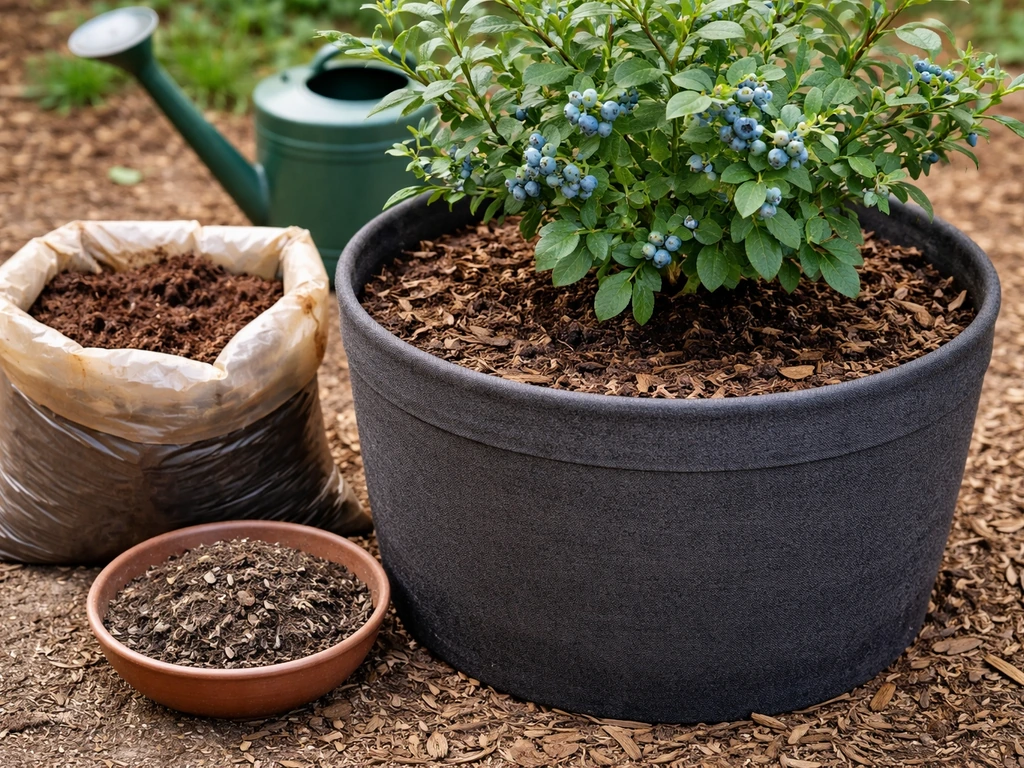
Containers are genuinely useful for blueberries in Oregon because they let you control soil pH precisely. If your native soil is too alkaline or too clay-heavy, a large container (at least 15 to 20 gallons for a mature blueberry bush) filled with an acidic blueberry mix is a practical solution. Strawberries are excellent in containers and hanging baskets, which is a good option if you're on a small patio or dealing with slug pressure, a real issue in coastal and valley gardens. Containers dry out faster than in-ground plantings, which means more frequent watering through Oregon's dry summers. That's the main trade-off.
Raised beds
Raised beds solve Oregon's clay drainage problem better than anything else. If you're gardening in the Willamette Valley on heavy clay, a raised bed filled with a loamy, slightly acidic mix will outperform amended in-ground soil for strawberries, blueberries, and raspberries. You can also control pH more precisely than in native soil. Raised beds warm up faster in spring, which helps get strawberries going earlier. The downside is that large plantings of cane fruits (blackberries or raspberries) get expensive and logistically complicated in raised beds. Those crops are generally better suited to in-ground rows.
In-ground
In-ground planting is the standard approach for blackberries and raspberries in Oregon, and it works well for blueberries and strawberries if your soil is appropriate. Amend heavy clay with compost before planting, ensure good surface drainage, and lower the pH for blueberries before you put plants in the ground. In-ground planting gives cane fruits the root run they need to establish a strong, long-lived planting. Well-managed in-ground blackberry rows in the Willamette Valley can stay productive for 15 to 20 years.
Finding and foraging wild berries in Oregon safely
Oregon has strong foraging traditions, and the wild berry diversity is real. But a few rules apply that are worth taking seriously.
Where to look
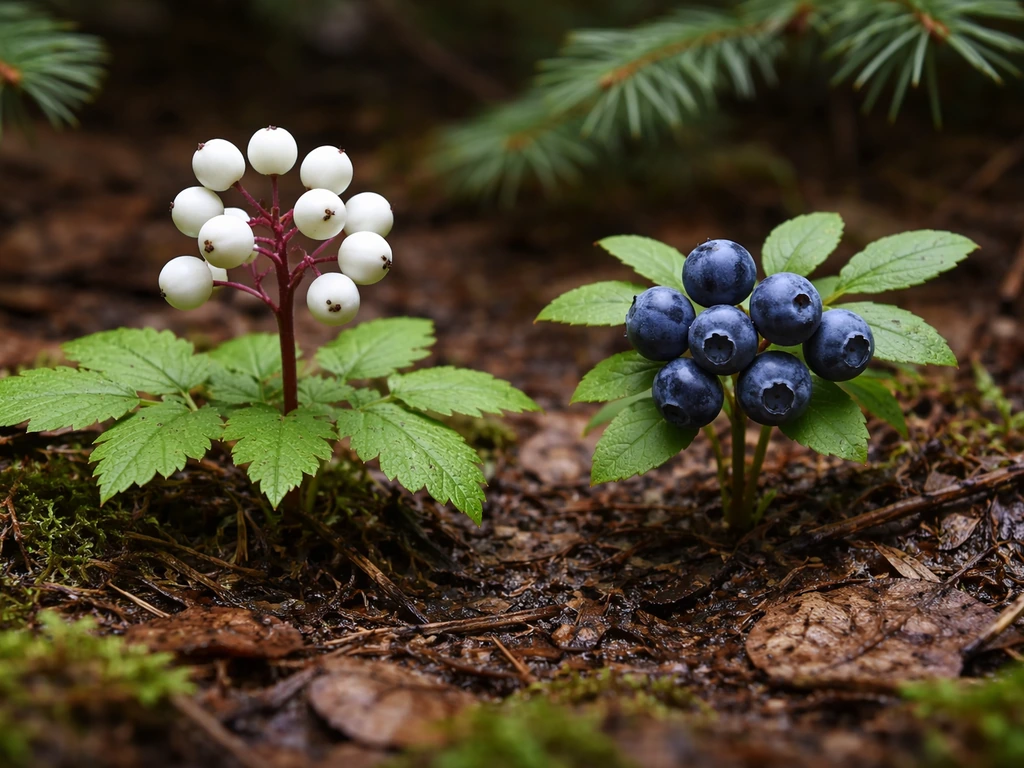
For salal and wild Vaccinium blueberries, look in coastal Douglas-fir forests with established understory vegetation. For salmonberry and thimbleberry, follow streams and look at wet, shaded ravine edges throughout the Coast Range and Cascades. Trailing blackberry appears on sunny forest margins, roadsides, and meadow edges across western Oregon. Many state forests and national forests in Oregon allow personal-use berry picking without a permit, but limits and rules vary by jurisdiction. Check with the relevant land management agency (Oregon Department of Forestry or the local National Forest) before you pick on public land.
Identify before you eat
Oregon has some genuinely dangerous plants that produce berry-like fruit. Baneberry (Actaea rubra) produces clusters of shiny red or white berries that are toxic and can be found in moist forest settings. Nightshade species (Solanum spp.) appear on disturbed ground and produce small, dark berries that look superficially similar to native berries. The cardinal rule: if you can't identify a plant to species with confidence, don't eat the fruit. A good regional field guide, like a wildflower or native plant guide specifically focused on the Pacific Northwest, is worth carrying. When in doubt, photograph and cross-reference multiple features including leaf shape, stem, flower remnants, and berry arrangement, not just berry color.
Foraging vs. growing your own
If your goal is a reliable, abundant harvest, growing your own will beat foraging every time. Wild berry plants depend on seasonal conditions, wildlife pressure, and habitat access you may not always have. A well-managed home planting of blueberries or blackberries in western Oregon can produce reliably for years with predictable timing and quality. Foraging is wonderful for connecting with native plants and getting something for free, but it works best as a supplement rather than a primary supply strategy. If you're interested in native species specifically, salal and trailing blackberry can both be incorporated into a home garden as native plantings, though both spread and need managed boundaries.
Where to start if you're planting this year
If you're in western Oregon and planting in 2026, blueberries can go in the ground now through early summer with irrigation support, or again in early October in the Willamette Valley. Blackberries and raspberries are best planted as bare-root plants in late winter or early spring, though container-grown plants can go in through early summer. Strawberries planted now will give you fruit this season if you choose a day-neutral cultivar. Test your soil pH before anything goes in the ground, especially for blueberries. Pick up certified planting stock from a reputable Oregon nursery rather than dividing from unknown-source plants, especially for raspberries where virus-free stock genuinely matters. Start with one or two berry types, get them established well, and expand from there. Oregon's climate is genuinely forgiving for berry growing compared to most of the country, including trickier states like Arizona or even parts of Colorado and Montana where season length or cold hardiness create harder constraints. For a quick start in Arizona, check which berry varieties are adapted to warm, dry conditions in the Phoenix area Phoenix area berry options. In Alaska, the list of berries you can grow is different again because winter cold and short seasons limit what will survive including trickier states like Arizona or even parts of Colorado and Montana. If you’re wondering what berries grow in Colorado, focus on varieties matched to your local chill hours and winter lows parts of Colorado. If you also want berries in Montana, focus on local cold-hardy types and varieties suited to your specific region’s winters.
FAQ
Are there any Oregon berries I should avoid because they can be toxic or hard to tell apart from edible ones?
Yes. Baneberry produces shiny red or white berries that are toxic, and nightshade species can look superficially similar to native berries. If you cannot identify the plant to species with confidence, do not eat the fruit. When foraging, confirm more than berry color, use a Pacific Northwest focused field guide, and double-check leaf, stem, and berry arrangement.
What’s the biggest mistake people make when growing blueberries in Oregon?
Skipping soil pH testing. Even if the region is often acidic, many valley clays and some amended beds drift too alkaline for productive blueberries. Blueberries need roughly pH 4.5 to 5.5, and “guessing” pH usually leads to poor yield and weak growth.
Can I grow Oregon raspberries without risking disease problems?
You can reduce risk a lot by starting with certified virus-free plants and choosing resistant cultivars. Raspberry virus issues are common in the Pacific Northwest, and stress can show up as pale green or yellow leaves. Also avoid planting into ground where infected plants were present if you know the history.
How do I stop salmonberry or thimbleberry from taking over if I want them in my yard?
Both spread aggressively by root suckering. Plan for a lot of space, or install a hard boundary barrier (a physical root barrier) and maintain it regularly. If you put them near paths, beds, or lawns, you will likely need ongoing containment to prevent encroachment.
Is there a practical way to tell native trailing blackberry from invasive Himalayan blackberry?
Use more than “native vs invasive” location assumptions. Himalayan blackberry typically dominates disturbed ground and can produce larger canes and larger, more coarse fruit characteristics. Native trailing blackberry tends to be lower and more arching, with smaller glossy black fruit and better flavor. If you are unsure, confirm the plant before harvesting.
Do I need more than one blueberry plant in Oregon to get fruit?
Often, yes. Cross-pollination usually improves set, so planting at least two cultivars with overlapping bloom times is a good plan. Even when the exact requirement varies by cultivar, multiple plants generally make results more reliable.
What container size is realistic for blueberries, and what is the trade-off?
For a mature bush, plan on at least 15 to 20 gallons filled with an acidic blueberry mix. The trade-off is faster drying in containers, so you will likely water more frequently during Oregon’s dry summers. Containers also heat and cool faster than in-ground soil, so consistent watering matters for fruit quality.
Are raised beds better than in-ground for cane berries like blackberries and raspberries?
Raised beds are great for strawberries, blueberries, and raspberries if drainage and pH control are your main goals, but they can become expensive and hard to manage for larger cane-berry rows. For blackberries and raspberries in particular, many growers find in-ground rows more practical because the plants need space and a stable trellis or management area.
When is the best time to plant berries in Oregon if I want a reliable first harvest?
Timing depends on berry type. Blueberries can be planted in fall or spring depending on region, while blackberries and raspberries are often planted as bare-root in late winter or early spring. Strawberries can give fruit sooner if you choose a day-neutral cultivar. Regardless of timing, test soil pH first for blueberries, and prioritize irrigation support where summers are dry.
How do I choose blueberry varieties for Oregon’s different regions and chill hours?
Match chill hour needs to your area. Northern highbush generally needs about 800 to 1,500 chill hours, which fits many Willamette Valley conditions. Southern highbush and rabbiteye need fewer chill hours (roughly 200 to 600), making them more suitable for milder coastal zones or warmer Rogue Valley parts. East of the Cascades, winter cold hardiness is usually the limiting factor, so choose Zone 4 or 5 rated northern highbush cultivars.
What should I do if my soil is heavy clay but I still want blackberries or raspberries?
Improve drainage before planting. Add compost before setup, ensure surface drainage works, and consider raised beds if the clay holds water in spring or after storms. For blueberries specifically, you also need pH corrections, but for cane fruits the core issue is often wet soil leading to weak establishment and rot.
Is foraging for Oregon berries legal everywhere?
Not necessarily. Many state forests and national forests allow personal-use berry picking without a permit, but rules and limits can vary by jurisdiction and location. Check with the relevant land management agency before you pick on public land, especially if you plan to harvest heavily or commercially.