
Serviceberry trees grow natively across a huge swath of North America, from the Atlantic coast to the Rocky Mountain foothills, and they're genuinely one of the most adaptable fruiting trees you can plant. If you are also wondering where do wineberries grow, the best answer depends on similar conditions like climate and soil moisture grow natively. Depending on the species, they're comfortable anywhere from USDA Zone 3 all the way up to Zone 9, which means most North American gardeners have at least one species that fits their climate. The sweet spot for most common species is Zones 4 through 7, with moist, well-drained soil, a slightly acidic to neutral pH, and a spot that gets full sun to partial shade.
Where Do Serviceberry Trees Grow Best? Zones, Soil, Sun
Marcus Holloway
11 Jun 2026
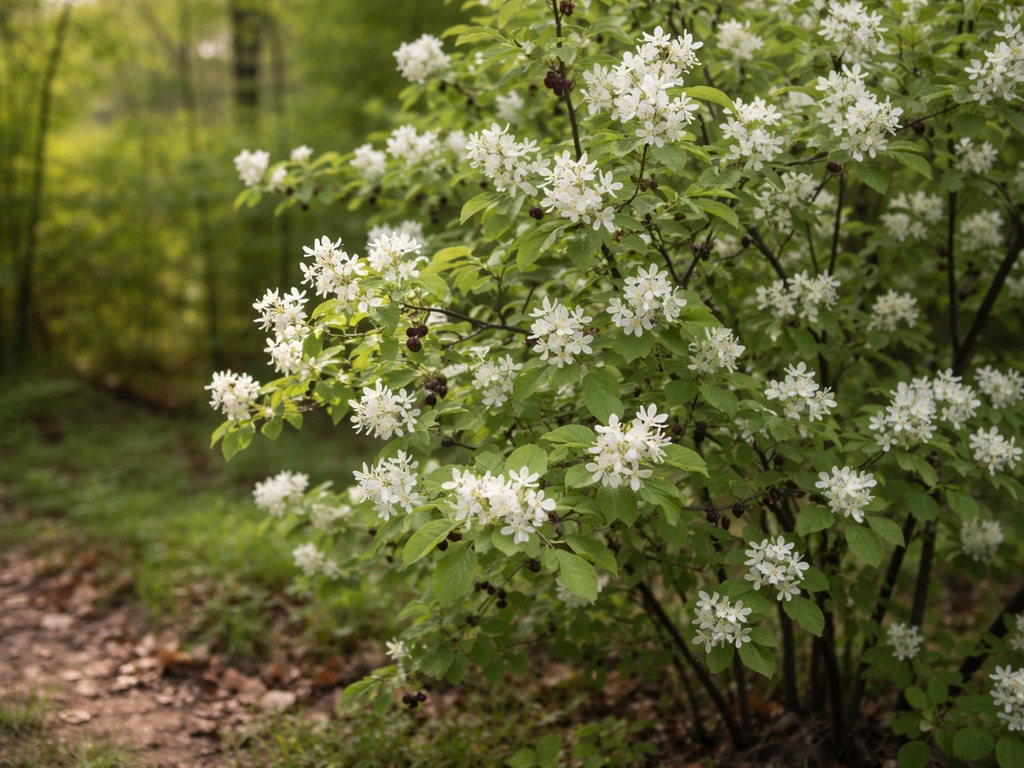
Where serviceberries naturally grow: native range and climate zones

There are several Amelanchier species worth knowing, and they each occupy a slightly different slice of the continent. Understanding their natural ranges is the fastest way to figure out whether your yard is a natural fit.
Canadian serviceberry (Amelanchier canadensis) is native from Newfoundland and southern Ontario south through Maine and down to Alabama. USDA lists it as hardy in Zones 4 through 7, though Oregon State University notes it can push into Zone 3 in sheltered conditions. Downy serviceberry (Amelanchier arborea) has the broadest warm-climate tolerance of the eastern species, rated hardy from Zone 4 all the way to Zone 9 by Clemson Extension, spanning from Maine and Iowa south to northern Florida and Louisiana. Allegheny serviceberry (Amelanchier laevis) covers a similar eastern footprint, from Newfoundland west to Ontario, Minnesota, and Iowa, and south along the Appalachians to Georgia and Alabama, rated Zones 4 through 8. Then there's saskatoon serviceberry (Amelanchier alnifolia), the western and interior species, which ranges from Alaska across western Canada and into the north-central and western United States. It's the one prairie and mountain gardeners should focus on. Snowberries (Amelanchier) are also typically found in cold-to-temperate regions, especially across much of North America.
What all these species share is an origin in temperate, deciduous woodland edges, open hillsides, and forest margins. They evolved alongside cold winters and moderate summers, which is exactly why they perform so well across the northern and mid-latitude regions of the continent and start to struggle when winters are too mild or summers are relentlessly hot and dry.
| Species | Native Range | USDA Zones | Notes |
|---|---|---|---|
| Amelanchier canadensis | Newfoundland to Ontario; Maine to Alabama | 3–7 | Tolerates wettest soils of the group |
| Amelanchier arborea | Maine to Iowa; south to Florida/Louisiana | 4–9 | Best for warmer southern gardens |
| Amelanchier laevis | Newfoundland to Minnesota; south to Georgia/Alabama | 4–8 | Classic Appalachian woodland edge species |
| Amelanchier alnifolia | Alaska across western Canada; western/north-central US | 2–7 | Best choice for plains and mountain west gardens |
What serviceberries actually need: soil, moisture, and sun
The ideal setup is moist, well-drained sandy loam with a soil pH between 5. Montana State Extension’s guide on growing serviceberries also specifies an ideal site with moist, well-drained sandy loam and a pH target range of 5.5 to 7.0, noting tolerance of higher pH soils up to about 8.0 well-drained sandy loam with a soil pH between 5.. 5 and 7.0. That said, serviceberries are genuinely tolerant plants, and Montana State Extension notes they can handle soils up to about pH 8.0 without major problems. The key phrase there is 'well-drained.' They'll take moisture, but they don't want to sit in waterlogged soil for extended periods. Think of the forest slopes and woodland edges where they naturally grow: consistently damp but never stagnant.
For sun, full sun to partial shade works well. They're understory-edge plants by nature, so they actually handle dappled light better than most fruiting trees. That said, more sun generally means more fruit. If you're planting primarily for the berries, a spot with at least six hours of direct sun is going to outperform a shadier location.
Once established, serviceberries become fairly drought-tolerant. During their first couple of seasons, consistent moisture matters a lot for root development, but after that, they mainly need extra water during extended heat or dry spells. This is one of the things I appreciate most about them compared to some of the high-maintenance berries like bilberries, which need very specific bog-like acidity to thrive.
- Soil type: moist, well-drained sandy loam preferred
- pH: 5.5 to 7.0 ideal, tolerates up to 8.0
- Sun: full sun to partial shade (6+ hours for best fruit production)
- Moisture: consistently moist during establishment, more drought-tolerant once roots are established
- Drainage: critical — avoid sites with standing water or heavy clay that stays wet
Where to plant serviceberry by region
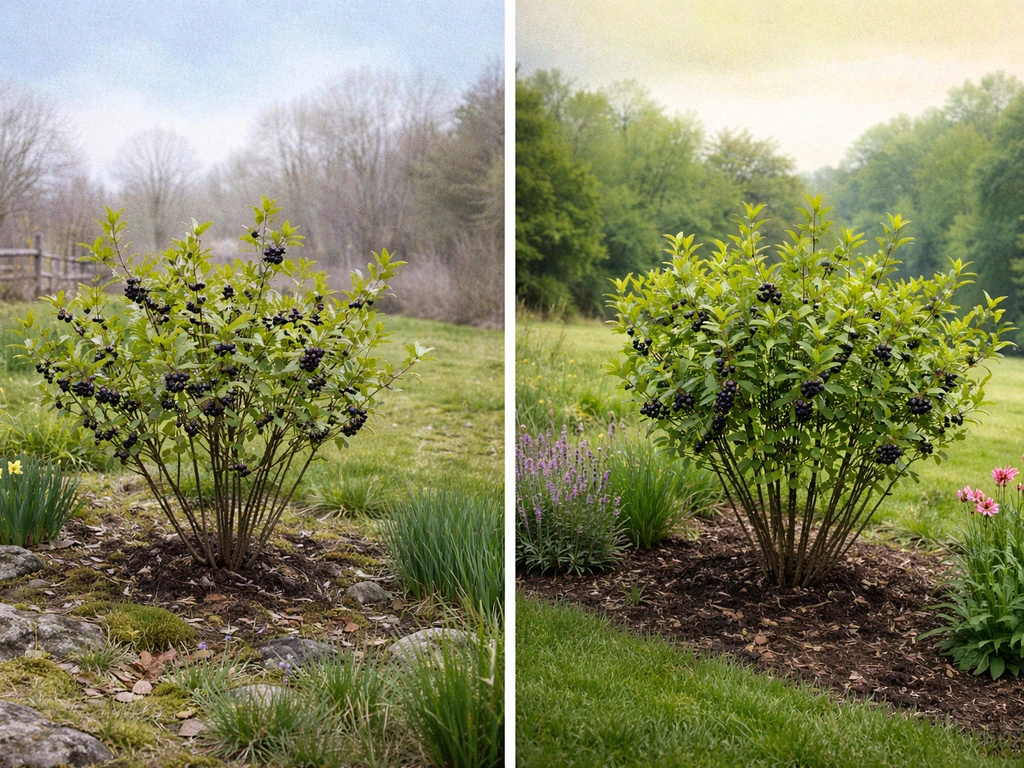
Northeast and New England: This is prime serviceberry country. Canadian serviceberry and Allegheny serviceberry are both native here, and they'll thrive in Zones 4 through 6 with minimal fuss. Woodland edges, hedgerows, and rain garden borders are all excellent placements. Expect reliable performance with little intervention.
Mid-Atlantic and Appalachian region: Amelanchier laevis evolved here, so conditions from Pennsylvania down through the Carolinas are essentially native habitat. The sloped, well-drained sites typical of Appalachian foothills are ideal. If you're gardening on flat, heavy lowland soils, you'll want to improve drainage before planting.
Southeast (Zones 7–9): Downy serviceberry (A. arborea) is your best bet here. It's the most heat-tolerant of the eastern species, rated to Zone 9. That said, the further south you go, the more important it becomes to choose a site with afternoon shade and reliable moisture. In the Deep South, serviceberries are possible but not effortless. Summers in Georgia or Louisiana push them to their limits, and they'll need more support than they would in, say, Virginia.
Midwest and Great Plains: The transition zone between eastern and western species. Minnesota and Iowa gardeners can grow Canadian or Allegheny serviceberry comfortably. As you move into the drier Great Plains, saskatoon serviceberry becomes the smarter pick. It evolved for exactly those conditions: cold winters, dry summers, and open grassland edges. Utah State Extension specifically recommends choosing the right cultivar for your site, and this is where that advice really matters.
Mountain West and Pacific Northwest: Saskatoon serviceberry is native across much of this territory, from the foothills of Montana and Colorado through the Pacific Northwest and up into Alaska. It handles Rocky Mountain climate patterns well. In the Pacific Northwest, most Amelanchier species perform admirably given the mild winters and adequate rainfall.
Canada: Serviceberries are genuinely native across most of populated Canada. From the maritime provinces through Ontario and across the prairie provinces, you'll find native species adapted to local conditions. Saskatoon serviceberry is actually a commercially grown fruit crop in Alberta and Saskatchewan, which tells you everything you need to know about its suitability for cold Canadian climates.
Growing serviceberry outside its ideal range: microclimates and site matching
If your location sits outside the comfortable range for a particular species, the first step is picking the right species rather than forcing a poor fit. Someone in Zone 9 shouldn't try to grow Canadian serviceberry when A. arborea exists. That said, there are real tools for pushing the limits when you want to.
Microclimates are your biggest lever. The south or southeast side of a building, fence, or hillside captures extra warmth and wind protection, which can effectively shift your planting location up half a zone or more. Missouri Botanical Garden notes that serviceberries naturally colonize sheltered slopes and woodland edges, so replicating that protected, slightly buffered environment in your garden is a legitimate strategy, not a workaround.
For gardeners in very hot, dry climates like the Southwest, the challenge isn't cold hardiness but summer heat and moisture stress. Here, afternoon shade becomes critical. Planting on the east side of a structure so the plant gets morning sun and shade after noon can significantly reduce heat load. Combining that with deep mulching (organic mulch, not black plastic) to retain soil moisture and keep roots cool is the other key adjustment. CSU Extension specifically warns that black plastic mulch can overheat soil and severely damage roots, leading to leaf scorch, so stick with wood chips or straw.
In heavier clay soils, raised planting or bermed beds improve drainage substantially. Mixing in compost and coarse sand to loosen the texture helps, but genuine clay hardpan may require raised planting to get roots above the zone where water sits. If soil pH runs high (above 7.5 or so), sulfur amendments can bring it down gradually, and acidifying mulches like pine bark help maintain lower pH over time.
Container and small-space growing
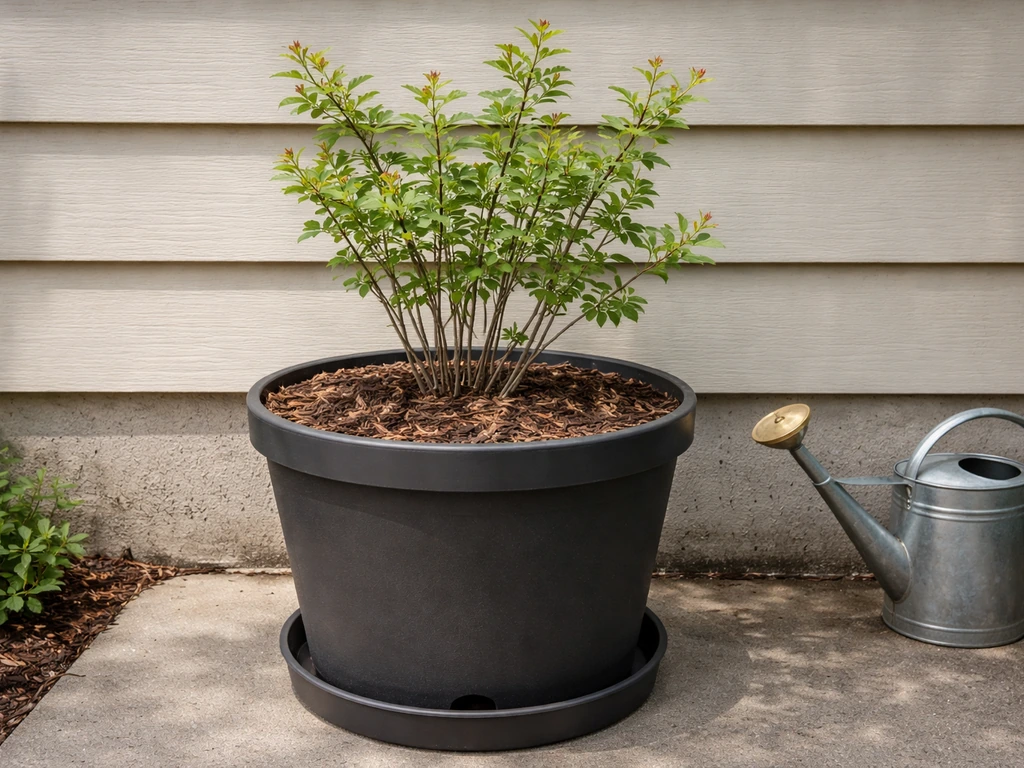
Serviceberries can be grown in containers, and UF/IFAS specifically lists Amelanchier laevis as suitable for planters. The compact, multi-stemmed growth habit of many serviceberry varieties makes them more container-friendly than a lot of other fruiting trees. For a patio or small garden, this is a genuinely viable option, not just a consolation prize.
Use a large container: at least 15 to 20 gallons to give the root system room to establish. Good drainage is non-negotiable in containers, so make sure your pot has adequate holes and use a well-draining potting mix rather than garden soil. Container plants dry out faster than in-ground plantings, so plan on more frequent watering, especially in summer.
Winter is the main challenge with containerized serviceberries. The roots in a container are exposed to air temperatures on all sides, unlike in-ground roots which are insulated by surrounding soil. Repeated freeze-thaw cycles can damage roots badly. The Missouri Botanical Garden's overwintering guidance recommends sinking smaller containers into the ground up to their rims for winter, or heavily mulching around the container sides. Another option is moving the container into an unheated garage or shed once the plant is dormant, somewhere that stays cold but doesn't go below about -10°F for extended periods. Don't try to keep it actively warm indoors; the plant needs that cold dormancy period to perform well the following season.
- Use a container of at least 15 to 20 gallons with good drainage holes
- Choose a well-draining potting mix, not garden soil
- Water more frequently than in-ground plants, especially in summer heat
- For winter, sink the container into the ground or mulch up to the rim heavily
- Alternatively, move dormant containers to an unheated but frost-protected structure
- Avoid heated indoor storage during dormancy: the plant needs cold to reset properly
Common mistakes that prevent serviceberry from thriving
Wrong drainage is the most common killer. Planting in a site where water collects after rain, especially heavy clay soils, leads to root rot and slow decline. If you notice waterlogging after a heavy rain, fix the drainage before you plant, not after.
Too much shade reduces fruiting significantly and can weaken the plant over time by reducing its energy production. Serviceberries tolerate shade, but 'tolerates' and 'thrives in' are different things. If your site gets fewer than four hours of direct sun, reconsider the location.
Planting near junipers is a mistake that trips up a lot of gardeners. Utah State Extension specifically warns against this because junipers are an alternate host for cedar-apple rust and related rust diseases that heavily affect Amelanchier. The Pacific Northwest Pest Management Handbooks note that A. canadensis is particularly susceptible, with characteristic orange pustules appearing on leaves. Keeping serviceberries well away from junipers is one of the simplest disease-prevention steps you can take.
Soil pH problems show up as chlorosis, where leaves yellow while veins stay green. Montana State Extension links this to nutrient uptake issues driven by soil chemistry. If you see this, get a soil test before throwing fertilizer at the problem. The fix is often pH adjustment rather than adding more nutrients.
Leaf scorch, which shows as brown, crispy leaf edges, usually signals one of two things: inadequate root development for the plant's water needs, or overheated soil from black plastic mulch. CSU Extension points to both causes. The fix for the first is better watering during the first two seasons while roots establish. The fix for the second is switching to organic mulch.
Planting at the wrong time amplifies all of these stresses. Utah State Extension recommends spring or fall planting to avoid transplanting a serviceberry into heat stress. A plant trying to establish roots in July heat in Zone 7 or above is fighting an uphill battle from day one.
Your next steps: assessing your site today
Start by confirming your USDA hardiness zone using the current USDA Plant Hardiness Zone Map, which is based on average annual extreme minimum winter temperatures across a 30-year period. USDA ARS explains the Plant Hardiness Zone Map is based on average annual extreme minimum winter temperatures using a 30-year span, clarifying how “zone” should be interpreted for freezing tolerance the current USDA Plant Hardiness Zone Map. That single number tells you immediately which species are viable candidates. Bunchberries generally grow best in cool, forested regions with moist, well-drained soil, often in understory conditions where bunchberries grow.
- Look up your USDA hardiness zone and match it to the species table above to narrow your options
- Walk your yard after a heavy rain and note where water pools or drains slowly, and avoid those spots
- Check your soil pH with an inexpensive test kit from any garden center (target 5.5 to 7.0)
- Count the direct sun hours in your preferred planting spot over a full day
- Note any junipers within 100 to 200 feet of your planting area and plan accordingly
- Choose your species based on zone and region, then select a cultivar suited to your specific site conditions (your local extension service can help narrow this down)
- Plan to plant in spring or fall, not midsummer, and water consistently for the first two growing seasons
Serviceberry is one of those plants that rewards a little upfront site assessment with years of reliable fruit and almost no ongoing drama. It's a different kind of commitment than, say, managing brambles or coaxing bunchberries through specific soil conditions. Get the species match and drainage right, and you'll have a plant that looks after itself pretty comfortably for decades. If you are instead asking where damsons grow, the climate and soil preferences will be different, so plan on checking damson-specific guidance where do damsons grow.
FAQ
If I live in a “good” hardiness zone, why am I still not getting many serviceberries?
Choose the species first, then fine tune with light. If your yard gets 3 to 5 hours of direct sun, serviceberries may live but fruiting often drops, especially in hot summers. In that case, prioritize an east or north-facing slope that still gives morning sun (and less afternoon heat) rather than pushing a shadier location.
Where should I avoid planting if I want to prevent winter damage in borderline climates?
Serviceberries generally dislike winter thaw and refreeze cycles more than they dislike cold itself. In the Midwest and interior West, that can mean more spring dieback even if the zone rating looks fine. Mulch around the root zone (not against the stems), and avoid planting in frost pockets or low spots where cold air settles.
What are practical signs my soil is too wet for serviceberries?
Expect the most vigorous fruiting on well-drained, evenly moist sites. If water stands after rain or you see a “soggy” spongy area a day later, that is too wet. The practical test is to dig a hole, fill it with water, and see how long it takes to drain before planting.
Can I grow serviceberries in containers in a climate that is near the edge of the recommended zones?
Yes, but the exact species matters. Some serviceberries are naturally multi-stemmed and compact enough for containers, and they are more forgiving in a pot if drainage is excellent. Plan for winter protection, because container roots freeze faster and can suffer from repeated freeze-thaw.
What should I do first if my serviceberry leaves turn yellow?
Do not fertilize until you confirm the problem. If leaves yellow with green veins (chlorosis), get a soil test first, because the issue is often pH related rather than nitrogen deficiency. Over-fertilizing when pH is off can worsen stress and lead to more leaf scorch.
How far away from junipers should serviceberries be planted to reduce rust risk?
You generally should not plant serviceberries directly alongside junipers. Junipers are an alternate host for rust diseases that can heavily affect Amelanchier, with certain species like Canadian serviceberry being particularly susceptible. Use distance and air flow (separate plantings by a wide margin) rather than just relying on routine pruning.
Do serviceberries struggle in places with mild winters, even if summers are not too hot?
Mild winters can reduce performance because serviceberries evolved with cold dormancy. If your winters are unusually warm, the plant may leaf out and then get hit by spring temperature swings, leading to reduced fruit set. A sheltered microclimate helps with wind and cold exposure, but it should not be so protected that it removes chilling.
How often should I water serviceberries after planting?
For best berry production, aim for consistent moisture during establishment (first 1 to 2 growing seasons), then water during extended dry spells. A common mistake is “light” frequent watering that keeps the top wet but does not encourage deep rooting. Use a deep soak strategy when you water, then allow the soil to partly dry.
What is the best way to handle summer heat stress in very hot, dry climates?
If you are in the Southwest or other hot, dry regions, afternoon shade is the make-or-break factor for summer survival and leaf health. Morning sun with afternoon shade, plus deep organic mulch to keep roots cool, typically beats full sun with heat stress. Black plastic mulch is a frequent failure point because it can overheat the soil.
How much spacing do serviceberry trees need, and should I prune to improve fruiting?
Spacing depends on the form and eventual width, but airflow matters because dense shade and stagnant air can reduce vigor. Many serviceberries also sucker or spread, so leaving room helps reduce crowding and supports better light penetration for fruiting. If your plant is getting leggy, thinning for light is usually more effective than adding fertilizer.