
Damsons grow best across temperate Europe, with the UK being their true home turf. They're well established in England and Wales, thriving in counties like Shropshire, Kent, Worcestershire, and the old county of Westmorland (now Cumbria). Outside the UK, they perform reliably across much of northern and central Europe. If you're also wondering where brambles grow, they typically favour hedgerows, field edges, and other sunny-but-not-too-dry spots where do brambles grow. In garden terms, that means you need a sunny, sheltered spot with moist but well-drained soil, a climate that delivers around 800 chilling hours in winter, and enough frost protection around flowering time to get a decent crop. If you can tick those boxes, a damson tree will reward you generously and outlast most other fruit trees in the garden.
Where Do Damsons Grow? UK and Europe Growing Guide

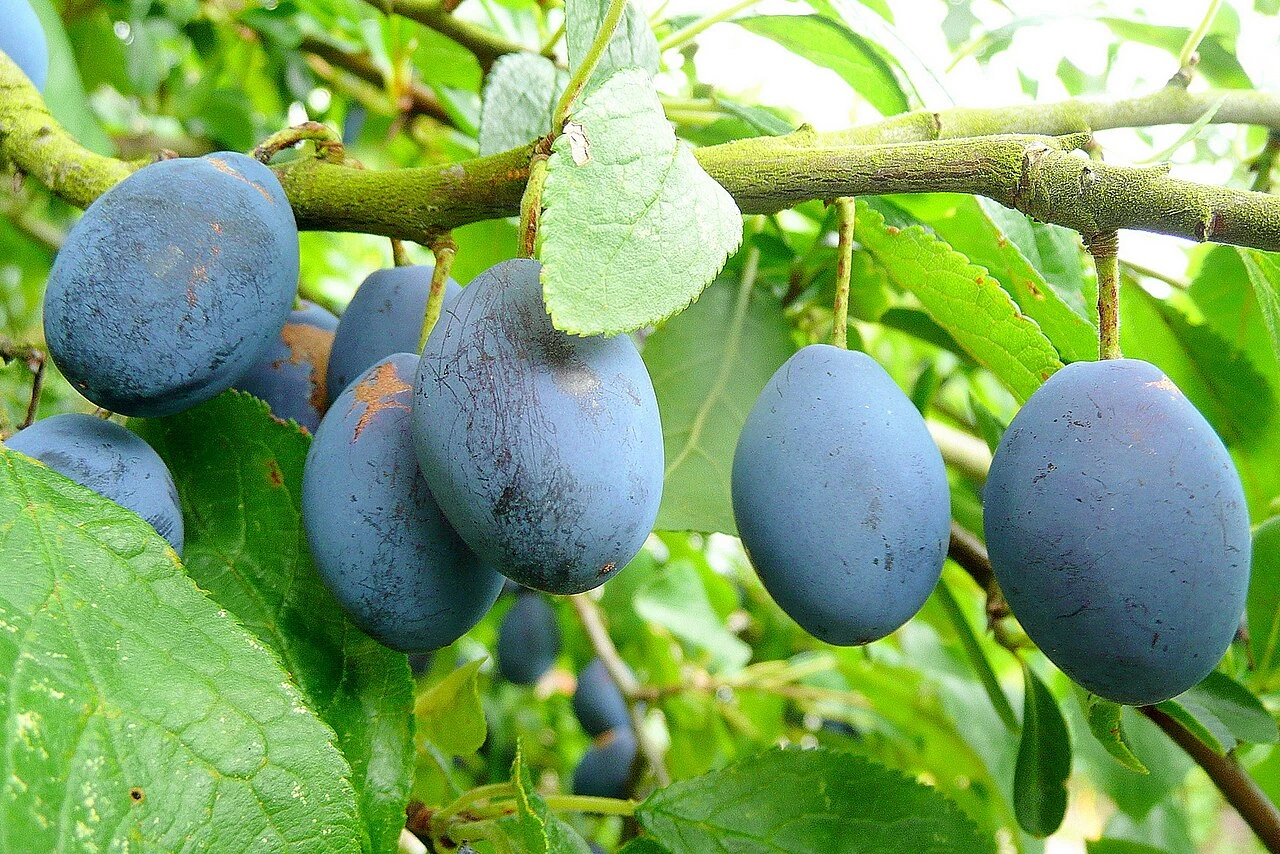
Where damsons come from: their natural European range
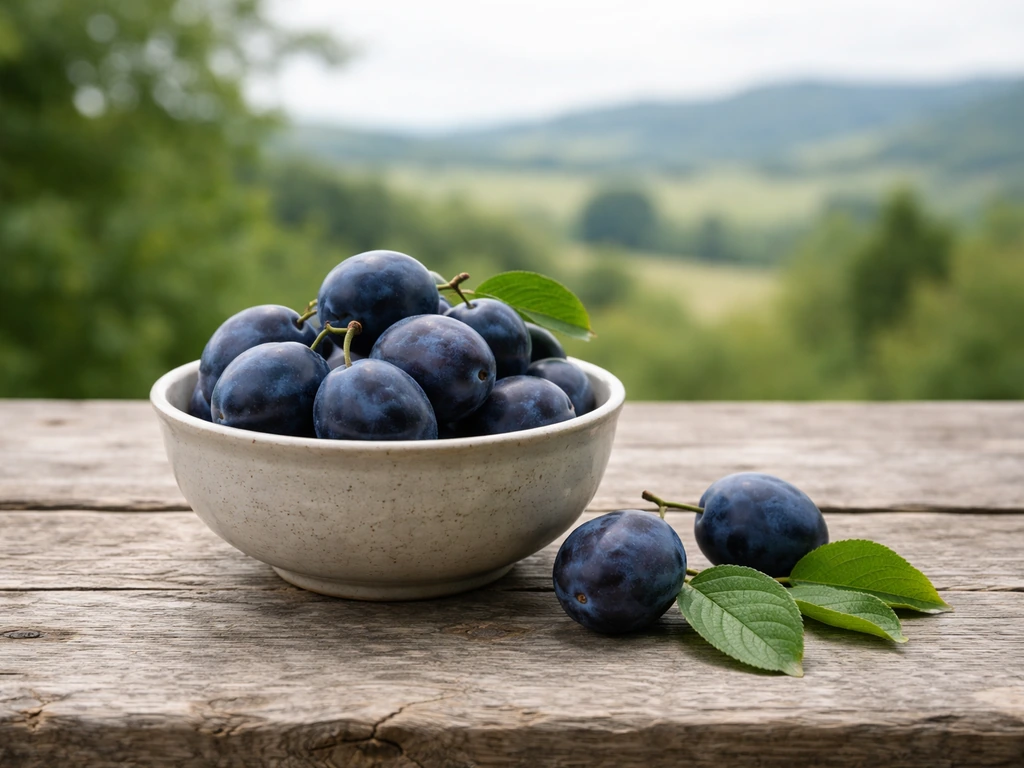
Damsons (Prunus insititia, or Prunus domestica subsp. insititia depending on which classification you follow) are not a wildly exotic plant. They've been part of the European landscape for a very long time, with the RHS noting their presence in Britain since at least Roman times. That's not a casual footnote: it means damsons have been embedded in the British countryside for roughly two millennia, showing up in hedgerows, wood margins, roadside verges, and riverbanks across England, Wales, and into Scotland and Ireland.
Across Europe, occurrence records cluster heavily across the British Isles, France, Germany, the Low Countries, and into Scandinavia and central Europe. They also appear naturalised in parts of eastern Europe and the Caucasus region, where the broader plum family has deep roots. The BSBI records damsons and bullace types appearing on wood margins, hedgerows, and riverbanks in counties like Fermanagh, and Warwickshire records describe them as occasional in hedges, often from planted stock that has since naturalised. So when you see a gnarled damson in an old hedgerow, it may well have started as an orchard escapee, not a truly wild plant.
The practical takeaway here is that damsons are not a fussy Mediterranean crop or a tender exotic. They belong to a cool temperate climate. They're at home in the kind of weather that a large chunk of northern Europe experiences: cold winters, mild summers, and reliable but not excessive rainfall.
The climate and soil conditions damsons actually need
Temperature and chilling hours
Damsons are genuinely cold-hardy. The RHS rates established named cultivars like 'Prune Damson' at H6, meaning they can handle temperatures down to around -20°C to -15°C. That puts them in the league of plants that survive without any winter protection across most of the UK and much of northern Europe. The catch is not the cold itself but the chilling requirement. Damsons need roughly 800 chilling hours, which means 800 hours of temperatures between 0°C and 7°C (32-45°F) during winter dormancy. Most of the UK delivers this comfortably. Warmer climates, particularly the deep south of Europe, California's Central Valley, or the Gulf Coast of the US, may not. Without enough chill hours, trees fail to break dormancy properly and fruit set becomes unreliable.
Soil: what damsons want (and what they won't tolerate)

The RHS soil target for damsons is a pH of around 6.0 to 6.5, so slightly acidic to near-neutral. That said, damsons are genuinely more forgiving about soil than most stone fruit. The Westmorland Damson Association, which knows more about growing damsons in tough conditions than most, says damsons tolerate a wide range of soil types, acidity, and alkalinity. But two things they won't put up with: solid peat and heavy, waterlogged clay. Damsons need moisture but also need drainage. Moist, loamy soils are ideal. Clay soils can work if drainage is good. If your site sits in standing water after rain, a damson will struggle.
One practical tip I've come across repeatedly, and that nurseries like Simpson's specifically advise: if your ground is on the wetter side during planting season, set the tree on a slightly raised mound. It keeps the root zone out of persistent wet and makes a real difference to establishment. Don't let damsons dry out completely either, especially when fruits are forming in summer. Inconsistent moisture at that stage can cause fruit to split or drop early.
Sun and shelter
Damsons want full sun. Not partial shade, not dappled light under a canopy: a genuinely open, sunny position. Alongside that, they need shelter from harsh winds, especially in spring when they're in flower. Damson blossom can appear relatively early in the year, and a cold easterly wind at flowering time can wipe out a crop before pollination even happens. A sheltered south or southwest-facing position in the UK is ideal. A garden wall, a windbreak hedge, or a south-facing slope all help. Don't confuse shelter with shade though: you want to break wind without blocking light.
How damsons grow and where they fit in a garden
A standard damson tree will reach 4 to 6 metres tall if left unpruned on a vigorous rootstock, though grafting onto semi-dwarfing or dwarfing rootstocks keeps things much more manageable for a home garden. Common forms include bush trees, half-standards, and fans trained against a wall or fence. The RHS is clear on one point: damsons are not suitable for training as espaliers, so don't try to force them into a flat, tiered fruit-wall form. A fan against a warm south-facing wall, however, works well and offers the bonus of extra warmth and frost protection during flowering.
On pollination: most damsons are at least partially self-fertile, which means a single tree can set fruit without a partner. The Arbor Day Foundation describes damsons as self-fertile, while also noting that planting two trees tends to produce better crops. BBC Gardeners World echoes this for 'Farleigh Damson', calling it partially self-fertile and reliable on its own. In cool springs where insect activity is low, having a nearby compatible plum or damson variety genuinely helps. If you only have space for one tree, you'll still get fruit, but don't bank on bumper harvests every year from a solitary tree in a shaded or exposed spot.
Spacing depends on rootstock and form. A bush tree on a semi-dwarfing rootstock typically needs around 3.5 to 4.5 metres between trees. A fan trained against a wall needs roughly 4 to 5 metres of horizontal space. Because damsons can be long-lived, it's worth getting spacing right from the start rather than crowding the tree and reducing airflow, which increases disease risk.
Region-by-region guide: where damsons succeed
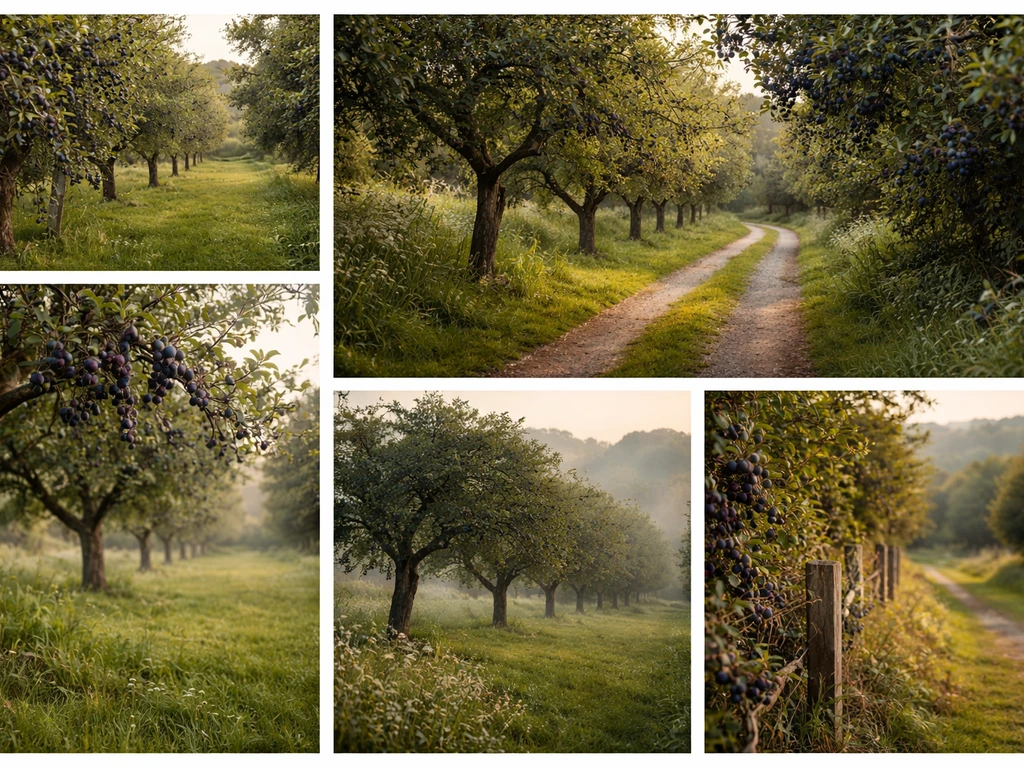
The UK and Ireland
Most of England, Wales, and lowland Scotland are ideal damson territory. The RHS points to Shropshire, Kent, Worcestershire, Westmorland (Cumbria), and Cheshire as the heartland of traditional English damson growing, and these areas still have working damson orchards and active growers today. If you’re wondering where snowberries grow, focus on matching the shrub’s native, cool-season habitat rather than relying on damson-style rules damson growing. Westmorland damsons in Cumbria are particularly notable because they demonstrate how damsons cope with altitude, rainfall, and cooler conditions that would finish off a lot of other stone fruit.
Named heritage cultivars from these regions include 'Farleigh Damson' from Kent, held in the National Fruit Collection, and 'Aylesbury Prune' from Buckinghamshire, recorded by Slow Food UK as a heritage variety with roots going back to at least 1948 in the National Fruit Collection. These aren't just horticultural curiosities: they're evidence that damsons have been seriously grown, selected, and localised across the UK for centuries. The Westmorland Damson Association makes an interesting point that many named cultivars sold through nurseries today are actually southern English varieties, so if you're in a colder, wetter northern area, local heritage stock or specifically northern-adapted varieties may outperform generic nursery trees.
In Ireland, damsons are well established in hedgerows and occasionally in gardens, though cultivation is less formalised than in England. Northern Ireland and the Republic both have the climate for damsons to succeed, provided the site is not exposed to persistent Atlantic winds without shelter.
Northern and central Europe
France, Germany, the Netherlands, Belgium, and into Scandinavia all sit within viable damson range. Germany in particular has a long tradition of growing prune damsons (Zwetschgen) for cooking and drying. As you move further north into Norway, Sweden, or Finland, success depends more heavily on choosing sheltered sites and cold-hardy cultivars, since late frosts in these regions can hit flowering trees hard. In Scandinavia, wall training against a warm south-facing surface is worth considering.
North America
In North America, damsons generally perform well in USDA hardiness zones 5 through 7. The Pacific Northwest (Oregon, Washington), much of the Midwest, New England, and upstate New York all deliver enough chill hours and cold-hardy conditions. The main risk in northern zones (zone 4 and colder) is late spring frost damage to blossom rather than cold killing the tree outright, since the tree itself is hardy to around -20°C. In zones 8 and warmer, the chilling hour deficit becomes the real problem. Southern US climates, southern California, and the Gulf states are generally too warm for reliable damson cropping.
Australia and New Zealand
In the southern hemisphere, cool-climate regions like Tasmania, Victoria's high country, the Adelaide Hills, Otago in New Zealand, and the Central Plateau of the North Island all have the potential to grow damsons well. Coastal areas in warmer parts of Australia (Queensland, northern NSW, the Perth coastal plain) are unlikely to accumulate enough chill hours for reliable fruiting.
How to check whether your location is suitable
Before buying a tree, run through this quick check on your specific site and climate: If you are wondering where wineberries grow, focus on cool, reliably moist conditions and a sheltered spot where they can establish well.
- Chilling hours: Does your location typically have 800 or more hours between 0°C and 7°C (32-45°F) during winter? If you're in the UK, almost certainly yes. In warmer climates, check your local agricultural extension or weather station records.
- Hardiness: Can your garden handle temperatures down to at least -15°C without much protection? If yes, the tree itself will survive winter fine. If you're in a frost pocket that gets unexpected -20°C events, you're at the cold limit but still workable.
- Late frost risk: Does your garden get hard frosts after April? Damson blossom is vulnerable to late frosts, and some UK growers have noted that bloom timing can vary by variety and site. A low-lying frost pocket is a bigger problem than a cold hillside with good air drainage.
- Sun: Does your proposed spot get at least 6 hours of direct sun daily during the growing season? Less than this and you'll get a tree, but cropping will disappoint.
- Soil drainage: Does water sit on the surface after heavy rain for more than an hour or two? If so, improve drainage or raise the planting position before planting.
- Soil pH: Test your soil if you can. You're aiming for 6.0 to 6.5. Outside this range, the tree can still grow, but adding lime to raise pH on acid soils or working in organic matter on very alkaline sites will help long-term performance.
- Shelter: Is there a wall, fence, hedge, or natural feature to break the prevailing wind on at least the north and east sides of the planting spot?
If you tick most of these boxes, plant with confidence. Once you know where bunchberries can grow, you can compare your site’s temperature and moisture with what they need where do bunchberries grow. If you're borderline on a few, read on.
Growing damsons where conditions aren't ideal
Creating a microclimate
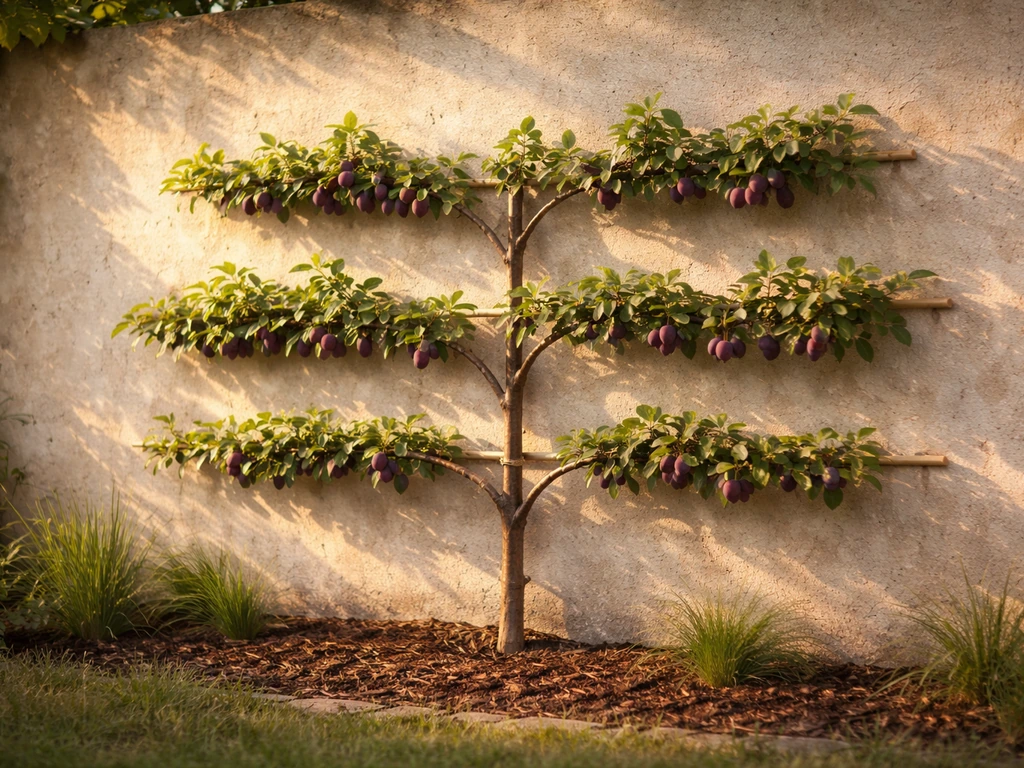
A south or southwest-facing wall is one of the best tools you have. Walls absorb heat during the day and release it at night, pushing the effective temperature of the planting spot up by a degree or two and, crucially, extending the frost-free window around flowering time. Training a damson as a fan against a warm wall in a cooler or more exposed location can genuinely shift performance from unreliable to productive. In exposed northern gardens or upland sites, a planted windbreak of native hedging to the north and east can make a substantial difference without shading the tree.
It's also worth thinking about air drainage. Cold air is dense and flows downhill, pooling in hollows and low spots. A damson on a gentle slope, even a slight one, will sit above the worst of the frost pockets. This is why valley floors in Cumbria or the Welsh borders sometimes have surprising frost damage despite not being particularly elevated: cold air drains into them from the surrounding hills.
Rootstock and variety selection
In cooler or shorter-season climates, choosing the right rootstock matters. Smaller rootstocks like Pixy or St Julien A keep the tree compact, bring it into fruiting earlier, and make it more manageable for frost protection. In warmer or drier climates, a more vigorous rootstock gives the tree better access to deep soil moisture. Named varieties bred or selected for specific regions are worth seeking out: the Westmorland Damson Association's advice to look for locally adapted stock rather than generic nursery trees is genuinely useful if you're in a challenging location.
Container growing
Damsons can be grown in large containers, though I'd be honest: they're not the ideal container fruit. They're vigorous even on dwarfing rootstocks compared to, say, a blueberry bush. Bilberry grows best in cool, acidic habitats such as heathlands, boggy ground, and woodland edges, so “where do they grow” depends a lot on finding the right soil and moisture conditions bilberry where do they grow. If you do go the container route, you need a pot of at least 60 to 75 litres, a dwarfing rootstock like Pixy, and a commitment to consistent watering and annual feeding. The advantage of containers is mobility: you can move the tree to a sheltered spot or under cover during the critical flowering period in late March to April, dramatically reducing frost risk. For gardeners in marginal climates, particularly those in zone 8 or colder parts of zone 9 in North America, or urban growers with only a paved outdoor space, a container-grown damson on Pixy can produce a reasonable crop if you manage it carefully.
One honest caveat: container-grown damsons won't match the lifespan or eventual productivity of a well-sited garden tree. Treat it as a workaround for difficult situations rather than the first choice. If you have any soil to plant into and reasonable sun and shelter, plant in the ground.
A quick comparison: damson versus other hedgerow and small orchard trees
| Plant | Hardiness | Chilling requirement | Soil tolerance | Self-fertile? | Container viable? |
|---|---|---|---|---|---|
| Damson | H6 (to -20°C) | ~800 hours | Loam to clay, not waterlogged or pure peat | Mostly yes (crops better with a partner) | Yes, with large pot and dwarfing rootstock |
| Serviceberry | Very hardy (zone 3-4+) | Low | Wide range including moist/boggy | Yes | Yes, easier than damson |
| Bilberry | Very hardy | Low to moderate | Acidic, peaty, well-drained | Partially | Yes, in ericaceous compost |
| Bramble | Hardy to zone 5-6 | Low | Wide range, tolerates poorer soils | Most yes | Yes, with support |
Compared to other hedgerow fruits like serviceberries or bilberries, damsons are more demanding about soil drainage and warmth at flowering time, but they're considerably less fussy about soil chemistry than bilberries, and they produce a much larger, more versatile harvest than most wild-type shrubs. If you're weighing up what to plant in a cool temperate garden, damsons sit in a sweet spot: genuinely productive, historically proven, and manageable on the right rootstock.
One more thing to know before you plant
Pruning timing matters more with damsons (and plums generally) than with many other garden trees. The RHS recommends pruning plums and damsons between April and July to reduce the risk of silver leaf disease and bacterial canker, which enter through pruning wounds. Avoid cutting in autumn and winter when the spores are most active. It sounds like a small detail, but getting this wrong can set a tree back significantly or, in a worst case, kill it. Keep it in mind from day one and you'll have far fewer problems down the line.
FAQ
What happens if my region is too warm for damsons (not enough chill hours)?
If your area does not naturally reach the tree’s winter chilling needs, you may still grow a damson vegetatively, but you will often see poor fruit set (flowers fail to open properly or fruit drops early). In practice, this is most common in unusually mild winters (deep south Europe, very warm US states, and coastal microclimates). A workaround is choosing a locally adapted cultivar or rootstock selection from cooler regions, and using the warmest, most sheltered site you can, especially near flowering.
Why does my damson tree grow well but fail to crop, and is it a wind problem?
For damsons, wind can reduce cropping even when the tree survives the winter. The specific risk window is during blossom opening and pollination, when cold easterlies can damage flowers and lower insect activity. The best setup is a bright, open position (full sun) plus a wind break to the north or east, for example a hedge line, garden wall, or fence that does not cast lasting shade.
Can damsons grow in heavy clay or wet ground?
Yes, but only if the soil drains well and the root zone does not sit wet. Damsons can tolerate a range of pH, and they can even handle some clay, but persistent waterlogging is the usual failure mode. Before planting, check for a drainage issue by monitoring where water collects after heavy rain, and if necessary improve drainage or plant on a mound to keep roots out of standing water.
How much should I raise the soil mound under a damson, and when does it really matter?
A raised mound is especially helpful if you expect wet winters or your planting spot is in the lower part of a garden. Use enough height so that after rain the root zone stays aerated, not saturated. Also, avoid planting too deep, because deeper soil can remain cold and wet longer into spring, increasing the odds of weak growth.
Is there a best time to prune damsons, and what goes wrong if I prune too late?
If you prune in autumn or winter, you increase exposure to diseases such as bacterial canker and silver leaf, because the spores and infection pressure are higher then. For damsons, plan pruning in the April to July window, when conditions reduce infection risk. If you inherit an older tree with lots of cuts, focus on making fewer, cleaner cuts and remove dead or crossing wood rather than heavy late-season shaping.
Do I need two damson trees to get good fruit?
Damsons are usually partially self-fertile, so a single tree can produce fruit, but yields are often inconsistent in cool springs. Adding a second compatible plum or damson variety nearby can improve set, particularly when flowering overlaps and pollinators are scarce. Aim for practical overlap, not just two trees in the garden, so both varieties bloom around the same time.
How far apart should damson trees be, and does spacing affect disease?
Spacing is not only about size, it is also about airflow and drying after rain. Overcrowding increases humidity inside the canopy and makes disease more likely, and it can also make it harder to prune and harvest. If you are training a fan, allow the horizontal spread from day one, and do not plant the wall fan so close that branches scrape the fence or wall during growth.
What is the best way to grow a damson in a container for frost protection?
Containers can work as a strategy for frost protection during late March to April flowering, but they do require steady care. Use a large pot (around 60 to 75 litres), a dwarfing rootstock such as Pixy, and consistent watering so the tree does not dry out when fruit is forming. Expect container trees to be less long-lived and less productive than well-sited in-ground trees.
Why do damsons sometimes suffer late frost in my garden even if temperatures are similar nearby?
Damsons can fail to thrive even in the right climate if the site traps cold air. Avoid low spots where frost pockets form, because cold air flows and pools in hollows and valley floors. If your yard has a slope, planting slightly higher on that slope can reduce spring blossom damage even when the elevation difference seems small.
Are damsons hardy enough to survive winters in my area, and what is the bigger risk to the crop?
They are genuinely cold-hardy, but cold survival is not the only requirement. The critical factors are chilling hours for dormancy release, full sun for energy to set fruit, and frost protection at blossom time. So even in a place where winter lows are not extreme, you can still lose the crop if late frost hits flowering or if the site is exposed and windy.