
Wyoming can grow a surprisingly solid lineup of berries: currants, gooseberries, raspberries, strawberries, serviceberries, elderberries, and haskap all do well across most of the state. Blueberries are possible but need serious soil work. The keys are picking cold-hardy varieties, matching your elevation and zone, and managing Wyoming's alkaline soils and short frost-free windows.
What Berries Grow in Wyoming: Hardy Options and How to Grow Them
Marcus Holloway
6 Jul 2026
Wyoming growing basics: zones, seasons, and moisture
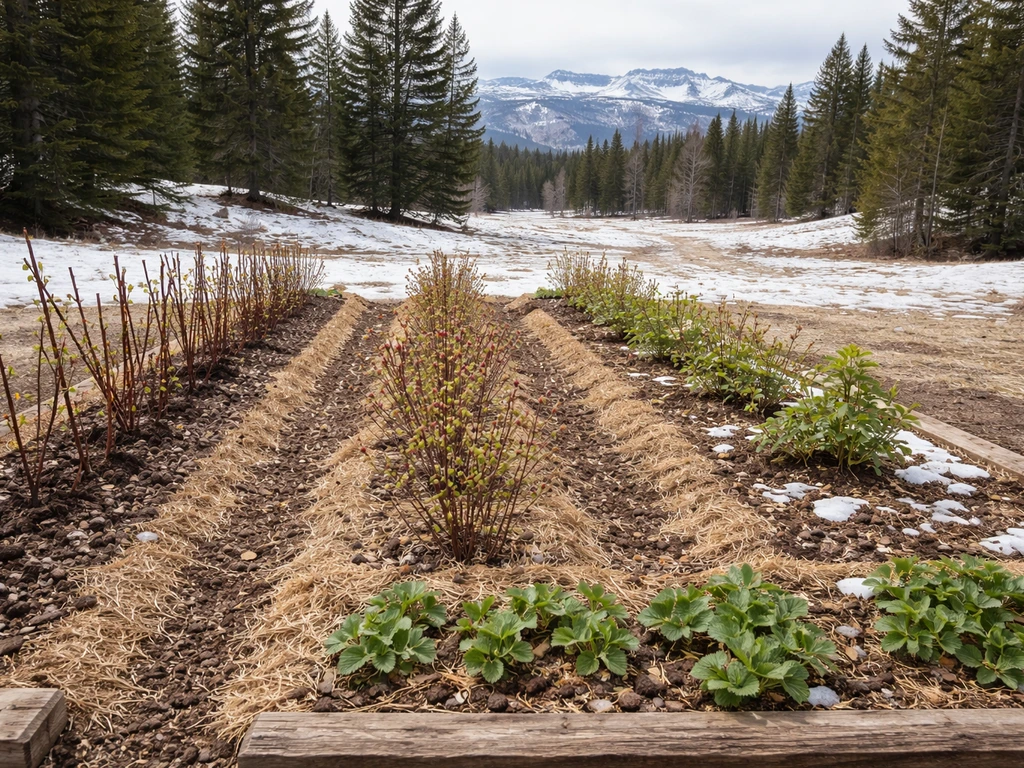
Wyoming spans USDA Plant Hardiness Zones 3 through 6, and that range really matters when you're picking berries. The high-elevation mountain areas around Jackson Hole and the Wind Rivers can sit in Zone 3 or 4, where winters regularly push below -30°F. The lower plains around Cheyenne, Casper, and Laramie generally land in Zones 4 to 5. Warmer pockets along the Big Horn Basin or lower-elevation towns can reach Zone 5 or 6. Before you plant anything perennial, look up your specific town on the 2023 USDA Plant Hardiness Zone Map to get an accurate read on your location.
Growing seasons are short and variable. Cheyenne, for example, typically sees its last frost around mid-to-late May and its first fall frost in early October, giving you roughly 120 to 150 frost-free days. Higher-elevation towns can have frost-free windows under 90 days, which cuts out anything that needs a long warm season. Wind is also a constant factor that accelerates soil drying and can physically damage canes and blossoms, so windbreaks and sheltered spots matter a lot.
Soil is Wyoming's biggest wild card. A large portion of the state has calcareous, high-pH soils with pH values well above 7.0, sometimes hitting 8.0 or higher. That's the opposite of what acid-loving berries like blueberries want. Most other berries tolerate neutral to slightly alkaline conditions but still perform better with organic matter worked in. Do a soil test before planting anything. Your local University of Wyoming Extension office can point you to testing services and interpret results for your specific county.
Best berry types to plant in Wyoming: quick shortlist
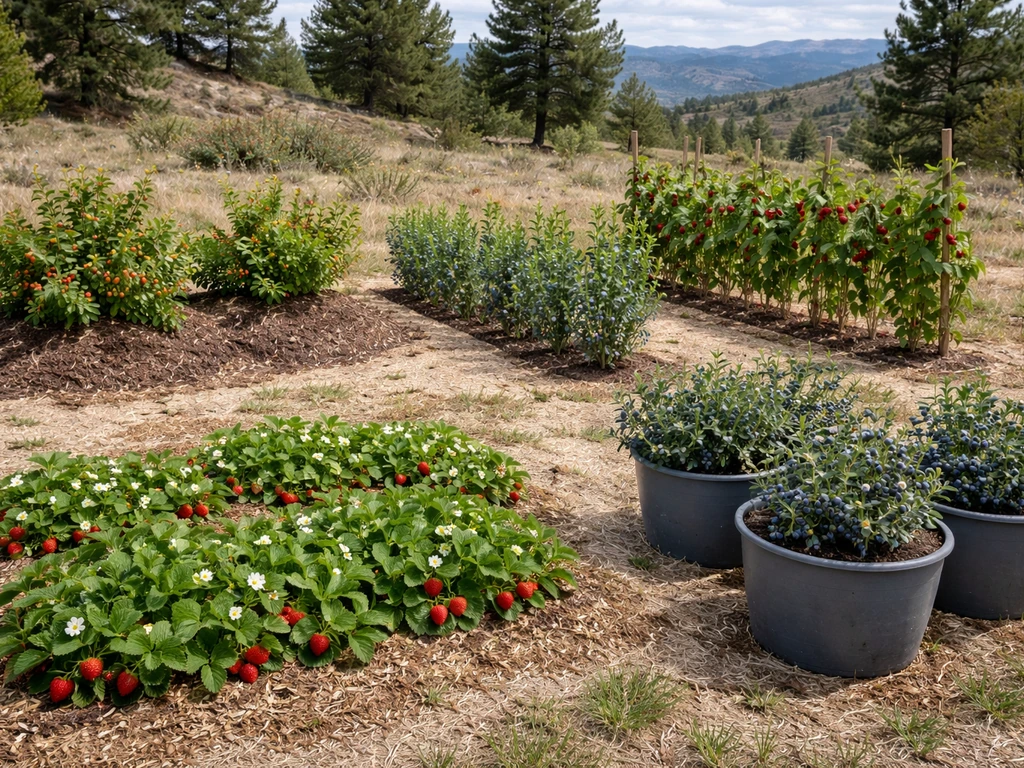
If you want a short answer before diving into the details, here are the berries worth prioritizing in Wyoming, roughly ranked by ease and reliability across most of the state. If you're wondering what berries grow in spring, this shortlist is a good place to start because it focuses on reliable growers that fit Wyoming's timing berries worth prioritizing in Wyoming.
- Currants and gooseberries: the most reliable, cold-hardy, and soil-tolerant berries for Wyoming. Zone 3 friendly, low-maintenance, and productive.
- Raspberries: excellent producers with the right cold-hardy variety. Need trellising and some annual pruning but reward you generously.
- Strawberries: easy to start, fruit the first or second season, and manageable even in short-season areas with good mulching.
- Serviceberry (Juneberry): a native shrub that grows wild in Wyoming and translates beautifully to the home garden.
- Elderberry: vigorous, wildlife-friendly, and hardy; works well as a multi-use edible shrub for larger spaces.
- Haskap (blue honeysuckle): extremely cold-hardy, early-ripening, and increasingly available from nurseries in the region.
- Blueberries: possible but require container growing or major soil acidification work; not the first choice for most Wyoming gardeners.
Bush berries: how they grow and where they fit
Currants and gooseberries
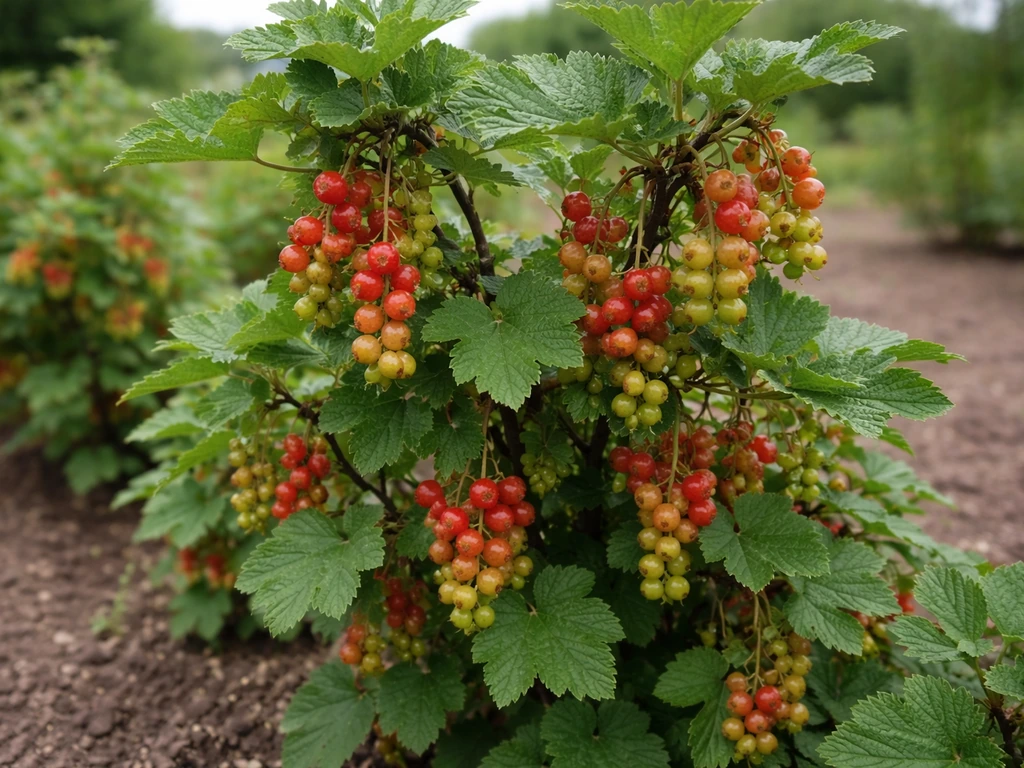
Currants and gooseberries are the underdogs of Wyoming berry growing, and honestly they deserve a lot more attention. They grow as multi-stemmed shrubs reaching about 3 to 6 feet tall and wide, they're cold-hardy to Zone 3, and they handle a range of soils far better than most other berries. Plant them in early spring as bare-root or container stock, spacing plants about 4 to 5 feet apart.
They prefer full sun to partial shade and appreciate consistent moisture, especially in Wyoming's dry summers. A 3- to 4-inch layer of organic mulch around the base retains moisture and keeps soil temperatures stable through winter. University of Wyoming Extension specifically highlights mulching as a key winter-prep step for currants. You can expect your first meaningful harvest in year two or three.
Watch for imported currant worm, which can defoliate plants quickly if you're not paying attention in late spring. Hand-picking or an organic spray early in the season handles it well. Beyond that, currants and gooseberries are low-drama plants that fit neatly into a mixed shrub border or a dedicated berry patch.
Blueberries: possible, but plan ahead
Blueberries need soil pH between 4.5 and 5.0, and Wyoming's native soils are almost never in that range. That doesn't mean you can't grow them, but it means you need to either create a raised bed or container filled with acidified growing media, or spend a full growing season amending an in-ground bed with sulfur and peat moss before planting. Peat moss naturally runs around pH 4.3 to 4.8 and is a useful amendment for building an acidic planting mix. Blueberries also have shallow roots that are sensitive to moisture swings, so consistent irrigation is essential in Wyoming's dry climate.
Container growing is genuinely the easiest path for most Wyoming blueberry growers. Use a large (15-gallon or bigger) container with an acidic mix of peat, perlite, and acidified compost. You can move containers to a protected location or unheated garage for winter. If you go in-ground, choose northern highbush cultivars like 'Duke', 'Spartan', 'Bluecrop', or 'Liberty', which have better cold tolerance. OSU Extension notes northern highbush blueberry cultivars with different ripening times, including ‘Duke’, ‘Spartan’, ‘Bluecrop’, and ‘Liberty’. Plant two different varieties for cross-pollination and better yields. Be patient: blueberries take 3 to 5 years to hit full production, and they won't forgive poor pH management.
Haskap (blue honeysuckle)
Haskap is worth knowing about if you haven't tried it yet. It's a compact shrub (roughly 3 to 5 feet) that produces elongated blue-purple berries tasting somewhere between a blueberry and a tart cherry. Utah State University Extension rates it as very hardy and long-lived, making it a great fit for Zone 3 and 4 Wyoming gardens. It ripens before almost anything else in the garden, often in late June or early July. Like blueberries, you need at least two compatible varieties for pollination. It tolerates a wider pH range than blueberries, which makes it much easier to establish in Wyoming soils.
Brambles: raspberries and blackberries in Wyoming's climate
Raspberries are one of the best bang-for-your-buck berries you can grow in Wyoming. They produce heavily, freeze well, and the right varieties handle Zone 3 to 4 winters without much trouble. Look for cold-hardy red raspberry varieties: 'Boyne', 'Latham', 'Nova', and 'Killarney' are all well-suited to cold-climate gardens. Fall-bearing (everbearing) varieties like 'Heritage' or 'Autumn Bliss' work well in Wyoming because their first crop comes on new canes in fall, which sidesteps late-spring frost damage to older canes.
Blackberries are a tougher call. Most standard blackberry varieties aren't reliably hardy below Zone 5, which rules them out for a lot of Wyoming. If you're in a warmer microclimate or Zone 5b, look for semi-erect or thornless varieties marketed as cold-hardy, and plan to provide winter protection. For most Wyoming growers, raspberries are the smarter bramble investment.
Planting and trellising brambles
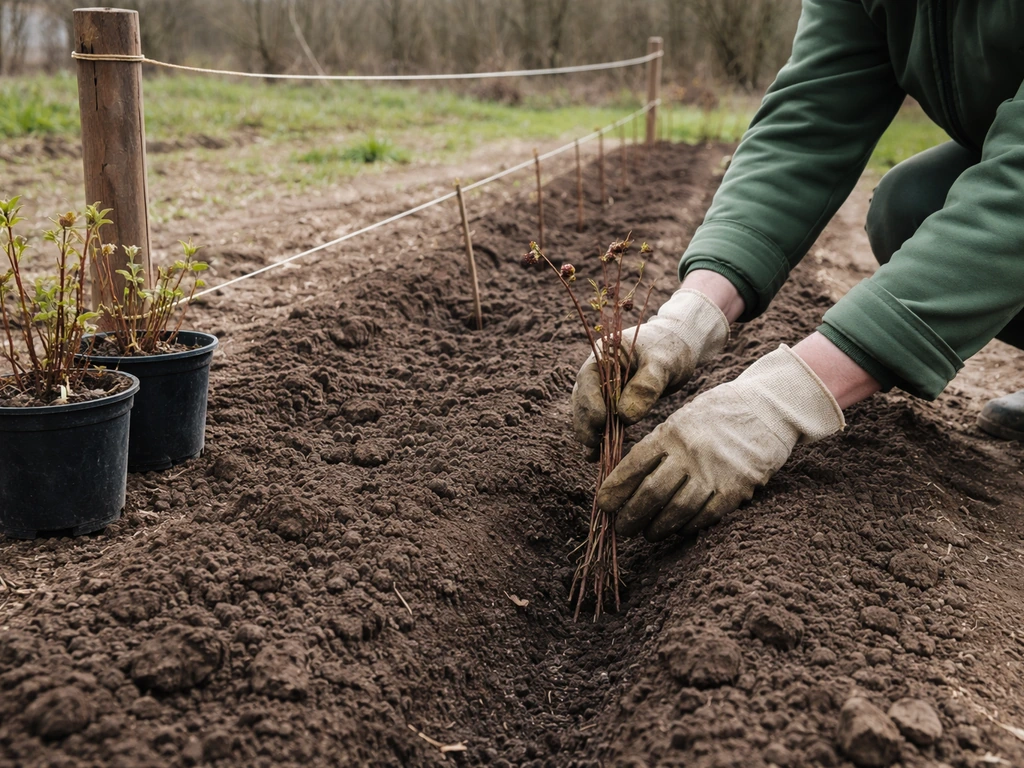
Plant bare-root or potted raspberries in early spring as soon as the soil can be worked. Space plants 2 to 3 feet apart in rows about 8 feet wide. After planting, cut the tops back to about 6 inches to encourage strong root establishment. Trellising is essential: Colorado State University Extension recommends it for all bramble crops because it supports canes, reduces wind damage, and keeps fruit off the ground. A simple two-wire trellis with posts set every 15 to 20 feet works well. Tie canes to the wires as they grow.
Pruning: the part most people skip
Standard (floricane) raspberries produce fruit on second-year canes. After those canes fruit, cut them to the ground in late summer or fall. Keep the current-year canes (primocanes) intact through winter, then thin them to 4 to 6 per plant in late winter before growth resumes. For fall-bearing varieties managed for a single fall crop, the simplest approach is mowing or cutting all canes to the ground in late winter. It sounds drastic, but it works and keeps disease pressure low. Late-winter pruning, done just before bud break, is also the right time to remove any winter-damaged tips.
Strawberries and other easy small fruits
Strawberries are one of the most beginner-friendly fruits for Wyoming gardens. University of Wyoming Extension specifically addresses strawberry establishment in Wyoming conditions, and the main themes are: pick the right type, mulch heavily, and protect plants going into winter. There are three main types to consider.
| Type | Fruiting Pattern | Best For | Wyoming Notes |
|---|---|---|---|
| June-bearing | One large crop in June/July | Maximum yield, preservation | Needs good overwintering; mulch is critical |
| Everbearing | Two crops: spring and fall | Steady fresh eating | Fall crop may get caught by early frost at elevation |
| Day-neutral | Continuous small crops | Containers and small beds | Good for short-season areas; manage heat stress |
Strawberries prefer well-drained soil with a pH of 6. 0 to 6. 5, which is closer to Wyoming's native range than blueberries and more achievable with basic organic matter additions. Plant in early spring, as soon as the ground can be worked.
Set crowns at soil level (too deep and they rot; too shallow and they dry out). Mulch around plants with straw to conserve moisture and suppress weeds. In fall, once the ground starts to freeze, cover the entire bed with 3 to 4 inches of straw mulch. This protects against the freeze-thaw cycles and desiccating winds that kill plants over winter.
Pull the mulch back gradually in spring as temperatures warm, leaving some over the crowns until the last hard frost risk has passed.
Wild berries you might find (and whether to grow them)
Wyoming has a rich palette of native edible berries growing in the wild, and several of them translate directly to the home garden. Knowing what's growing in your region's wild areas is also a good clue about what your soil and climate can support.
- Serviceberry (Amelanchier alnifolia): Also called Juneberry or saskatoon, this is one of Wyoming's best native edible shrubs. It produces sweet, blueberry-like fruits in mid-summer and is extremely cold-hardy. It works well as an edible landscape shrub from 6 to 15 feet tall depending on the species. Birds compete heavily for the fruit, so netting the shrub near harvest time helps.
- Chokecherry (Prunus virginiana): Grows wild across much of Wyoming and produces tart, astringent berries used in jellies, syrups, and wine. It's tough, adaptable, and can form thickets. Not commonly planted for fresh eating but excellent for preserves.
- Elderberry (Sambucus canadensis or S. racemosa): Both the American and red elderberry species grow in Wyoming. American elderberry is more commonly cultivated for fruit. It grows as a large multi-stemmed shrub (up to 10 feet), produces clusters of dark berries, and is very cold-hardy. Space plants 6 to 10 feet apart and note that deer browse them readily, so fencing may be needed in rural areas.
- Wild strawberries (Fragaria virginiana): The native wild strawberry grows in meadows, forest edges, and disturbed areas across Wyoming. The berries are tiny but intensely flavorful. You can transplant runners to your garden where they'll naturalize into a low-maintenance ground cover.
- Kinnikinnick / bearberry (Arctostaphylos uva-ursi): A low-growing native ground cover with small red berries. Edible but mealy and bland fresh; best left for wildlife. Useful as a drought-tolerant landscape plant.
A word on foraging: always make a positive identification before eating any wild berry. Wyoming also has toxic berries growing wild, including baneberry (white or red berries, extremely poisonous) and nightshade. If you're not certain of an identification, consult a field guide with clear photos or connect with your local University of Wyoming Extension office.
For cultivation, serviceberry and elderberry are the two wild species most worth intentionally planting. If you are wondering what berries grow in Michigan, serviceberry is one option worth considering for cold winters. Elderberry in particular establishes quickly, tolerates Wyoming's variable soils, and provides a large harvest within two to three years. Utah State University Extension notes elderberry roots are somewhat shallow, so avoid deep cultivation around established plants.
Matching a berry to your yard: soil, sun, and containers
The single most useful thing you can do before planting any berry in Wyoming is a basic soil test. Alkaline, calcareous soils are common across much of the state, and they affect what you can realistically grow in the ground versus in containers. University of Wyoming Extension has called out soil pH management as a key issue, and it's not something to guess at.
| Berry | Ideal Soil pH | Sun Needs | Container-Friendly? | Key Soil Notes |
|---|---|---|---|---|
| Blueberry | 4.5–5.0 | Full sun | Yes (best option in WY) | Requires major acidification; use peat-based mix |
| Currant/Gooseberry | 5.5–7.0 | Full sun to part shade | Possible in large pots | Very adaptable; tolerate WY soils well |
| Raspberry | 5.5–6.5 | Full sun | Large containers possible | Add organic matter; good drainage critical |
| Strawberry | 6.0–6.5 | Full sun | Yes (excellent option) | Easy to amend; raised beds work well |
| Serviceberry | 5.5–7.0 | Full sun to part shade | Not ideal (large shrub) | Native to WY; highly adaptable |
| Elderberry | 5.5–6.5 | Full sun to part shade | No (too large) | Tolerates moist areas; shallow roots |
| Haskap | 5.5–7.0 | Full sun | Possible in large pots | Much more pH-tolerant than blueberry |
For Wyoming gardeners dealing with poor in-ground soils, containers and raised beds open up a lot of options. A 15- to 20-gallon container filled with a quality potting mix amended with compost can support a productive strawberry, currant, or haskap plant. Blueberries in containers are the most practical approach for most Wyoming locations. Just keep in mind that container-grown plants are more vulnerable to winter temperature extremes because the roots aren't insulated by surrounding soil. Move containers to an unheated garage or insulate them with burlap and wood chips once temperatures drop in fall.
Sun exposure is relatively straightforward: most berries want at least 6 to 8 hours of direct sun for best production. Currants and gooseberries are the most shade-tolerant if you have a partially shaded spot. Wind protection matters more in Wyoming than in most states. A fence, hedgerow, or building on the prevailing wind side (usually the west or northwest) makes a real difference for fruit set and moisture retention.
Planting, care, and overwintering checklist
Here's a practical, season-by-season checklist to take you from site prep through your first few harvests. Yes, you can grow and harvest some berries in winter in Wyoming, but it depends on your variety and protection like mulching and wind shelter. It applies broadly across Wyoming; adjust timing based on your specific zone and elevation.
Before you plant (fall or early spring)
- Take a soil test through your local Extension office and get results interpreted for fruit crops.
- If your soil pH is above 7.0 and you want to grow blueberries in-ground, apply elemental sulfur the fall before planting and retest in spring. This takes months to work.
- Choose your site: full sun, protected from prevailing winds, with good drainage. Avoid frost pockets in low-lying areas.
- Work 3 to 4 inches of compost into the top 12 inches of soil for raspberries, currants, and strawberries.
- Install trellising posts and wires for raspberries before planting so you're not disturbing roots later.
- Order bare-root starts in late winter for early-spring arrival. Nurseries in the Intermountain West (Utah, Colorado, Montana) often carry cold-hardy varieties better suited to Wyoming than general catalog sources.
Planting and first-season care
- Plant bare-root stock as early as the soil can be worked, typically late April to mid-May depending on your elevation.
- Water deeply at planting and maintain consistent moisture through the first growing season. Drip irrigation is ideal for Wyoming's dry conditions.
- Apply 3 to 4 inches of organic mulch (wood chips, straw) around all newly planted berries, keeping it a few inches away from stems/crowns.
- Cut raspberry canes back to 6 inches after planting to redirect energy into root development.
- Don't fertilize blueberries heavily in year one. Wait until plants show new growth, then use an acidifying fertilizer formulated for blueberries at half the recommended rate.
- For strawberries, pinch off blossoms in the first season (for June-bearing types) to build stronger plants and a better harvest in year two.
Ongoing care and harvest years
- Prune raspberries in late winter before bud break, removing dead/fruited canes and thinning remaining canes to 4 to 6 per plant.
- For currants and gooseberries, remove the oldest (darkest, most gnarled) canes at ground level every two to three years to keep the plant productive.
- Irrigate during dry spells, especially in July and August when fruit is sizing up. Wyoming summers are dry enough that irrigation is not optional.
- Reapply mulch each spring to maintain a 3-inch layer as it breaks down.
- Watch for mummy berry in blueberries if you're in a moist microclimate; remove and dispose of mummified fruit and fallen debris to break the disease cycle.
- Net serviceberries and blueberries as fruit ripens; birds will strip a planting in days.
Overwintering
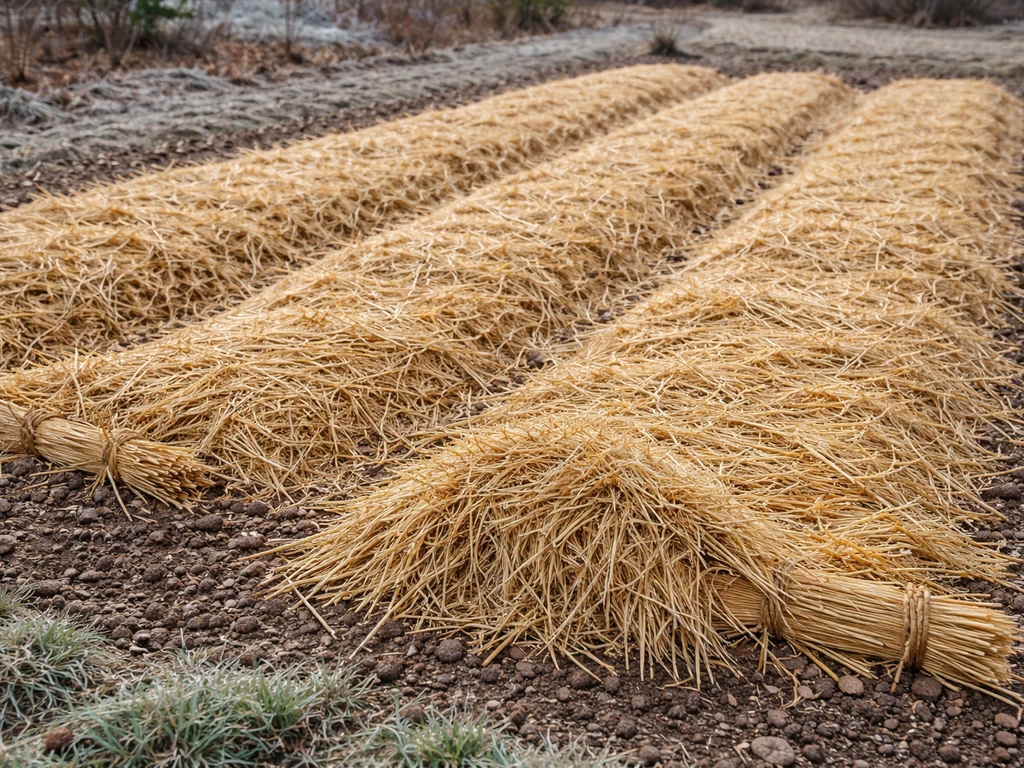
- After the ground begins to freeze in fall (usually October to November depending on elevation), mulch strawberry beds with 3 to 4 inches of straw. Don't apply too early or you may trap warmth and delay dormancy.
- Move containerized blueberries or other container berries to an unheated but frost-buffered space like a garage or shed, or insulate containers heavily with burlap and straw bales.
- For raspberries in Zone 3 or 4, consider laying long canes on the ground and covering lightly with straw or snow before hard freezes set in, then re-tying to the trellis in spring.
- Water all perennial berries in late October before the ground freezes hard. Desiccation is a major winter-kill cause in Wyoming, and plants going into winter with dry roots are far more vulnerable.
- In spring, pull strawberry mulch back gradually once night temperatures stay consistently above about 25°F, but leave some cover over crowns until the last hard frost risk passes.
Narrowing your choices and sourcing plants
If you're still deciding what to plant, start with your town and elevation. Look up your USDA hardiness zone, then check whether your first and last frost dates give you enough of a season for the berry you want. Zone 3 and 4 growers in mountain areas should anchor their plans around currants, gooseberries, haskap, serviceberry, and cold-hardy raspberries.
If you're wondering what berries grow in Washington state, the best choices depend mainly on your climate zone and soil conditions. Zone 5 growers in lower elevations have more flexibility and can add strawberries, elderberry, and potentially in-ground blueberries with good soil prep. For plants, check with local independent nurseries in Casper, Cheyenne, and Cody, or order from mail-order nurseries that specialize in cold-hardy fruit plants.
University of Wyoming Extension offices by county are also a reliable source for variety recommendations specific to your part of the state.
Wyoming's growing conditions are genuinely more hospitable to berries than most people assume. The cold winters actually suit many of these plants perfectly, since currants, gooseberries, raspberries, serviceberries, and haskap are all native to or bred for cold-climate gardening. Get the soil, water, and variety selection right, and you can be picking berries from your own yard within a season or two.
FAQ
What berries grow in Wyoming without needing a soil pH overhaul?
If you want the easiest path, prioritize currants, gooseberries, raspberries, strawberries, serviceberry, and haskap. They tolerate neutral to slightly alkaline conditions much better than blueberries, which require a dedicated acidic mix or long-term in-ground amendments.
Can I grow blueberries in Wyoming if I do not want raised beds or containers?
It’s usually difficult, because Wyoming calcareous soils commonly push pH too high for blueberries. If you refuse containers and raised beds, plan on amending an in-ground bed for an entire season and still expect ongoing pH management, plus close monitoring of irrigation to prevent root stress from dry-wet swings.
Which Wyoming berries fruit earliest in the season?
Haskap typically ripens before many other berries, often in late June to early July. Strawberries can also start early depending on your frost dates, but haskap is often the quickest way to get usable harvests compared with longer-ramp shrubs.
How do I choose berry varieties that will actually survive Wyoming winters?
Use your exact town’s USDA hardiness zone plus the plant’s listed cold tolerance, then sanity-check against your elevation and typical low temperatures. For brambles, also treat wind as a winter injury factor, so a sheltered planting site and trellising can be as important as the variety label.
What’s the best way to handle Wyoming’s dry, windy conditions for berry plants?
Use deeper mulch than you might elsewhere (often 3 to 4 inches for many berry bases) and irrigate consistently during establishment and fruiting. Wind dries soil fast, so avoid shallow watering schedules that let the topsoil dry out while roots are still trying to establish.
Do I need two plants for berries like haskap, blueberries, and some others?
Many fruiting shrubs need cross-pollination for best yields. Haskap needs at least two compatible varieties, blueberries generally do best with two varieties planted together, while currants and gooseberries are often more forgiving depending on the cultivar, but checking pollination requirements for the specific variety will prevent disappointment.
Are there any berries that are risky to forage in Wyoming?
Yes. Wyoming has toxic wild berries, including baneberry and nightshade, which can look superficially similar to edible species. If you are not fully confident in identification, do not eat it, and consider confirming with a local field guide or your county Extension office.
What soil test details matter most for berry success in Wyoming?
Ask specifically for pH and texture, plus recommended amendments based on your county. The pH result determines whether you can grow berries in-ground or must switch to raised beds or containers, and knowing your soil type helps you choose amendments that retain moisture without waterlogging.
How should I prune raspberries in Wyoming if I want the simplest maintenance?
If you want low-maintenance, choose fall-bearing raspberries and manage them for a single fall crop by cutting canes down to the ground in late winter. For summer-bearing types, the pruning is different because fruiting happens on second-year canes, so cutting times and which canes to keep matter.
Do container-grown berries survive Wyoming winters reliably?
They are often productive but less reliable than in-ground plants because roots lack insulation from surrounding soil. Move containers to a protected spot such as an unheated garage, or insulate containers well (for example with burlap and surrounding mulch) once temperatures drop in fall.
What berries are best for partial shade in Wyoming?
Currants and gooseberries are the most shade-tolerant options among commonly grown Wyoming berries. Most others prefer at least 6 to 8 hours of direct sun for strong yields, so partial shade can reduce production if it is not limited.
How long until I can expect a first meaningful harvest in Wyoming?
Many berry plants take time to ramp up. Currants and gooseberries often give a first meaningful harvest in year two or three, strawberries can produce quickly after establishment if planted early and protected well, and blueberries can take several years to reach full production, even when conditions are ideal.