
Cranberries grow on low, trailing, woody vines, not trees and not upright bushes. The plant spreads horizontally across the ground on stems called runners or stolons, and then sends up short vertical shoots called uprights, which are where the flowers and fruit appear. That trailing vine structure is the core answer to the question, and it explains almost everything about how cranberries need to be grown.
What Type of Plant Do Cranberries Grow On? (Bog Tips)
Marcus Holloway
7 Apr 2026
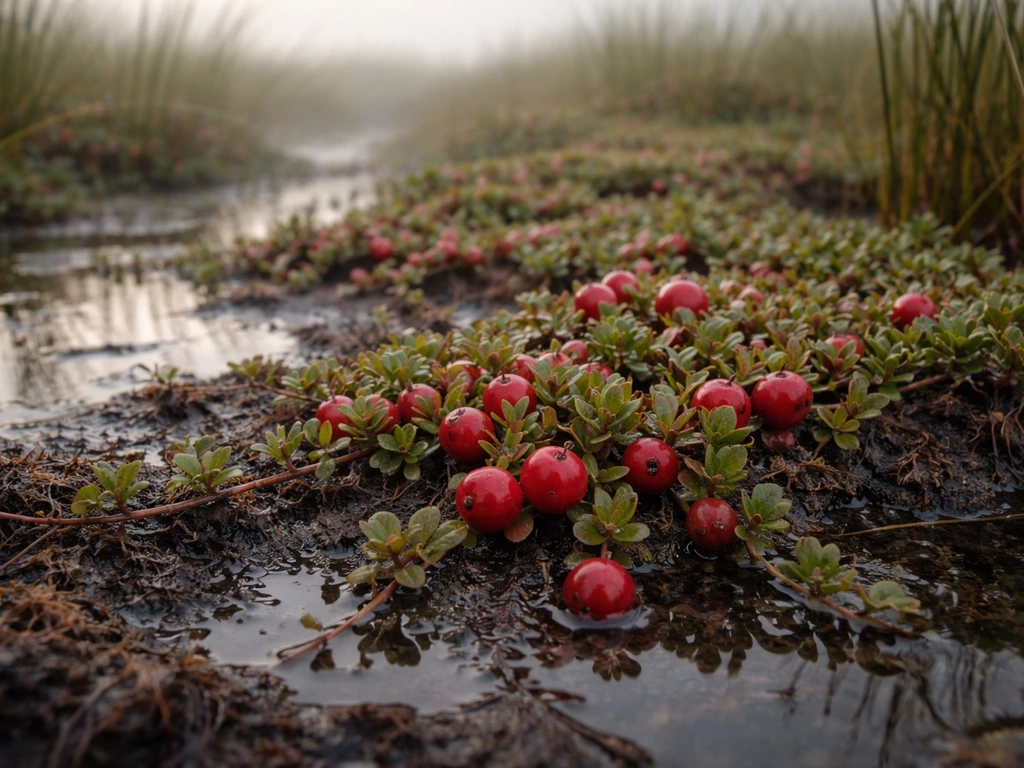
Vine or bush? The cranberry growth form explained
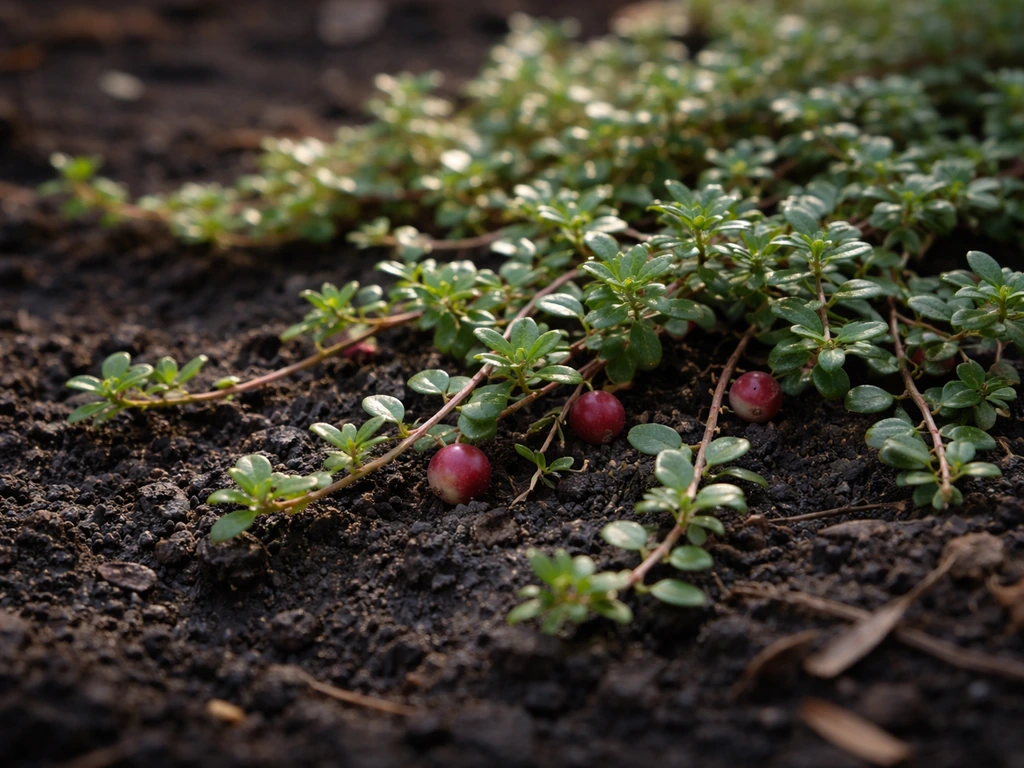
The American cranberry (Vaccinium macrocarpon) is described by NCSU Extension as a 'native low-growing vine, ground cover, or trailing evergreen shrub.' The USDA characterizes it as a 'blank" rel="noopener noreferrer">trailing, low-growing, woody, evergreen vine.' Neither of those descriptions sounds anything like a blueberry bush or a fruit tree, and that distinction matters a lot when you're planning how to grow them. If you've ever wondered do cranberries grow on trees, the answer is a firm no. They're ground-hugging, spreading plants that build up a dense mat over time.
The Cranberry Institute describes the plant as a 'low-growing, vining, woody perennial' whose horizontal runners can extend up to about 6 feet. Think of it more like a strawberry plant that spreads by runners, except cranberry runners are tougher and woodier, and the whole system is a perennial that just keeps expanding year after year. It's genuinely beautiful when it fills in, but it requires a completely different setup than a bush or tree fruit.
One easy way to confirm this: cranberries do grow on vines, and if you search images of commercial cranberry operations, you'll see vast, flat beds carpeted with a low, dense mat rather than rows of upright plants. That mat is built by the runner system.
Where cranberries grow naturally (and why it matters)
In the wild and in commercial production, cranberries grow in acidic, wet, bog-like environments. The plant is what botanists call a calcifuge, meaning it actively dislikes alkaline soil and needs a pH in the range of about 4.0 to 5.5 to thrive. Most garden soil runs higher than that, which is one of the first hurdles home growers hit. Research data from multiple university extension programs, including UMass Amherst, the University of Maine, and Michigan's agricultural guidelines, all confirm that 4.0 to 5.5 is the target window. Go above 5.5 and you'll start to see nutrient uptake problems and weak growth.
The bog connection is real but slightly misunderstood. Many people picture cranberries floating in water, but the plants themselves aren't aquatic. They grow in well-drained (though consistently moist) sandy, acidic soils, with a managed water table sitting roughly 9 to 12 inches below the surface during the growing season. The flooding you see on commercial farms is used for harvest and winter frost protection, not because the vines like being submerged. To understand exactly how that works, the deeper look at whether cranberries grow in bogs is worth a read. And if you're still picturing cranberries as fully underwater plants, the full picture on whether cranberries grow in water clears that up nicely.
Runners, uprights, and what the plant actually looks like
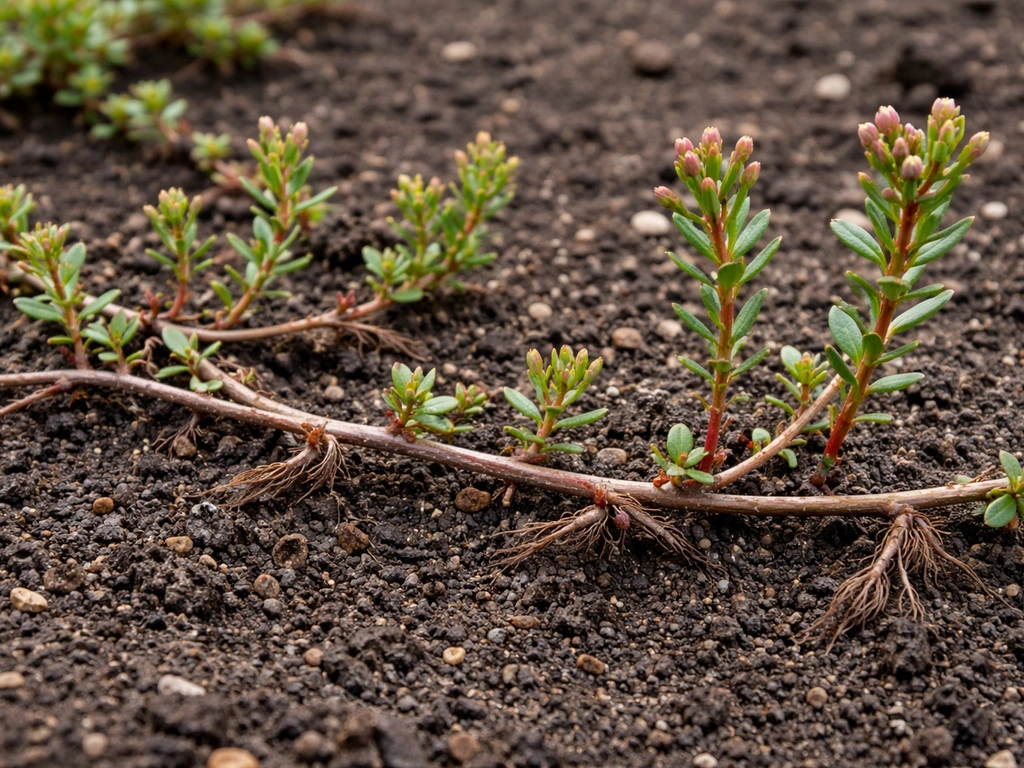
Here's how the cranberry plant architecture works in practice. The runners are the horizontal, woody stems that spread across the surface of your bed. They root into the soil as they go, slowly colonizing the growing area. As the runner mat fills in, vertical shoots called uprights emerge. The uprights are the fruiting part of the plant: they're short (only a few inches tall), and they bear the flowers and eventually the berries. So when you're looking at a cranberry bed, you're seeing a flat mat of rooted runners with these small, upright fruiting shoots poking up through it.
This is why cranberry growing is described in terms of managing a 'bed' rather than tending individual plants. Once established, the runner system knits the whole planting together into one interconnected mat. It's one of those plants where the mental model really does change your approach. You're not maintaining individual shrubs. You're cultivating a living carpet.
Setting up a cranberry bed that mimics bog conditions
If you want to grow cranberries seriously, the setup is the most important part. The University of Maine Extension recommends building a bed over a base layer that slows vertical water movement, which lets the bed hold a flood for harvest and winter protection. On top of that base, you add at least 4 inches of sand. That sand layer is where the vines root and spread. It's a specific construction, and it's worth taking seriously if you're going beyond a casual container experiment.
For soil, you want acidic, sandy, moisture-retentive material. A peat and sand mix is the classic approach. Adjust pH to the 4.0 to 5.0 range using elemental sulfur before planting if your base material is too alkaline. The water table during the growing season should sit around 9 to 12 inches below the surface. That sounds specific because it is. Too dry and the shallow-rooted vines struggle. Too wet and you invite fungal disease, which is a real concern for new plantings. UMaine notes that the frequent irrigation needed for establishment can increase the risk of fruit rot and other fungal problems, so the goal is consistently moist, not waterlogged.
Irrigation water pH is also something to watch. If your tap or well water has a higher pH (above 6.5 or so), regular irrigation can gradually nudge your soil pH upward over time, eventually moving you out of that 4.0 to 5.5 sweet spot. This is a documented issue in Wisconsin's cranberry-growing regions, where irrigation water with elevated pH has been linked to soil pH drift. Test your soil annually and correct as needed.
Practical steps for building a small home cranberry bed
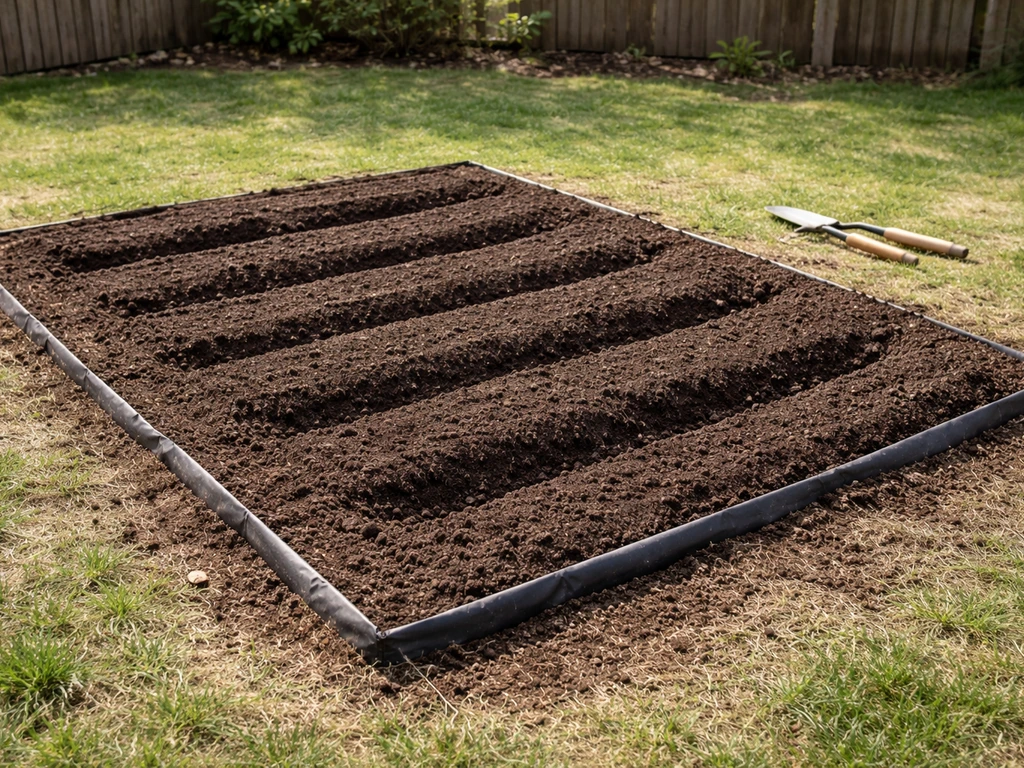
- Choose a sunny, level site that can hold moisture. Low spots are fine as long as they don't flood completely.
- Lay down a compacted base layer (clay or lined material) to slow vertical drainage and allow the bed to hold a flood if needed for frost protection.
- Add at least 4 inches of coarse, acidic sand above the base layer. This is your growing medium.
- Amend with peat moss to improve moisture retention and lower pH. Target pH 4.0 to 5.0.
- Test and adjust soil pH before planting. Use elemental sulfur if your starting pH is too high.
- Plant rooted cuttings or young plants at spacing that allows runners to spread, typically about 12 to 18 inches apart.
- Maintain consistent moisture during establishment. The water table should stay 9 to 12 inches below the surface.
- Mulch lightly with sand to protect runners and help new roots anchor quickly.
Container and small-space cranberry growing
Yes, you can grow cranberries in containers, and for a lot of home gardeners this is the most realistic option. The key is accepting that you're working with a trailing vine, not a compact plant, so wide and shallow containers work much better than deep pots. Think large planter troughs, half whiskey barrels, or dedicated raised bog beds lined to hold moisture. The runners need room to spread.
Fill your container with a mix of peat and coarse sand, targeting a pH of 4.5 to 5.0. Make sure drainage holes exist but that the mix stays consistently damp. You can sit the container in a shallow saucer of water to help maintain that moisture level between waterings. The cranberry vine will trail over the edges of the container and look great, especially in fall when the berries color up. Container-grown plants produce modest yields compared to a proper bog bed, but they're completely doable and a great way to learn how the plant grows.
One thing to keep in mind with containers: they heat up faster than in-ground beds, which can push the soil pH up more quickly as organic matter breaks down. Check pH every spring and amend as needed. Also, container plants are more vulnerable to freeze-thaw cycles in very cold winters, so if you're in Zone 3 or 4, either bury the container or move it to an unheated garage for winter protection.
Climate and zone compatibility
American cranberry (Vaccinium macrocarpon) is hardy in USDA Zones 3 to 7 according to UVM Extension, with some sources extending that to Zone 2 for cold tolerance. That's a wide range, which is good news for northern and mid-latitude growers. The plant needs a genuine cold dormancy period in winter, so it's actually more at home in cold climates than warm ones. Growers in the deep South or warm coastal areas often struggle to get cranberries to perform well because the plants don't get the chilling hours they need.
Cranberry production in the U.S. is concentrated in Massachusetts, Wisconsin, New Jersey, Oregon, and Washington for a reason. Those regions have the cold winters, acidic soils, and access to water that the plant wants. If you're curious whether your specific region is a match, the detailed look at whether cranberries grow in Michigan is a good example of region-specific analysis you can use as a template for evaluating your own location.
| Climate/Zone | Suitability | Best Setup | Key Challenge |
|---|---|---|---|
| Zones 3 to 5 (cold north) | Excellent | In-ground bog bed or raised bog bed | Spring frost damage on uprights; flood protection helps |
| Zones 6 to 7 (mid-latitude) | Good | Raised bog bed or large containers | Summer heat can stress plants; keep soil consistently moist |
| Zone 8+ (warm south/west) | Poor to none | Containers with cold storage in winter | Insufficient chilling hours; heat stress during growing season |
| Pacific Northwest (mild, wet) | Moderate to good | In-ground or raised bed | Rainfall may help moisture but winters may be too mild in southern areas |
If you're in Zone 8 or warmer and really want to grow cranberries, container growing with a cold storage period (a cool garage or refrigerator for part of the winter) is worth experimenting with. Yields will be low and the process is more work, but it's possible on a small scale. For most growers in those climates, though, blueberries or other Vaccinium relatives that tolerate more warmth will be a much easier and more rewarding choice.
Quick comparison: vine vs. bush vs. tree fruit setup
To make this concrete, here's how cranberry's trailing vine setup compares to the other common berry growth forms you might be working with in your garden. In a related discussion on a whatsthisplant subreddit, commenters note that visible fruit and growth features, including where shoots emerge from nodes or buds, can help distinguish Vaccinium-related plants from photos features (including growth from nodes/buds) can be diagnostic. This comparison helps clarify why the bog bed approach is so specific and non-negotiable.
| Plant Type | Growth Habit | Soil Needs | Water Needs | Space Required |
|---|---|---|---|---|
| Cranberry (Vaccinium macrocarpon) | Trailing vine / runner mat with fruiting uprights | Acidic, sandy, pH 4.0 to 5.5 | Consistently moist; high water table 9 to 12 in. below surface | Wide and flat; runners spread 6+ feet |
| Blueberry (Vaccinium corymbosum) | Upright woody bush, 4 to 8 ft tall | Acidic, well-drained, pH 4.5 to 5.5 | Moderate; good drainage needed | Individual plant spacing, 4 to 6 ft apart |
| Strawberry (Fragaria × ananassa) | Low herbaceous plant with surface runners | Loamy, pH 5.5 to 6.5 | Moderate, consistent watering | Runners spread but less aggressively than cranberry |
| Raspberry (Rubus idaeus) | Upright canes, biennial fruiting | Well-drained loam, pH 5.5 to 6.5 | Moderate | Rows or trellised canes, 3 to 4 ft spacing |
The takeaway from that comparison: cranberry is the most demanding in terms of soil and moisture management, and its trailing form means you need to think about bed area rather than individual plant placement. But if you get the conditions right, it's a beautiful, low-maintenance ground cover that produces fruit for decades. I've seen well-established cranberry beds that are 20 or 30 years old, still producing reliably, with almost no replanting needed. That kind of longevity makes the upfront setup effort very worthwhile.
FAQ
Do cranberry vines grow upright like blueberry bushes?
No, even though cranberries are in the Vaccinium group like blueberries. Cranberries form a spreading vine mat with short upright fruiting shoots, so you cannot space them like blueberry bushes or expect them to grow upright on their own.
How can I tell a cranberry plant from another berry in the garden?
Look for horizontal woody runners that root along the bed surface, then short upright shoots that poke up to flower and fruit. In contrast, berry bushes mainly stay as one woody framework, with new growth coming straight up rather than forming a ground-cover mat.
If cranberries are on vines, how much space do the runners actually need?
Cranberry vines will colonize nearby space over time, but they still need a planned bed area. Expect runners to expand, so give plenty of room and avoid treating them as a single “plant spot,” which usually leads to weak coverage or uneven rooting.
Why do commercial cranberry farms flood the beds if the plants are not aquatic?
They are not fully aquatic plants. The bog or bed is kept consistently moist with a managed water table, but the vines need oxygen in the rooting zone. Heavy, uncontrolled standing water increases fungal disease risk rather than improving growth.
Do cranberries need to be “established first” before they produce berries?
Cranberries flower on the upright shoots, but those uprights come from the established runner mat. The best “plant type” to buy for your goal is healthy, well-rooted vines that will spread, not just bare cut runners with no roots.
What’s the most common mistake that ruins cranberry beds over time?
Yes, nutrient and soil chemistry drift can affect plant vigor even when you build the bed correctly. The biggest common mistake is using irrigation water or amendments that slowly raise pH above the target range, which can cause poor nutrient uptake and weak growth.
Can I grow cranberries by lowering my soil pH only at planting time?
If your soil pH is above the target range, you typically cannot “fix it once” and forget it. You usually need a system that includes an acidic growing medium (often peat and sand) and ongoing monitoring, because alkaline influence and irrigation water can push pH upward again.
What container setup mistakes most often lead to failure?
Most container failures come from using a deep pot (root zone gets too unstable) or letting the mix dry out too long. Wide, shallow containers work better, and many growers maintain moisture by periodically checking damping down to the runner rooting area, not just surface wetness.
If cranberries are evergreen, will they still need winter cold to fruit?
Some people describe cranberries as “evergreen,” but home plants can look less lush in cold periods. The key is that they still need a real chilling and dormancy period, so if you skip cold exposure, you may get poor flowering the next season.
How long does it take for cranberry vines to form a productive mat?
To get reliable coverage, focus on bed construction and consistent moisture, then give time for runner spread. Bedding plants that are immature or too small may look fine but take longer to knit into a dense mat, which delays fruiting.