
Yes, cranberries grow in bogs, and that is genuinely their preferred habitat. Wild cranberries (Vaccinium macrocarpon) are native to bogs, swamps, and wet shorelines across northern and eastern North America, and commercial cranberry production is built almost entirely around replicating those bog conditions artificially. BioInteractive (HHMI) also notes that American cranberry (Vaccinium macrocarpon) grows in acidic, sandy bogs and marshlands acidic sandy bogs and marshlands. If you want to grow cranberries successfully, thinking in terms of bog ecology is the single most useful frame you can use.
Do Cranberries Grow in Bogs? How to Grow Them
Marcus Holloway
28 Apr 2026
Why cranberries are built for bogs
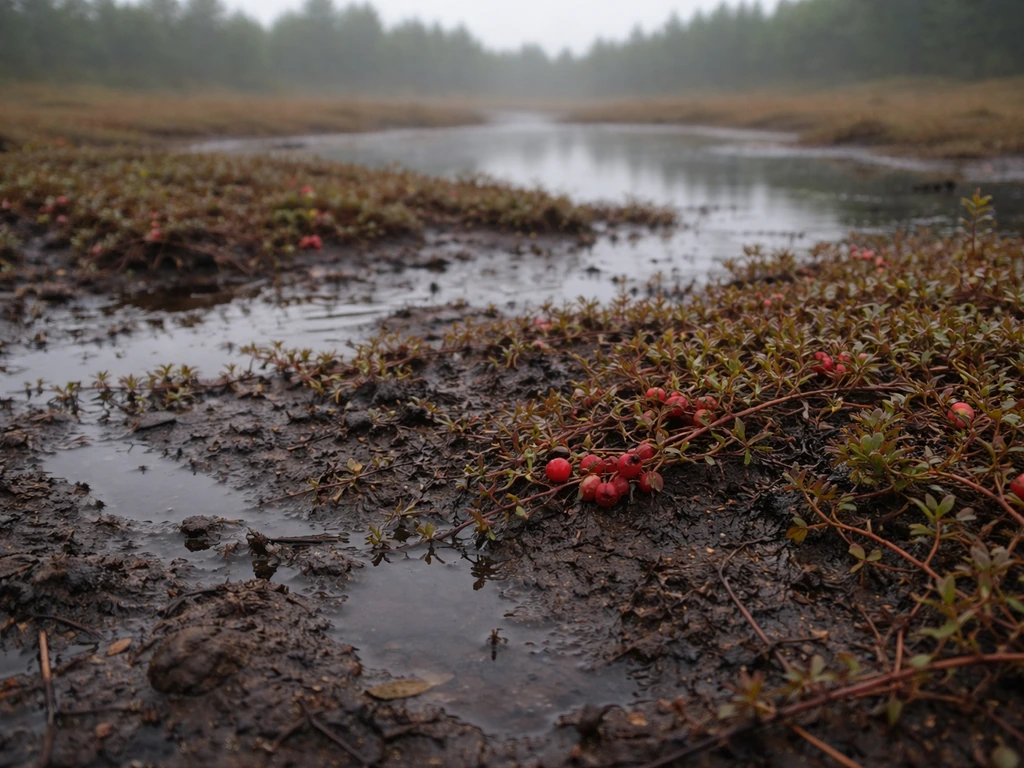
Cranberries have adapted over thousands of years to conditions that would kill most other fruiting plants. Bogs offer a very specific combination of factors: highly acidic soil, low nutrients, constant moisture, and a shallow, well-defined root zone. Most plants cannot compete in that environment, which is exactly why cranberries thrive there with so little competition.
The soil pH that cranberries need sits between 4.0 and 5.5. That is genuinely acidic, in the same range as peat moss itself, and it is the pH you find naturally in a sphagnum bog. Outside that range, the plant struggles to absorb nutrients properly, and yields drop off quickly. The bog's organic peat base delivers that acidity consistently while also retaining moisture around the shallow root zone, which only needs to be about six inches deep to support a productive plant.
Bogs also tend to sit over a high water table, which keeps the root zone moist without the grower constantly irrigating. Cranberries can draw water upward through capillary rise when the water table sits as much as 18 inches below the root zone. That water table proximity is what makes bog environments so naturally suited to cranberries: the plants get consistent moisture without the grower having to manage it manually.
How cranberries actually grow in a bog
Plant structure: runners and uprights
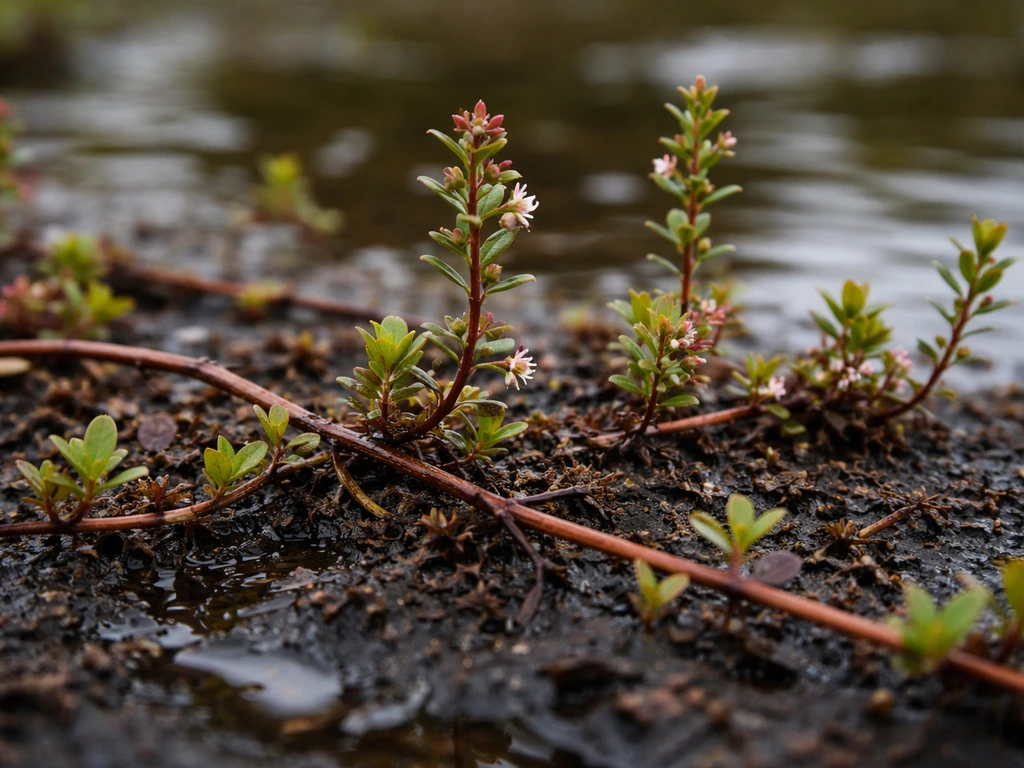
Cranberries do not grow as shrubs or trees. <a data-article-id="84AC0E22-32B8-46FA-A6D9-2D41DEDE05F7">They grow as low, spreading vines that form a mat across the bog surface.</a> Long horizontal stems called runners spread across the ground and send up short vertical shoots called uprights. Those uprights are where the flowers and fruit form. If you are wondering do cranberries grow on vines, the key detail is that cranberry vines spread as low, spreading runners rather than growing upright like a typical vine crop. Over time, a well-established planting covers the entire bed surface with an interlocking mat of runners, and the uprights poking up through that mat are what you see when a bog is in fruit.
Because the roots are shallow and the runners spread laterally, cranberries are perfectly suited to the thin, organic-rich surface layer of a bog. They do not need deep soil. What they need is a stable, moist, acidic surface layer they can spread across, which is exactly what a bog provides.
The growth cycle through the year
The cranberry's production cycle from bud initiation to harvest spans roughly 16 months, which surprises a lot of first-time growers. A flower bud that develops this fall will produce fruit next fall. In practical terms, the year looks like this:
- April through May: Plants break dormancy. Uprights begin elongating and flower buds that were set the previous summer start developing.
- Early June through mid-July: Bloom and pollination occur. Bees are critical at this stage, and commercial growers bring hives onto the bog during this window.
- July through September: Fruit develops and sizes up on the uprights. Water management is critical here, with plants needing roughly 0.20 to 0.25 inches of water per day during the hottest, driest periods.
- September through October: Harvest. Commercial bogs are flooded so the buoyant berries float to the surface and can be corralled and pumped out.
- Early winter: Beds are flooded again so ice forms over the plants, protecting them from freeze damage. The flood is applied after the surface soil layer has frozen.
The bog environment supports all of these stages. The consistent moisture handles summer irrigation needs, the water table management allows for protective flooding in winter, and the acidic peat holds the root system stable through the freeze-thaw cycle.
How wet does a bog actually need to be?
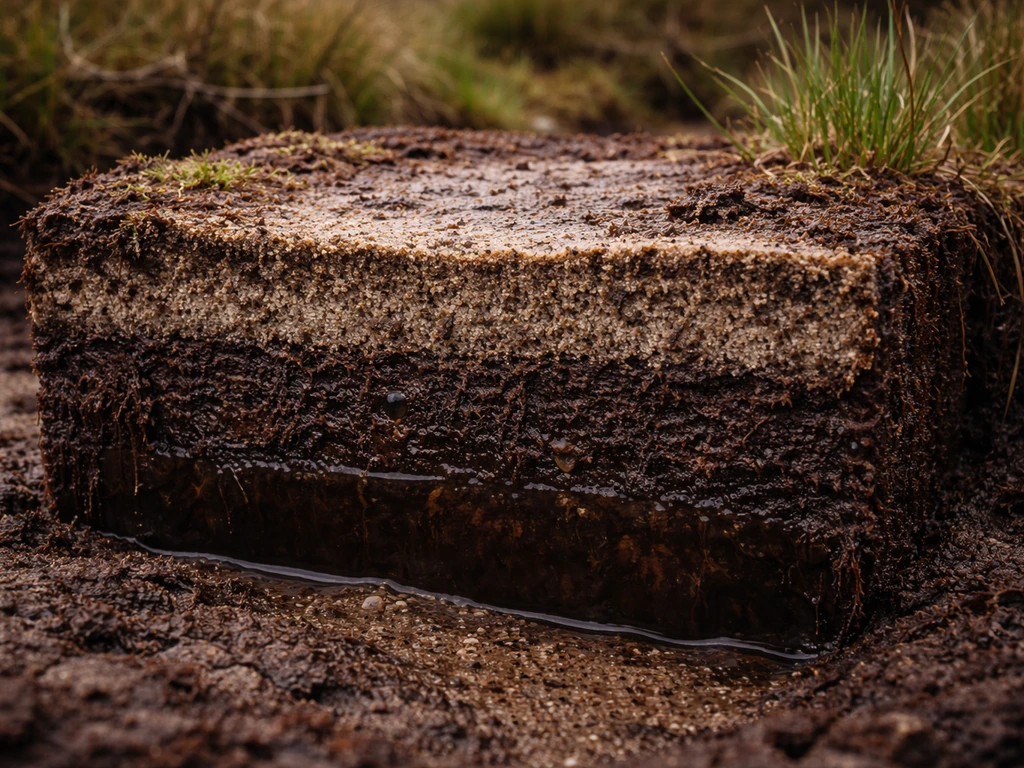
This is where a lot of people get confused, especially when they hear the term "water bog" or see photos of harvested cranberry bogs flooded with water. The flooding you see at harvest is a management technique, not the normal growing condition. For most of the growing season, cranberries are not sitting in standing water. So even though cranberry bogs are wet, cranberries do not grow in water the way many people assume standing water.
The sweet spot is a moist, well-oxygenated root zone about six inches deep. Constantly saturated soil, where oxygen is completely unavailable, will damage roots just as badly as drought stress. OSU Extension research makes this explicit: saturated soils become oxygen-poor, and roots in oxygen-poor soil cannot function properly. The goal is to keep the soil consistently moist and the water table close to the surface, not to drown the plants.
| Moisture Condition | What It Means for Cranberries | Result |
|---|---|---|
| Too dry (water table more than 18 inches below roots) | Capillary rise cannot supply enough moisture | Drought stress, poor fruit set, reduced yield |
| Ideal bog moisture (water table within 18 inches, moist but aerated root zone) | Roots have moisture and oxygen simultaneously | Healthy establishment, good flowering and fruiting |
| Fully waterlogged / standing water during growing season | Oxygen unavailable in root zone | Root damage, poor nutrient uptake, plant decline |
| Controlled winter flood (after surface soil freezes) | Ice layer protects dormant vines from hard freezes | Normal winter protection practice, no harm to plant |
Commercial cranberry beds are built with a coarse sand layer (roughly 70% coarse sand composition) specifically to allow water to move through the root zone and prevent surface ponding while keeping moisture readily available. That sand layer is what separates "good bog drainage" from "waterlogged swamp." If you are thinking about home growing, that distinction matters a lot.
Replicating bog conditions at home
You do not need to own an actual bog to grow cranberries, but you do need to replicate the key conditions: acidic soil, consistent moisture, a shallow root zone, and a climate with enough cold to satisfy the plant's dormancy requirement. Cranberries are often discussed as vine plants, but the key is that they grow as low, trailing vines in bog-like conditions rather than like true climbing garden vines do cranberries grow on vines. Cranberries grow best in USDA zones 2 through 7, and if you are in the northern US, Canada, or the Pacific Northwest, you are in good shape.
In-ground bog bed setup
If you have a low-lying, naturally moist area in your yard, that is your best starting point. The classic approach is to dig out a bed 6 to 8 inches deep, line it with heavy plastic sheeting to retain moisture, and fill it with a mix of coarse sand (about 70%) and acidic peat. Test the pH and adjust it to between 4.0 and 5.5 using elemental sulfur before planting. The liner prevents the moisture from draining away too quickly while still allowing you to manage water levels. University of Maine Cooperative Extension recommends planting vines between May 1 and June 6, giving them enough time to establish before their first winter.
Container growing
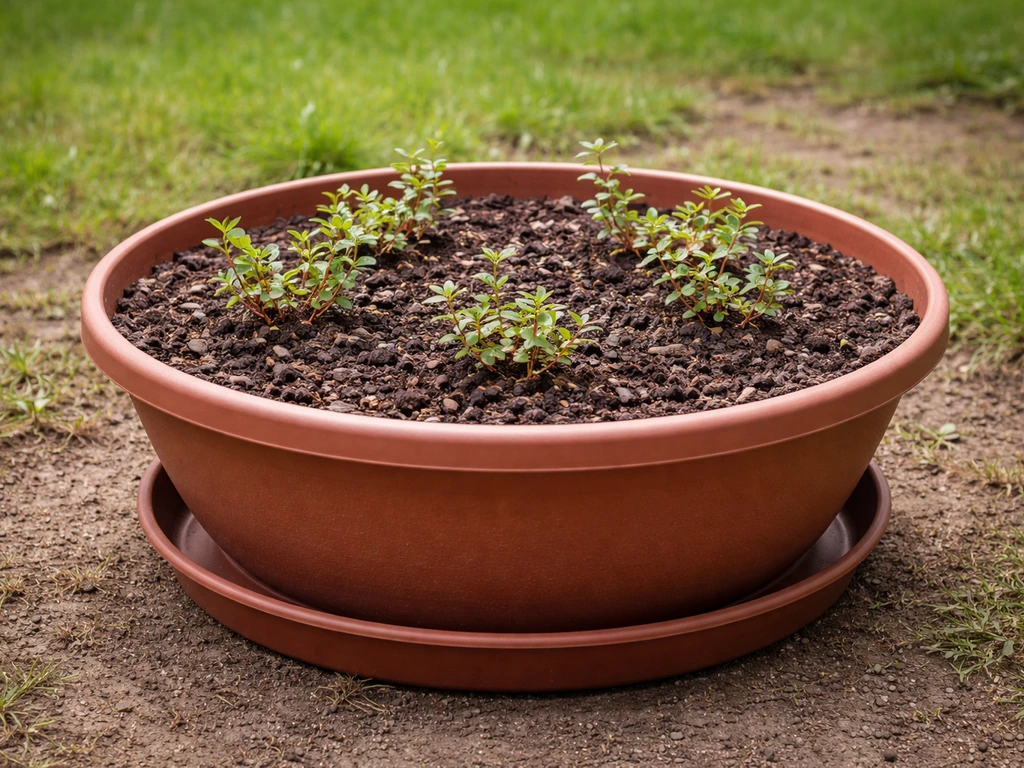
Cranberries actually do well in large containers if your yard cannot support an in-ground bog bed. Use a wide, shallow container at least 18 inches across and 12 inches deep, with drainage holes you can partially block to keep the growing medium consistently moist. Fill it with a 50/50 mix of coarse sand and peat moss, check the pH (target 4.0 to 5.0), and set it in a location that gets full sun. The challenge with containers is keeping soil moisture consistent during summer heat, especially during the 0.20 to 0.25 inch per day water demand window in peak summer. A drip line or daily watering schedule helps a lot.
Site and climate considerations
Cranberries need full sun, at least 6 hours a day. They also need a real winter: the plant requires cold dormancy to cycle properly, and growers in zones 8 and warmer will find it very difficult to get consistent fruiting. If you are in a mild-winter region, container growing with some cold exposure (moving the container to an unheated garage or shed for a few months) is worth experimenting with, but results will be less predictable.
Common mistakes to watch out for
I have seen (and made) most of these errors, and they almost always trace back to misunderstanding the bog environment cranberries actually need.
- Wrong pH: This is the number one problem for home growers. If your soil pH is above 5.5, the plant will grow slowly, look chlorotic (yellowing leaves), and produce almost no fruit. Test before you plant and adjust with elemental sulfur, not lime.
- Standing water during the growing season: Flooding is for harvest and winter protection, not summer growing. If your bed stays waterlogged from June through September, root oxygen is depleted and the plant declines. Make sure your sand-based mix drains while still staying moist.
- Planting too late: Vines need time to establish before winter. If you plant after mid-June, the plant may not root deeply enough to survive a hard freeze. Aim for the May 1 to June 6 window.
- Expecting fruit in year one: Cranberries take 3 to 5 years to start producing meaningfully. The 16-month production cycle means patience is built into the biology. Do not pull plants because they did not fruit the first season.
- Skipping pollination: Without bees or other pollinators visiting during the June-to-July bloom window, you will get almost no fruit even if the plant is perfectly healthy. If you are growing in a covered space or an area with low bee activity, hand pollination or introducing a hive nearby is worth the effort.
- Ignoring winter water management: In cold climates, an unprotected cranberry bed can suffer severe freeze damage to the vine tips. Commercial growers flood beds for winter protection; home growers can apply a deep mulch of straw or pine needles if flooding is not practical.
One last thing worth knowing: cranberries are perennial and slow to establish, but once they are going, a well-managed bed can produce for decades. The investment in getting the bog conditions right at the start pays off for a very long time. Whether you are setting up an in-ground bed in Michigan or a container planting on a Pacific Northwest patio, the core variables are the same: acidic soil, consistent moisture without waterlogging, full sun, and a cold winter to reset the clock each year. If you are wondering do cranberries grow in Michigan, the short answer is yes, as long as you can create the right bog-like conditions.
FAQ
How can I tell if my bog-style bed is too wet for cranberries?
Cranberries can tolerate wet ground, but they do not need to be continuously submerged. The practical goal is a consistently moist, oxygenated root zone (about six inches deep) with the water table kept close enough for capillary rise, not standing water that eliminates oxygen for long periods.
What’s the difference between a bog-like wet bed and a swamp-like waterlogged area?
If the soil stays saturated and does not drain enough to allow air into the root zone, roots can struggle. A simple check is how long the surface takes to dry slightly after heavy watering or rain, if water ponds at the surface for hours to days, or if you see a consistently muddy, oxygen-poor layer.
Does the planting date matter, and what happens if I miss the recommended window?
Planting too early or too late can reduce establishment. The article mentions a suggested window (roughly May 1 to June 6), and if you plant outside that range, focus on giving plants enough time to root before winter and avoid planting when the soil is still cold.
What are the most common reasons home cranberry beds fail despite “doing everything right”?
Most failure cases come from pH and moisture, not the variety. Even if you copy the sand and peat mix, you must test pH and keep it in the acidic range, and you need moisture consistency. For example, letting the bed dry out between waterings can be as harmful as staying saturated.
How long does it take to lower soil pH with elemental sulfur before planting cranberries?
Elemental sulfur is used for lowering pH, but it does not act instantly. Plan to test and adjust ahead of planting, then re-test before vines go in, because you want the root zone in the 4.0 to 5.5 range from day one.
Should I prune or trellis cranberries to control their growth?
Do not treat cranberries like other fruit vines that are trained upward. Because they spread by runners and form a mat, you typically manage by keeping beds weed-free and avoiding disruptions to the mat, rather than pruning for height.
How do I control weeds without harming the shallow runners and roots?
Yes, you can reduce weeds in new beds, but avoid heavy tilling once the mat starts forming because shallow roots and runners can be damaged. Use mulch or careful surface weed control compatible with acidic bog media, and keep competition low especially during the first season.
Do cranberries need fertilizer, and what’s the risk of over-fertilizing?
Cranberries do benefit from a balanced approach, but the key in bog setups is low nutrient availability. Over-fertilizing, especially with sources that raise pH or add excess salts, can hurt fruiting and worsen water quality in the root zone.
If I grow cranberries, when should I harvest for best flavor and storage?
Longest storage and shelf life depends more on harvest timing and handling than on where the cranberries grow. If you harvest early, you get more tart fruit that holds well, and if you harvest later for sweetness, quality can still be excellent but you need prompt cooling and gentle handling to avoid soft berries.
Can I substitute wild cranberry plants or other Vaccinium species if I cannot get commercial cranberries?
Wild cranberries (Vaccinium macrocarpon) and other Vaccinium species are not guaranteed to behave the same in a constructed bog. For best odds, use true cranberry varieties intended for bog or wetland-style cultivation rather than trying to substitute look-alikes.
What’s the best strategy for growing cranberries in warm-winter climates?
If you are in a warm winter region, fruiting is unreliable because dormancy requirements are not met. Container growing can help you provide cold exposure for a few months, but results are less predictable than in zones 2 through 7.
How do I keep container-grown cranberries from drying out in summer?
You can grow in containers, but moisture swings are the biggest challenge in summer heat. Using a wide, shallow container, partial drainage hole blockage, and a drip line or consistent daily watering schedule helps keep the root zone moist without creating prolonged oxygen-poor saturation.