
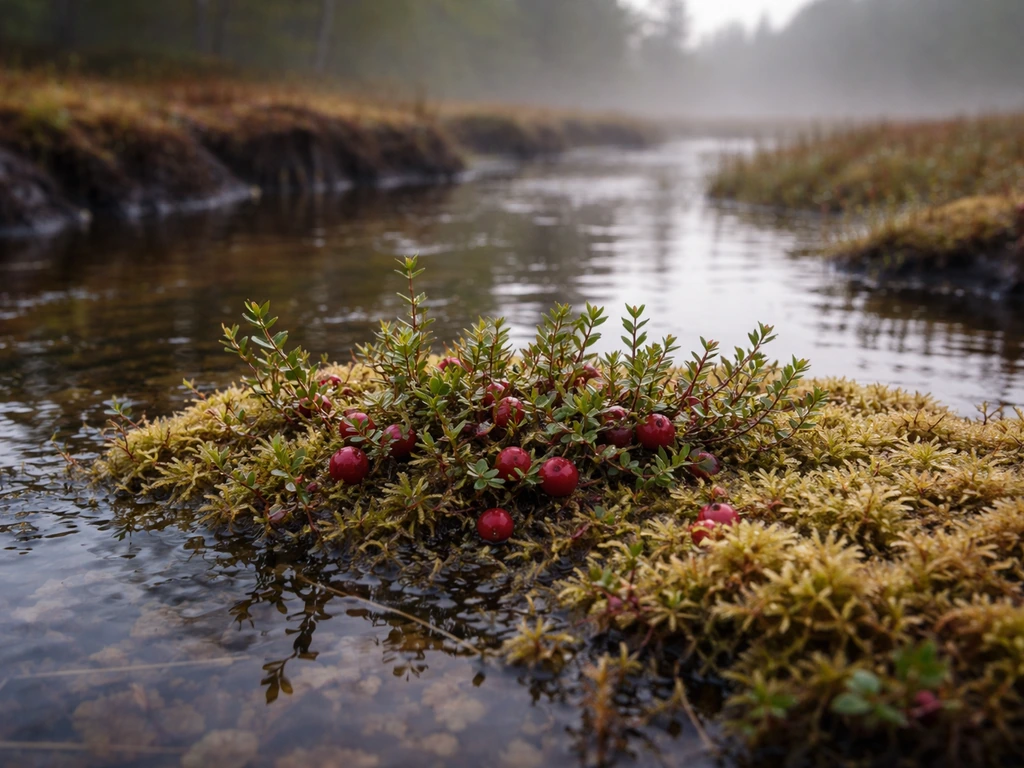
Cranberries do not grow fully submerged in water. That image you've seen of harvesters wading through flooded fields? That's a harvest technique, not how the berries actually grow. Cranberries grow on low-trailing vines in moist, acidic, well-aerated soil. Water is managed around them strategically, not used as a growing medium. That said, water is absolutely central to cranberry production, and understanding how it's used is the key to growing cranberries successfully at home.
Does Cranberries Grow in Water? How to Grow Them in a Bog
Marcus Holloway
2 Apr 2026
Wetlands vs. standing water: where cranberries actually live
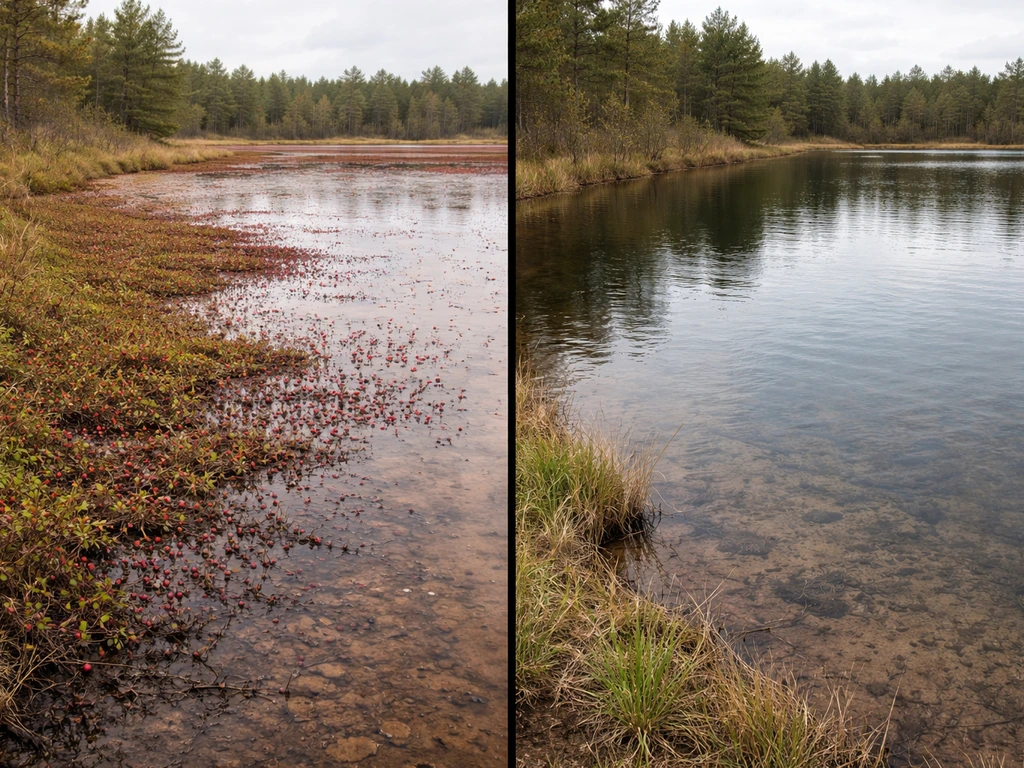
Cranberries are native to wetland environments, which is probably where the water confusion starts. But there's a meaningful difference between a wetland and a pond. Wetlands are areas where the soil stays consistently moist and water tables sit high, but the ground surface itself isn't permanently flooded. Cranberries thrive in exactly that kind of environment: damp, spongy, acidic soil where water drains slowly and the root zone stays saturated without becoming waterlogged all the time.
Commercial cranberry bogs are built on engineered hydrology systems, with berms and water-control structures that allow growers to flood and drain beds on a schedule. During the growing season, plants are not underwater. Flooding events happen at specific times: fall for harvest, late fall through winter for vine protection, and occasionally mid-season for pest and frost management. The rest of the year, the vines sit in moist soil and breathe. This is a crucial distinction if you're planning your own setup. If you'd like more context on how cranberries grow in bogs, that ecology is worth understanding before you start digging.
Why water matters so much to cranberries
Cranberries evolved in bog ecosystems shaped by Sphagnum moss, which forms thick, water-retaining mats over wet ground. These environments are naturally acidic (pH 4.0 to 5.5), nutrient-poor, and cold in winter. Cranberry vines adapted to exactly those stressful conditions. They've developed a root system that functions in a moist, oxygenated zone roughly six inches deep, which means they need consistent moisture but also need oxygen reaching their roots. Fully submerged roots would suffocate them.
Flooding plays a protective role rather than a nutritive one. Winter floods, typically held from around December through mid-March at depths of 8 to 12 inches (sometimes up to 18 inches in older production methods), shield the vines and buds from freeze damage. Harvest floods, usually about a foot deep, cause the air-filled berries to float to the surface where they can be corralled and collected. Occasional mid-season flooding can knock back insect populations. None of these floods are about feeding the plant with water; they're about managing temperature, pests, and harvest logistics. Understanding how cranberries grow on vines helps explain why the plants survive these periodic floods without drowning.
Can you actually grow cranberries at home with a water-based setup?
Yes, and plenty of home gardeners do it successfully, but it takes honest planning. Cranberries are not tropical plants. They need a cold dormancy period (roughly 1,000 to 1,200 chill hours below 45°F) to set fruit the following season. If you're in a warm climate, say USDA zones 8 and above in the American South or Southwest, growing cranberries outdoors year-round is a losing battle. You'd be fighting both the wrong soil chemistry and insufficient winter cold. Growers in zones 4 through 7 have the best shot, particularly in the Northeast, the Great Lakes region, and the Pacific Northwest.
That said, container setups give gardeners in marginal zones a workaround. You can grow cranberries in pots or raised bog beds and move them to a cold garage or unheated space for winter dormancy. I've seen gardeners in zone 8a pull this off with compact varieties like 'Stevens' or 'Ben Lear' by treating the dormancy phase like a vegetable requiring vernalization. It's more management, but it's doable. Growers in the Great Lakes area, for instance, have a real natural advantage. Cranberry growing in Michigan is actually well-established at a production level, and the regional climate conditions there translate well to home setups.
Setting up your water-style cranberry system
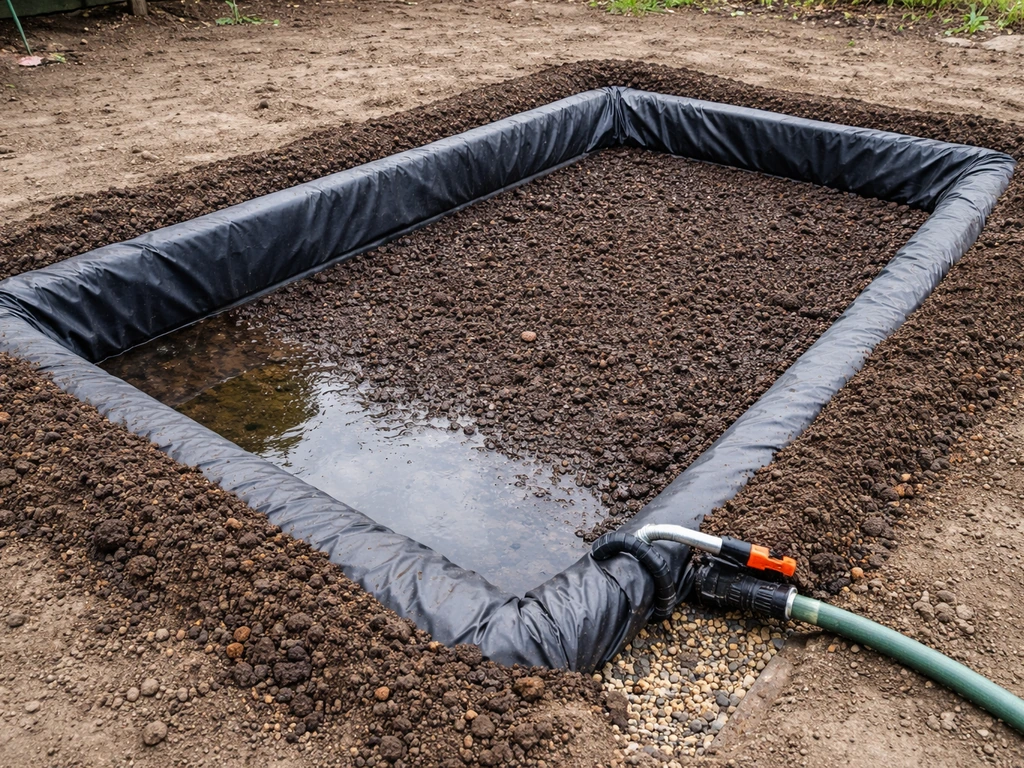
There are three practical approaches home growers use to replicate bog conditions. Each one balances moisture retention with drainage, and all three rely on acidic media rather than plain garden soil.
Bog bed in the ground
This is the most traditional approach and the one that produces the best long-term results if you have the space. You excavate a bed about 12 to 18 inches deep, line the bottom with an impermeable layer (heavy-duty pond liner or thick plastic sheeting with a few small drainage holes at the sides, not the base), then fill it with a mix of 50% coarse sand and 50% peat moss.
The liner retards vertical water movement, keeping the root zone moist without letting water drain away too quickly. This mirrors what commercial growers describe as a base material designed to hold water at the right level. You'll still want the ability to drain the bed occasionally, so plan drainage holes or a standpipe you can open and close.
Raised bog container
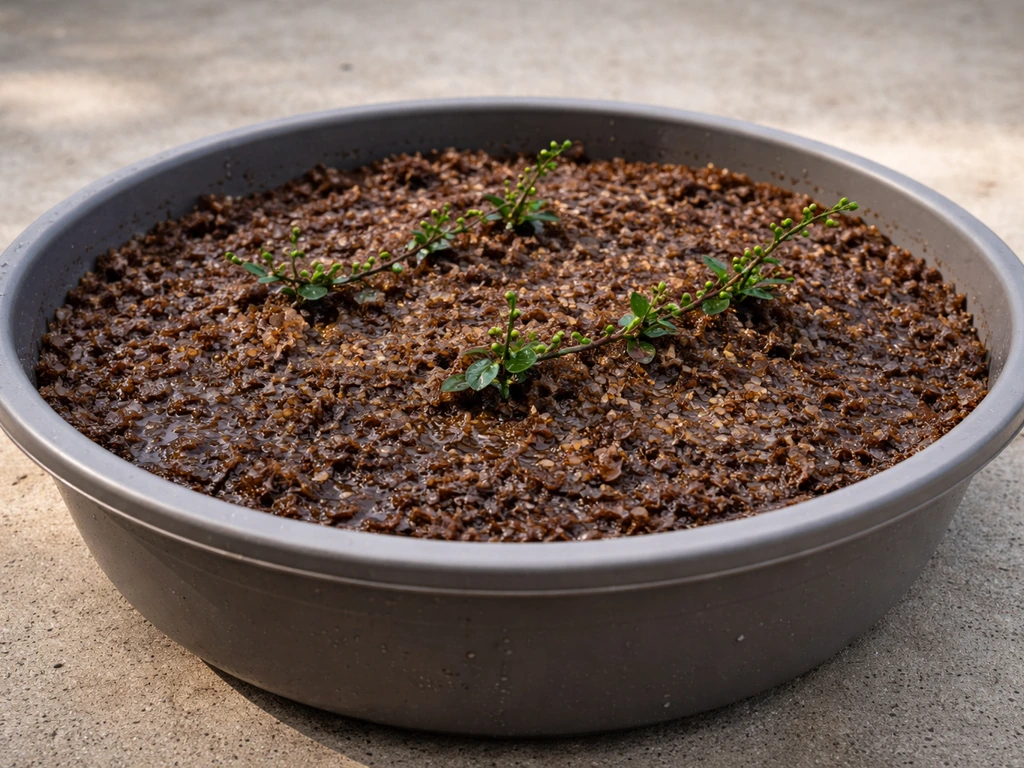
For smaller spaces or colder climates where you need winter portability, a wide, shallow container (at least 18 inches across and 12 inches deep, with no drainage holes, or holes you can plug) filled with peat-sand mix works well. I've used half-barrel planters lined with plastic for this. The trick is maintaining moisture without letting it stagnate. Water regularly enough that the medium stays damp but not sitting in a puddle at the root zone. A water reservoir at the base of the container, kept at about an inch or two below the soil surface, gives the roots access to moisture through capillary action without submerging them.
Water-bed or shallow flood approach
Some adventurous growers try a shallow pan-style system where plants sit in a tray of water, essentially a semi-hydroponic approach. I wouldn't recommend this for fruit production. Cranberry roots need oxygen, and constant submergence leads to root rot fast. If you're experimenting, keep any standing water at the very bottom of the container (below the peat layer) and never let it wick up to the root crown. This is the one scenario where the line between 'bog-style' and 'aquatic' really matters.
Step-by-step: water, soil, and bog requirements
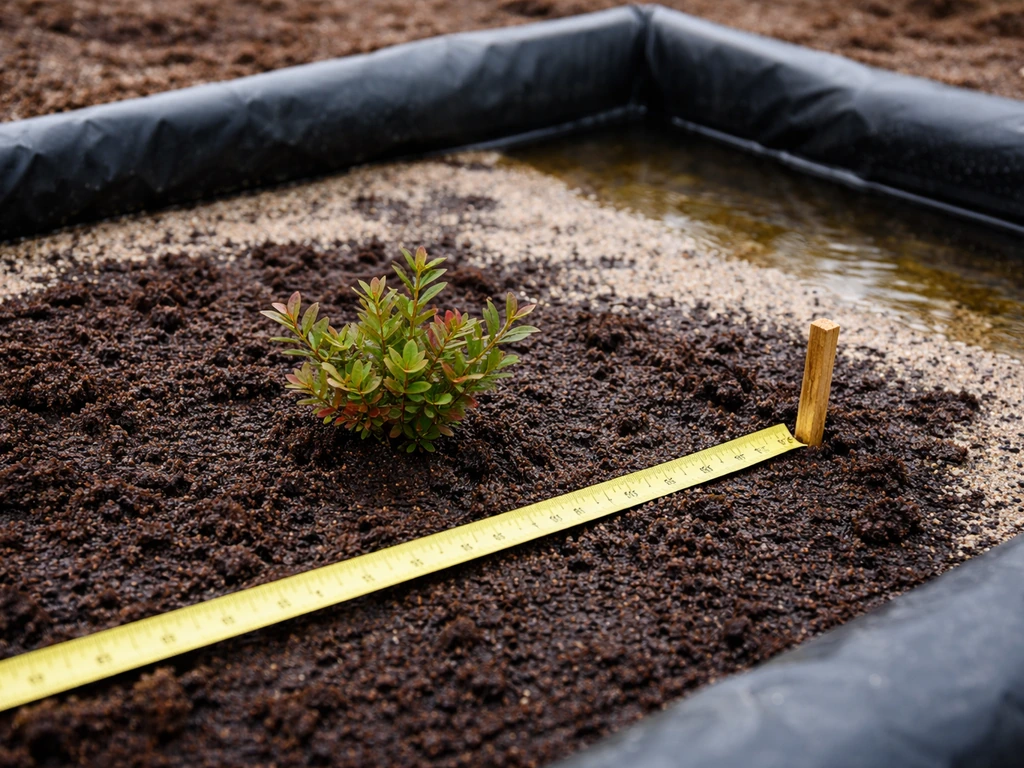
- Choose your setup: in-ground lined bog bed, raised container, or portable pot. Plan for at least 2 to 3 square feet per plant; cranberries spread via runners over time.
- Build your growing medium: mix coarse sand and peat moss at a 1:1 ratio. Avoid garden soil, compost-heavy mixes, or anything with a neutral or alkaline pH. Target a pH of 4.0 to 5.5. Test with an inexpensive soil pH meter before planting.
- Line the base: use pond liner or heavy plastic sheeting to slow downward water movement. Leave a small drainage point at the side or install a standpipe so you can drain and refill the bed on a schedule.
- Plant your vines: space rooted cuttings or plugs 12 to 18 inches apart in spring after the last frost. Press them into the peat-sand mix so the root ball is snug but the crown is at or just above the surface.
- Water at establishment: keep the medium consistently moist (not soggy) for the first growing season. Water with rainwater or well water if possible; municipal water with high pH can raise soil pH over time and stress the plants.
- Manage water depth through the seasons: during the growing season, maintain moisture without surface flooding. In late fall, if you can flood to 8 to 12 inches depth, do so for winter protection. Drain the flood in mid-March before new growth begins.
- Fertilize sparingly: cranberries are adapted to low-nutrient environments. A small application of an acid-forming fertilizer (ammonium sulfate is commonly used in production settings) in early spring and again in midsummer is usually sufficient. Overfertilizing causes leafy growth and poor fruit set.
Comparing your setup options at a glance
| Setup Type | Best For | Water Control | Difficulty | Fruit Potential |
|---|---|---|---|---|
| In-ground lined bog | Zone 4-7 with space | Standpipe or side drain | Moderate | High (multi-year production) |
| Raised bog container | Small gardens, zones 5-8 with portability | Plug-drain or no holes | Easy to moderate | Moderate (compact varieties) |
| Shallow pan/water-bed | Experimentation only | Tray overflow | Easy to set up, hard to manage | Low (root rot risk is high) |
Problems you'll run into and how to fix them
Root rot
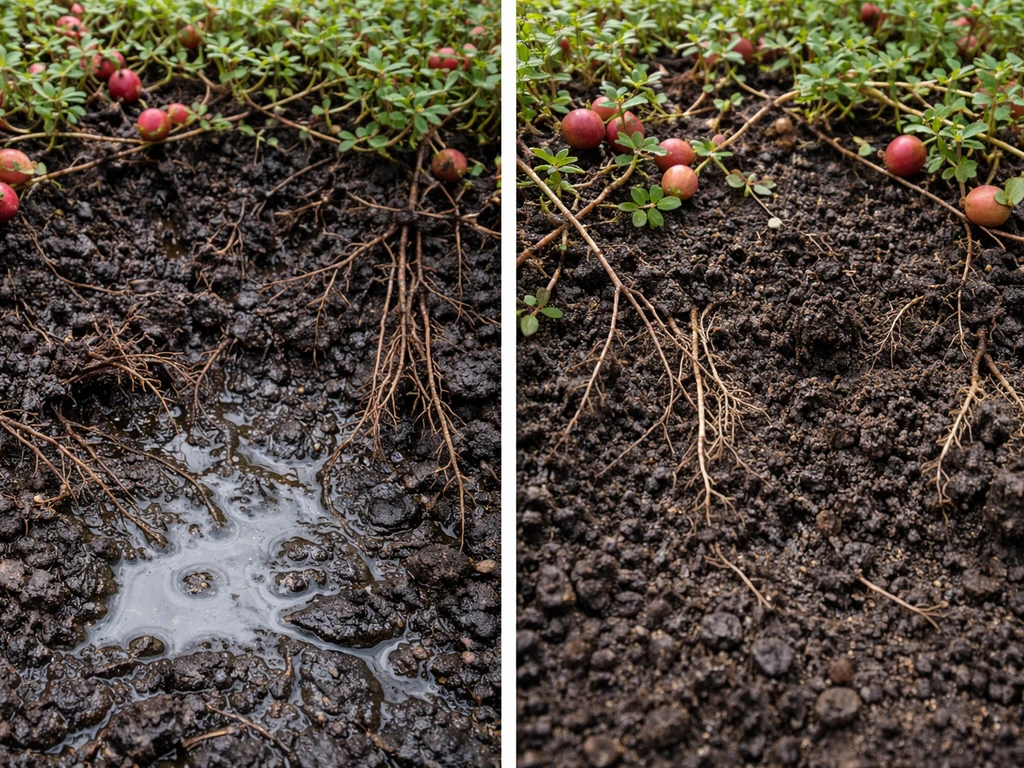
This is the most common killer of home-grown cranberries, and it's almost always caused by poor drainage. Phytophthora root rot thrives in low, wet spots where water pools and oxygen is depleted. You'll notice vines wilting or turning reddish-brown despite adequate moisture. The fix is improving drainage immediately: open your standpipe, let the bed drain, and hold off watering until the top inch of medium feels barely moist. In production settings, water management is the primary tool for controlling this disease, and keeping water high in ditches or irrigating too frequently is specifically flagged as a practice that worsens fruit rot conditions. Avoid letting your bog bed sit in a puddle between watering cycles.
Poor fruit set or no berries
If your vines are growing vigorously but producing few or no berries, the usual culprits are insufficient chill hours, wrong pH, or lack of pollination. Oregon State Extension notes that cranberry production typically targets a soil pH range of about 4. 5 to 5. 5 and links pH management and other cautions to standing-water conditions [wrong pH](https://extension.
oregonstate. edu/sites/extd8/files/documents/em8672. pdf). Check your pH first; if it's drifted above 5.
5, acidify with sulfur or switch to rainwater for irrigation. If chill hours are the issue (common in warmer zones), you'll need to provide an artificial cold period by moving containers to a cold space in winter. Pollination is often overlooked: cranberries need bees, so if you're growing in a very enclosed space, hand-pollinate with a small brush.
Fruit rot
Fruit rot is a significant disease in cranberry production and one that water management directly influences. Holding a late-water flood (a re-flood in spring after the winter flood drains) is actually used in production settings to reduce the amount of fungal inoculum in the bed. At home, the practical takeaway is to clean up any rotted berries promptly and avoid leaving standing water on the bed surface during the fruiting season. Good airflow around the vines also helps.
Pests
Cranberry fruitworm, tipworm, and various caterpillar pests are the main insects to watch for. In commercial production, flooding is actually used as a pest-management tool, with re-flooding events knocking back insect populations mid-season. At home scale, you can use insecticidal soap or neem oil for most soft-bodied pests. Slugs are also a common issue in moist bog setups; iron phosphate bait works well and is safe around the acidic soil environment.
Harvesting your cranberries and keeping the patch going
Cranberries are typically ready for harvest in September through October in most North American growing regions, when the berries turn deep red and feel firm. At home scale, hand-picking is the easiest method. If you have a large enough bog bed and can flood it to about 12 inches, you can rake the berries loose and let them float to the surface for easier collection, which is exactly what commercial growers do. Just make sure your liner can hold the water depth and that you have a way to drain it afterward.
After harvest, drain any flood water and let the bed settle into its winter state. If you're in zone 5 or colder, flooding for winter protection (8 to 12 inches, held from around December 1st through mid-March) is worth doing if your setup allows it. This protects flower buds from freeze damage and sets you up for a better crop the following year. In milder zones, a thick layer of straw mulch over the vines achieves similar protection.
Long-term, cranberry patches improve with age. The vines spread via runners and fill in the bed over three to five years, increasing yield as coverage expands. Prune upright shoots that become too dense every few years to maintain airflow and light penetration. Refresh the peat layer every few seasons as it breaks down. And keep testing your pH annually; it drifts more than you'd expect, especially if you're using tap water.
One thing worth noting for anyone new to these plants: cranberries are one of the more unusual berry crops in terms of their growth habit. If you're still getting oriented with the basics, it helps to understand what type of plant cranberries grow on before committing to a setup. And if you've heard conflicting things about whether they grow on shrubs or trees, the quick answer is neither. As covered in detail elsewhere on this site, cranberries do not grow on trees; they're low-trailing vines that hug the ground, which is exactly why bog flooding works as well as it does for both pest management and harvest.
The bottom line: cranberries need water managed carefully around them, not water to grow in. Get the pH right, give the roots moist but oxygenated soil, plan your flood and drain cycles intentionally, and you'll have a productive patch that keeps producing for decades.
FAQ
If I keep cranberries submerged in a tub, will they still grow?
No. Cranberry roots need moisture plus oxygen. If the peat layer stays saturated from the top down, roots can suffocate and rot quickly. If you experiment with a “semi-hydro” style, keep any standing water confined at the very bottom and prevent it from wicking up to the root crown.
How deep should the water be when I flood for harvest at home?
A common home target is about 12 inches for harvest. The key is practicality and control, not just depth, make sure your container or liner can safely hold that volume, and have a way to drain fully afterward so the root zone is not left waterlogged.
Can I grow cranberries in a pond or natural water body?
Usually not. Even if the water is nearby, you still need a controlled acidic, low-nutrient root medium and the ability to manage wet-dry cycles. Natural pond margins often have higher nutrients and inconsistent pH, plus water chemistry that can accelerate rot.
What’s the difference between “wetland conditions” and “permanently flooded” for cranberries?
Wetland conditions mean the root zone stays saturated most of the time but the surface is not continuously submerged, so oxygen can reach the shallow root area. Permanent flooding blocks oxygen and leads to root diseases.
How can I tell if my bog bed is staying too wet?
Look for signs such as vines wilting despite moist media, reddish-brown discoloration, and an overall decline that persists even when you keep watering. The fix is to improve drainage and pause watering until the top inch of medium is only barely moist.
If I use tap water, will that affect the water management or pH?
Yes. Tap water can be higher in minerals and raise pH over time, which makes your “water” indirectly harmful by changing soil chemistry. Test pH regularly, and consider rainwater if your readings drift above the target range.
Do cranberries need bees, even in a bog-style setup?
Yes. Flood or bog conditions do not remove the pollination requirement. If your plants are in an enclosed porch, greenhouse, or a small container area with limited insect activity, hand-pollination can prevent a crop even if the vines look healthy.
My vines are growing but there are no berries, what water or environment issue is most likely?
Start with chill hours and pH. If chill is insufficient for your zone, you may get leafy growth without fruit regardless of watering. Also confirm your medium stays acidic (if pH rises above about 5.5, fruiting often drops).
Should I flood immediately after the winter period ends?
Often, production systems use a re-flood in spring after winter water drains to reduce fungal pressure. At home, a safer approach is to avoid prolonged standing water on the bed surface during fruiting, remove rotted berries quickly, and ensure the area has airflow.
What’s the safest container design if I want winter portability?
Use a wide, shallow container (roughly 18 inches across and 12 inches deep) and prevent drainage holes from letting you lose the acidic medium, or use holes you can plug. Pair that with a controlled moisture system, a water reservoir kept slightly below the peat layer helps supply moisture without drowning roots.
Is winter flooding always required?
No. In colder climates, winter flooding (commonly held from early December through mid-March) helps protect buds from freeze damage. In milder areas, thick straw mulch can offer similar protection without the complexity of managing deep water in a container.