
Illinois is genuinely one of the better Midwest states for growing a wide range of berries. Strawberries, raspberries, blackberries, and elderberries all thrive across most of the state with minimal fuss. Blueberries take more prep work because of soil pH, but they're absolutely doable, especially in containers or with a well-amended raised bed. If you want a quick answer: start with June-bearing strawberries or thornless blackberries like 'Chester' for the easiest wins, add raspberries for a long-season harvest, and tackle blueberries once you've got your soil dialed in. Oklahoma growers can use many of the same berry choices, but the best varieties depend on local USDA zones and heat and humidity patterns across the state best berries to grow in oklahoma. If you're also planning for Ohio, the best berries to grow in Ohio will depend on your local temperatures and soil conditions, especially for blueberries. If you’re specifically planning around Utah’s growing conditions, you’ll want to choose berry varieties proven for the state and match them to your local sunlight and winter lows best berries to grow in utah.
Best Berries to Grow in Illinois: Top Varieties and Tips
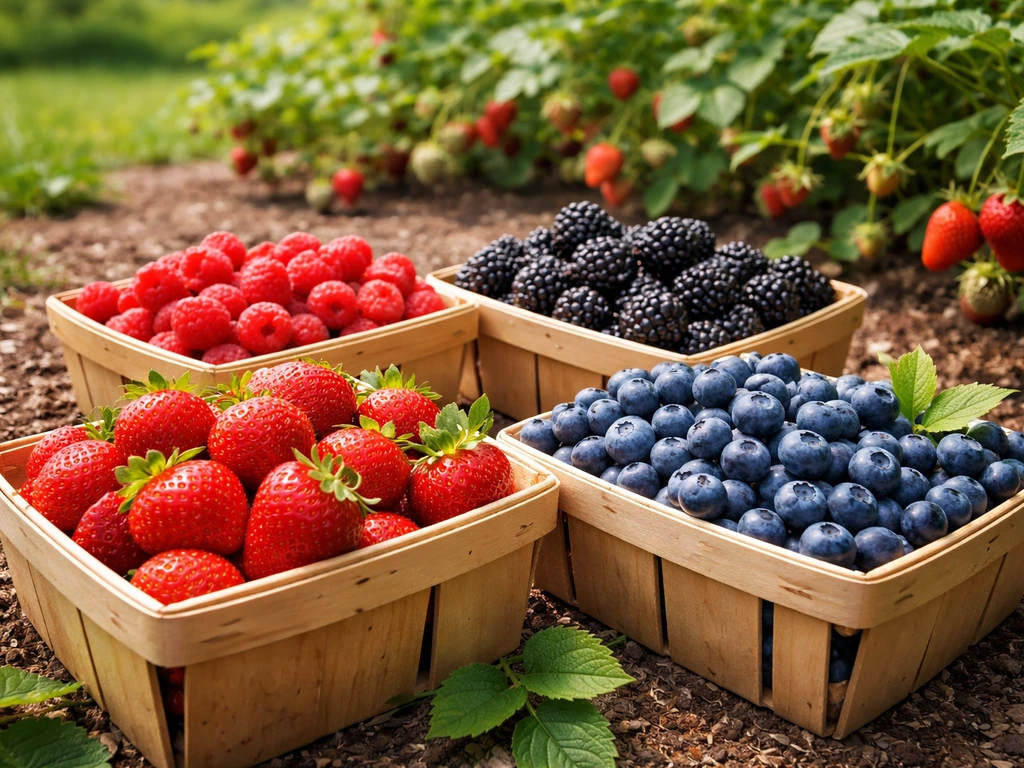
Best berry picks for Illinois at a glance
Not everyone wants to read a full guide before buying plants. Here's a fast breakdown of what I'd plant first, depending on how much work you want to put in.
| Berry | Ease Level | Best For | Top Varieties |
|---|---|---|---|
| Strawberries | Easy | Quick results, beginners | June-bearing types; 'Albion' or 'Seascape' (day-neutral) |
| Blackberries | Easy–Moderate | Big harvests, low maintenance | 'Chester Thornless', 'Illini Hardy' |
| Raspberries | Moderate | Long season, multiple crops | Red primocane types; purple raspberries |
| Elderberries | Easy | Native, wildlife-friendly, large shrub | 'York', 'Adams' |
| Currants & Gooseberries | Moderate | Shade tolerance, tart fruit | Black currant, red currant, gooseberry |
| Blueberries | Harder (soil prep) | High reward, long-lived plants | 'Blue Crop', 'Blueray', 'Patriot', 'Elliott' |
If you're in northern Illinois (roughly zones 5a–5b), lean toward cold-hardy varieties across every category. Central Illinois (zones 5b–6a) is the sweet spot where almost everything on this list works well. Southern Illinois (zones 6a–6b) opens up some semi-erect thornless blackberries that wouldn't survive a northern winter, but you'll also deal with more heat stress on strawberries mid-summer.
Illinois climate and site factors that determine success
Illinois spans USDA hardiness zones 5a in the far north to 6b in the southern tip, which is a meaningful range. What that really means in practice: northern Illinois gets colder, longer winters that can kill marginally hardy canes. Southern Illinois gets warmer winters but also hotter, more humid summers that stress strawberries and increase fungal disease pressure on all brambles. Central Illinois sits comfortably in the middle, and most variety recommendations from Illinois Extension target that region.
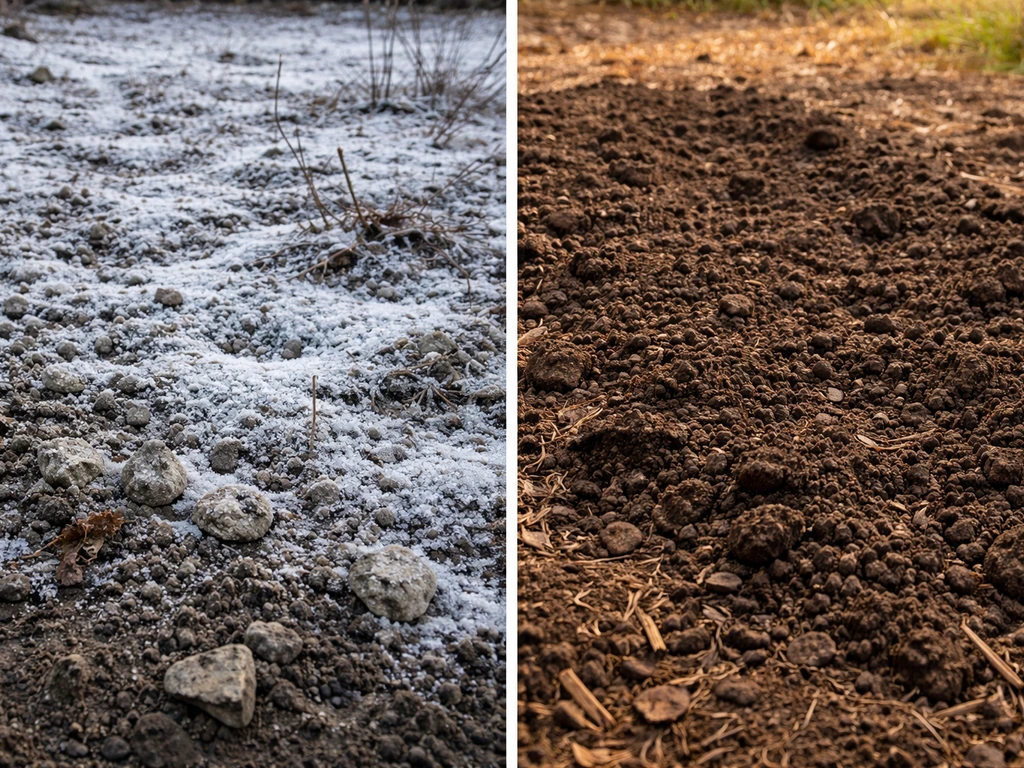
The other big factor is soil. Illinois soils are often naturally alkaline or near-neutral, which is fine for most berries but a real obstacle for blueberries. Heavy clay is common statewide and needs amendment for brambles and strawberries, which want good drainage. If you're on the flat, compacted agricultural soils of central Illinois, raised beds make life considerably easier. The hot, humid summers also mean disease pressure (especially fungal issues) is real, so air circulation and drip irrigation matter more here than in drier states.
- Full sun (6+ hours) is non-negotiable for strawberries, blueberries, and brambles
- Currants and gooseberries tolerate partial shade, making them great for woodland-edge spots
- Elderberries handle wet spots better than any other berry on this list
- Raised beds or mounded rows help drainage on heavy clay soils
- Drip irrigation is worth it for brambles and blueberries — wet foliage drives disease
Blueberries: great fruit, but you have to earn it in Illinois
Blueberries are the high-effort, high-reward berry for Illinois. The plants are long-lived and produce reliably for decades once established, but they need soil with a pH between 4.8 and 5.2, and most Illinois soils don't come close to that. Illinois Extension recommends testing your soil first and applying sulfur at least one full year before planting, giving it time to actually work. As a rough guide, to bring pH down from 6.0 to 5.5, you'd apply about 0.5 lb of sulfur per 100 square feet on sandy soil, 0.75 lb on loamy soil, and 1.0 lb on clay. If you're working with soil in the 5.2 to 6.2 range, mixing in half acid sphagnum peat moss and half topsoil at the planting site can help close the gap.
Container and bog-style growing for blueberries
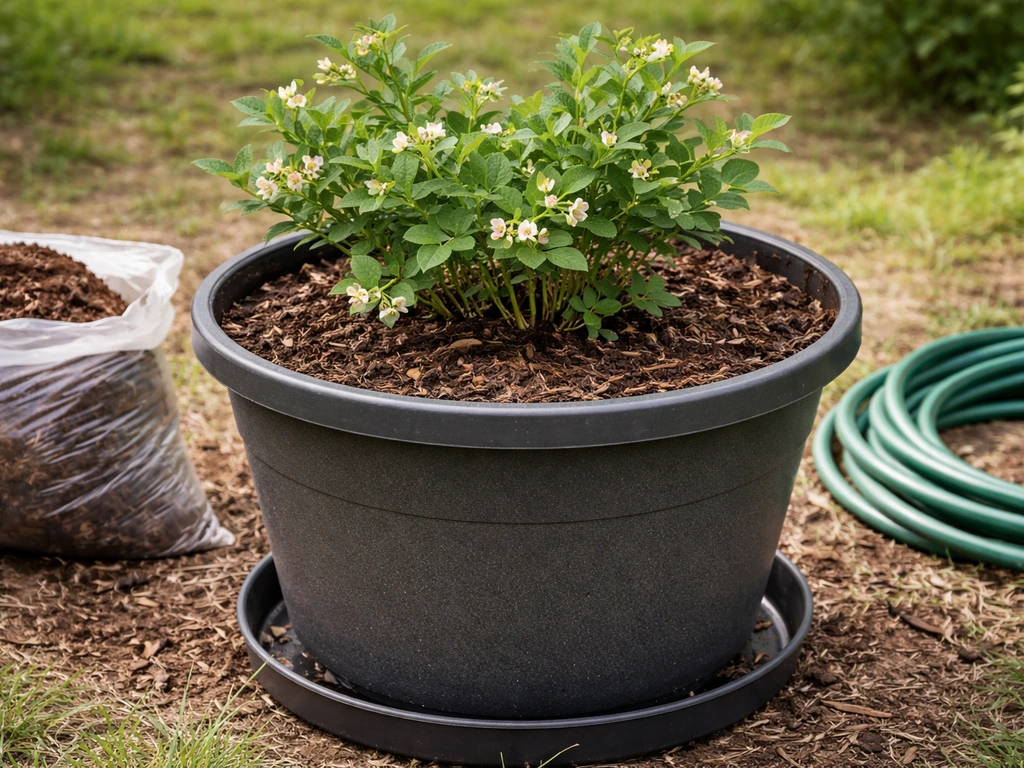
If the in-ground pH fight sounds exhausting, containers are a legitimate alternative. Illinois Extension has actually documented container experiments in central Illinois specifically for this reason: a large self-watering container with a 1:1 mix of peat moss and potting mix, topped with shredded bark mulch to conserve moisture, works well. Blueberries are shallow-rooted, which makes them good container candidates, but that shallow root system also means they dry out fast and need consistent irrigation, pretty much everywhere in Illinois.
For variety selection, Illinois Master Gardeners recommend 'Blue Crop' and 'Blueray' as solid mid-season producers, 'Patriot' as a cold-hardy option well-suited to northern Illinois, and 'Elliott' as a late-season variety that extends your harvest window. Blueberries need cross-pollination from at least two different varieties to fruit well, so plan on planting at least a pair. Space them 4 to 6 feet apart and expect minimal production for the first two years while they establish.
Strawberries and berry groundcovers: the easiest starting point
Strawberries are where most Illinois home growers should start. If you're gardening in Idaho, the best berry choices will also depend on your climate, especially winter lows and soil conditions Illinois home growers. They produce fruit in the first year, they're forgiving in average garden soil, and they fit in small spaces. The main decision is whether to grow June-bearing or day-neutral types, and they behave quite differently.
June-bearing vs. day-neutral: which one is right for you
June-bearing strawberries produce one big flush of fruit in late spring to early summer, then focus their energy on sending out runners for the rest of the season. They're the best choice if you want a large harvest to preserve or freeze. Day-neutral varieties flower and fruit continuously through the growing season, as long as temperatures stay reasonable, they'll slow down or stop during the peak heat of an Illinois summer but then pick back up in fall. Day-neutral types are better for fresh eating through the season. Illinois Extension specifically notes that 'Albion' and 'Seascape' are day-neutral varieties that produce noticeably larger berries.
Planting time matters. Illinois Extension says March or April is ideal for strawberries, getting them in the ground before the heat arrives so they can build roots. For day-neutral varieties especially, pinch off the first flush of flowers for about six weeks after planting. I know it's painful to pull off flowers when you're excited about fruit, but it pushes the plant to develop a stronger root system and you'll get more berries overall. Plan on relocating your strawberry bed to a new spot every three to five years to avoid verticillium wilt buildup in the soil, and never compost infected leaves back into the planting area.
Strawberries need about one inch of water per week during the growing season. Mulching with 4 to 6 inches of weed-free straw helps retain moisture, suppress weeds, and keep berries clean. That's where the name came from, after all.
Raspberries and blackberries: the backbone of an Illinois berry garden
Brambles (raspberries and blackberries) are genuinely some of the most reliable fruiting plants you can grow in Illinois. Once established, a well-managed planting will produce for a decade or more. The key is understanding cane behavior, because that's what drives every pruning and training decision.
Raspberry cane types and what they mean for your garden
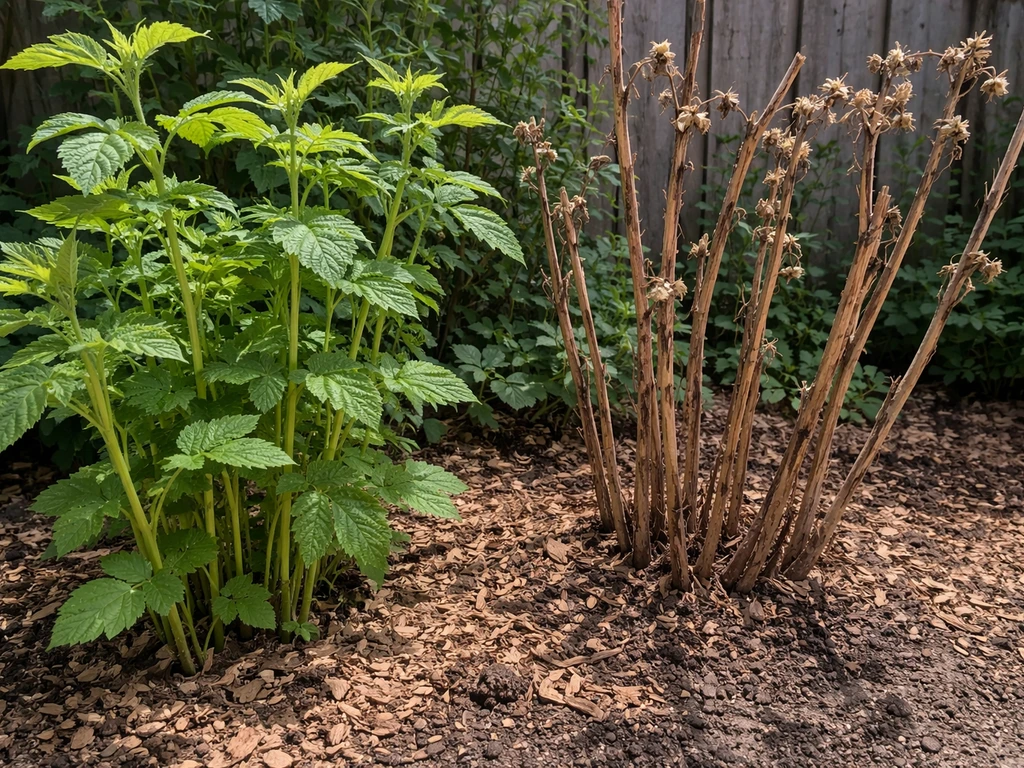
Raspberries come in two main fruiting types. Floricane-fruiting types grow new canes (primocanes) the first year, those canes overwinter, and then they flower and fruit in their second year as floricanes, then die. You get one crop per season. Primocane-fruiting types (sometimes called fall-bearing or everbearing) produce fruit on the tips of first-year canes in late summer or fall, then those same canes can produce a smaller early-summer crop the following year before dying. For simplicity, many growers with primocane types just mow the whole planting to the ground in late winter and settle for one big fall crop instead of managing two.
Plant raspberries in early spring, and if you're ordering from a nursery, place that order in fall or early winter so plants arrive on time. Illinois Extension recommends drip irrigation for raspberries during summer because keeping foliage and fruit dry significantly reduces disease problems. Most red raspberries benefit from a simple trellis system to keep canes upright. Purple raspberries are notably more vigorous than black raspberries and, interestingly, don't require trellising.
Blackberries: the variety choice matters a lot in Illinois
For blackberries, the most important decision is picking a cultivar matched to your part of the state. Illinois Extension is direct about this: most semi-erect and trailing thornless blackberry cultivars are not reliably winter hardy and are recommended only for southern Illinois. For central and northern Illinois, 'Illini Hardy' is the go-to variety, it's a thorny, erect type described as very cold hardy, with dependable, moderate production of good quality fruit. 'Chester Thornless' is the best thornless option for central Illinois; it's semi-erect (so it needs trellising), has an extended harvest window that can stretch up to about six weeks in late summer, and it's held up reasonably well in zone 5b winters with good site selection.
Blackberry cane behavior mirrors raspberries: primocane shoots grow during summer, initiate flower buds in fall, overwinter, and then flower and fruit the following season as floricanes. After fruiting, those canes die and should be removed. Keep canes thinned so air can move through the planting, and trellis semi-erect types to a two-wire system to prevent canes from flopping and to make harvest easier.
Currants, gooseberries, elderberries, and other underused options
These are the berries that don't get enough attention in Illinois home gardens. They're productive, relatively low-maintenance, and they fit into spots where other berries won't work.
Currants and gooseberries
Currants and gooseberries are both cold-hardy shrubs that tolerate partial shade better than any other fruiting berry plant on this list, which makes them uniquely useful for woodland edges or spots that don't get full sun all day. Black currants ripen in June and are typically ready for harvest by early July in central Illinois growing areas. The tart flavor is intense raw but excellent for jams, syrups, and baking. Red and white currants are milder and can even be eaten fresh. Gooseberries are similarly cold-tolerant and shade-adaptable, and they produce well in average Illinois garden soil without any pH gymnastics. Both plants grow as upright shrubs reaching roughly 3 to 5 feet, and they need good air circulation to minimize fungal issues in humid Illinois summers.
Elderberries
American elderberry (Sambucus canadensis) is native to Illinois, which tells you everything about how well it's adapted here. It handles wet soils, it tolerates part shade, it grows fast, and the wildlife love it (which can also be a challenge if you want berries for yourself). The University of Illinois Extension's shrub selector calls out 'York' and 'Adams' as named fruiting cultivars, with 'York' producing larger fruits that mature slightly later than 'Adams'. Plant two different cultivars for better fruit set. Elderberries grow as large, multi-stemmed shrubs and need space, plan for 6 to 10 feet in all directions. The berries must be cooked before eating; raw elderberries cause digestive distress.
Juneberries (serviceberries)
Juneberries (Amelanchier species) are worth mentioning even though they're technically a small tree or large shrub rather than a traditional berry plant. They're native to Illinois, extremely cold-hardy, produce blueberry-like fruit in early summer, and require essentially no special soil prep. If you have space and want something that feels like a low-maintenance fruit tree rather than a managed berry patch, juneberries are worth a look.
Planting, care, and troubleshooting basics
Timing your planting
For most Illinois berries, early spring planting (March through early May depending on the crop and your zone) gives the best establishment before summer heat arrives. Strawberries: March to April. Raspberries and blackberries: early spring as soon as the soil is workable. Blueberries: spring, but only after soil prep work done the previous year. Elderberries, currants, and gooseberries: early spring bareroot or container plants both work well.
Watering and soil prep
Drip irrigation is the best investment you can make for a serious berry planting in Illinois. It keeps water at the root zone where it's needed, keeps foliage dry (which matters enormously for disease pressure in a humid Illinois summer), and makes consistent watering easier to manage. Strawberries need about one inch of water per week. Blueberries, being shallow-rooted, need consistent moisture especially during dry stretches and in the heat of summer. All berries benefit from 2 to 3 inches of mulch to conserve soil moisture and suppress weeds, straw for strawberries, wood chip or bark mulch for shrub berries and brambles.
Pollination
Strawberries, raspberries, blackberries, and elderberries are all self-fruitful or pollinated easily by insects in a typical garden setting. Blueberries are the main exception: they technically self-pollinate but produce significantly better crops with cross-pollination from a second different variety. Currants and gooseberries are generally self-fruitful but also benefit from a second plant nearby. When in doubt, plant at least two plants of any berry species.
Pests and disease: what to watch for
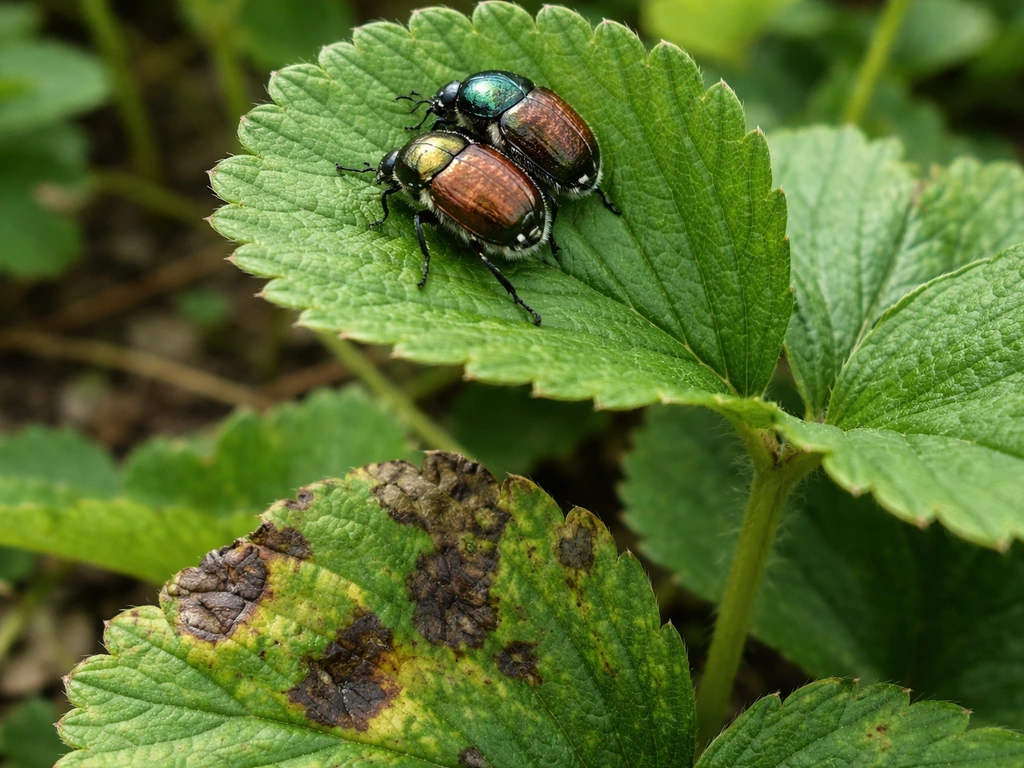
Japanese beetles are the most universally annoying pest in Illinois berry gardens. Illinois Extension confirms they've been reported in southern, central, and northern Illinois, and raspberries are among their favorite targets. Hand-pick them early in the morning when they're sluggish, knock them into a bucket of soapy water. Don't bother with Japanese beetle traps, Illinois Extension explicitly says they are not recommended for managing populations because they tend to attract more beetles than they catch.
Verticillium wilt is the main soil-borne disease concern for strawberries. Rotating your strawberry bed to a new location every three to five years is the most practical management strategy. Don't replant into soil where susceptible crops (including tomatoes, potatoes, and peppers) recently grew. For brambles, spotted wing drosophila can damage soft ripe fruit, harvest frequently and don't let overripe berries sit on the cane. Gray mold (botrytis) is common in wet summers; good air circulation and drip irrigation reduce it substantially.
What to expect in year one
Be honest with yourself about first-year expectations. Strawberries planted in spring will give you some fruit that first season, but removing the first flush of flowers (especially on day-neutral types) and resisting the urge to harvest runners will set you up for a much better second-year crop. Raspberries and blackberries will focus almost entirely on vegetative growth in year one, you might get a small fall crop on primocane raspberry types, but don't expect a full harvest. Blueberries typically produce very little for the first two years and should honestly be thought of as a three-year investment before you see real production. Elderberries grow fast and can produce a meaningful crop by year two. Currants and gooseberries usually start producing a modest crop in year two as well. The upside of all of this: once established, most of these plants will outlive your expectations and produce for many years with minimal inputs. If you live in Texas, you'll want to choose berry types and cultivars that handle Texas heat and humidity best best berries to grow in texas.
FAQ
What are the easiest berries to start with if I’m a first-time grower in Illinois?
Start with June-bearing strawberries or thorny or erect raspberries/blackberries that are known cold-hardy for your zone, then add currants or gooseberries if your site gets only partial sun. Blueberries are the toughest first move because soil pH and cross-pollination requirements are more strict.
Should I plant in-ground or use raised beds for the best berries to grow in Illinois?
Use raised beds if your ground is heavy clay or compacted, because brambles and strawberries need fast drainage. Choose containers mainly for blueberries if you cannot realistically amend soil pH for a full year.
How do I tell whether my soil is good for blueberries before I buy plants?
Get a pH test before you plant, ideally from a lab, not just a quick home strip kit. If your pH is above about 5.5, plan on long lead time (sulfur needs months to change pH), and budget for repeated testing because Illinois soils can buffer changes.
Do strawberries in Illinois need full sun?
They perform best with at least 6 to 8 hours of direct sun, but they will tolerate less if you manage disease risk by keeping plants airy and using drip irrigation. In humid areas, poor airflow under trees or eaves increases gray mold and leaf spot issues.
What’s the difference in pruning between primocane and floricane raspberries in Illinois?
Primocane types are usually managed by mowing canes down in late winter to get a single late-season crop. Floricane types require keeping first-year canes through winter and removing the canes after they fruit, which means you cannot just mow everything without sacrificing production.
How do I prevent canes from flopping for thornless blackberries in Illinois?
Trellis semi-erect thornless cultivars to a two-wire system and tie canes as they grow. Also thin the planting so light and air reach the interior, otherwise dense growth plus humidity increases disease and weak cane structure.
Are there any berry types I should avoid in northern Illinois because of winter hardiness?
Many semi-erect thornless blackberry cultivars that are marketed broadly can fail winter-to-winter in the colder end of Illinois. When in doubt, pick cultivars specifically described as hardy for colder zones and test the exact label claims against your local winter lows.
How close together should I plant blueberries for cross-pollination?
Plant at least two different blueberry varieties, and space plants about 4 to 6 feet apart to allow airflow and easier watering. Even with cross-pollination, expect minimal production for the first one to two years while the bushes build a strong root system.
How should I water berry plants during Illinois heat waves?
For most berries, switch from occasional deep soaking to consistent moisture, especially on shallow-rooted crops like blueberries and on newly planted strawberries. Drip irrigation helps you keep water at the root zone without wetting foliage, which is important during humid spells.
Do Japanese beetle traps work in Illinois berry gardens?
Often they backfire. Illinois Extension cautions that traps can attract more beetles than they remove, so a better approach is regular hand-picking early in the day and focusing on protecting raspberries, which beetles target heavily.
What’s the quickest way to reduce fungal disease in Illinois berries?
Prioritize airflow and leaf-drying, use drip irrigation, and keep mulch in place to reduce splash onto leaves and fruit. Also harvest brambles frequently, because overripe berries increase botrytis and fruit-rot pressure.
When should I start expecting harvest from each berry in Illinois?
Build expectations around a timeline: strawberries often give some fruit the first year, but blueberries are typically a two-year ramp-up with meaningful production by year three. Elderberries and currants can start earlier, often around year two, depending on plant size and establishment.
Can I compost berry leaves or should I discard them in Illinois?
Don’t compost leaves or plant material that could carry disease, especially for strawberries where verticillium wilt is a concern. Bag and remove infected debris from the planting area to reduce reintroducing soil-borne problems.
What if I have shade in my yard, what are the best berries to grow in Illinois for that situation?
Currants and gooseberries are especially useful for woodland-edge conditions, and elderberries also handle part shade well. Most brambles and strawberries need much more sun for consistent yields, so in heavy shade you may get disappointing fruit even if plants survive.