
Raspberries are the single most reliable berry you can grow in Utah, followed closely by strawberries and winter-hardy blackberries. Blueberries can work but require serious soil prep. That shortlist covers most Utah home gardeners, whether you're in a hot St. George backyard, a Salt Lake City suburb, or a cool mountain valley in Summit County.
Best Berries to Grow in Utah: What Works and How to Grow
Marcus Holloway
20 May 2026
What makes Utah tricky for berries (and how to plan around it)
Utah throws a lot at berries. Winters in northern Utah can dip hard and fast, damaging canes and buds before plants have time to harden off. USU Extension specifically flags this: temperatures may drop quickly in fall, leaving plants no time to acclimate, which is a real problem at higher elevations like Cache Valley or the Wasatch Back. Then summer swings to the opposite extreme, with intense heat and low humidity that stresses moisture-loving plants like blueberries and even strawberries during peak fruiting.
Soil is the other big problem. Most Utah garden soils sit above pH 7.5, which is nearly the opposite of what acid-loving berries like blueberries want. The soils are also often buffered by lime and carbonates, meaning you can add a lot of acidifier and barely move the needle. And in many areas, soils are either heavy clay that holds water poorly in summer and pools in spring, or sandy and fast-draining. Neither extreme is ideal without amendment.
The good news: once you know which berries naturally tolerate cold winters, tolerate some alkalinity, and can handle dry summers with irrigation, the list of what works is actually pretty satisfying. Planning around Utah means choosing cold-hardy varieties, using drip irrigation, and sometimes building your own soil in raised beds or containers rather than fighting what's in the ground.
Top berry types that grow well in Utah (quick picks + why)
Here's the honest shortlist, ranked from most to least beginner-friendly for most Utah locations:
- Raspberries: Most reliable berry in Utah. Cold-hardy, productive, widely adapted across elevations. Both summer-bearing and fall-bearing types work. Start here if you're new.
- Strawberries: Easy to establish, great in containers or raised beds. Everbearing and day-neutral types suit Utah's warm summers well. Need weed management and consistent water.
- Blackberries (semi-erect, thornless): Work well in northern Utah with the right cultivar. Avoid trailing types, which don't survive Utah winters reliably. Semi-erect thornless varieties like Chester and Apache are your best bets.
- Blueberries: Possible but genuinely difficult due to Utah's alkaline soil. Require dedicated bed preparation with acidified, amended growing mix. Rewarding if you put in the effort, but go in with realistic expectations.
- Currants and gooseberries: Underused but surprisingly well-suited to Utah's cooler mountain areas. Cold-hardy, tolerate part shade, and don't fuss much about soil pH. Worth considering if you're at higher elevation.
Raspberry and blackberry in Utah: varieties, planting, and care
Raspberries
Raspberries are the workhorse of the Utah berry garden. You have two main types to choose from: summer-bearing (floricane-fruiting) varieties that produce one big crop in early summer on second-year canes, and fall-bearing (primocane-fruiting) varieties that fruit in fall on first-year canes. Fall-bearing types give you more flexibility in management and are often the easier choice for beginners because you can simply cut all canes to the ground each dormant season for a clean fall-only crop.
If you want both a summer and fall harvest from fall-bearing varieties, you prune them the same way you would summer-bearers, leaving the second-year canes to fruit in early summer before removing them. Either approach works in Utah. The key management step for rows is keeping them narrow: USU Extension recommends narrowing fall-bearing rows to 2 to 3 feet wide to maintain light penetration and airflow. Wider rows get crowded fast and yields drop.
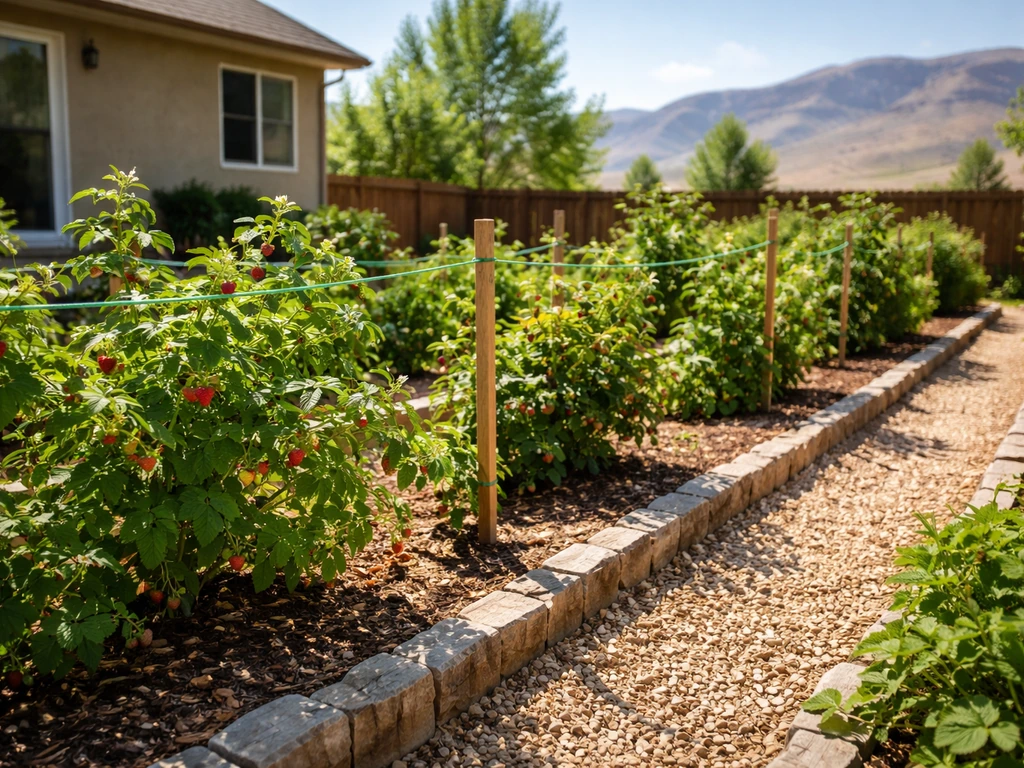
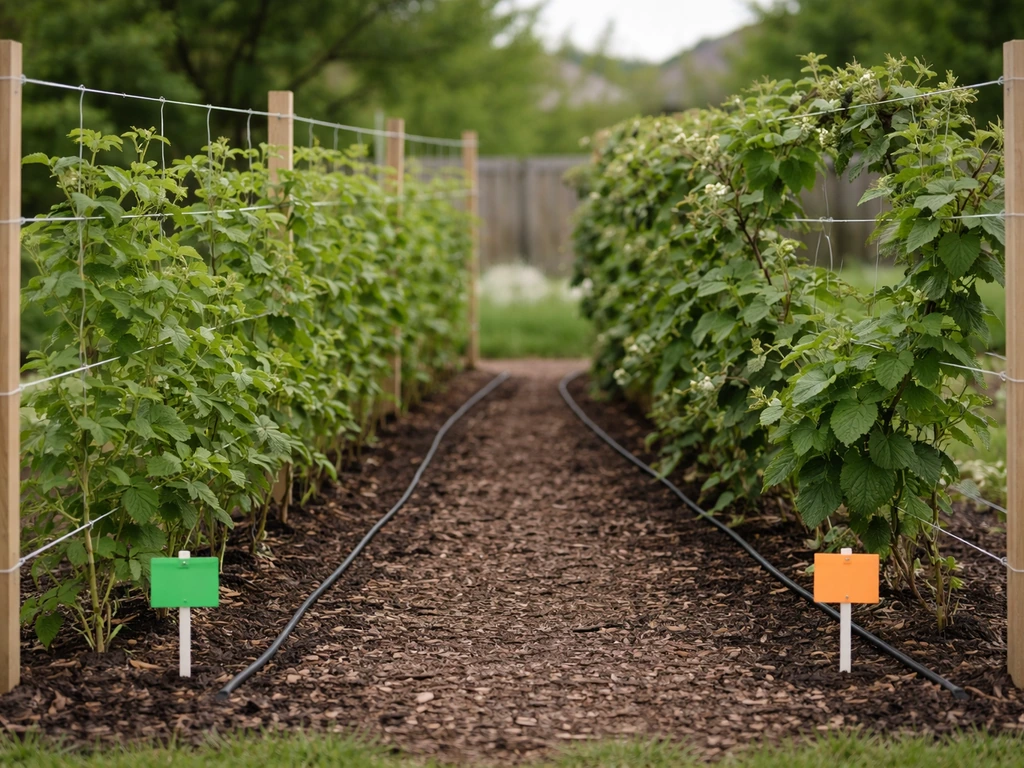
Trellising is not optional for raspberries in Utah. A simple T-trellis with wire strung at two heights keeps canes upright, reduces wind breakage, and makes harvest much easier. Without a trellis, canes flop, fruit sits on the ground, and you lose half your crop to rot. For home-scale plantings, two posts with crossarms and two runs of wire per side is all you need.
If you're growing for bigger fruit rather than just volume, cutting canes back to 3 to 5 feet (depending on vigor) when tying them to the trellis is a proven approach. It concentrates the plant's energy into fewer, larger fruits rather than spreading it across every node.
Blackberries
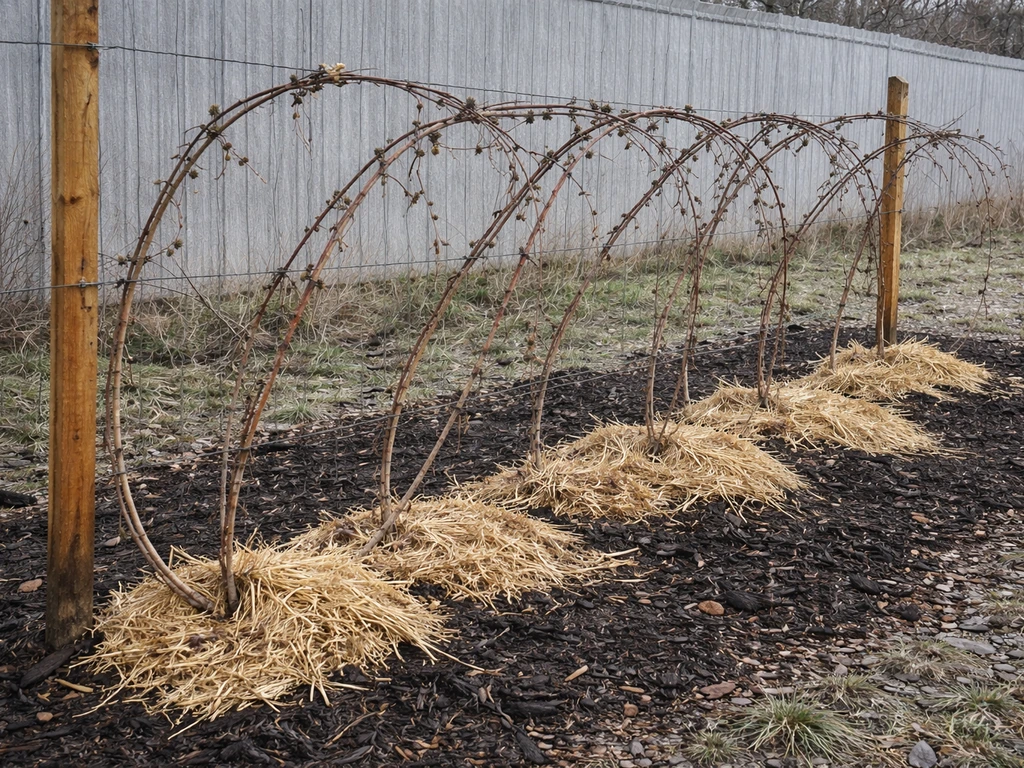
Blackberries need more care in variety selection than raspberries. Trailing types simply don't survive northern Utah winters reliably. USU Extension's cultivar trials showed trailing types had low to no yield reliability. Semi-erect thornless types are what you want. Based on USU Extension's Utah work, the top performers for winter bud survival are Illini Hardy at around 93%, Apache at 88%, and Chester at 84%. Under northern Utah conditions, USU Extension notes that semi-erect blackberries typically produce heavier yields than erect and trailing types due to winter damage to canes and buds semi-erect blackberries “typically produce heavier yields than the erect and trailing types”. Chester is especially popular because it's thornless, productive, and widely available.
Semi-erect blackberries have long, arching canes that droop toward the ground. If a shoot tip touches soil, it can tip-layer and root down, spreading the planting on its own. That's useful if you want more plants, but it can become a management headache fast. A trellis keeps canes off the ground, prevents uncontrolled spread, improves light penetration, and makes harvest much more manageable. Trellis blackberries the same way you would raspberries.
Because harsh winters and late spring frosts can damage blackberry canes and buds even in the semi-erect types, planting in a sheltered location (south-facing wall, protected corner) gives your plants a better shot at consistent fruiting. If you're in a higher-elevation area of Utah, be cautious: blackberries are more frost-sensitive than raspberries and may need some winter protection in exposed spots.
Blueberry and other acid-loving berries: how to match soil and moisture
Blueberries want soil with a pH around 4.5, and they'll tolerate up to about 5.5 at the high end. Utah garden soils typically sit above 7.5. That's not a small gap to close. What makes it worse is that Utah soils are often buffered by calcium carbonate (lime), so they resist pH change. You can apply sulfur and barely see the needle move if your soil has a high lime buffering capacity. This is why blueberries fail so commonly in Utah, not from cold, but from nutrient lockout caused by high pH, showing up as iron chlorosis (yellowing between veins) and zinc deficiency.
The most reliable approach is to stop trying to convert your existing soil and instead build a contained growing environment. A raised bed or large container filled with a mix of high-quality peat moss, pine bark fines, and acidified compost gives you control from day one. Keep it isolated from your native soil so the alkaline water and carbonates don't migrate back in. Even then, Utah's irrigation water is often alkaline, so you may need to acidify your water periodically using a measured dose of sulfuric acid or citric acid, or collect rainwater for blueberries.
Blueberries also need two different varieties for cross-pollination and consistent yields, so plan for at least two plants. They're slow to establish, usually not productive for three to four years, but they live a long time once settled. If you're committed, varieties like Northblue, Northcountry, and Chippewa (half-high hybrids) handle cold winters better than Southern Highbush types and are the smarter starting point for Utah.
Currants and gooseberries are a genuinely underrated alternative for Utah gardeners who want an acid-tolerant, cold-hardy berry without the pH battle. They're not as pH-sensitive as blueberries, they tolerate part shade (useful in mountain areas with afternoon cloud cover), and they're extremely cold-hardy. If you're in a cooler Utah location like higher Cache Valley or the Wasatch Back, currants are worth serious consideration.
Strawberries and summer fruiting options: spacing, sun, and irrigation
Strawberries are one of the most beginner-friendly berries in Utah, and they work well across a wide range of elevations. For most home gardeners, everbearing and day-neutral varieties are the practical choice. They produce a late spring flush, slow down during the hottest part of summer (day-neutral varieties stop fruiting reliably above about 75°F, which covers most Utah summers), and then produce again in fall. That fall crop is often the one people enjoy most because the fruit quality is excellent in cooler temperatures.
For everbearing and day-neutral types, USU Extension recommends the hill system: plant dormant bare-root plants early in spring in rows spaced 12 to 15 inches apart, with plants staggered 12 to 15 inches within the row, typically in beds 2 to 4 rows wide. Remove the first flower cluster after planting. It feels counterintuitive, but pinching that first bloom lets the plant build roots and crown structure before it starts spending energy on fruit. You'll get more total production over the season if you do it.
Irrigation method matters in Utah. Drip irrigation or soaker hoses under plastic mulch is the recommended approach. Overhead sprinklers keep foliage and fruit wet, which increases gray mold (botrytis) rot. Drip keeps water at the roots where it belongs and is far more efficient in Utah's dry climate. Plastic mulch also blocks weeds, which USU Extension identifies as the most common limiting factor in the life of a strawberry patch. If you let weeds get ahead of you, they'll outcompete your plants within one season.
If you're growing strawberries in containers (common in Utah because containers let you control soil and move plants out of extreme heat), plant at the same depth the nursery container had them. Too deep and the crown rots; too shallow and roots dry out. In a container, watch watering more closely because pots dry out fast in Utah's low humidity and summer heat.
Site-specific guidance: containers vs raised beds vs in-ground; hot vs cool microclimates
Not every Utah garden is the same, and where you are in the state changes what setup makes sense. Here's how to match growing method to your situation:
| Growing method | Best for | Utah-specific notes |
|---|---|---|
| In-ground | Raspberries, currants, gooseberries | Works well where soil drains reasonably. Amend with compost before planting. Avoid low spots where cold air pools. |
| Raised beds | Strawberries, blueberries, blackberries | Lets you control soil mix and drainage. Critical for blueberries where native soil is too alkaline. Warm up faster in spring. |
| Containers | Strawberries, blueberries (small varieties) | Maximum control over soil pH and moisture. Can move out of hard frost or extreme heat. Require more frequent watering. |
Microclimate matters as much as your official USDA zone. A south-facing wall in Salt Lake City can be significantly warmer than an open garden bed 20 feet away, which helps blackberries or borderline varieties. A north-facing slope or shaded corner in a mountain valley can stay cold well into spring, which is actually useful for delaying bloom on early-flowering varieties to dodge late frosts. USU Extension's freeze date tables for Utah show that last spring frost dates vary widely across the state, so knowing your specific location's average freeze date is worth looking up before you plant.
For hot southern Utah areas (St. George, Washington County), afternoon shade is your best tool. Full-day sun that works great for raspberries in Logan can fry strawberries in St. George by late June. In hotter zones, plant berries where they get morning sun and afternoon shade, use heavy mulch to keep soil cool, and plan for drip irrigation on a timer. At higher elevations (above 6,000 feet), the growing season shortens noticeably. USDA hardiness zones only tell you minimum winter temperature; they don't account for growing season length, which matters for getting fruit to mature before fall frosts hit. Fall-bearing raspberries and June-bearing strawberries are better bets at elevation because they don't need as long a warm window.
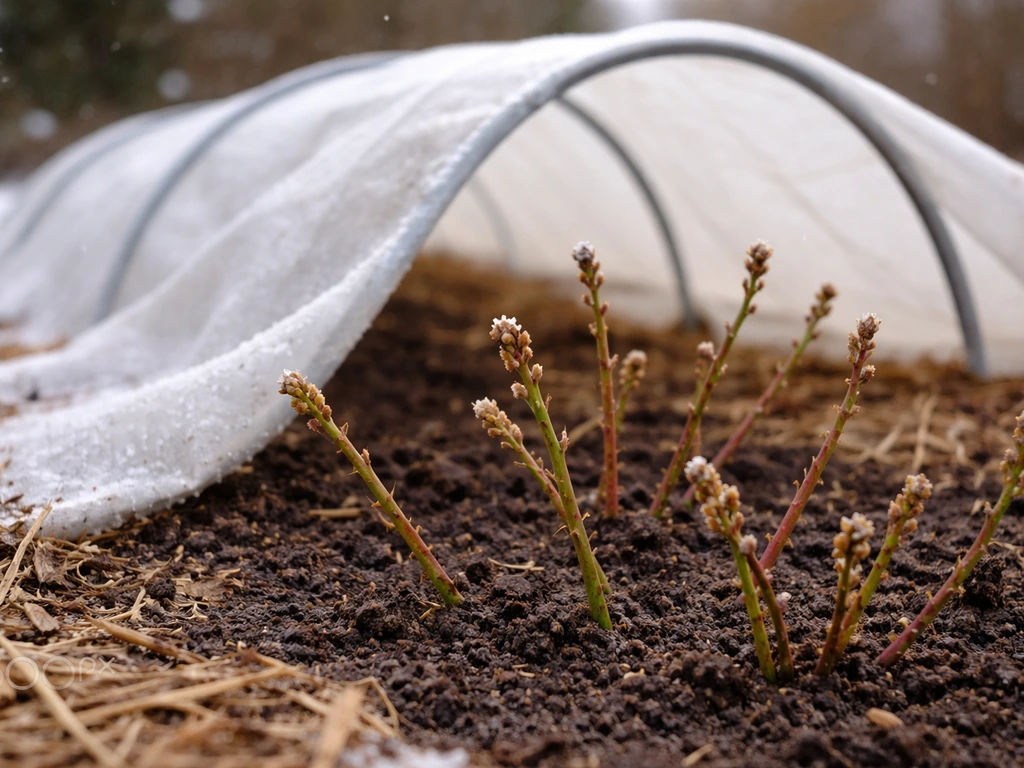
Row covers are a practical tool for extending the season on both ends in Utah, but keep one thing in mind: covers reduce air movement, which also reduces pollination. Use them for frost protection when plants aren't actively flowering, or choose a cover weight that allows some airflow. Remove covers during bloom if pollinators aren't getting in.
Choosing varieties and next steps for your first planting
If this is your first Utah berry planting, start with raspberries or strawberries. Both are forgiving, productive relatively quickly, and available at most local nurseries in good Utah-adapted varieties. For raspberries, look for fall-bearing types like Caroline, Autumn Bliss, or Heritage. For strawberries, Seascape and Albion are reliable day-neutral varieties that perform well in Utah conditions.
If you want to add blackberries, go with Chester or Apache and make sure you have a trellis system ready before your plants arrive. Don't plant trailing types, regardless of how good they look at the nursery. For blueberries, plan your bed prep a full season before you plant. Test your soil pH, calculate how much amendment you'll need, and build your raised bed with an isolated, acidic growing mix. Trying to shortcut this step is why most Utah blueberry attempts fail.
Here's a practical checklist before you buy your first plants:
- Look up your last spring frost date for your specific Utah location using USU's freeze date resources so you know when it's safe to plant.
- Test your soil pH, especially if you're considering blueberries or want to know how much compost amendment your in-ground planting needs.
- Choose your growing method: in-ground for raspberries and currants, raised bed or container for blueberries and strawberries in most Utah conditions.
- Plan irrigation before you plant. Drip or soaker hose is the right call for almost every berry in Utah.
- Source plants from a reputable local nursery or Utah-based online supplier that can confirm the varieties are suited to your zone. Bare-root plants in early spring are often the best value.
- Build your trellis for raspberries and blackberries before canes get too tall to manage comfortably.
Utah's climate challenges are real, but they're workable once you match the right berry to the right setup. If you're wondering about the best berries to grow in Oklahoma, the same core idea applies: pick varieties that match your local winters and soil. For readers planning outside Utah, the same idea applies when choosing the best berries to grow in Ohio: match varieties to your local winter lows, soil pH, and how much sun and moisture you can provide. Gardeners in neighboring states like Idaho and Colorado face similar cold-snap and alkaline soil issues, so many of the same variety recommendations and soil prep strategies apply across the region. If you are planning a similar berry garden in Idaho, focus on cold-hardy varieties and plan for your soil pH and irrigation needs best berries to grow in Idaho. If you're looking for the best berries to grow in Texas, start by picking varieties that handle local heat and then match them with reliable irrigation and the right soil pH. The same kind of matching berries to soil and microclimate is the key to picking the best berries to grow in Illinois neighboring states like Idaho and Colorado. Start with one or two berry types, get your irrigation and trellis infrastructure right, and add more variety once you see what performs in your specific spot. A well-chosen, well-sited raspberry planting in Utah can produce abundantly for 10 or more years with minimal fuss.
FAQ
Can I grow raspberries or blackberries without trellising in Utah if I just accept lower yields?
Yes, but only if you control both freeze exposure and moisture. In cold northern valleys, use a winter watering schedule that keeps soil slightly moist going into deep cold (not saturated), then add insulation like mulch and, for exposed spots, a simple row cover. Avoid heavy, wet mulch that stays soggy after snow melt because crowns can rot.
What’s the best time to plant berries in Utah, and can I plant in summer?
For most Utah home gardens, transplanting from a nursery container in summer is riskier than planting in early spring or early fall. If you must plant in warm weather, schedule planting just before a cool stretch and start with extra drip irrigation for establishment, then reduce watering as canes harden off. This matters most for blueberries in particular, since heat and drying stress can mimic nutrient problems.
Do I need to remove blossoms for every berry to get better production?
Strawberries are the one berry where the “pinch the first bloom” approach is most consistently helpful. For raspberries and blackberries, focus on correct cane training, pruning timing, and row width instead of removing early blossoms. If you remove too much later in the season, you can delay fruit without actually improving hardiness.
How should I mulch berries in Utah without causing rot or disease?
For strawberry beds, aim for mulch that stays in place and doesn’t bury crowns, and plan to refresh it each season. For raspberries, avoid piling mulch directly against canes, which can trap moisture and increase cane disease risk. Also, keep mulch away from blackberry cane tips that are touching soil, because tip contact can trigger unwanted rooting.
How do I set up drip irrigation for berries in Utah (common mistakes to avoid)?
Start with drip lines sized for your row length, then use timers or moisture checks so the system delivers consistent water during fruiting. A common mistake is watering too infrequently, which triggers stress and small fruit. Also, make sure emitters are positioned for root depth, and consider adding a second line in wide beds to avoid dry edges.
If I use raised beds for blueberries, do I still need to worry about alkaline irrigation water?
Even with raised beds, don’t skip water testing. If your irrigation water is alkaline, it can raise the pH over time and gradually recreate the same nutrient lockout problem blueberries fail with. Many growers fix this by isolating the bed mix, using measured amendments, and periodically re-checking pH rather than guessing.
Why does my blueberry soil pH not drop even after adding sulfur or other acidifiers?
Yes, but the “buffering” can be uneven in containers and raised beds. After amending, retest pH and keep a log, then make small, targeted adjustments instead of one heavy application. Sulfur-based acidifiers can take time to work, so expect changes over weeks, not days.
Are the recommended varieties still worth growing if I’m in a very windy or frost-prone spot?
Not always, and variety choice depends on how much winter dieback you get where you live. In exposed areas, prioritize winter-hardy selections and keep plants sheltered from wind. For raspberries, choosing fall-bearing types can simplify management in harsh sites, because cutting canes to the ground reduces winter injury from old growth.
Can I reliably grow Utah’s “best berries” in containers year-round?
Container growing is mainly about controlling roots, not beating all climate limits. Choose large pots with drainage, use a potting mix designed for acid-loving crops if growing blueberries, and plan to water more often because Utah pots dry faster. Also, provide some winter protection for pots so the root ball doesn’t freeze and thaw repeatedly.
If I plant only one blueberry bush, will it always fail, or is there an exception?
In most Utah locations, yes, you’ll need at least two blueberry varieties for dependable cross-pollination, unless you pick varieties that are known to overlap well. A practical edge case is having one plant that blooms early and another that blooms later but still within the same window, which prevents fruit set gaps. Also, label your plants so you can time bloom overlap.
Are currants and gooseberries truly easier than blueberries for Utah, and what tradeoffs should I expect?
Yes. Currants and gooseberries are often easier when you do not want to manage soil chemistry. They also tolerate part shade better than many blueberries, which can help in mountain microclimates where afternoon heat spikes or where the best berry bed is not full sun. The tradeoff is they may need more attention to spacing and pruning to keep plants productive.
What’s the best way to reduce gray mold and other common berry diseases in Utah?
Good airflow and narrow spacing matter most for disease prevention. For raspberries, keep rows narrow (the article’s 2 to 3 foot guidance is a key starting point) and trellis canes so fruit doesn’t sit on wet ground. For strawberries, avoid overhead irrigation, and keep weeds controlled so humidity doesn’t linger around crowns and fruit.