
Winterberry (Ilex verticillata) naturally grows across eastern and central North America, from Newfoundland and Ontario down through the Great Lakes states and south to Alabama. Winterberry's native habitat and range are covered in more detail above, but if you're specifically researching where do buffalo berries grow as a comparison, that separate guide can help you match berry shrubs to the right region.
Where Does Winterberry Grow? Native Range and Planting Guide
Marcus Holloway
3 Jun 2026
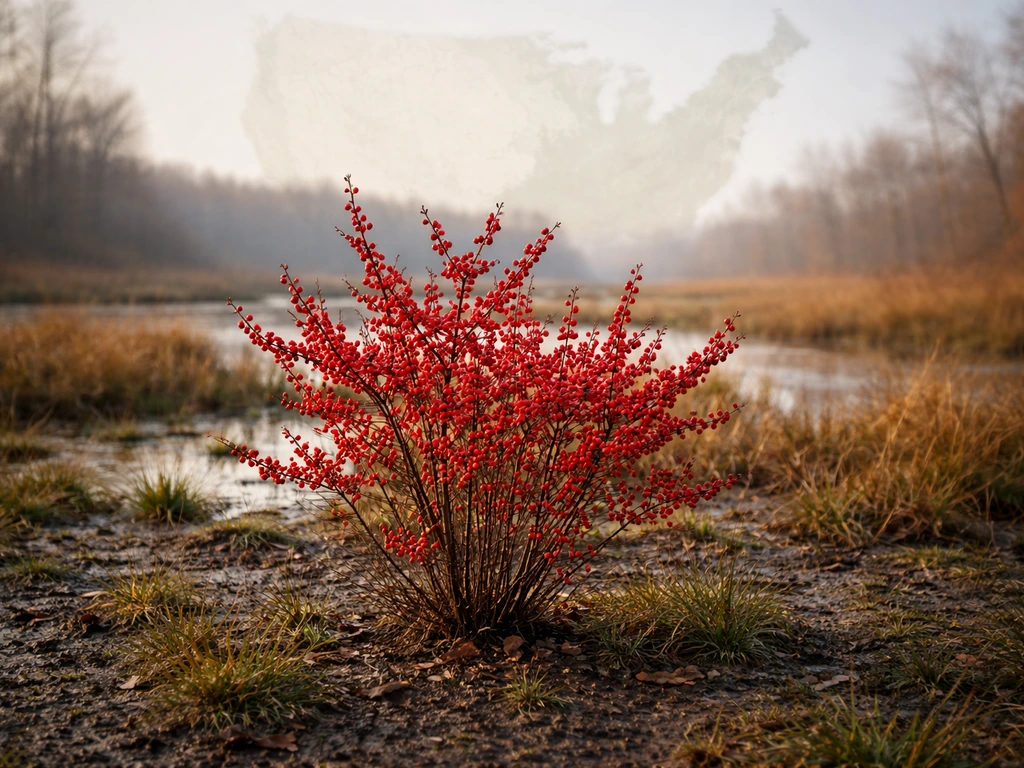
In the wild you'll find it tucked along blank" rel="noopener noreferrer">streambanks, at the edges of swamps and bogs, and in low-lying woodland margins where the soil stays reliably moist and slightly acidic. It thrives in USDA hardiness zones 3 through 9, which covers an enormous swath of the country, and it's genuinely one of the easiest native shrubs to grow as long as you can give it wet-to-moist, acidic soil and at least a few hours of sun.
Where winterberry grows natively
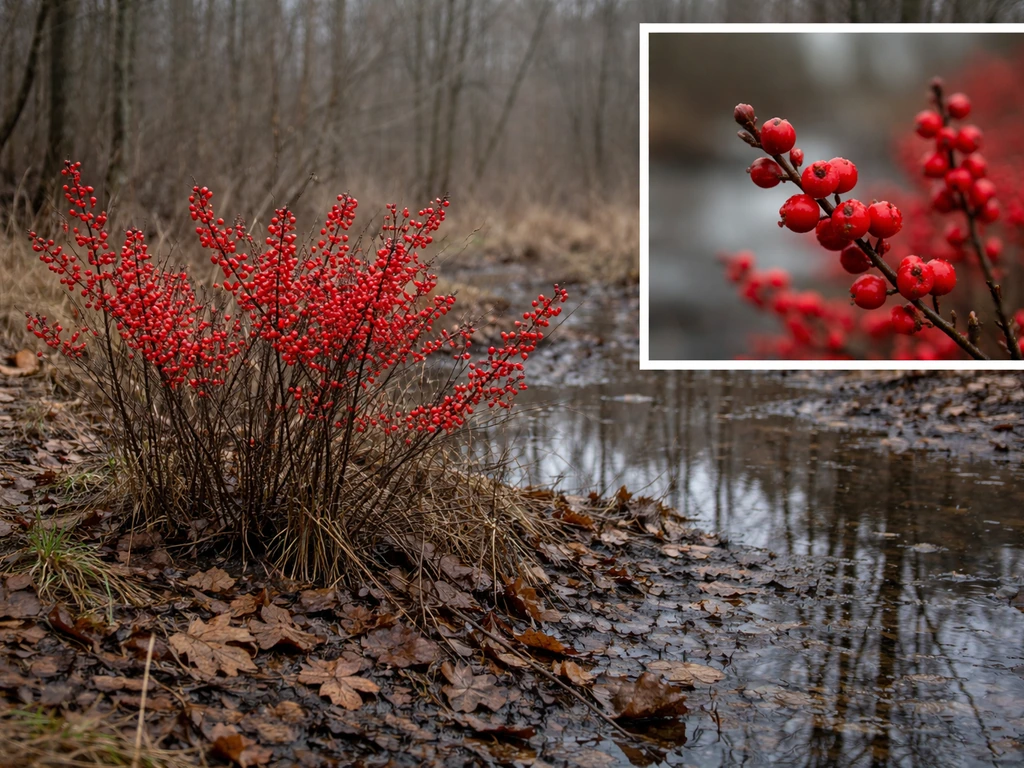
Ilex verticillata's native range runs from Newfoundland west to Ontario and Minnesota, then south through the eastern United States all the way to Alabama. If you are wondering where winterberry grows natively, it spans from eastern Canada down through much of the eastern United States. That's a wide band of territory, and it tells you a lot about the plant's adaptability: this is a shrub that handles brutal cold, humid summers, and everything in between.
It's been documented as native in the Chesapeake Bay watershed, throughout the Mid-Atlantic and New England states, across the Midwest, and into the Upper South. If you're gardening anywhere east of the Great Plains, there's a good chance winterberry is either native to your area or perfectly adapted to your climate.
Winterberry is also closely related to the question of where yew berries grow, since both are tied to their native ranges and suitable growing conditions native to your area.
In that range, it shows up most consistently in low, wet places: the margins of forested swamps, the shores of rivers and lakes, boggy depressions, and streamside thickets. It's a plant that has learned to live with wet feet for at least part of the year, and in many of its native haunts it actually experiences spring flooding followed by drier conditions in late summer. That seasonal wet-dry pattern is worth remembering when you're choosing a planting site at home.
What winterberry habitat actually looks like
When people say winterberry likes 'moist soil,' they often underestimate what that really means. In the wild, this shrub is comfortable in genuine wetland conditions, not just 'don't let it dry out' conditions. That said, Virginia Tech research confirms it can perform fine in average-moisture soils too, so it's not a strict bog plant. Think of its preference as wet-to-moist, with the ability to tolerate average moisture if you're consistent about not letting it dry out, especially during its first couple of growing seasons.
Soil pH: this is the detail most growers miss
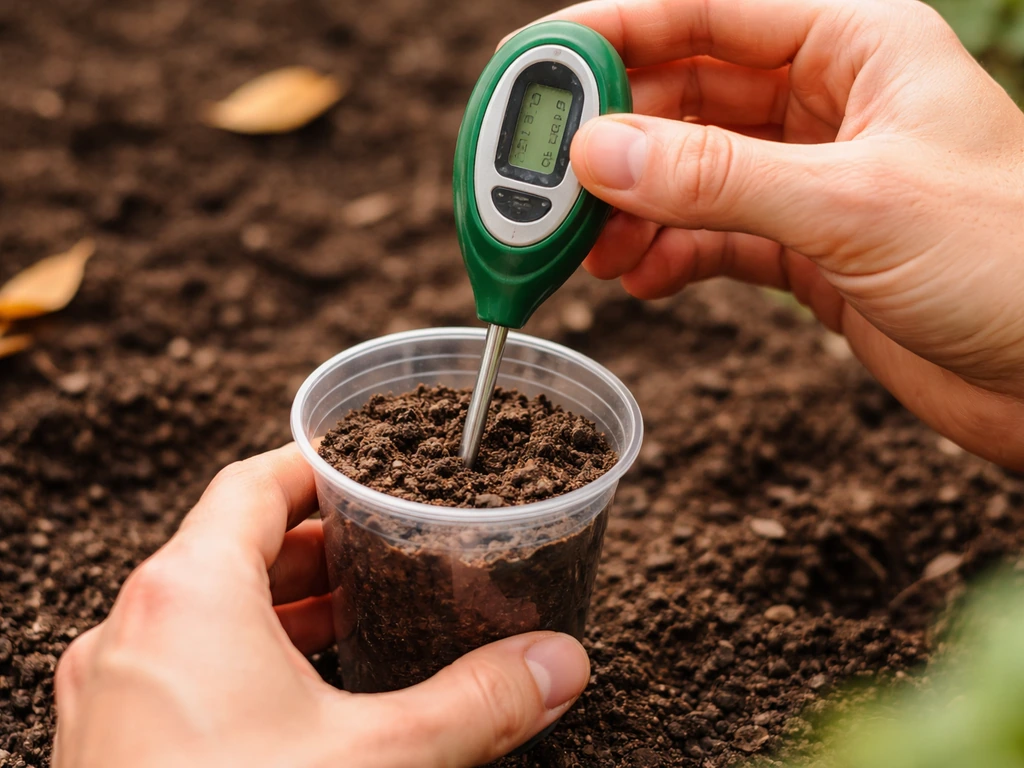
Winterberry strongly prefers acidic soil, and this is honestly where I've seen more failures than anywhere else. The target range is pH 4.5 to 6.5. Below 7 is fine; above 6.5 and you'll start to see yellowing leaves and poor berry set. If your soil is naturally alkaline or you've been liming your lawn for years, you'll need to amend before planting. Sulfur is the standard fix, but it takes time to work, so test your soil before you plant rather than after.
Sun requirements
Winterberry tolerates quite a bit of shade, and you can grow it from full sun down to mostly shaded conditions. But here's the practical truth: if you want a jaw-dropping berry display, you need sun. Proven Winners recommends at least four hours of direct sun per day. Filtered light works reasonably well too. Heavy shade means fewer flowers, weaker pollination, and noticeably fewer berries come fall. For most home gardeners, a location with morning sun and light afternoon shade is ideal, especially in hot southern zones where full afternoon sun can stress the plant during dry spells.
Soil texture and organic matter
University of Maryland Extension notes that winterberry can handle any soil texture as long as it stays moist and has high organic matter content. That lines up with its native habitat in swampy woodland edges where soils are rich with decomposed plant material. If your soil is sandy and drains fast, you'll need to work in significant compost before planting and mulch heavily to retain moisture. Heavy clay can actually work well for winterberry since it holds water, but poorly drained clay that stays waterlogged without oxygen can still cause problems.
USDA hardiness zones: where it thrives and where it struggles
The consensus from multiple university extension sources puts winterberry's range at zones 3 to 9, with some sources citing zones 4 to 8 for the straight species. University of Maine Cooperative Extension has documented it surviving zone 3b conditions, making it one of the most cold-hardy deciduous hollies you can plant. Chicago Botanic Garden highlights it specifically for its cold-season berry display, which tells you it's been tested hard in northern climates and delivered.
| Zone | Region Examples | How Winterberry Performs |
|---|---|---|
| 3–4 | Northern Minnesota, Maine, Ontario border areas | Excellent cold hardiness; reliable berries; may need wind protection in exposed sites |
| 5–6 | Chicago, New York, Pennsylvania, Virginia | Ideal conditions; thrives with minimal fuss in moist sites |
| 7–8 | Georgia, South Carolina, Tennessee, Pacific Northwest | Does well with consistent moisture; watch for drought stress in summer |
| 9 | Gulf Coast margins, parts of California | Possible but marginal; heat and drought stress are real concerns; pick heat-tolerant cultivars |
In zones 9 and beyond, the honest answer is that pure Ilex verticillata starts to struggle. The combination of heat, low humidity, and dry summers works against it. The hybrid 'Sparkleberry' (a cross of I. serrata and I. verticillata), which is rated for zones 5b to 9, handles warmer conditions a bit better and is worth considering if you're at the warmer end of the range. In truly hot, dry climates like the desert Southwest, winterberry is simply not the right plant and you're better off looking at alternatives.
Is your yard a match? Run through this before you plant
Before you buy winterberry plants, run through these questions honestly. Getting a yes on most of them means you're in good shape.
- Are you in USDA zones 3 through 8? (Zone 9 is possible but needs extra attention.)
- Does your soil stay consistently moist, or do you have a low spot, rain garden area, or streamside location?
- Is your soil pH between 4.5 and 6.5, or are you willing to amend it before planting?
- Can you provide at least 4 hours of sun per day, especially in spring when flowers form?
- Are you planning to plant both male and female plants? (Without a male, you get no berries.)
- Do you have space for the male plant within 40 to 50 feet of the females?
- Is your soil high in organic matter, or can you amend it with compost before planting?
That last point about male plants trips people up more than anything else. Winterberry is dioecious, meaning each plant is either male or female and they're not self-pollinating. Penn State Extension notes winterberry is dioecious, so only female plants bear berries and fruit set depends on cross-pollination with a male nearby [dioecious, meaning each plant is either male or female](https://extension. psu.
edu/rain-garden-plants-winterberry). Only female plants produce berries, but they need a nearby male for pollination. University of Maryland Extension recommends one male for up to 10 female plants, all within 50 feet of each other. Clemson HGIC suggests that if plants are closer together (within 40 feet), one male can support up to 20 females.
The key is that the male cultivar you choose must bloom at the same time as your females, so check that overlap before buying.
Best spots in your yard and how to lay things out
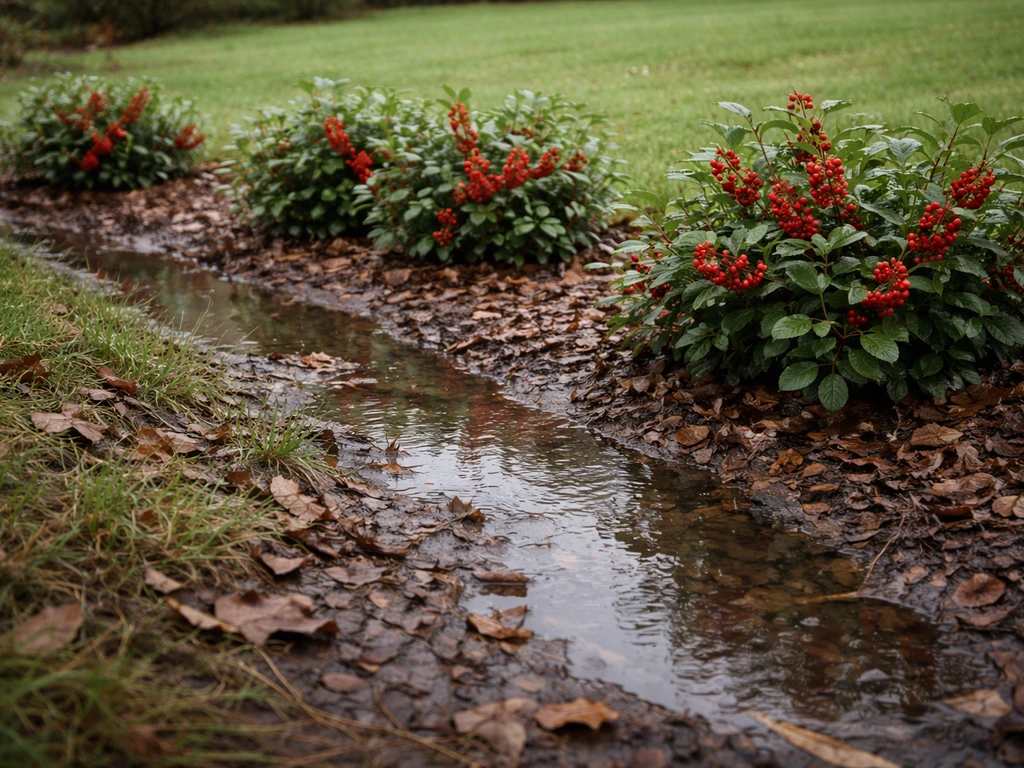
The absolute best place for winterberry is any spot that gives you trouble because it stays wet. That low corner of the yard where water pools after rain, the edge of a drainage swale, a rain garden, or the bank of a pond or stream: these are winterberry's sweet spots. Palmetto berries are native to the southeastern United States, and their natural habitat is typically warm, humid coastal and lowland areas winterberry's sweet spots.
Thimbleberries also prefer cool, moist conditions, which is why they are often found in the same kinds of woodland edges and forested habitats. University of Maine Cooperative Extension specifically calls it an excellent choice for spring-flooded sites that dry out a bit in summer, which describes a lot of problem areas in eastern and midwestern yards.
Beyond wet spots, woodland edges work beautifully. Planting winterberry at the transition between a lawn area and a wooded section mimics its natural habitat almost perfectly. It gets enough sun in that open-edge zone, the soil tends to retain more moisture under the canopy drip line, and the leaf litter naturally keeps the organic matter high and pH low.
For layout, think in masses rather than single specimens. A cluster of three to five female plants with one male tucked nearby reads much more naturally than a single plant and creates a bigger berry display that birds absolutely love. Winterberry also works well as a windbreak or screening hedge along property lines, especially in zones 4 through 7 where it grows vigorously. Mature plants typically reach 6 to 10 feet tall and wide, so give them room.
Growing winterberry in less-ideal conditions
If your yard doesn't naturally match winterberry's preferences, you have options. It's worth working through them before you give up on the plant entirely.
Fixing the soil pH problem
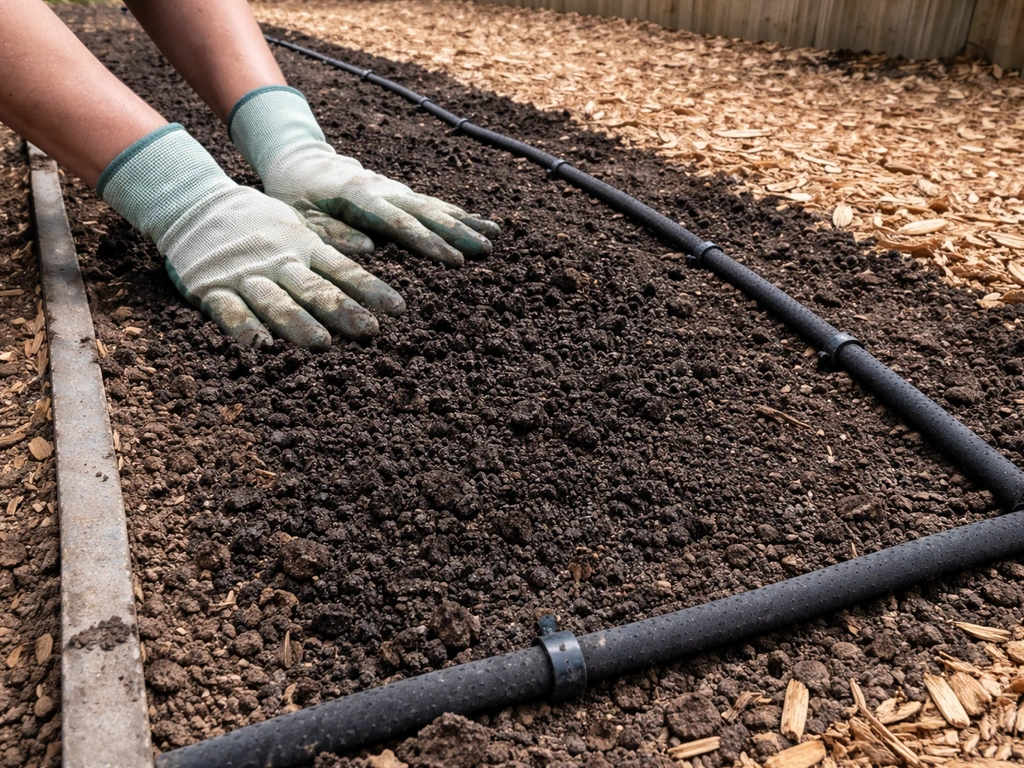
Alkaline soil is the most fixable obstacle. Apply granular sulfur according to the rate on the package for your soil type and the pH drop you need, then retest after a few months. Work in plenty of acidic compost, pine bark fines, or peat moss at planting time. Mulching with pine bark or pine needles helps maintain acidity over time. This is a multi-year process if you're starting from a high pH, so plan ahead.
Dealing with dry soil
If your soil drains too fast, amend generously with compost before planting, apply a 3-inch layer of mulch, and commit to consistent supplemental irrigation during dry spells, especially in the first two years. Proven Winners specifically warns that drought stress reduces berry production, so this isn't optional if you want a real display. Drip irrigation on a timer is genuinely worth the setup cost for a planting you want to establish well.
Container growing
If you're in a marginal zone or have terrible native soil, containers are a real option. Use a large pot (at least 15 to 20 gallons for a mature plant), fill it with an acidic potting mix blended with extra peat or pine bark, and don't let it dry out. Container plants need more frequent watering than in-ground plants, and in cold climates you'll need to overwinter containers in an unheated garage or bury them in the ground to protect roots from freeze-thaw cycles. You'll still need a male plant in a separate container nearby for fruit set.
Alternatives if winterberry really won't work
If you're in the deep South or an arid western region where Ilex verticillata just isn't suited, consider the hybrid 'Sparkleberry' for zones 5b to 9, or look at other native berry shrubs that suit your specific climate and conditions. If you're in the deep South or an arid western region where Ilex verticillata just isn't suited, consider the hybrid 'Sparkleberry' for zones 5b to 9, or look at other native berry shrubs that suit your specific climate and conditions, including where do tayberries grow as a related comparison. Gardeners in drier or shadier sites might also explore partridge berry, which thrives in completely different conditions, as a low-growing ground cover option. The broader point is that winterberry's specific combination of cold hardiness, wet soil tolerance, and brilliant fall display is hard to replicate, but matching the plant to its right conditions is always more rewarding than fighting the site.
FAQ
If winterberry grows in zones 3 to 9, why do some people still fail to get berries?
Most failures come from one missing ingredient, male pollinators close enough, enough direct sun for flowering, or soil acidity that stays in range. Even if the plant survives, berry set drops fast when pH drifts above about 6.5 or when shade limits bloom time.
How close do male and female winterberry plants need to be for consistent fruit set?
Aim for a single male within roughly 40 to 50 feet of the female cluster, and keep all plants blooming at the same time. If your male is a different cultivar with a slightly different bloom window, you can end up with no berries even when the male is nearby.
Does winterberry need full sun all day to produce a strong berry display?
It can tolerate heavy shade and still live, but berry quantity usually suffers. A practical target is at least four hours of direct sun, and in hot southern areas it helps to get morning sun and some afternoon relief to prevent drought-driven stress.
What’s the difference between “moist soil” and “wetland soil” for winterberry?
Winterberry prefers wet-to-moist conditions, not simply “never let it dry.” In the wild it can experience spring flooding followed by a drier late-summer period, so the soil should stay consistently damp while still having enough oxygen in the root zone.
Will winterberry tolerate heavy clay, or does it need sandy soil like some other hollies?
Heavy clay can work because it holds water, but only if it does not stay waterlogged without oxygen. If water sits for long stretches after rainfall and leaves the root zone anaerobic, consider improving drainage or using a slightly raised, mulched planting area.
How do I know if my soil is acidic enough before planting winterberry?
Test with a real soil test, not a strip kit, and check current pH before amendments. If your soil is alkaline or you’ve been liming for turf, you may need sulfur and organic matter at the start, then repeat testing after a few months because pH changes are gradual.
Can winterberry be grown in a container in the same way as in-ground planting?
Yes, but containers dry out faster and freeze-thaw cycles can damage roots. Use a large pot (15 to 20 gallons minimum), keep an acidic potting mix, and in cold climates overwrite container protection by storing in an unheated garage or insulating and burying the pot.
Where should I plant winterberry if my yard does not have a natural wet spot?
You can mimic the “wet corner” by building a rain garden-style area or redirecting downspout runoff into a sun-exposed depression. Keep the site acidic, and plan for supplemental irrigation during the first one to two growing seasons until the roots establish in your modified soil.
What problems should I watch for if winterberry is planted in the wrong pH range?
If pH is too high, you may see yellowing leaves and reduced or missing berries over time. The plant may look generally okay at first, so regular pH checks after amendments are important to avoid wasting years on a site that never reaches the target range.
Is “Sparkleberry” (the hybrid) only for warmer areas, or can it solve other site issues too?
It’s mainly a heat-tolerance option for the warmer end of the range, but it can be a practical substitute when pure Ilex verticillata struggles. However, it still needs the same basic basics of acidic, consistently moist soil and appropriate sun for flowering.