Yew berries grow on female Taxus trees and shrubs across Europe, parts of North Africa, and North America, most reliably in well-drained soils on chalk or limestone slopes, in woodland understories, in hedgerows, and in managed sites like churchyards and gardens. In the wild, you are most likely to find berry-bearing yews on shaded hillsides or forest edges in the UK, continental Europe, and parts of eastern and Pacific-coast North America. In gardens, they turn up as clipped hedges, specimen trees, and foundation plantings from USDA Zone 5 through Zone 8, producing their small, bright red arils from late summer into fall. The single non-negotiable requirement for berries: you need both a male and a female plant nearby.
Where Do Yew Berries Grow: Range, Habitats, and Tips
Marcus Holloway
6 Jun 2026
The native range and natural habitats where yew trees fruit
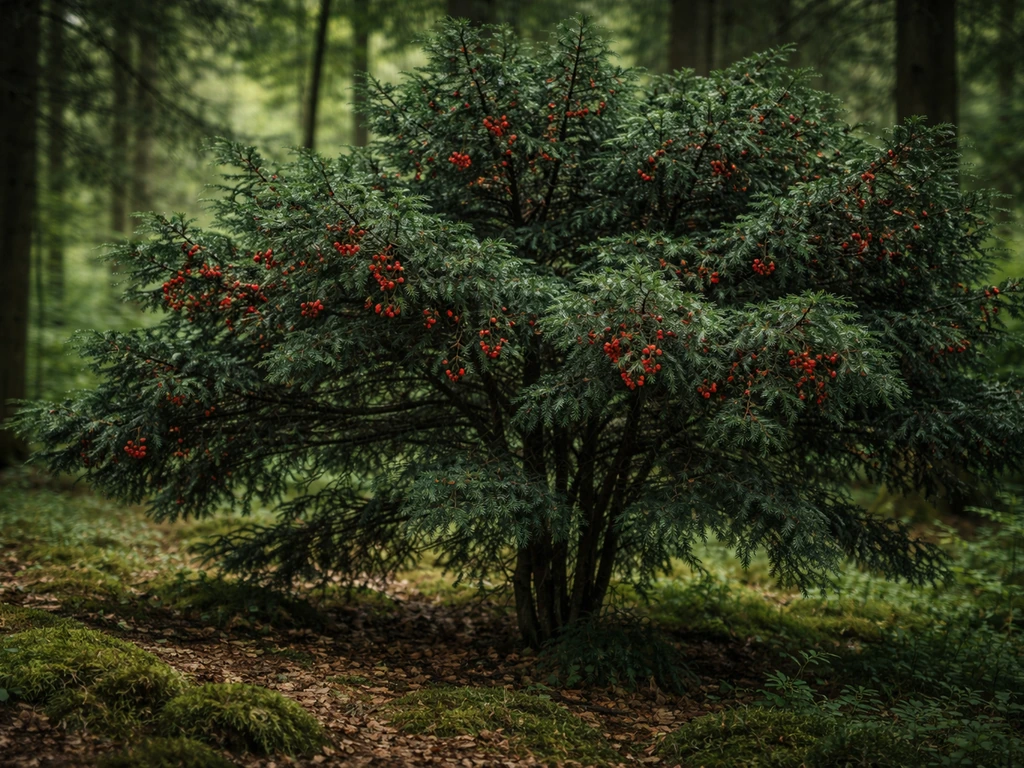
The species most people picture when they think of yew berries is Taxus baccata, the English or common yew. Tallow berries (more commonly called yew berries) grow wherever Taxus species can establish, especially in woodlands and sheltered limestone or chalk sites across Europe and parts of North America. Its native range, according to Kew's Plants of the World Online, stretches across most of Europe from the Azores through to western Asia, with northern limits in Norway and southern limits in North Africa. That is a genuinely wide footprint. But range on a map and actually finding a berry-covered yew in the wild are two different things. Yew berries appear only on female trees, and in natural stands the density of female versus male individuals varies enormously.
In terms of habitat, yew is a shade specialist. EUNIS describes Taxus baccata persisting under deep shade, including beneath dense beech (Fagus sylvatica) canopy where almost nothing else survives. You also find it on cliff edges and rocky limestone outcrops, where low competition and excellent drainage let it carve out space in exposed spots. JNCC's habitat summary for yew woodland specifically describes stands growing on shallow, dry soils on chalk or limestone slopes. JNCC’s SAC habitat summary for yew woodland also notes that stands can occur on more mesotrophic soils in a few areas. Think steep scarp faces in the South Downs, rocky hillsides in Wales, or the limestone pavements of the Lake District. These are the core wild berry-producing sites in Britain.
Beyond Britain, North America has two native yew species that produce the same red aril-covered seeds. Canada yew (Taxus canadensis) is a low, sprawling shrub that grows across eastern North America in hemlock-white pine-northern hardwood forests. It is more cold-hardy than English yew and survives well into northern Canada. Pacific yew (Taxus brevifolia) occupies a completely different territory: the Pacific Coast from southeast Alaska south through British Columbia, Washington, Oregon, and into northern and central California, including the Sierra Nevada. Both produce berries under the same basic condition as their European cousin: female plant, nearby male, decent drainage.
Climate and soil conditions yew berries prefer
English yew is hardy to USDA Zone 5 or 6 depending on the cultivar, and tolerates a broad soil pH range of roughly 5.4 to 7.8. What it will not forgive is waterlogged ground. EUFORGEN flags it as sensitive to long-lasting poor drainage, and in my experience that is the fastest way to kill a yew: plant it somewhere that puddles in winter. Chalk and limestone soils drain quickly and often run slightly alkaline, which is exactly why yew thrives on them naturally. Oregon State University's plant profile confirms it tolerates most soil types except strongly alkaline or strongly acidic extremes.
Light is flexible but not irrelevant to berry production. Yew handles full sun to full shade, but fruiting tends to be more reliable and the plant more vigorous when it gets at least some direct sun each day. A deeply shaded specimen will survive for centuries (the oldest churchyard yews prove that), but you may see fewer berries per branch than on a plant with a few hours of morning sun. Frost sensitivity matters too: EUFORGEN notes English yew is sensitive to late frosts, which can damage the soft new spring growth right when pollination is happening. A late frost during the March-to-May flowering window can knock out a year's berry crop before it starts.
For berry production specifically, nitrogen availability in the soil plays a role. Research on Taxus baccata reproductive effort links nutrient availability to how robustly female trees invest in aril development. A soil that is extremely nutrient-poor may sustain the tree but reduce berry output. This is worth keeping in mind if you are trying to encourage berries on a long-established garden yew that has been in poor, compacted ground for decades.
| Condition | What yew prefers | What to avoid |
|---|---|---|
| Soil drainage | Free-draining, including chalk and limestone | Waterlogged or compacted ground |
| Soil pH | 5.4 to 7.8 (tolerates slightly acid to moderately alkaline) | Strongly alkaline (above 8) or strongly acid (below 5) |
| Light | Full sun to full shade; fruiting better with some sun | No special avoidance, but deep shade reduces berry load |
| USDA hardiness | Zones 5–8 (English yew); Canada yew is hardier | Zone 4 and colder for English yew |
| Frost timing | Tolerates winter cold well | Late frosts during March–May flowering window |
| Soil nutrients | Moderate fertility supports berry production | Severely depleted, compacted soils reduce aril output |
Where yew berries actually show up by region
UK and Ireland
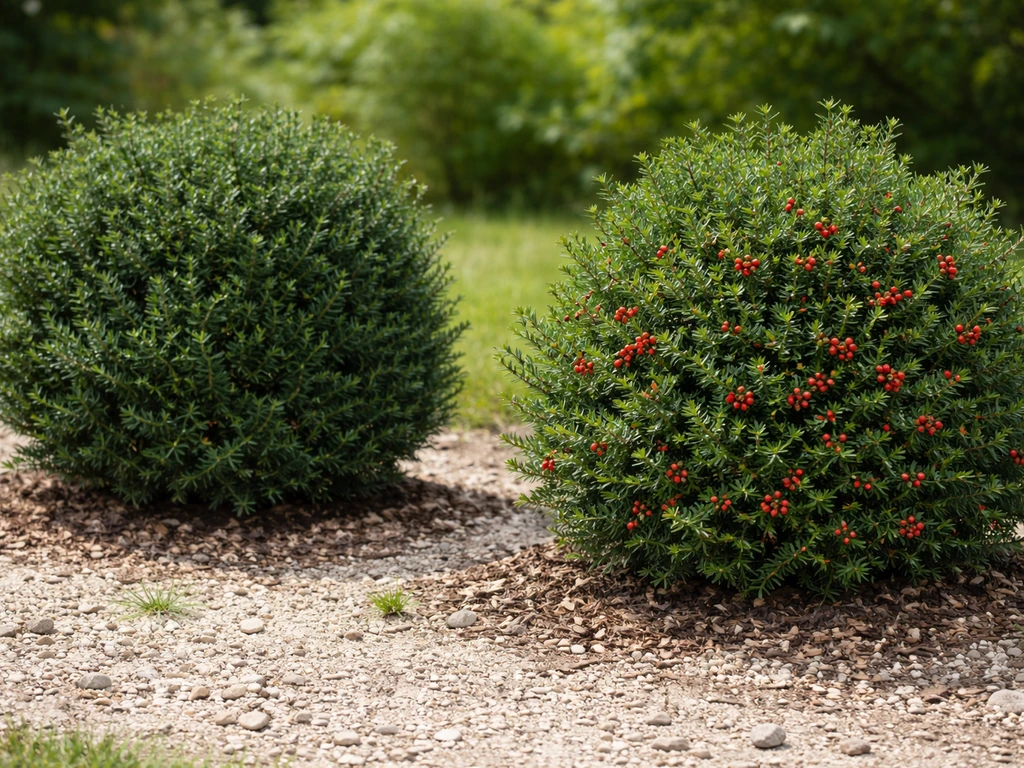
This is the heartland for wild berry-bearing yews. Northumberland Wildlife Trust points to well-drained chalk and limestone soils as the key wild habitat, with notable concentrations in South East England, Central England, Wales, and the Lake District. The Chilterns, the North and South Downs, and the limestone hills of the Cotswolds and Mendips all have native yew populations. Some of the most dramatic wild yew stands in Britain are at Kingley Vale in West Sussex, where ancient berry-bearing trees have grown undisturbed for centuries. In the UK, you’ll most often find yew berries in long-established native stands such as Kingley Vale in West Sussex where do partridge berries grow. You will also find old fruiting yews in almost every English country churchyard, a pattern explained below.
Continental Europe
Taxus baccata is native across most of continental Europe according to EUFORGEN, with significant wild populations in the mountains of central and southern Europe, including the Pyrenees, Alps, Apennines, and Carpathians. In lower-elevation forests it tends to grow as an understory tree beneath beech or mixed deciduous woodland. Berry-bearing trees turn up across France, Germany, Spain, Italy, and into the Balkans and into Turkey. The northern edge of reliable wild populations runs through Scandinavia, with the absolute northern limit in Norway.
Eastern North America
Canada yew is the species to look for here. Its range covers a wide swath of eastern North America from Newfoundland and Manitoba south through the Great Lakes region and into the Appalachians. It grows as a low, shade-tolerant shrub in cool, moist forests. The arils look identical to English yew: small, red, fleshy cups around a single seed. Japanese yew (Taxus cuspidata) and its hybrids are also widely planted in gardens and hedges across the northeastern US and Canada, and female plants in those landscapes produce berries freely.
Pacific Coast of North America
Pacific yew (Taxus brevifolia) is the native species here, found from southeast Alaska through western British Columbia, Washington, Oregon, and into California. It grows as an understory tree or large shrub in moist, coniferous forests, often alongside western hemlock, Douglas fir, and redwood. Female Pacific yews produce the same red arils as their relatives, typically visible on trees in late summer. If you are hiking in the Pacific Northwest and spot small red berry-like fruits on a flat-needled understory shrub, Pacific yew is a very likely candidate.
Where you actually find yews: gardens, hedges, churchyards, and wild corners
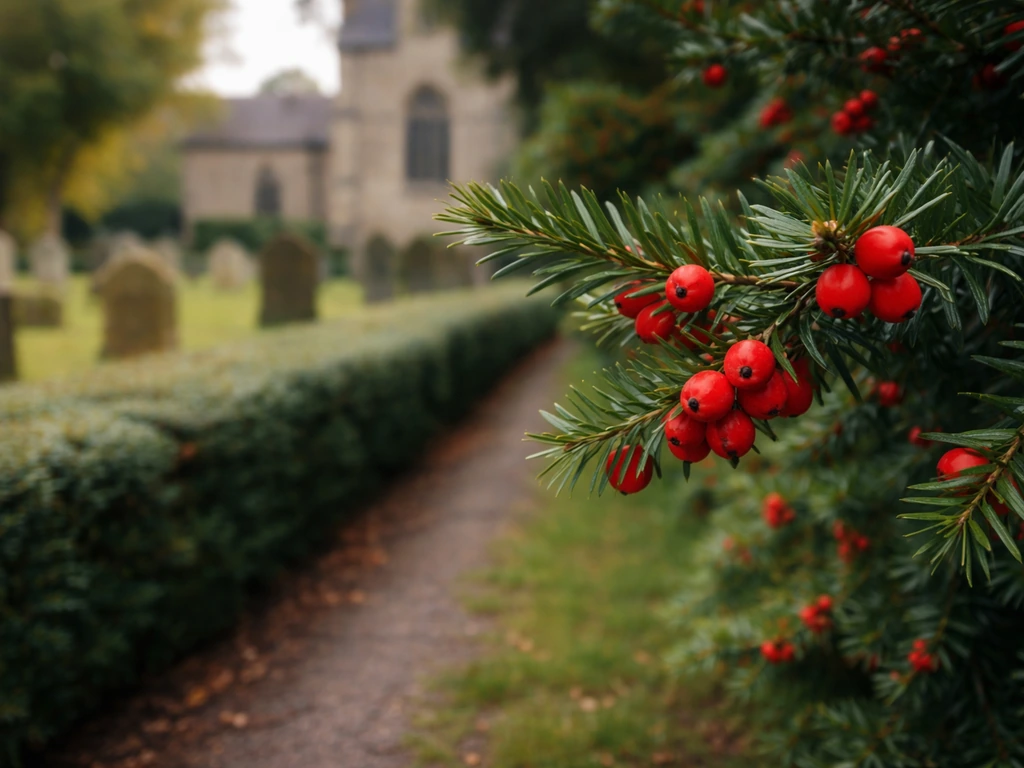
In practice, most people encounter yew berries not in wild woodland but in managed landscapes. English churchyards are the single most reliable place to find ancient, berry-bearing yew trees in the UK. If you are wondering where berries are grown in a different region, you may also want to check where do palmetto berries grow for a comparable North American berry-growing picture. The Wildlife Trusts link this directly to yew's historical and cultural association with sacred sites, and the Woodland Trust's Ancient Tree Inventory confirms that many of Britain's oldest Taxus baccata specimens live in churchyards, some potentially thousands of years old. These old female trees fruit reliably when there are male trees nearby, and in a churchyard with multiple ancient yews, you almost always have both sexes present.
Beyond churchyards, garden hedges are the other major source. Taxus baccata and its cultivars have been used as hedge plants for centuries across the UK and Europe, and Japanese yew hybrids fill the same role across much of North America. A mature, unclipped or lightly clipped female hedge section will produce berries most years. The challenge with heavily clipped hedges is that the clipping timing can remove the fruit-bearing shoots, so you often see berries on the wilder, less manicured ends of a hedge or on specimen trees rather than tight topiary. I have seen old estate hedges in England with one end cropped flat and the other end billowing out, and it is always the loose end that is covered in red arils in September.
In the wild, beyond the chalk downland and limestone sites already mentioned, keep an eye on shaded north-facing road cuts, old estate woodlands, and hedgerow trees in limestone country. Yew often persists in these spots as a remnant of older vegetation, and isolated female trees can be surprisingly productive if there is a male yew within a few hundred meters to supply pollen.
How to confirm it is actually a yew and not a lookalike
This matters. Hemlock (Tsuga species, not the poisonous herb) is the most common lookalike confusion in North America, and both hemlocks and yews are flat-needled, shade-tolerant conifers that can look similar at a glance. There are also some ornamental shrubs with red berries that get confused with yew by beginners. Here is how to be sure you are looking at a true Taxus.
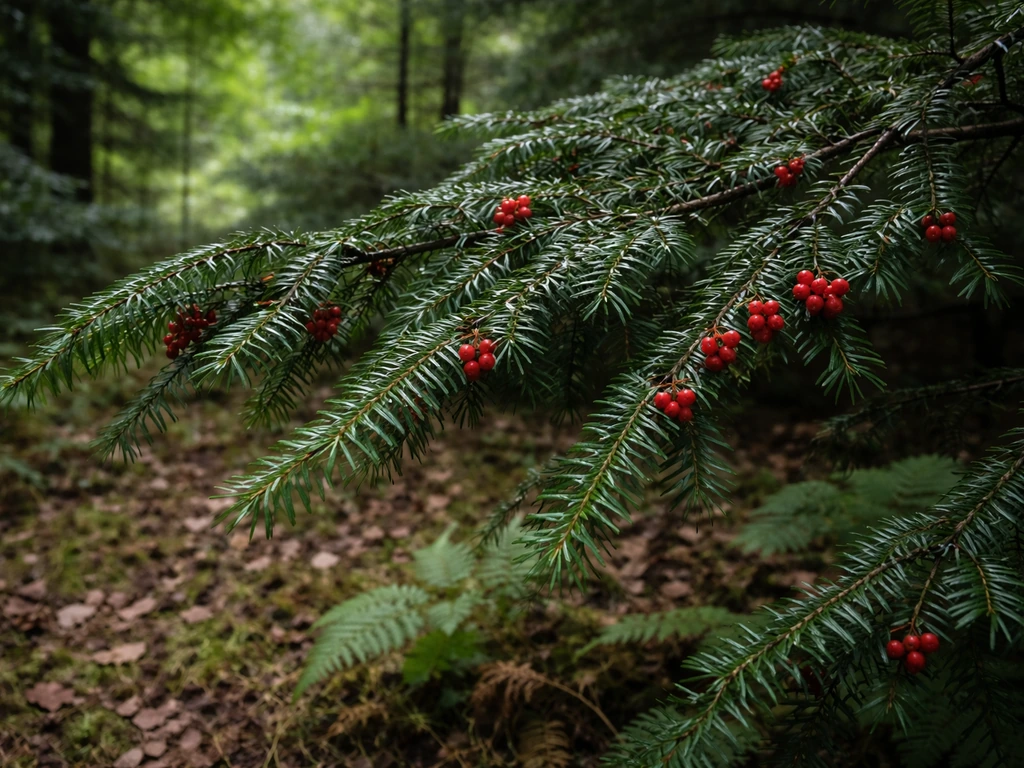
- Check needle arrangement: Yew needles sit in two distinct rows along each side of the twig, like the teeth of a comb. The Ancient Yew Group describes this as needles arranged in two rows either side of each twig, which is very recognizable once you have seen it. Hemlock needles also appear two-ranked but are shorter, have a tiny stalk at the base, and have two white stripes on the underside (Maine Forest Service calls them 'racing stripes'). Yew needles lack these white stripes and are attached directly to the twig without a stalk.
- Look at the needle surface: Yew needles are flat and glossy on top, with a duller pale green underside. They are typically 1 to 3 cm long. Hemlock needles are shorter and have a slightly different texture.
- Examine the bark: Yew bark is distinctive: reddish-brown, thin, and peeling away in irregular flakes or strips. Older trunks often show a fluted, sometimes twisted appearance.
- Identify the fruit: A true yew aril is a small (roughly 7 mm across), bright red, fleshy cup that is open at the tip so you can see the single dark seed inside. Nothing else looks quite like this. If the 'berries' are fully enclosed like a small holly berry or have a completely different structure, it is probably not a yew.
- Check for toxicity clues: Every part of the yew plant except the red fleshy aril itself is toxic. The seeds inside the aril are also toxic. If someone in your group is tempted to eat the berries, it is worth making this absolutely clear before identification proceeds any further.
- Smell the foliage: Crushed yew needles have a faint, slightly resinous smell that is milder than most pines. This is subjective but useful as a secondary check once you have confirmed the needle and fruit characteristics.
If you are in the UK and near a churchyard, garden boundary, or chalk hillside and you see a dark-foliaged, flat-needled shrub or small tree with red berry-like fruits in late summer or fall, the probability that it is Taxus baccata is very high. The combination of two-ranked needles, reddish peeling bark, and open-tipped red arils is essentially unique to yew in the British landscape.
Growing yew in your own garden to get berries
The first thing to sort out is whether your climate is compatible. English yew works well from USDA Zones 5 through 8, which covers most of the UK, much of Western Europe, the Pacific Northwest, and a large chunk of the eastern and central US. If you are in Zone 4 or colder, Canada yew is a better bet because it is hardier. If you are in Zone 9 or warmer, yew generally struggles: it needs a proper winter chill period and dislikes sustained summer heat.
Getting the male-female equation right
No male tree, no berries. This is the single most common reason gardeners have a yew with no fruit. Taxus is dioecious, meaning individual plants are either male (pollen-producing) or female (berry-producing). You need at least one male plant within reasonable distance of your female plants. The USDA Forest Service notes that good seed crops in wild populations depend on a good intermixture of males and females. In garden terms, one male can service multiple females, and since yew is wind-pollinated, a male a street or two away can be enough, though having one on-site is more reliable. When buying from a nursery, ask specifically for a female plant for berries, or a named female cultivar. Taxus baccata 'Fastigiata Robusta' is a commonly available upright female form, and most broadleaf yew hybrids (Taxus x media cultivars) have named male and female selections.
Soil preparation and site matching
Replicate what yew does naturally: free-draining soil, moderate fertility, and a pH between 5.4 and 7.8. If your soil is heavy clay, the single most important thing you can do before planting is improve drainage. Raised planting (mounding the soil a few inches above grade) or incorporating coarse grit helps enormously. Yew does not need rich soil, but it will not thrive in compacted, waterlogged ground. On naturally chalky or alkaline ground, yew is in its element and needs minimal amendment.
Light and positioning
Plant female yews where they will get at least partial sun if you want reliable berry production. Full shade is tolerated but often reduces fruiting. A north-facing wall or deeply shaded corner will keep the plant alive but you will see fewer arils. East or west-facing spots with morning or afternoon sun tend to give the best balance of vigor and fruiting. Avoid frost pockets if you can: a sheltered spot reduces the risk of late frosts damaging the spring flowers before pollination is complete, since flowering runs from March to May and arils take six to nine months after pollination to mature and color up. A PMC review of Taxus species similarly reports that Taxus baccata flowering occurs from March to May and that wind pollination spans from September to April flowering runs from March to May.
Container growing
Yew grows well in large containers, which is useful if you are in a marginal climate or have a paved garden. Use a well-draining potting mix with some added grit, pot into a container at least 40 to 50 cm wide to give the roots room, and be very consistent with watering because containers dry out faster than ground soil. Container yews can be moved to a sheltered spot during unusually cold winters. You will still need a male plant nearby (even a small potted male works), and container plants may berry slightly less heavily than ground-planted ones due to restricted root volume, but it is entirely achievable. I have seen a pair of container yews on a London terrace, a male and a female, fruiting reliably every September.
Pruning and berry timing
If you are growing yew as a hedge and want berries, leave the female sections unpruned or only lightly trim them after berries drop in late fall. Heavy summer clipping removes the developing aril-bearing shoots. Berries typically ripen from August through October depending on your location and the year's weather. The arils persist on the plant into fall and are attractive to birds, particularly thrushes, which disperse the seeds. Watching a female yew get stripped by a flock of fieldfares on a November morning is one of the more satisfying garden wildlife sights.
If you are looking at other berry-producing shrubs and trees for comparison, it is worth noting that yew occupies a different ecological niche from most berry plants covered on this site. If you are also comparing other berries, you might be wondering where do tayberries grow and what conditions they need. Winterberry (Ilex verticillata) grows as a native shrub in parts of the eastern and central United States and prefers cold winters and moist, well-drained soil. Unlike sprawling shrubs such as thimbleberries or low bog plants like partridgeberries, yew is a long-lived woody tree or hedge plant that rewards patience. It grows slowly, which means the berries are years away if you are starting from a small nursery plant, but once established it is almost indestructible and will fruit for decades with very little intervention.
FAQ
Why do I see yew trees in my area, but none have red berries?
Not necessarily. Yews are widespread in Europe and North America, but berries only appear on female Taxus plants. In many areas you can find yews that do not fruit because there are no nearby male plants, or the male plants are too far away for good wind pollination.
How close do male and female yews need to be for berries to form?
In the ground, yew’s fruiting is often better when you have a wind-friendly arrangement. A male plant on-site is most reliable, but you can sometimes get fruit with a male within a few hundred meters if it is in the same general stand. In sheltered gardens, place the male where prevailing breezes can move pollen.
Can late frost prevent yew berries even if I have both male and female plants?
Yew flowers early in the year, and late frosts can reduce the crop even when summer conditions are perfect. If you are in a frost pocket (valley bottom, beside a cold drain), berries may be inconsistent year to year because soft new growth gets damaged during the March to May flowering period.
Why does my yew hedge lose berries after I trim it?
Yes, heavy pruning timing is a common cause of missing berries. If you clip in summer, you can remove the shoots that would have carried arils, so the fix is to keep hedges lightly trimmed and avoid major summer cuts, or do any shaping after the berries drop in late fall.
What soil conditions reduce yew berry production, even if the plants live?
You may still see survival, but berry output can drop on poor sites. Long-term, extremely compacted, nutrient-poor ground can reduce how strongly female yews develop arils, so improving drainage is priority one, then consider moderate fertility rather than heavy feeding.
Is full sun required for yew berries, or will shade still produce fruit?
Many people assume yew needs full sun to fruit, but it can persist in deep shade for decades. However, berry set is usually lighter in very dark spots, so for reliable fruiting aim for partial sun (a few hours of direct morning or afternoon light) rather than a constantly shaded corner.
How can I tell yew berries from lookalikes when I’m hiking?
Watch for confusion with other flat-needled, shade-tolerant conifers in North America, especially hemlocks. Yew’s easiest field clue is the distinctive open-tipped red arils on female plants, whereas hemlock has different needle structure and does not produce those fleshy red cups.
Can I grow yew berries on a balcony or patio in pots?
Yes, yew berries can be grown in containers, and you can still achieve fruit if you have a male and female together. The main limitation is root volume, so use a wide pot (roughly 40 to 50 cm or larger), ensure excellent drainage, and keep watering consistent because container soil dries quickly.
When should yew berries appear, and why are mine late?
If the berries are present, ripening timing depends on location and the year’s weather. In general, arils color from late summer into fall (often August through October). If berries take much longer than expected, check whether the plants actually received sufficient winter chill and avoid excessive shade.
What’s the fastest troubleshooting plan if my yews won’t produce berries?
If your yew does not fruit, the quickest checklist is: confirm you have a female plant, confirm a nearby male (even a small potted male can work), verify the site is not waterlogged, and check that pruning is not removing fruiting shoots. After that, evaluate light (partial sun), and frost risk in early spring.
Why do my yew berries disappear quickly, even though the tree looked like it had fruit?
Birds can remove the arils after they ripen, so “no berries left” does not always mean “no berries formed.” To assess fruiting, look at mid-to-late fall from a distance, and if you want berries to persist longer, avoid heavy pruning and keep the planting less manicured so fruiting shoots remain intact.
Do I need a specific cultivar to get yew berries, or will any yew do?
If you’re planning for berries, choose cultivars intentionally. Some commonly sold upright or hedge-form yews are not guaranteed to be female, so when buying, ask for a named female cultivar or a female plant specifically for aril production, and plan the male companion at the same time.