
Thimbleberries (Rubus parviflorus) grow naturally across a sweeping stretch of North America, from Alaska down through California and into the mountains of New Mexico, then eastward through the Dakotas all the way to the Great Lakes states. If you are comparing related bramble types, you may also be interested in where do tayberries grow as an adjacent berry growing-range question. If you're in the western U. S.
Where Do Thimbleberries Grow Learn Their Best Habitat
Marcus Holloway
19 Apr 2026
or Canada, there's a good chance they already grow somewhere near you. If you're in the upper Midwest or Great Lakes region, you're on the edge of their range but still within reach. East of that, they're not a natural fit. The short version: cool-to-moderate climates, moist woodland edges, and partial to open light are the core conditions to match.
Natural range and geography of thimbleberries
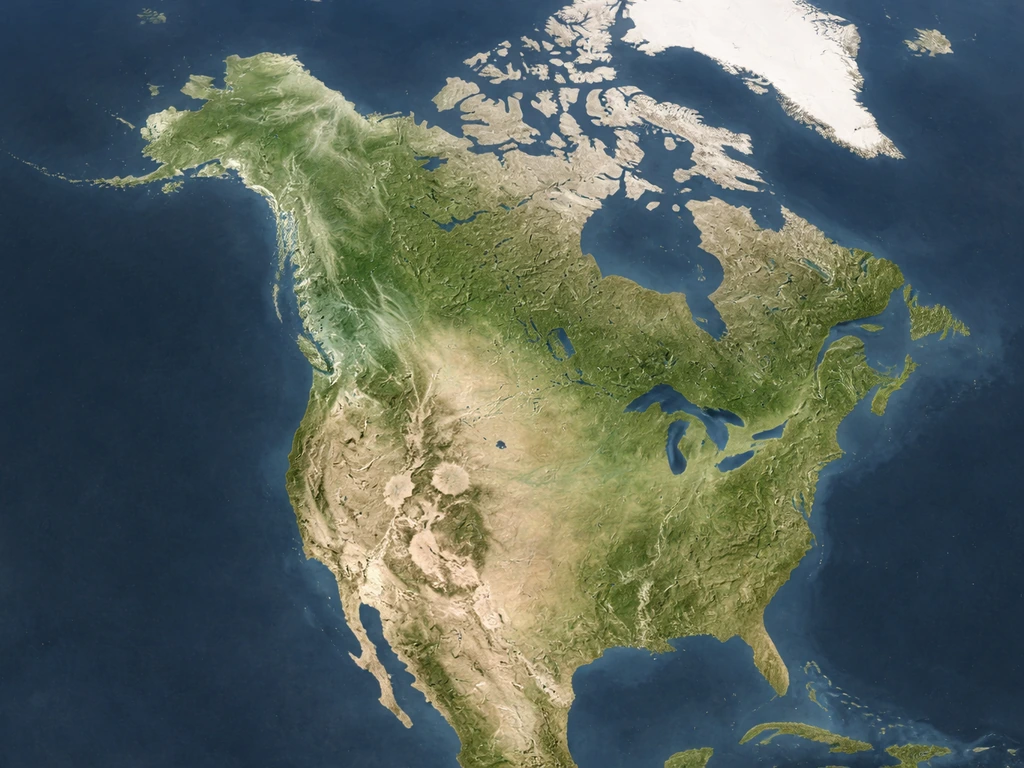
Rubus parviflorus has one of the widest natural distributions of any native Rubus in North America. Oregon State University's landscape plant database describes it as 'wide native,' and that's not an exaggeration. It runs from Alaska along the Pacific Coast down through Washington, Oregon, and California, then fans out eastward through Idaho, Montana, Wyoming, and Colorado, reaching the Dakotas and Great Lakes states like Michigan and Wisconsin. In the southern part of its range, you'll find it primarily in the mountains of New Mexico at elevations of 7,000 to 10,600 feet, where cooler temperatures compensate for the latitude.
There are two recognized varieties. The variety parviflorus covers the full range described above. The variety velutinus is a California-only variant with a narrower footprint. For most gardeners outside California, you'll be working with var. parviflorus, and the distribution data is well-documented right down to the county level through tools like the BONAP distribution map if you want to verify local presence.
Habitats where thimbleberries grow in the wild
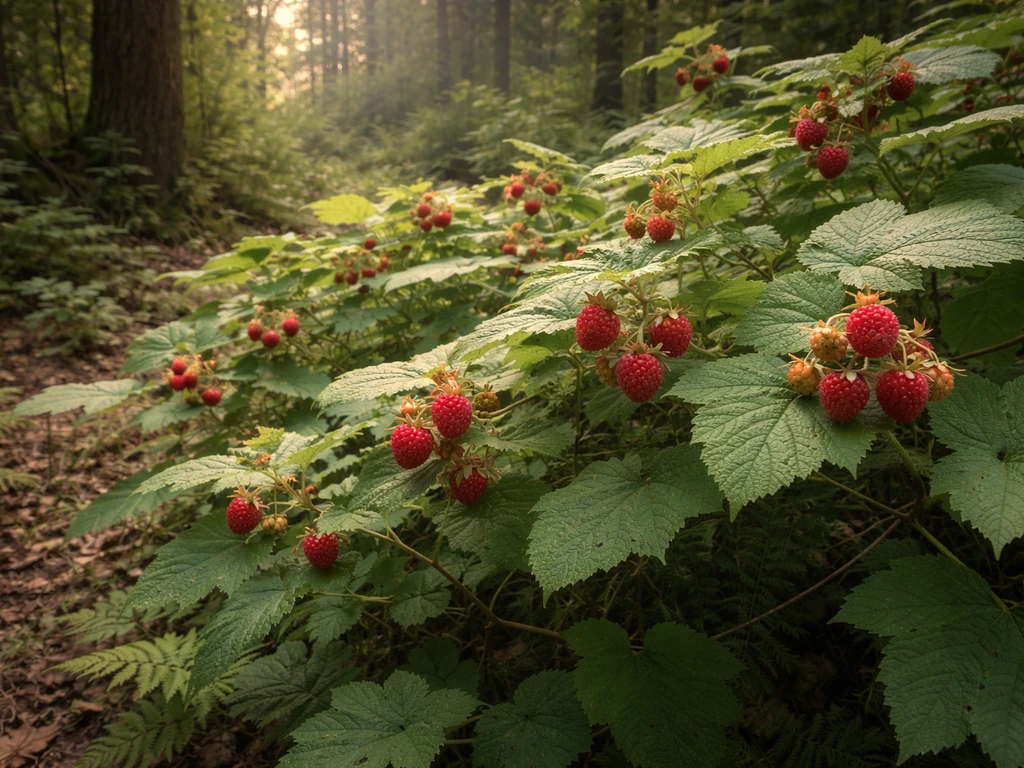
In the wild, thimbleberries show up in a surprisingly wide range of habitats, which is part of what makes them interesting to work with. The USDA Forest Service FEIS species review notes that thimbleberry commonly occurs in the understory of humid Pacific Northwest forests along with a broader range from Alaska to northern Mexico [thimbleberries show up in a surprisingly wide range of habitats](https://research. fs. usda.
gov/feis/species-reviews/rubpar). They're a common understory plant in deciduous, coniferous, and mixed-forest types throughout their range. But they don't just hide deep in the woods. They're also a classic edge and disturbance plant, showing up [along roadsides, railroad corridors, forest clearings, and post-fire sites](https://mynpn.
usanpn. org/npnapps/species/Rubus/parviflorus). Nature's Notebook specifically calls out those roadside and railroad-track locations, and that observation matches what I've seen: look for them where tree canopy breaks and light increases.
Historically, Indigenous groups in forested regions would burn patches of Rubus to encourage fruit production in the first post-fire growing season. That's a telling detail. It confirms that thimbleberries respond enthusiastically to disturbance-created light and edge conditions. They're not deep-forest specialists; they're early-succession opportunists that happen to tolerate shade when that's what's available. This ecology is directly relevant when you're picking a garden spot.
- Forest understories (deciduous, coniferous, mixed)
- Forest edges and canopy openings
- Post-fire and post-harvest clearings
- Roadsides and railroad corridors
- Streamside and moist woodland margins
- Montane shrub zones at higher elevations in the Southwest
Light and soil moisture conditions (what to look for)
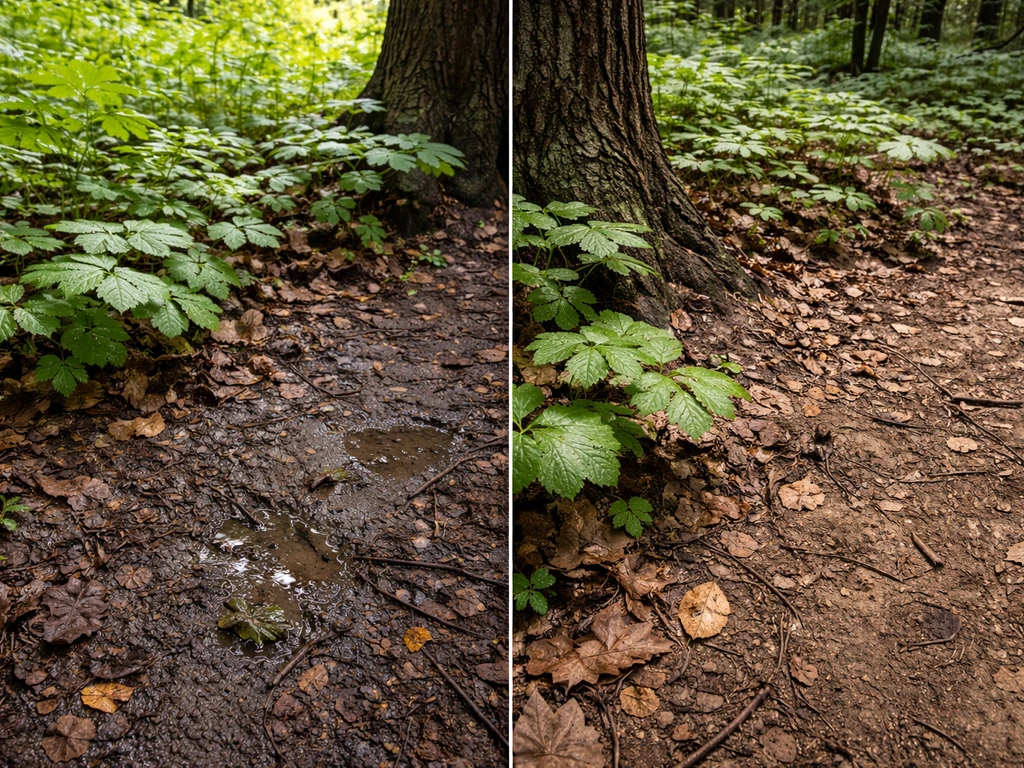
Light is where thimbleberry gets interesting. Research from Siskiyou Mountains clearcut comparisons gives some genuinely useful numbers: thimbleberry cover maxed out at around 5% in locations receiving less than 10% of full sunlight, climbed to 25% cover in spots with 11 to 60% of full light, and hit 75% cover where light exceeded 60% of full sunlight. In plain terms, they can survive in shade but they really perform in partial to open light. If you're choosing a garden spot, aim for a location that gets at least a few hours of direct sun or bright filtered light throughout the day, not deep forest gloom.
Soil moisture is a bit more flexible than people assume. Yes, thimbleberries perform best on moist sites, and you'll reliably find them near streams, seeps, and low spots where moisture lingers. But they also turn up in interior British Columbia's Douglas-fir zones that are described as warm and dry with regular moisture deficits. Prairie Restorations lists their moisture tolerance as spanning dry, mesic, and wet conditions. The takeaway: consistent moisture is ideal and will get you the best growth, but they won't immediately fail on well-drained soils if other conditions are right. What they really can't handle is prolonged waterlogging or baking, hot, drought-exposed locations with no relief.
Elevation, temperature, and climate compatibility
Thimbleberries are cold-hardy plants. Oregon State University rates them at USDA Zone 3, which means they can handle winter lows down to around -40°F (-40°C). If you're also trying to figure out where winterberry grow in your area, their site and climate needs are different, so it's worth checking the local conditions before planting.
If you want berries instead of winterberry, you can also look up where palmetto berries grow to compare range and climate needs where do palmetto berries grow. If you want the same kind of location guidance, search for where yew berries grow before you plant. That covers essentially the entire northern U.
If you are also wondering where tallow berries grow, their habitat and climate preferences can differ from thimbleberries, so it helps to check local conditions where do tallow berries grow. S. and most of Canada, so cold hardiness is rarely the limiting factor. The more relevant concern is summer heat.
In the Southwest, they retreat to elevations above 7,000 feet where temperatures stay cooler. At low elevations in hot, dry climates like the Sonoran Desert or the Deep South, they simply don't belong.
The British Columbia interior example is worth keeping in mind: thimbleberries can handle warm, dry summers as long as growing seasons are reasonably long and there's some moisture relief, either from snowmelt, occasional rain, or a nearby low spot. What they're really calibrated for is a cool-to-moderate climate with defined seasons. If you're in USDA Zones 3 through 7 in the western half of the continent or the upper Midwest, you're broadly in their comfort zone.
How to tell if thimbleberries will grow in your area
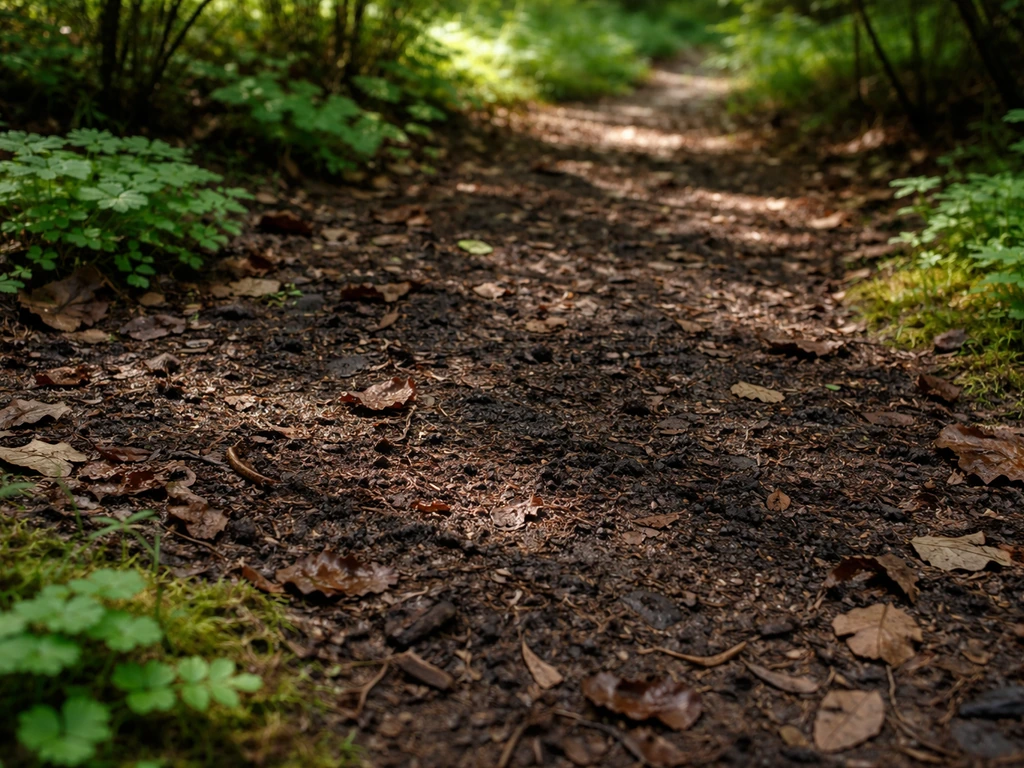
The quickest check is whether you're within or near their natural range. If you're in the Pacific Northwest, northern Rockies, Great Lakes states, or anywhere in between at a reasonable elevation, the climate likely works. If you're in the Southeast, the Gulf Coast, or low-elevation Southwest, it doesn't match their profile. Winterberry’s range depends heavily on temperature and cold exposure, so it helps to compare your local conditions to where it naturally occurs where winterberry grows.
But rather than relying entirely on maps, I'd recommend doing two things: check iNaturalist for recent Rubus parviflorus observations near your location (filter by your county or region), and cross-reference with the BONAP county-level distribution map. Real observations from your area or neighboring counties are the most reliable signal.
Beyond geography, look at your site conditions honestly. Ask yourself: Is your climate Zone 3 to 7? Do you have a spot that gets partial to open sunlight (not full dense shade, not baking afternoon exposure on a south-facing slope)? Is there a naturally moist area, a slope where runoff collects, or a garden bed where you can maintain consistent moisture? If you can check two or three of those boxes, thimbleberries are worth trying. If you're checking none of them, it's going to be an uphill battle.
- Check your USDA hardiness zone (Zone 3–7 is the target range)
- Look up Rubus parviflorus observations on iNaturalist for your county or region
- Cross-reference with the BONAP county distribution map to see if it's documented nearby
- Assess your available light (partial to open sun preferred, not deep shade)
- Evaluate soil moisture: do you have a low spot, shaded slope, or area with reliable moisture?
- Consider elevation if you're in the Southwest: aim for 7,000 feet or higher in warm climates
How to replicate wild conditions in your garden
The mental model that helps most here is to think 'forest edge clearing' rather than 'vegetable bed' or 'woodland garden.' Thimbleberries thrive where canopy opens up, light increases, and some disturbance has reset the competition. In a garden setting, that translates to a spot at the edge of tree cover, along a fence line with morning or afternoon sun, or at the transition between a shaded border and a more open lawn or path area.
Soil preparation should lean toward moisture retention without waterlogging. Work in compost to improve both water-holding capacity and drainage. If your soil drains very fast (sandy), adding organic matter helps hold the moisture thimbleberries prefer. If your soil is heavy clay, make sure water doesn't pool for extended periods after rain. A gentle slope that catches runoff but doesn't sit wet is actually ideal, which is exactly the kind of streamside or hillside margin where you find them in the wild.
One thing to plan for: thimbleberries spread. They're vigorous colonizers when site conditions click, and they can form dense patches quickly through rhizome expansion. That's great for a naturalized hedge or wildlife planting, but it means you'll want to define boundaries early if you're working near other plantings. A buried root barrier or a mown edge on the open side can keep them from taking over. Think of managing them the way you'd manage a patch of raspberries, because the growth habit is comparable.
Planting location tips: spacing, edges vs beds, and moisture management
For spacing, Prairie Restorations recommends 5 feet between plants, which makes sense given that mature shrubs reach 3 to 6 feet tall (with an average around 5 feet) and spread laterally through suckering. Don't crowd them at planting thinking they look small; they fill in faster than you expect. A 5-foot spacing gives each plant room to establish without immediate competition from its neighbors, while still allowing the patch to fill in naturally over two to three seasons.
Edge plantings consistently outperform formal bed plantings with thimbleberries. Along a fence line, a tree line, a property boundary, or the shaded side of a building where light angles in from one direction, they behave much more like they do in the wild. Formal raised beds or fully open vegetable-garden-style plots tend to either dry out too fast or expose the plants to more heat stress than they're built for. If you're in the Great Lakes region or upper Midwest and want to trial them, a north or east-facing slope edge with some afternoon shade is a good starting point.
Moisture management is the main ongoing task. Mulching heavily (3 to 4 inches of wood chips or shredded bark) makes a real difference in keeping root-zone moisture consistent, which directly mimics the duff layer thimbleberries grow through in forest settings. In the first season especially, supplemental watering during dry spells matters. Once established, plants in reasonably moist sites are much more self-sufficient, but don't assume they're drought-tolerant from day one.
| Condition | Wild preference | Garden target |
|---|---|---|
| Light | Partial to open (60%+ of full sun for best cover) | Edge location with 4–6 hours of direct or bright filtered light |
| Soil moisture | Moist to mesic; tolerates some dry periods once established | Consistent moisture; heavy mulch; avoid prolonged waterlogging |
| Soil type | Forest duff and mineral soil; organic-rich | Amended loam with compost; good drainage without fast dry-out |
| Temperature/zone | USDA Zone 3–7; cool to moderate summers | Zone 3–7; avoid hot, humid southern climates at low elevation |
| Elevation (Southwest) | 7,000–10,600 feet in New Mexico | Only viable at high elevation in warm/dry climates |
| Spacing | Forms natural dense patches via rhizomes | 5 feet between plants; use root barriers near other plantings |
| Mature height | 3–6 feet (average 5 feet) | Plan for 5-foot height; stake or manage edges as needed |
If thimbleberries don't match your climate, it's worth knowing that other native shrubby berries have overlapping but distinct ranges. Buffalo berries and partridge berries, for example, occupy different climate niches and might be better fits depending on where you garden. Partridge berries grow in cold, northern climates, especially in boreal and subarctic regions with acidic, well-drained soil and plenty of moisture where do partridge berries grow.
Buffalo berries grow in cool, moist habitats, often in northern regions and wooded wetlands. But if you're in the Pacific Northwest, northern Rockies, or Great Lakes region, thimbleberries are genuinely worth the effort. They're productive, wildlife-friendly, and visually striking with their large maple-like leaves and bright red fruit. Getting the location right is most of the work.
FAQ
If I’m outside the natural range, can thimbleberries still grow in my garden?
Not necessarily. If you live outside the main natural range, thimbleberries can still grow if you recreate their core conditions, especially partial to open light plus consistent, not waterlogged, moisture. Your best chance is a cool microclimate spot like a shaded north or east-facing edge, a location that stays evenly moist, or an elevation where summer heat is moderated.
What’s the biggest failure point when growing thimbleberries outside their ideal climate?
Winter hardiness is usually not the problem in most of their broader planting zones, but summer heat is. In hot regions, plan on higher elevation, more morning sun with afternoon shade, and extra moisture management (mulch plus targeted watering during heat waves). Without that, plants may survive winters but fail to fruit well.
How do I keep thimbleberries from taking over nearby plants or grass?
They spread aggressively through rhizomes and can form dense patches quickly. If you want a controlled planting, install a buried physical root barrier before planting (and keep the barrier continuous), and use a regular mowing or trimming edge on the open side to prevent runners from expanding into lawn or flower beds.
Will thimbleberries grow in shade, and how do I tell if the light is too low?
Yes, thimbleberries can tolerate some shade, but they perform best when the canopy breaks and light increases. If your site is deep shade, you may get plants that persist but stay sparse and underperform. Aim for bright filtered light or at least a few hours of direct sun, then adjust with pruning nearby trees or moving plants to a more open edge.
How should I manage soil moisture if I have heavy clay or areas that stay wet after rain?
Heavy mulch is helpful, but avoid creating a permanently soggy “bathtub.” For clay soils, incorporate compost to improve drainage and place plants on a gentle slope or raised edge so water can move through. After rain, if the area stays wet for extended periods, that’s a warning sign.
If my thimbleberries grow leaves but don’t fruit much, what should I troubleshoot first?
Poor fruiting often comes from two issues: not enough light and inconsistent moisture during the growing season. Check whether plants are getting bright light for most of the day, then make sure the root zone stays evenly moist from early growth through fruiting, especially during dry spells.
What spacing works best, and what changes if I want a dense wildlife patch?
You generally want plants spaced far enough to limit early crowding because thimbleberries fill in quickly. A common practical target is about 5 feet between plants, especially if you want a patch that develops without immediate competition. If you’re making a dense wildlife thicket, you can reduce spacing later, but start with room to establish.
Can I plant thimbleberries in a raised bed or vegetable-style bed?
Yes, but match the planting style to their ecology. Thimbleberries usually do better at woodland edges, fence-line transitions, or margins that mimic disturbed, lighter understory than in fully open, rapidly drying beds. If you plant like a vegetable garden, you’ll likely need more frequent irrigation and heat protection.
What’s a good way to verify whether thimbleberries are likely locally adapted near me?
A quick confirmation method is local observation, not just broad climate maps. Look for recent Rubus parviflorus sightings near your area using citizen science tools, then cross-check with county-level distribution maps. Observations from your county or neighboring counties are especially useful.
What should I do if I’m in a hot, low-elevation area where thimbleberries seem unlikely to thrive?
In very hot, low-elevation areas, they often struggle because they cannot rely on cooler summer temperatures. Your best alternatives are higher-elevation planting, adding afternoon shade, and choosing a site with some moisture relief. If you cannot create these conditions, consider native berries that fit your hotter climate better.