
Yes, lingonberries grow in Minnesota, and they do so naturally. Vaccinium vitis-idaea, the North American subspecies called var. minus, is a native plant across northern Minnesota's boreal forests and peatlands. ITIS report, Vaccinium vitis-idaea ssp. minus treats the North American taxon (ssp./var. minus) as the subspecies/variety occurring naturally in North America ITIS report — Vaccinium vitis-idaea ssp. minus. Herbarium records and county-level occurrence maps confirm wild populations in places like Lake of the Woods and Itasca County. For home gardeners, that's genuinely good news: you're not fighting the climate when you grow lingonberries in Minnesota. You're working with it, at least in the northern half of the state. Even in central and southern Minnesota, where soils get trickier, the right soil prep and cultivar choice will get you there.
Do Lingonberries Grow in Minnesota? Complete Growing Guide
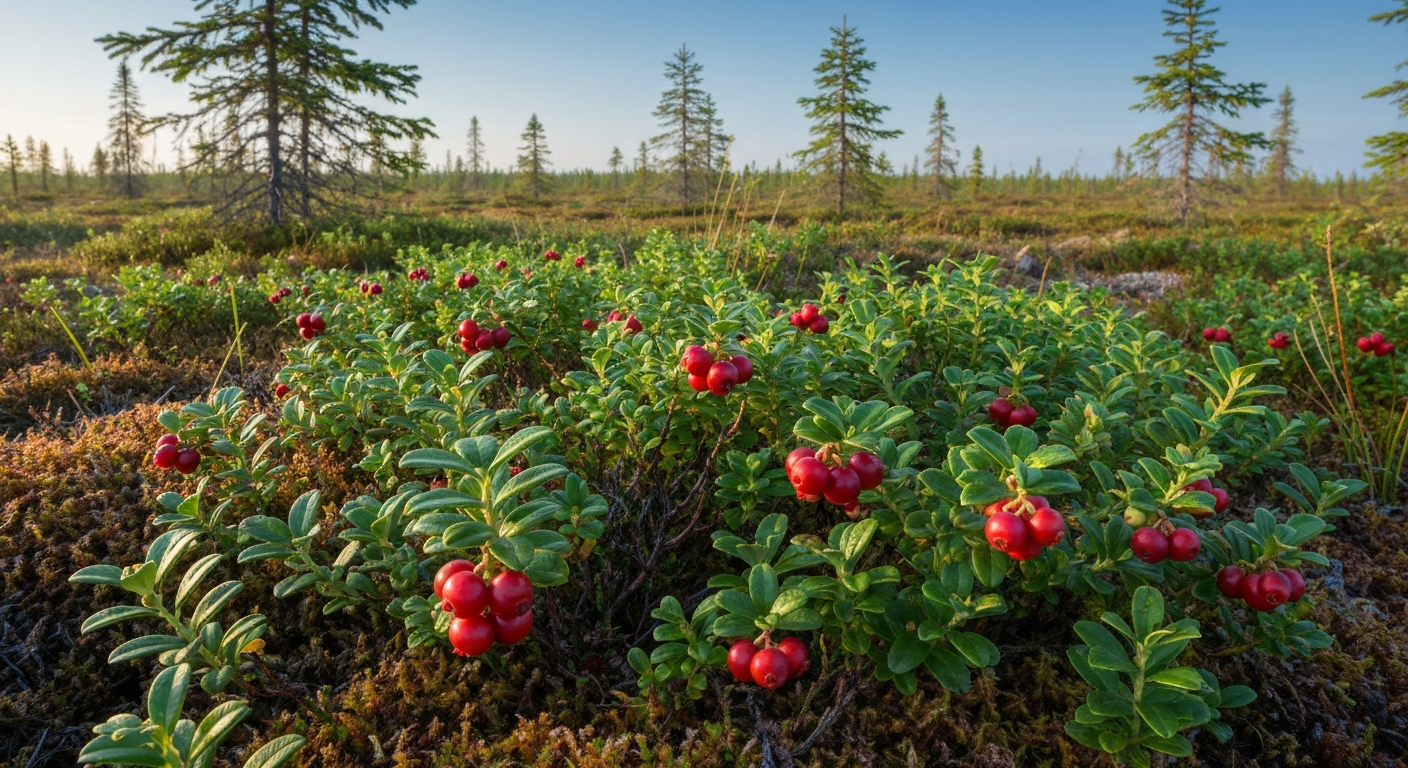
Where lingonberries naturally grow across the U.S., Canada and the boreal world
Lingonberry is a circumboreal species, meaning it circles the globe in cool northern climates. Across North America, the native range runs from Alaska through Canada and dips into the northern tier of the U.S., including Minnesota, Michigan, Maine and the upper Great Lakes region. In Canada, it appears across nearly every province and territory with boreal or subarctic forest cover. Globally, you'll find it across Scandinavia, Russia, northern Europe and parts of East Asia. It's the same berry Swedes call lingon and pack into IKEA sauce jars, just wearing a North American scientific tag (subsp. minus vs. the European subsp. vitis-idaea).
The USDA Forest Service includes Minnesota explicitly in its species account for Vaccinium vitis-idaea, treating it as a component of boreal and peatland plant communities in the region. Global occurrence databases like GBIF show point records scattered across northern Minnesota and neighboring states. So when you're growing lingonberries in Minnesota, you're not importing an exotic plant. You're cultivating something that already belongs here.
If you're curious about the broader natural range or how lingonberry distribution compares across Canada and other U.S. states, those topics are covered in depth in the related guides on where lingonberries grow and whether lingonberries grow in the U. See our guide on do lingonberries grow in Canada for detailed provincial distribution and maps. See the guide Do lingonberries grow in the U.S.? for a detailed overview of their distribution across American states. For more detailed maps and habitat comparisons, see the guide titled where do lingonberry grow. S. and Canada, which are worth reading alongside this one.
Lingonberry habitat and climate needs
USDA hardiness zones
Lingonberry, particularly the North American var. minus, is exceptionally cold-hardy. Most horticultural references place it at USDA Zone 2, meaning it can handle winter minimum temperatures down to around -40 to -45°F (-40 to -42.8°C). That's as tough as any fruiting shrub you'll find. Even the more tender commercial cultivars bred in Europe are generally rated to Zone 3 or 4, and the native North American forms will shrug off nearly anything a Minnesota winter throws at them. On the warm end, lingonberries grow comfortably up to about Zone 6 or 7, though they need a real cold dormancy period to perform well, so they're not suited to mild-winter climates.
Soil pH and organic matter
This is where most growers run into trouble, and honestly it's the one thing you have to get right. Lingonberries need acidic soil, full stop. The recommended pH range in cultivation trials and horticulture literature is approximately 4.3 to 5.5, with the sweet spot sitting in the mid-4s. That's more acidic than blueberries typically need and far below the neutral or slightly alkaline soils common in central and southern Minnesota. The plant thrives in nutrient-poor to moderately fertile, organic-rich, well-drained conditions. Think peat bog margins, sandy forest floors, and rocky heath. If your soil is rich, loamy, and pH 6.5, you'll need to do some work before planting.
Light and moisture
Full sun produces the best fruit set and the most compact, tidy plants. Lingonberries will tolerate partial shade, and in nature they often grow under an open tree canopy, but shaded plants fruit less reliably and can get leggy. Aim for at least six hours of direct sun. Moisture needs are moderate: the soil should stay consistently moist but never waterlogged. Lingonberries dislike both drought and saturated roots for extended periods. This puts them somewhere between a typical blueberry and a bog cranberry in terms of water demand, which makes drip irrigation or consistent hand watering important during dry stretches.
How Minnesota's climate breaks down for lingonberry growers
Minnesota is a big state climatically. The 2023 USDA Plant Hardiness Zone Map shows northern Minnesota sitting in Zones 3a and 3b, with some pockets historically even colder. Central Minnesota is largely Zone 4a to 4b. The Twin Cities metro and southern Minnesota range from Zone 4b up to 5a and, in some southern counties, 5b. For lingonberry, all of those zones are technically within range for the plant to survive winter. The real variables are soil pH, summer heat, and microclimate.
Northern Minnesota has a natural advantage on two fronts: the native populations are already there, and much of the landscape sits on acidic glacial till and histosols, the peat-rich, low-pH soils that lingonberries love. If you're gardening in Cook, Lake, St. Louis, or Itasca County, your baseline soil conditions may already be close to what lingonberries want. Southern and central Minnesota is a different story. Soils there tend toward calcareous glacial lake deposits and agricultural loams with higher pH, often 6.5 to 7.5 or above. In those areas, in-ground planting requires deliberate soil modification, and raised beds or container growing becomes a genuinely attractive option.
One microclimate factor worth flagging: lingonberries in exposed, windswept sites with minimal snow cover can experience winter desiccation and dieback even within their hardiness range. In colder northern zones, a site with reliable winter snow accumulation, or the ability to add mulch protection in open years, gives you better long-term results than raw zone numbers suggest.
Choosing the right site in a Minnesota garden or small farm
Site selection is where I'd tell any Minnesota grower to spend the most time thinking before buying a single plant. Once lingonberries are established, they're long-lived and fairly low-maintenance. But move them or plant in the wrong spot and you're fighting an uphill battle for years.
- Full sun to light partial shade: at least six hours of direct sun daily for best fruit production.
- Good air circulation: avoids fungal disease pressure, especially in humid northern Minnesota summers.
- Well-drained ground: avoid low spots that hold water after spring snowmelt or heavy rain.
- Wind protection in northern zones: a windbreak, fence, or building on the prevailing west or northwest side reduces winter desiccation.
- Proximity to water: lingonberries need consistent moisture, so proximity to irrigation or easy hand watering is a practical plus.
- Space for spread: plants spread by underground rhizomes and can form patches two to three feet wide or more over time. Give them room or plan for edging.
For southern Minnesota gardeners with high-pH soils, a raised bed built with an acidic growing mix is often the cleanest solution. You control the pH from the start and avoid a multi-year battle with soil chemistry. A raised bed 12 to 18 inches deep, framed with untreated wood, stone, or metal edging, filled with a peat-and-sand-based mix, gives you the ideal starting environment without amending an entire in-ground plot.
Soil preparation and amendments for Minnesota
I'll be honest: soil prep is the unglamorous work that separates the growers who get lingonberries to thrive from those who get a few sad plants that never fruit. The goal is to reach and maintain a pH between 4.3 and 5.0 in your planting zone. Here's how to approach it depending on your starting point.
Testing first
Always test before you amend. The University of Minnesota Extension lab offers reliable soil testing, and knowing your starting pH tells you exactly how much work you need to do. A soil at 5.5 needs much less amendment than one sitting at 7.0.
Acidifying with elemental sulfur
For in-ground beds with high-pH soil, elemental sulfur is the standard tool. The University of Minnesota Extension provides rate tables for Vaccinium crops: as a rough guide, sandy soils require less sulfur per unit of pH change than clay-heavy soils, and the sulfur should be incorporated into the top 12 inches of soil the season before planting. Sulfur works slowly via soil bacteria, so applying it in fall for a spring planting, or early spring for a fall planting, gives it time to act. A soil that starts at pH 7.0 in central Minnesota may need several pounds of elemental sulfur per 100 square feet to come down to 4.5, and it often takes more than one season. Test again before planting.
Incorporating peat
Sphagnum peat moss is the other key amendment. It lowers pH, adds organic matter, and improves moisture retention without waterlogging, exactly what lingonberries want. For individual plants, work in one to two cubic feet of acid peat around each planting hole. For a full bed, blend peat at a rate of roughly 50 percent by volume into your planting layer. Avoid lime-amended or 'neutral pH' peat products; read the bag and choose sphagnum peat with a naturally low pH.
Mulching to maintain pH and moisture
Pine needle mulch, shredded pine bark, or wood chip mulch from conifers applied two to three inches deep over the root zone helps maintain soil acidity as it decomposes, conserves moisture, and moderates soil temperature through Minnesota's wide seasonal swings. Avoid hardwood mulch or anything that's been composted from high-pH plant material.
Cold-hardy lingonberry cultivars worth planting in Minnesota
The native North American var. minus is the hardiest option, but commercially available cultivars offer better fruit size, more reliable cropping, and in some cases two fruiting flushes per season. USDA-ARS trials conducted in the Pacific Northwest tested ten cultivars and selections, with 'Ida' and 'Koralle' standing out for overall horticultural performance. The USDA‑ARS trial report 'Growth, Yield, and Fruit Quality of 10 Lingonberry (Vaccinium vitis-idaea) Cultivars and Selections in the United States Pacific Northwest, USDA‑ARS (2006 trial paper)' documents phenology, vigor and yield differences among tested cultivars and highlights 'Ida' and 'Koralle' for strong horticultural performance blank" rel="noopener noreferrer">Growth, Yield, and Fruit Quality of 10 Lingonberry (Vaccinium vitis-idaea) Cultivars and Selections in the United States Pacific Northwest — USDA‑ARS (2006 trial paper). Here's how the most commonly available options compare for Minnesota conditions.
| Cultivar | Hardiness Zone | Fruiting Flushes | Notes for Minnesota |
|---|---|---|---|
| 'Ida' | Zone 3–4 | 2 per season | Strong performer in U.S. trials; compact habit; good for northern MN |
| 'Koralle' | Zone 3–4 | 2 per season | High yield; widely available; reliable for most of MN |
| 'Linnea' | Zone 2–3 | 1–2 per season | Marketed as very cold-hardy; good choice for Zones 3a/3b in northern MN |
| 'Red Pearl' | Zone 3–4 | 2 per season | Good berry size; moderate vigor; suitable for central MN |
| 'Sanna' | Zone 3–4 | 2 per season | Compact and dense; useful for raised beds and containers |
| 'Red Candy' | Zone 2–3 | 1–2 per season | Listed hardy to Zone 2 or 3 by several nurseries; good for exposed northern sites |
| Native var. minus | Zone 2 | 1 per season | Hardiest option; small berries; best for naturalistic plantings in northern MN |
My general recommendation for most Minnesota gardeners: start with 'Koralle' or 'Ida' for reliable production and proven U.S. trial data, and add 'Linnea' or 'Red Candy' if you're in northern Minnesota's colder zones and want extra insurance. Two-flush cultivars (those that fruit in both early and late summer) give you a longer harvest window and are worth prioritizing over single-flush types if you have the choice.
How to propagate lingonberries in Minnesota: step-by-step options
Lingonberries can be propagated several ways, and which method makes the most sense depends on whether you're starting from scratch, expanding an existing patch, or buying in plants to save time. I've tried most of these and I'll tell you honestly which ones are worth the effort for a home grower.
Buying transplants (the fastest and most reliable start)
For most Minnesota home gardeners, buying container-grown transplants from a reputable nursery is the right call. You get a known cultivar, a head start of one to two growing seasons, and roots that are already adapted to peat-based growing media. Look for plants in two-inch to quart-sized pots. Plant in spring after last frost (mid-May in most of Minnesota) or in early fall at least six weeks before hard frost to allow root establishment. Transplants from mail-order nurseries that specialize in edible plants are usually the easiest way to access the better cultivars listed above.
Rhizome division (best for expanding an existing patch)
- In early spring before new growth starts, or in late summer after fruiting, dig up the edge of an established plant clump.
- Using a clean sharp spade or pruning knife, cut sections of rhizome that each have at least two to three shoots and some attached roots.
- Replant divisions immediately at the same soil depth they were growing at, into prepared acidic soil.
- Water in well and mulch. Divisions establish quickly and typically fruit the following season.
Softwood cuttings (good for multiplying a cultivar in quantity)
- Take three to four inch cuttings from new growth in late spring to early summer, just as the first flush of growth matures slightly (semi-softwood stage, usually June in Minnesota).
- Remove lower leaves, leaving two to three leaves at the tip.
- Dip the cut end in IBA (indole-3-butyric acid) rooting hormone powder or gel at a low concentration (0.1 to 0.3% IBA for softwood).
- Stick cuttings into a rooting mix of 50 percent sphagnum peat and 50 percent coarse perlite or sharp sand in a cell tray or small pot.
- Cover with a humidity dome or plastic tent to maintain moisture. Provide bottom heat of 70 to 75°F if possible; a seedling heat mat works well.
- Keep in bright indirect light. Rooting typically takes four to eight weeks.
- Once rooted and showing new growth, pot up into acidic potting mix and grow on for the rest of the season before transplanting to the garden the following spring.
Layering (low-effort vegetative propagation)
Layering works well for lingonberry because the stems are flexible and the plant's natural rhizome habit means it already wants to root where it touches soil. In spring or early summer, pin a long shoot to the soil surface with a U-shaped wire stake, covering the middle section with an inch or two of moist peat mix while leaving the shoot tip exposed. Keep the soil moist. Roots typically form by late summer, at which point you can cut the connecting stem and lift the new plant. This method requires no special equipment and suits gardeners who want to expand a patch slowly and naturally.
Growing from seed (for the patient and curious)
Seed propagation is slow and not typically recommended for home gardeners who want fruit in a reasonable timeframe, but it's worth knowing. Lingonberry seeds require cold stratification to break dormancy. Refrigerate seeds in a moist peat-sand mix at 33 to 38°F for 90 days, then sow onto the surface of a sphagnum peat-based mix in a tray. Seeds need light to germinate; do not bury them. Germination is slow and uneven, and seedlings take three or more years to reach fruiting size. Stick to vegetative propagation if you want berries within two seasons.
Container growing in Minnesota
Container growing is a legitimate and practical strategy for Minnesota gardeners, especially those in southern counties with high-pH in-ground soils. Use pots at least 12 inches wide and deep, filled with a purpose-mixed acidic potting blend: roughly 60 percent sphagnum peat, 30 percent perlite, and 10 percent aged pine bark. Avoid general-purpose potting mixes, which are often pH-adjusted with lime and will push your soil too alkaline. Water regularly since containers dry out faster than in-ground beds, and fertilize lightly with an acid-formulated slow-release fertilizer (ammonium sulfate or a blueberry-specific fertilizer) once in spring. In Minnesota, container lingonberries need winter protection: move pots into an unheated garage or shed once temperatures drop below 20°F, or bury the containers in the ground or insulate with heavy mulch. The roots are more exposed in containers and can freeze solid without protection even in a Zone 3-hardy cultivar.
A note on lingonberries in Grounded 2
If you landed here searching for lingonberries in the video game Grounded 2, that's a completely different topic from real-world growing. Where lingonberries appear in Grounded 2 as in-game items or forageable plants is a gaming question outside the scope of this guide. If you meant where do lingonberries grow in Grounded 2, consult the Grounded 2 locations guide for in-game spawn points and collection tips. For real-world Minnesota gardening, everything you need is covered above.
FAQ
Do lingonberries grow in Minnesota?
Yes. Vaccinium vitis-idaea (the North American lingonberry taxon usually treated as ssp./var. minus) is recorded from Minnesota and can be grown successfully there when site and soil conditions are suitable.
Where are lingonberries native and what is their natural range in North America?
Lingonberries are a circumboreal species found across northern Europe, Asia and northern North America. In North America they occur in boreal and montane regions across Canada and in northern U.S. states (including parts of Minnesota, Michigan, Maine and Alaska). Minnesota herbarium and distribution records show occurrences concentrated in northern counties and peatland/glacial landscape habitats.
What climate and hardiness do lingonberries require?
North American lingonberry forms are extremely cold‑hardy (commonly rated to USDA Zones 2–3). They tolerate very low winter temperatures but benefit from protective snow cover and sheltered microclimates in exposed sites. Flower and fruit production is best in areas with a cool growing season and reliable moisture.
What soil conditions do lingonberries prefer?
Lingonberries prefer acidic, organic soils with good drainage: pH roughly 4.2–5.5 (mid‑4s ideal), high organic matter or peat content, and consistent moisture without prolonged waterlogging. They tolerate nutrient‑poor or moderately fertile soils typical of peatland margins and heathland communities.
Can I grow lingonberries in southern or central Minnesota where soils tend to be higher pH?
Yes, but you will usually need to modify the soil. In central and southern Minnesota (where soils are often calcareous or neutral), amend planting beds with acidic organic matter (peat moss or well‑aged pine bark) and/or apply elemental sulfur several months before planting to lower pH to the target range. Raised beds or containers filled with an ericaceous (acid) mix are often easier for non‑acid soils.
How do I select a planting site in Minnesota?
Choose a site with full sun to light shade (full sun gives best fruiting), good air circulation and consistent moisture. Avoid heavy, poorly drained clay that stays saturated; instead opt for loamy, humus‑rich, or raised beds with added peat/pine bark. For northern Minnesota natural sites, peatland margins or acidic glacial soils are ideal. Protect plants from late spring frosts in low frost pockets if possible.