
Mayhaw berries grow natively across the wet lowlands, floodplain swamps, and seasonal pond edges of the southeastern United States, primarily from East Texas through Louisiana, Mississippi, Alabama, Georgia, and into Florida and the Carolinas. In the wild, you'll find them with their roots sitting in or very near standing water for much of the year.
Where Do Mayhaw Berries Grow Best and How to Replicate It
Marcus Holloway
4 Jun 2026
If you are wondering where maqui berries grow, they have a different native range than mayhaw and prefer much cooler, more temperate conditions where do maqui berries grow. At home, you don't have to replicate a swamp exactly, but you do need consistent soil moisture, a reasonably humid climate, and a spot that doesn't bake dry in summer. Get those three things right and mayhaw is surprisingly grower-friendly, especially if you're in USDA zones 6 through 9.
Where mayhaw naturally grows: the core geographic range
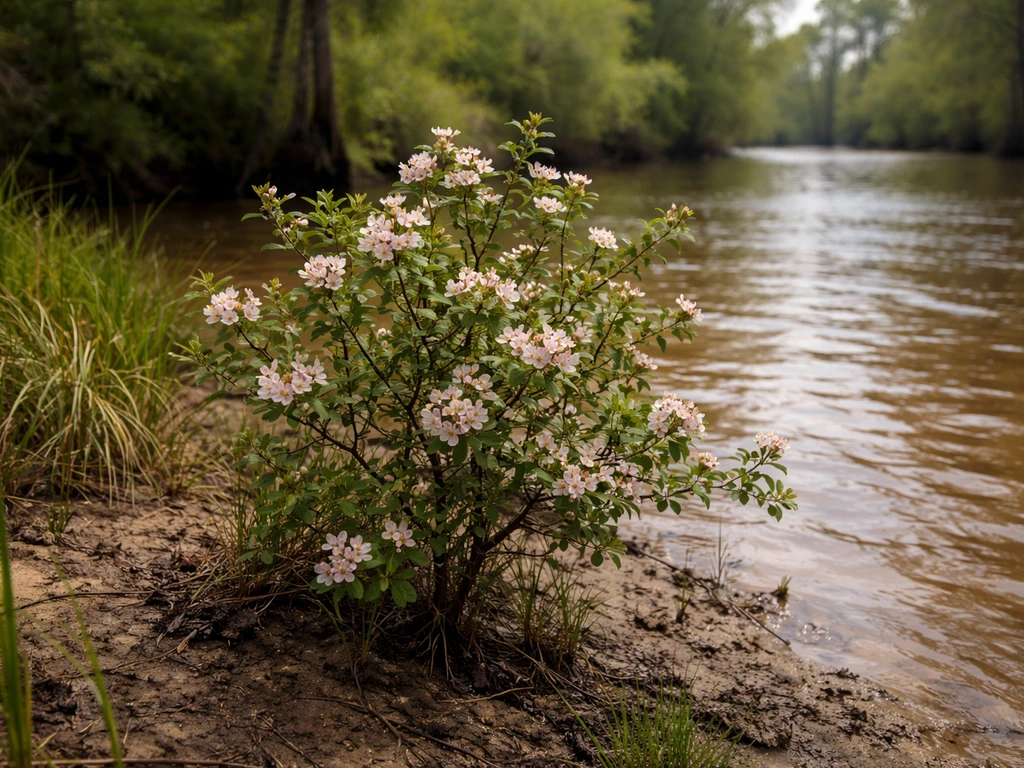
Mayhaw (Crataegus aestivalis) is a native of the Lower South's coastal plains and river corridors. Its natural stronghold runs through the Gulf Coast states, with particularly dense populations in East Texas, the Louisiana river bottoms, and the South Atlantic and East Gulf coastal plains of Alabama, Georgia, and Florida. The USGS actually recognizes a distinct 'mayhaw pond association' plant community in this region, which tells you how dominant and characteristic the tree is there. You'll also find it scattered along the Carolina coastal plain and into isolated mountain ridges further west, though those populations are less concentrated.
If you've ever driven through rural Louisiana or East Texas in late April and spotted clusters of bright red berries hanging over a creek or backwater pond, there's a good chance that was a mayhaw. The tree grows in a small-tree form, typically reaching 15 to 30 feet tall, and it fruits in late April through May, which is exactly where the 'may' in its name comes from. It's not a vine like some people assume, and it's not a low shrub like blueberry. It's a proper tree, and that affects where and how you site it.
What the wild habitat actually looks like
Mayhaw's preferred wild habitat is wet woods, shallow ponds, seasonal swamps, and floodplain edges, especially where water stands for extended periods. The Florida Native Plant Society describes its habitat as 'in and near pools and small ponds, floodplains, and swamps, especially where water stands much of the time.' In the Carolinas, it's documented growing in cypress-gum swamps and forested pond margins, often alongside bald cypress and tupelo. NC Parks and the North Carolina DPR flora listing for Crataegus aestivalis notes it occurs primarily in swamps, including cypress-gum stands and forested pond or pool margins, and also in wet bottomlands cypress-gum swamps and forested pond margins. In East Texas and Louisiana, it's characteristic of bottomland hardwood forests that flood seasonally.
That said, mayhaw doesn't demand permanent standing water. The moisture tolerance runs from 'stays wet' all the way to 'not wet but not extremely dry,' which is a wider range than a lot of people realize. Think of it as a tree that thrives at the wet end but won't die if conditions occasionally dry out once it's established. I've seen productive mayhaw trees growing right at the edge of a pond and others planted 20 feet back in a consistently moist but not flooded yard. Both worked.
The exact conditions mayhaw needs to grow well
Soil moisture and drainage
This is where most people get confused because the research seems contradictory at first glance. Extension sources describe mayhaw as preferring well-drained, moist soils, while its natural habitat includes swamps and standing water. Both are true. Mayhaw does best in soils that retain consistent moisture without staying waterlogged permanently at the root zone during the growing season.
In the wild it tolerates flooding because that flooding is often seasonal (winter and early spring), and the roots get some air in summer. When you're planting at home, aim for moist, never bone-dry soil rather than a permanent bog. Clay loam, loam, and sandy loam all work as long as they hold moisture. Slightly acidic soil (pH 5.
5 to 6. 5) is ideal, though it can handle mildly alkaline conditions.
Sun exposure
Mayhaw wants full sun for best fruit production, ideally 6 or more hours of direct light daily. UF/IFAS Extension fact sheet for Crataegus aestivalis (May Hawthorn) lists the light requirement as full sun (with toleration of part shade) full sun for best fruit production. It will tolerate part shade and will still grow and look healthy in dappled light, but flowering and fruiting will drop off noticeably if it's heavily shaded. If you're planting near a water feature or in a low spot, make sure there's open sky above it rather than an overhanging canopy.
Site characteristics
- Low-lying or naturally moist areas: drainage swales, creek edges, pond margins, or the bottom of a slope
- Soil that stays damp through summer even if it doesn't flood
- Slightly acidic pH, though moderate alkalinity is tolerated
- Open sky overhead for full sun exposure
- Protection from extreme wind if you're near the northern edge of its range
Climate and USDA zones: where mayhaw thrives and where it struggles
Mayhaw is best suited to USDA zones 6 through 9. That covers most of the Deep South, the Gulf Coast, much of the Southeast, and parts of the mid-Atlantic coastal plain. If you're in zone 7 or 8 in the Southeast, you're essentially in the target zone. Zone 6 works but you'll want a sheltered planting spot and consistent moisture because cold snaps hit harder there. Zone 9 and into zone 10 can work in Florida and coastal areas, but summer heat stress becomes more of a concern if soil moisture isn't managed.
| USDA Zone | Compatibility | Key Consideration |
|---|---|---|
| Zone 5 | Generally too cold | Winter damage to buds and roots; not recommended |
| Zone 6 | Marginal to suitable | Choose a sheltered, moist site; mulch heavily |
| Zone 7 | Excellent | Core range; full fruit production expected |
| Zone 8 | Excellent | Core range; watch summer soil moisture |
| Zone 9 | Good with management | Keep roots consistently moist; mulch to reduce heat stress |
| Zone 10+ | Difficult | Insufficient winter chilling; fruiting unreliable |
Outside the South, mayhaw hits two main walls: insufficient winter chilling in the deep tropics (zone 10+), which interferes with flowering, and soils and climates that dry out too aggressively in summer (much of the Southwest and interior West). Gardeners in the Pacific Northwest or upper Midwest will find mayhaw a poor fit not primarily because of cold but because of summer dryness and the absence of the humid warmth it expects. If you're curious about how mayhaw compares to other native berry trees in terms of climate adaptability, hawthorn relatives like the common hawthorn cover a wider geographic range, and aronia berries handle colder and drier zones more reliably. If you are asking where hawthorn berries grow, it helps to look at the same coastal and river-corridor climates that favor hawthorn relatives where do hawthorn berries grow.
How to check if your yard is a good match
Before you buy a tree, do a quick site audit. It takes about 20 minutes and will tell you a lot about whether your yard can actually support mayhaw without heroic irrigation efforts.
- Check your USDA zone using the current 2023 USDA Plant Hardiness Zone Map. If you're in zones 6 through 9 in the eastern half of the country, you're in range.
- Walk your yard after a heavy rain. Look for any areas where water pools or drains slowly. Those low spots are your candidates for mayhaw planting.
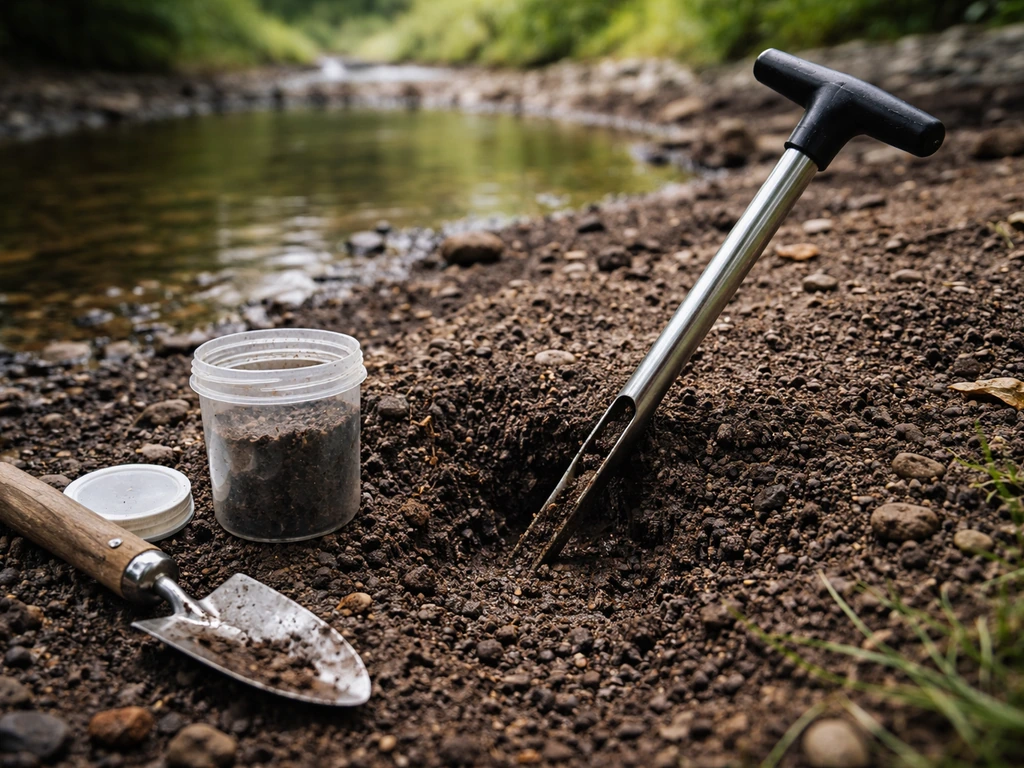
- Do a simple soil drainage test: dig a hole about 12 inches deep, fill it with water, and check it an hour later. If some water remains and the soil walls stay moist, that's a good mayhaw site. If it drains completely in 15 minutes, you'll need to amend or irrigate.
- Check for existing moisture-loving plants nearby. If wild ferns, sedges, buttonbush, or willows grow naturally in that area, mayhaw will likely be happy there too.
- Test your soil pH with an inexpensive meter or strip test. Target 5.5 to 6.5 for best results, though readings up to around 7.0 are workable.
- Count the sun hours at your candidate spot. Ideally you want 6 or more hours of direct sun. If you're getting 4 to 5 hours, fruiting will be reduced but the tree will survive.
Growing mayhaw outside the ideal range: practical workarounds
Plant in a naturally wet spot
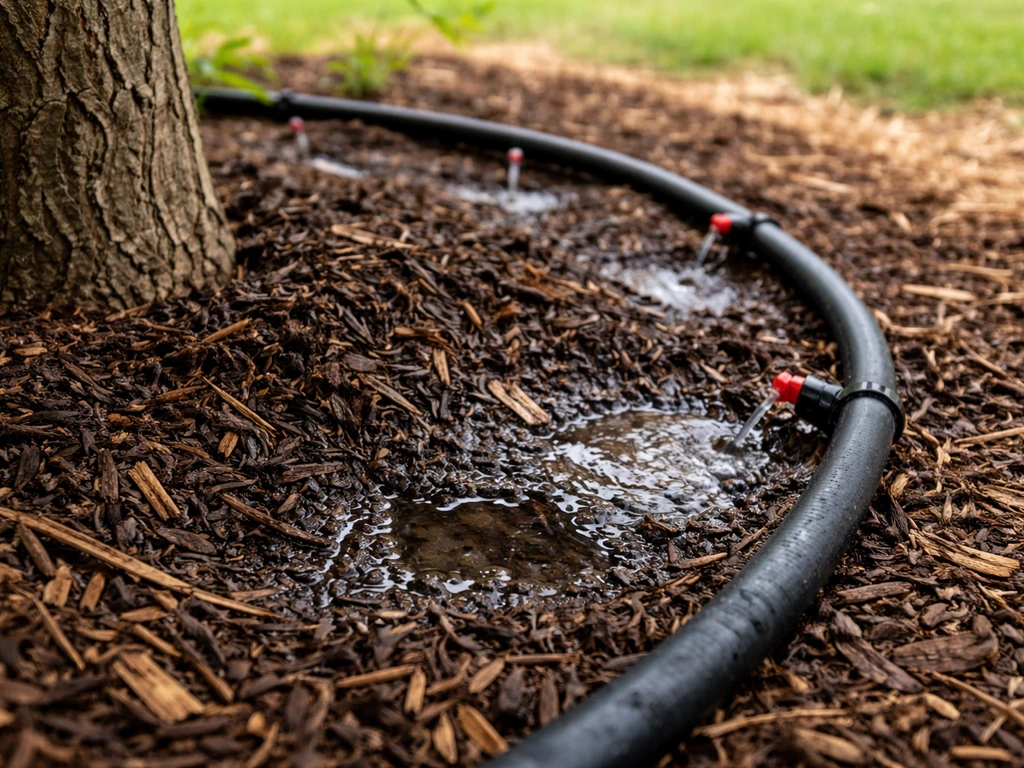
If you have any low area, rain garden, drainage swale, or creek-adjacent spot in your yard, that's your first and easiest option. Plant the tree at the edge rather than dead center of any standing water area so roots get moisture without permanent saturation. A 3 to 4 inch layer of wood chip mulch over a wide radius (3 feet or more from the trunk) helps hold soil moisture through dry spells and keeps the root zone from baking.
Improve moisture retention with irrigation
If your soil drains fast but your zone is right, you can compensate with consistent drip irrigation during the growing season. A drip line placed at the drip line of the canopy (not against the trunk) and running for 45 to 60 minutes two to three times per week in dry weather can keep a mayhaw tree productive in conditions that would otherwise be too dry. Amending with compost before planting also improves moisture retention in sandy soils. This is a legitimate approach and I've talked to growers in the drier parts of zone 8 Georgia who keep mayhaw thriving this way.
Containers and large tubs
Mayhaw can be grown in containers, but you need to be realistic about scale. This is a tree, not a shrub, so a half-barrel planter or a 25 to 30 gallon fabric grow bag is the minimum to give roots enough room. Containers let you control moisture directly, which is the main advantage: you can keep the medium consistently moist without depending on your native soil.
The trade-off is that a container-grown mayhaw will stay smaller, may need annual root pruning to prevent it from becoming completely rootbound, and requires more attentive watering because containers dry out faster than ground soil. This is a workable option for zone 6 growers who want to move the tree to a sheltered spot in extreme cold, or for anyone with raised garden areas where native soil is poor.
Common mistakes that keep mayhaw from thriving
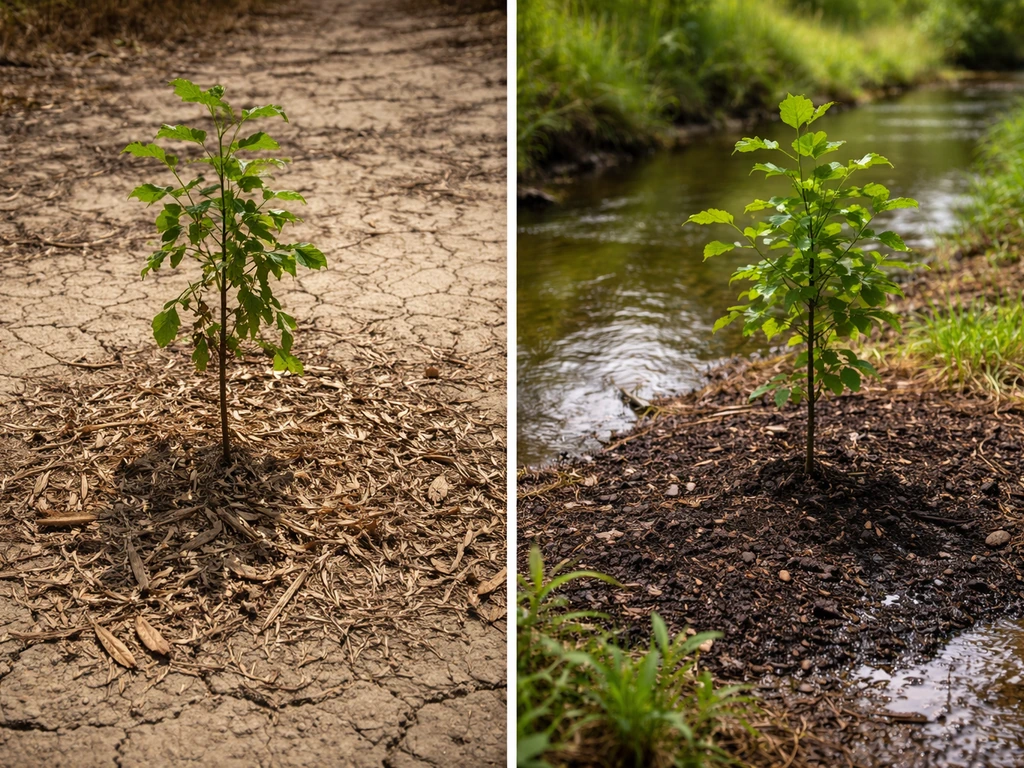
Most mayhaw failures come down to one of three habitat errors. The most common is planting in a spot that's too dry. If your site drains freely and you're not supplementing with irrigation, the tree may survive for a season or two but will produce poorly and eventually decline. Mayhaw is described as having moderate drought tolerance once established, but 'moderate' means it won't immediately die from a dry spell, not that it will fruit reliably. Consistent moisture is non-negotiable for good berry production.
The second mistake is planting too deep or in permanently waterlogged soil with no seasonal dry period. Even though mayhaw grows in swamps, those swamps typically have seasonal fluctuation. If you plant in a spot where the root zone never gets any air at all, you'll see root health decline over time. A slight rise or berm at the planting site within a wet area can help get the drainage rhythm right.
The third issue is fire blight, which is documented as a susceptibility for this species. Fire blight is a bacterial disease that kills shoots and causes a characteristic scorched appearance, and it's worse in warm, humid conditions with overhead watering. If you're growing in the Southeast and using sprinkler irrigation, switch to drip. Prune out infected branches well below the damaged tissue and sterilize tools between cuts. The good news is that mayhaw is considered to have better disease resistance than many other hawthorns, so with good airflow and appropriate watering methods, fire blight is manageable rather than fatal.
If mayhaw really won't work in your climate, aronia berries are worth a look as a native alternative with excellent adaptability across a wider range of zones. Aronia berries have different climate needs, so it helps to know where do aronia berries grow before you choose a site. For humid subtropics where mayhaw struggles with insufficient chilling, tropical berry options shift the conversation entirely, much as acai requires a completely different climate profile.
Acai berries, by contrast, are native to tropical regions, which is why they need a very different climate than mayhaw. The key takeaway for mayhaw specifically is that it rewards growers who can offer wet feet, open sun, and a humid southeastern climate, and it punishes those who can't.
FAQ
If I do not live in the Southeast, is there any way to grow mayhaw successfully anyway?
Yes, but you need to recreate the moisture and humidity pattern more than the latitude. In practice that means keeping the root zone consistently moist through the growing season (often with drip irrigation plus a moisture-holding mulch) and choosing a site with good summer air humidity and enough winter chilling to support flowering.
What is the difference between “wet feet” and permanently flooded roots for mayhaw?
“Wet feet” means the soil stays damp much of the year, while “permanently flooded” means the root zone stays saturated with little to no oxygen. For mayhaw you want periodic seasonal drying or at least a rhythm where the soil is allowed to breathe during parts of the year, even if it never turns bone dry in summer.
Where exactly should I plant mayhaw on a sloped or low landscape?
Plant at the edge of the wet area or where water lingers, not at the deepest point where puddling lasts for weeks. On a slope, aim for the lower half of the site where moisture collects but where you can still get an airflow break and some drainage after heavy rain.
Can I grow mayhaw in a raised bed or on a berm?
It can work if the berm or bed holds moisture but still drains with a seasonal rhythm. Build the berm high enough that the root zone is not continuously waterlogged, then compensate with organic matter and an irrigation plan, especially during the first 1 to 2 growing seasons.
How much sun is “full sun” in real yard conditions?
Plan for at least 6 hours of direct, unobstructed light during the peak season when buds are forming. If your tree only gets morning sun through shade trees, it may leaf out fine but can underperform in flowering and fruit set.
Does overhead sprinkler irrigation increase disease risk for mayhaw?
Yes, overhead watering can raise the risk of fire blight because wet foliage and warm humidity help the bacteria spread. If you use sprinklers, consider switching to drip or soaker hoses, and avoid watering late in the day so leaves dry quickly.
When is the best time to plant mayhaw if my goal is to maximize establishment?
For many regions, spring planting is easiest because the tree gets the full warm season to develop roots and handle moisture regulation. In zone 6 or other cooler areas, plant earlier in spring and keep consistent moisture during establishment, because late freezes plus dry winds can set trees back.
How do I know whether my soil is the right type for mayhaw?
Do a simple moisture test: after a rain, check whether the soil stays damp for days without turning into standing muck. Clay loam and loam are usually forgiving, while very sandy soil almost always needs compost and an irrigation schedule to maintain consistent moisture.
What spacing and airflow should I allow if I’m planting more than one mayhaw?
Give each tree room so leaves and branches dry faster after rain. A common rule of thumb is to avoid crowding so crowns do not knit together, which helps reduce disease pressure and improves flowering by letting light reach inner branches.
Can I grow mayhaw in a container long term without it failing?
You can, but you must manage size and moisture carefully. Use a large minimum container (around 25 to 30 gallons), keep the medium consistently moist, and expect smaller growth. Also plan for root pruning or repotting because root-bound plants become harder to keep evenly hydrated and may decline in fruiting.