
Yes, you can grow cloudberries at home, but they are genuinely one of the more demanding berries to cultivate outside their natural range. They need cold winters, cool summers, acidic boggy soil, and both a male and female plant to produce fruit. Get those conditions right and you will have a creeping, low-growing perennial that delivers small but remarkable amber-gold berries every late summer. Get them wrong and the plants will sulk, barely grow, or simply refuse to fruit. This guide walks you through exactly what it takes, whether you are in a subarctic region where they almost grow themselves, or in a temperate zone where you will need to build a mini-bog setup to fake the conditions.
Can You Grow Cloudberries? Step-by-Step Guide for Home
Marcus Holloway
10 Jun 2026
What cloudberries are and where they naturally grow
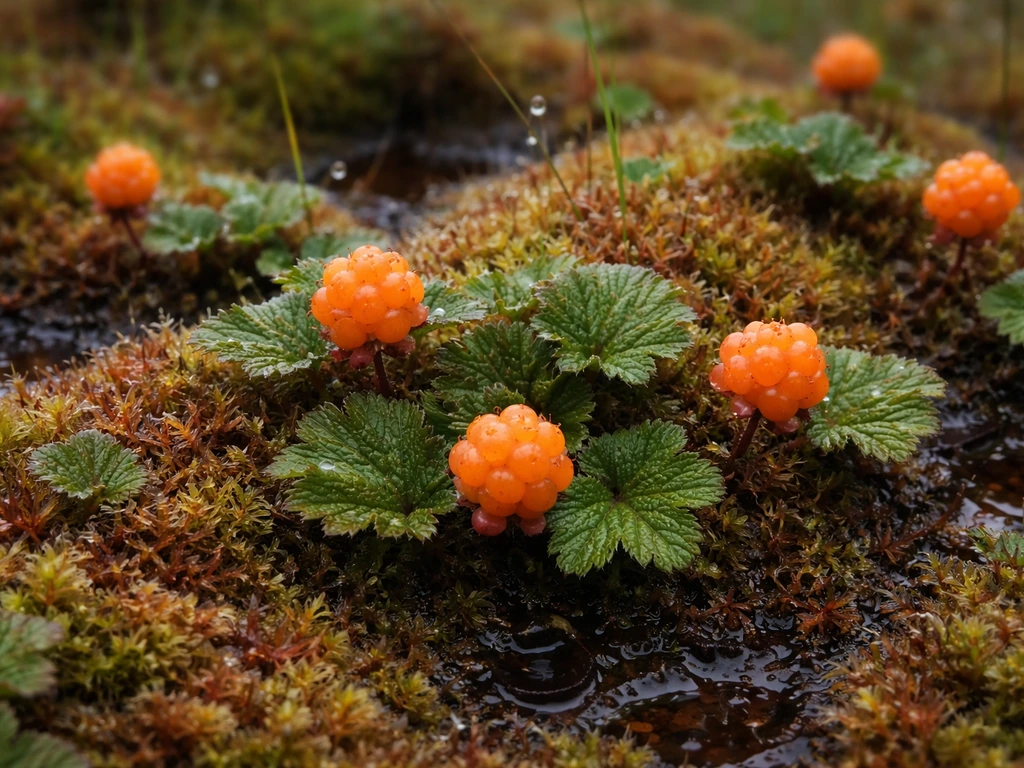
Cloudberry (Rubus chamaemorus) is a circumpolar Arctic and subarctic plant, the kind that blankets Scandinavian and Canadian bogs in late summer. Cloudberry (Rubus chamaemorus) is a circumpolar Arctic and subarctic plant, the kind that blankets Scandinavian and Canadian bogs in late summer where does cloudberry grow. It is not a shrub like a blueberry or a cane fruit like a raspberry, even though the fruit looks raspberry-like. It is a creeping herbaceous perennial, low to the ground, with individual berries carried on short upright stalks. The fruit starts pale red and ripens to a gorgeous amber-orange color, usually in late July through early August at northern latitudes.
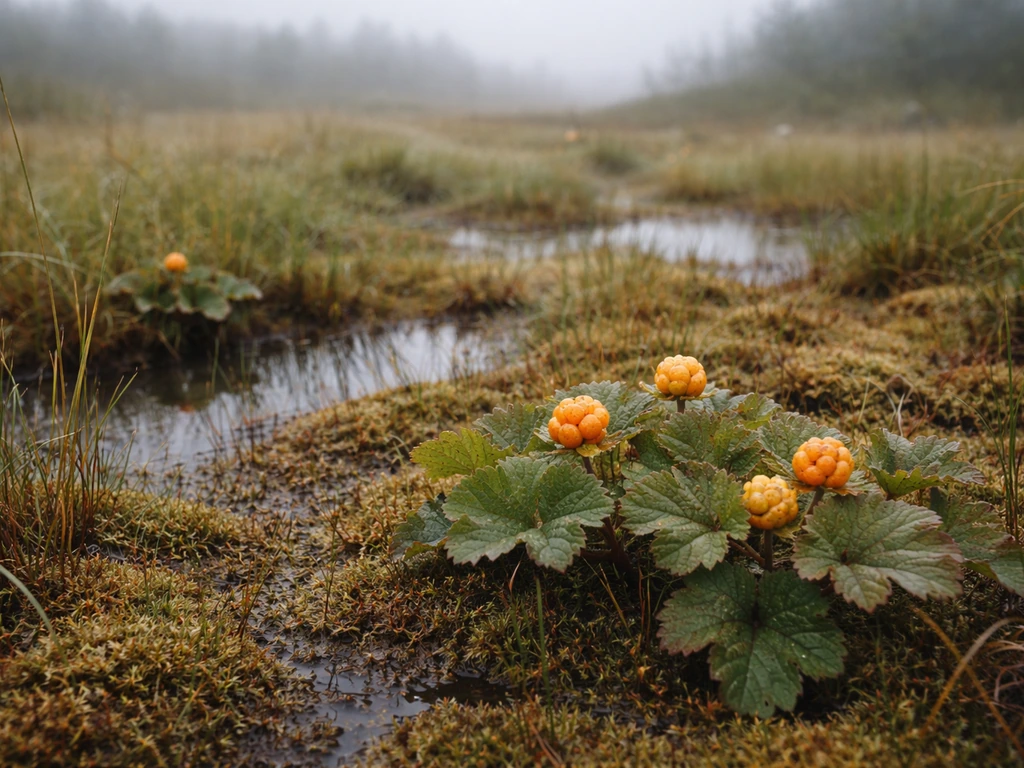
In the wild, cloudberries grow in sphagnum bogs, wet meadows, and boggy moorlands across northern Canada, Alaska, Scandinavia, Russia, and Scotland. A peer-reviewed paper focusing on cloudberry habitat characteristics in Latvia reports oligotrophic sphagnum bogs as commonly associated habitats and identifies sphagnum as the most frequently found companion species in cloudberry stands [sphagnum bogs as common habitats](https://pmc. ncbi. nlm.
nih. gov/articles/PMC9920050/). The soil conditions are extreme by most garden standards: waterlogged peat with a pH of roughly 2. 5 to 5.
0, very low in nutrients (what ecologists call oligotrophic), and dominated by living sphagnum moss. Shading from scattered pines and birches is typical in many habitats, so full baking sun all day is not actually what cloudberries evolved in. If you want to understand where cloudberries grow naturally in more detail, the global distribution map story is worth a closer look.
One thing that catches a lot of growers off guard: cloudberries are dioecious, meaning individual plants are either male or female. Only female plants produce fruit, and only when a male plant is nearby to provide pollen. Pollinators (mainly insects) carry pollen between plants, so in a home garden you need at least one male for every few females, and you need flowering plants in proximity to each other. Named cultivars such as 'Fjellgull' and 'Fjordgull' are female fruiting varieties, while 'Apolto' and 'Apollen' are male pollinators. There is also a Finnish cultivar called 'Nyby' that is monoecious (carries both male and female flowers), which simplifies things if you can source it.
Can you grow cloudberries in your climate?
Cloudberries are cold-hardy plants. Established plants tolerate temperatures down to around -25°C (-13°F), which puts them comfortably in USDA hardiness zones 2 through 6 in terms of winter survival. Some sources suggest they can be pushed into zone 9 with careful management, but honest experience says zones 3 to 6 are the sweet spot. The issue is not just winter cold, it is summer heat. Cloudberries are native to cool subarctic climates, and prolonged hot summers cause significant stress.
The other climate vulnerability is at flowering time. While the dormant buds handle deep cold fine, flower and fruit structures are fragile. Temperatures below about -2°C can damage female flowers and reduce fruit set, and male flowers are damaged below around -4°C. This means late spring frosts are a real problem at any latitude. In their native range, cloudberries sometimes have poor fruiting years simply because of frost events during bloom, so plan for that possibility in your garden too.
Climate compatibility in plain terms: if you live in northern Minnesota, Scandinavia, Scotland, northern Japan, Canada, or Alaska, cloudberries are a realistic in-ground project. If you are wondering about other in-ground berry options, the short answer is that some berries can work, but it depends heavily on matching the right soil, moisture, and chill conditions in-ground project.
If you are in the Pacific Northwest, New England, or similar cool-temperate zones, it is possible with careful site selection and soil work. If you are in the American South, Mediterranean climates, or anywhere with hot dry summers, in-ground cultivation is very unlikely to succeed, and you will be working exclusively with container setups in controlled conditions.
In Valheim, you can also set up berry production, but the process and requirements are different from real-world cloudberry cultivation can you grow berries in valheim.
How to grow cloudberries at home: soil, light, moisture, and spacing
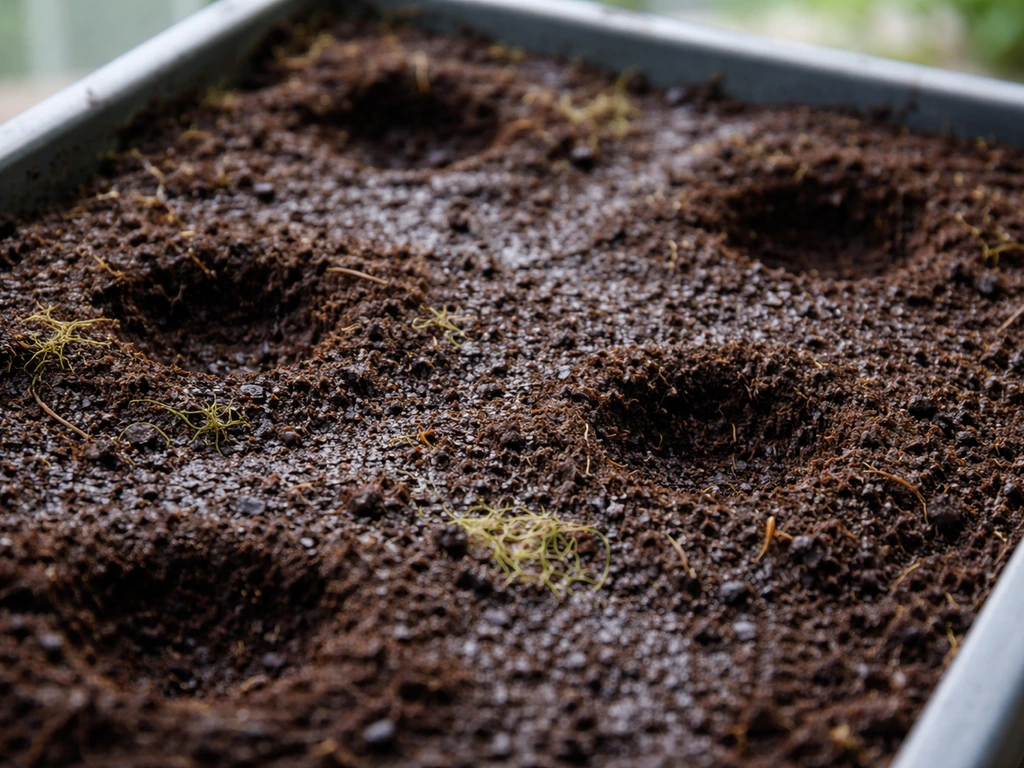
Getting the soil right is the single most important thing you can do for cloudberries. They need a substrate built around sphagnum peat, kept consistently wet but not stagnant, at a pH between 3.5 and 5.0. Use a mix of roughly 50/50 sphagnum peat and silica sand, which gives you the water retention of peat with enough structure to prevent total waterlogging. Avoid standard garden compost or rich potting mix entirely. Cloudberries come from nutrient-poor bog environments; adding fertilizer-rich media is one of the fastest ways to kill them.
Water quality matters more than most growers expect. Tap water is often too alkaline and will gradually push the soil pH up over time. Use collected rainwater wherever possible. This is not an optional tip for cloudberries, it is fairly essential for long-term success.
For light, full sun works in cooler northern climates where summer temperatures stay moderate. In warmer zones, filtered sunlight or dappled shade (replicating the scattered-tree shade of natural bog habitats) is a better choice. A spot that gets morning sun and afternoon shade is a sensible compromise for most temperate gardeners.
Plant cloudberries about 30 to 40 cm (12 to 16 inches) apart. They spread slowly via underground rhizomes, forming a low-growing mat over time, so give them room to expand. When planting, make sure both male and female plants are included. A practical ratio is one male plant for every three to four female plants.
Growing cloudberries in containers or raised beds
If your native soil and climate are not suitable for cloudberries, a container mini-bog or a lined raised bed is the most realistic path forward. The principle is simple: you are recreating the physical conditions of a sphagnum bog in a controlled, portable setup. It sounds fiddly but it is actually quite satisfying once you get it running.
For a raised bed mini-bog, dig out or build a bed 30 to 75 cm (12 to 30 inches) deep and line it with an impermeable membrane (pond liner works well) to hold moisture. Leave a small overflow hole or notch near the top of the sides rather than the base, so the bed stays consistently wet without becoming anaerobic at depth. Fill with a 50/50 sphagnum peat and silica sand mix, top with a layer of live sphagnum moss if you can source it, and flood the whole thing thoroughly before planting.
For containers, a large, wide trough or window box works better than a deep pot because cloudberries are surface-spreading plants. Use the same peat-sand substrate, line the container to reduce drainage, and keep it in a spot that stays cool. A north-facing wall in warmer climates or a spot with afternoon shade helps significantly. The container approach also lets you move plants indoors or into a cool greenhouse over winter in marginal zones, which is how Scandinavian breeders have successfully grown cloudberries in framed peat-beds inside plastic greenhouses for multi-year cultivation and selection programs.
Propagation and buying cloudberry plants
Seeds are technically possible but genuinely difficult. Cloudberry seeds have deep physiological dormancy and require around 270 days of cold moist stratification before they will germinate, and even then germination happens at around 18°C. That is a very long commitment for uncertain results. Seeds are also hard to source reliably from plants that are true to type. I would only go down the seed route if you have the patience and a specific reason, such as breeding experiments or access to a lot of local wild seed.
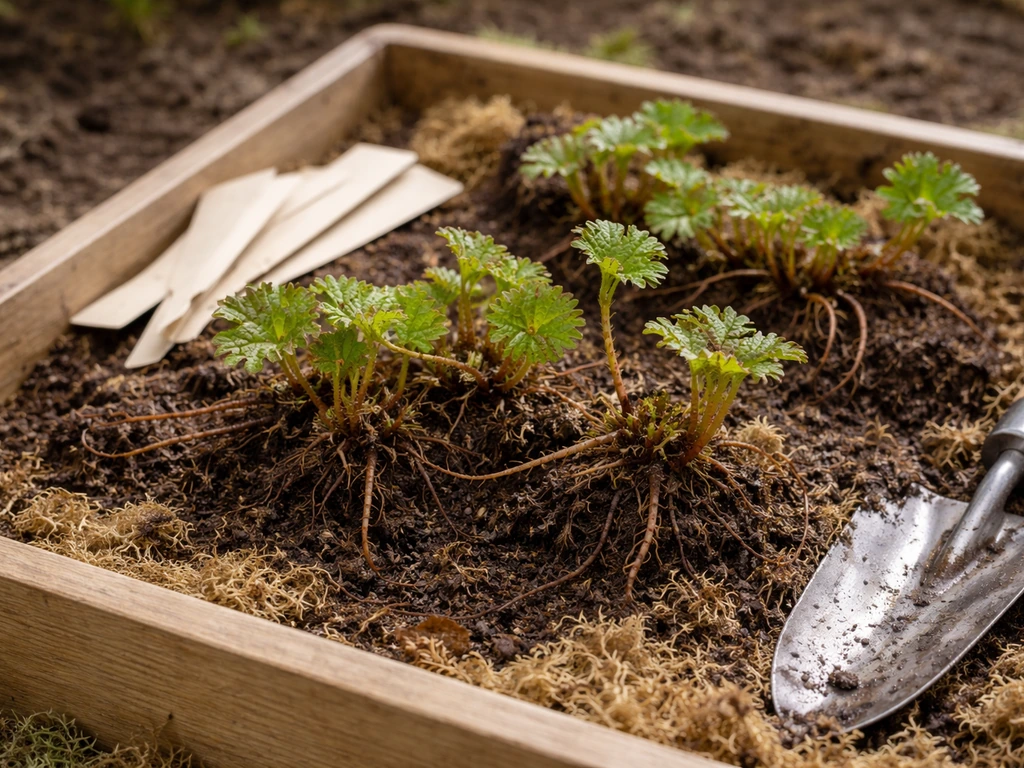
Vegetative propagation via rhizome divisions or runners is the practical choice for home growers. Established cloudberry plants spread underground, and you can divide clumps in early spring or late autumn, making sure each division has a healthy section of rhizome with buds. This is how most home growers and small-scale commercial producers expand their plantings.
Buying named cultivars is strongly recommended over wild-collected plants, for two reasons: you know the sex of what you are buying, and cultivars have been selected for garden performance. Look for the registered Scandinavian cultivars, particularly the female varieties 'Fjellgull' and 'Fjordgull' paired with the male 'Apolto' or 'Apollen.' The Finnish cultivar 'Nyby' (monoecious) is worth seeking out if you want a simpler setup. Sourcing in North America is harder than in Europe, but specialist native plant nurseries, arctic plant suppliers, and some Finnish and Norwegian nurseries that ship internationally do list cloudberries. Expect to pay a premium and plan your orders well in advance.
Seasonal care: watering, feeding, weeds, and pests
Watering
Keeping moisture consistently high is the number one ongoing task. The bog substrate should feel permanently damp, never drying out between waterings. In a lined raised bed or container, check the water level regularly during dry spells and top up with rainwater. In hot summers, daily watering may be needed for containers. Do not let the substrate dry out even briefly during the growing season; cloudberries have almost no drought tolerance.
Fertilizing
Less is genuinely more here. Cloudberries are adapted to extremely low-nutrient bog environments, and adding standard fertilizers, especially nitrogen-heavy ones, will harm rather than help. Research on cloudberry substrate and fertilization in greenhouse cultivation confirms that getting fertilization strategy wrong is a common cause of poor performance. If you feel you need to feed at all, use a very dilute, acid-formulated fertilizer (the kind used for ericaceous plants like blueberries) once in early spring, and keep the dose minimal. Most established bog setups need no supplemental feeding if built with genuine peat substrate.
Weed control
Cloudberries are slow-spreading and low-growing, which means they are easily outcompeted by weeds. Hand-weeding is the only realistic approach since herbicides risk disrupting the delicate soil chemistry. A top dressing of live sphagnum moss helps suppress weeds naturally and also maintains the acidic conditions. Pull weeds early and often, especially in the first year or two before your cloudberry mat establishes.
Pests and diseases
Cloudberries are not heavily plagued by pests in most home settings, partly because the bog conditions are inhospitable to many common garden insects and fungal diseases. Birds are probably the most significant 'pest' issue at harvest time. Light netting over the bed as fruit ripens is an easy fix. In humid conditions, botrytis (grey mould) can appear, especially in poorly ventilated greenhouse setups. Good airflow around the plants helps prevent it. Slugs can damage young plants, so keep an eye out in damp settings.
When to harvest, how much to expect, and how to store cloudberries
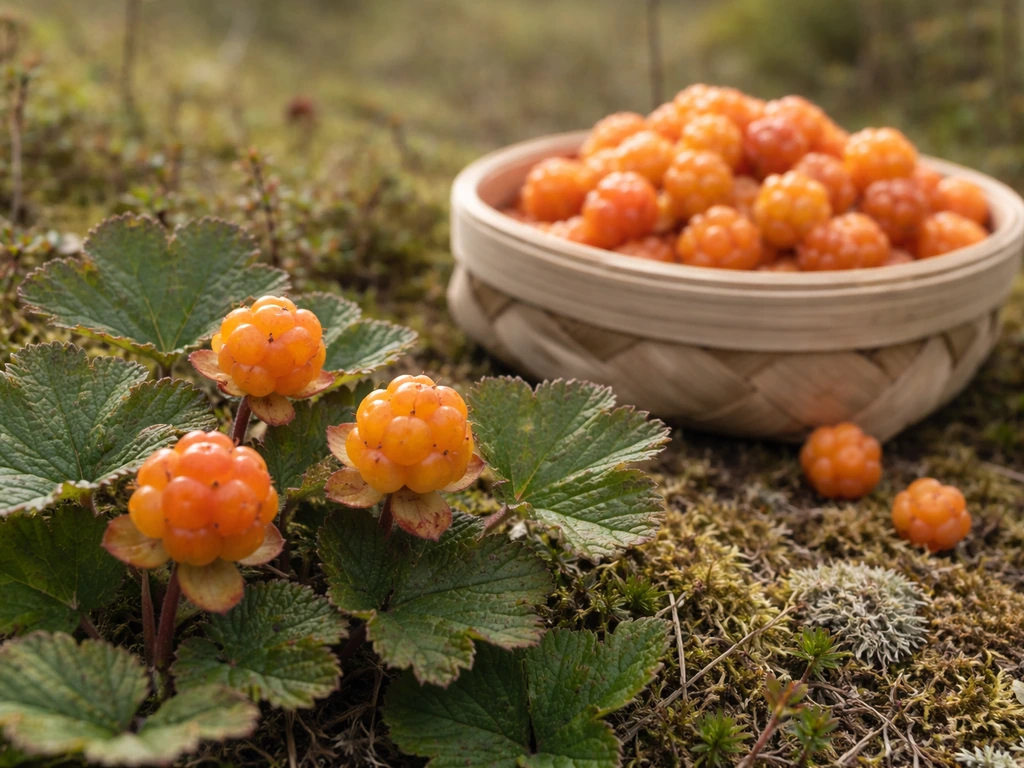
Cloudberries typically ripen in late July through August in their natural range. In home cultivation, the exact timing shifts with your climate, but watch for the fruit to transition from pale red through to a warm amber or golden-orange color. Fully ripe cloudberries are soft and come away from the plant easily. Unlike some berries, they do not hold on the plant long once ripe, so check daily once they start coloring up.
Yields are modest, especially in the early years. Cloudberries are slow to establish and do not produce heavily until a mature mat has formed, which can take three to five years from planting. Even in good conditions, yields from home plantings are measured in handfuls per square meter rather than kilograms. This is not a berry you grow for bulk production; it is a berry you grow because it is extraordinary. That said, if you build a reasonably sized mini-bog bed and give it time, you will eventually be harvesting enough for preserves, a sauce, or the occasional bowl eaten fresh.
Cloudberries do not store well fresh, which is part of why they are so expensive commercially. They are fragile and start to break down within a day or two at room temperature. Refrigerate freshly picked fruit and use within two to three days. For longer storage, freezing works very well: spread berries on a tray to freeze individually, then bag them up. They hold their flavor nicely frozen. Cloudberries also make exceptional jam (called 'lakka' in Finland and 'molte' in Norway) because the high pectin content gives a beautiful set, and the jam keeps for months.
Is it worth the effort?
If you are in a cool northern climate (zones 3 to 6) with naturally acidic, moisture-retentive soil, cloudberries are worth a serious attempt. The setup investment is real but manageable, and once established they are perennial and fairly self-sufficient. If you are in a warmer zone, the container mini-bog route is the honest path, and it does work with commitment. The key things to get right are: genuinely boggy acidic substrate, rainwater irrigation, both male and female plants, protection from late frosts at flowering time, and patience. Get all five right, and yes, you absolutely can grow cloudberries.
FAQ
How many male cloudberry plants do I actually need if I want fruit, not just leaves?
A common rule is one male plant for every three to four female plants, but the practical goal is that males flower at the same time as your females. If you buy plants at different times or in different batches, flowering overlap can be off by a week or more, so consider sourcing a matching cultivar set or staggering planting dates only within the same season.
Can I grow cloudberries from “any” nursery plants, even if the plant tag does not say male or female?
If the tag does not clearly state sex or cultivar, fruiting is a gamble. Cloudberries are dioecious, so a mislabeled or unknown-sex plant can look healthy for years and then never produce. For highest success, buy named cultivars where sex is specified, or verify flowering sex once you see blooms.
What should I do if my plants survive but never flower or never set fruit?
First check whether you have flowering overlap between male and female plants. Next, look for late-spring frost damage during bloom, temperatures below about -2°C for females can reduce fruit set. Also confirm your pH has not drifted up, if you used tap water or a richer medium, the plants may grow slowly without moving into productive bloom.
Do cloudberries need fertilizer, or will they die if I skip feeding?
Most established bog setups should not need regular feeding because the peat-sand substrate is nutrient-poor by design. If growth is weak, avoid “fixing” it with nitrogen, that is a fast route to decline. If you do feed at all, use a very dilute acid-formulated ericaceous fertilizer once in early spring, then stop and observe rather than continuing monthly.
How do I keep the soil acidic long-term in a raised bed or container?
Acidity usually fails when alkaline water is used repeatedly. Switch to rainwater as your default irrigation, and if you must use tap water, test pH and consider diluting with rainwater. Also avoid any compost, wood ash, or liming around the mini-bog, even small amounts can shift the substrate over time.
Will cloudberries grow in full sun if my summers are cool?
They can handle full sun in cooler regions, but in warmer summers that same sun can stress the plant. If daytime temperatures frequently climb, use morning sun with afternoon shade or dappled light to mimic bog habitat. In containers, sun also increases evaporation, so you may need more frequent moisture checks even if the temperature is only moderately higher.
How wet is “wet but not stagnant” for a cloudberry mini-bog?
Aim for consistently damp substrate with standing water behavior only at the bog level you built, not deep anaerobic waterlogged conditions throughout the bed. For raised beds, your overflow notch near the top is important, and for containers you should line them to slow drainage but still prevent water from becoming trapped far below the planting zone.
How do I prevent birds from eating the fruit without netting headaches?
Install lightweight netting as soon as fruit begins to color, then keep it taut enough that birds cannot hop inside. Remove and re-secure netting carefully to avoid tearing stems, and consider weighing the edges so wind does not create gaps that appear suddenly near ripening time.
My container cloudberries look healthy but weeds take over. What works best?
Hand-weeding is the safe approach because herbicides can disrupt the fragile bog chemistry and beneficial moss layer. Pull weeds early, especially in the first year before the cloudberry mat thickens. A top layer of live sphagnum moss helps reduce weed establishment while also buffering moisture and acidity.
Can I move container-grown cloudberries indoors for winter, and will they still get enough cold?
Yes, moving them to a cool, protected spot can help in marginal zones, but they still need winter chilling. Avoid warm, heated indoor locations, instead use an unheated greenhouse, cold frame, or porch-like space where temperatures stay low enough for dormancy. Also do not let the substrate dry out during winter storage.
How long before I can expect any harvest?
Even with perfect conditions, expect a slow start. Many home plantings need about three to five years to form a mature mat before yields are noticeable, early fruiting may be limited to a few berries. Plan your expectations around mat establishment, not the first year after planting.
What is the best way to store cloudberries at home if I can’t eat them immediately?
Refrigerate promptly and use within two to three days for best texture. If you want longer storage, freeze them on a tray first so you do not end up with one solid clump, then bag once frozen. For preserves, cloudberry jam sets well because of pectin content, so small-batch jam is often the easiest way to make use of harvest ripeness.