
Cloudberries grow naturally in Arctic and subarctic regions of the northern hemisphere, specifically in bogs, wet tundra, muskeg, and peaty wetlands across northern Canada, Alaska, Scandinavia, Russia, and parts of the British Isles. If you live in USDA hardiness zones 2 through 4, you have a realistic shot at growing them. If you're in zone 5 or warmer, you're fighting the plant's fundamental biology, and I'll be honest with you about why.
Where Does Cloudberry Grow and How to Replicate It
Marcus Holloway
11 Apr 2026
What exactly is a cloudberry
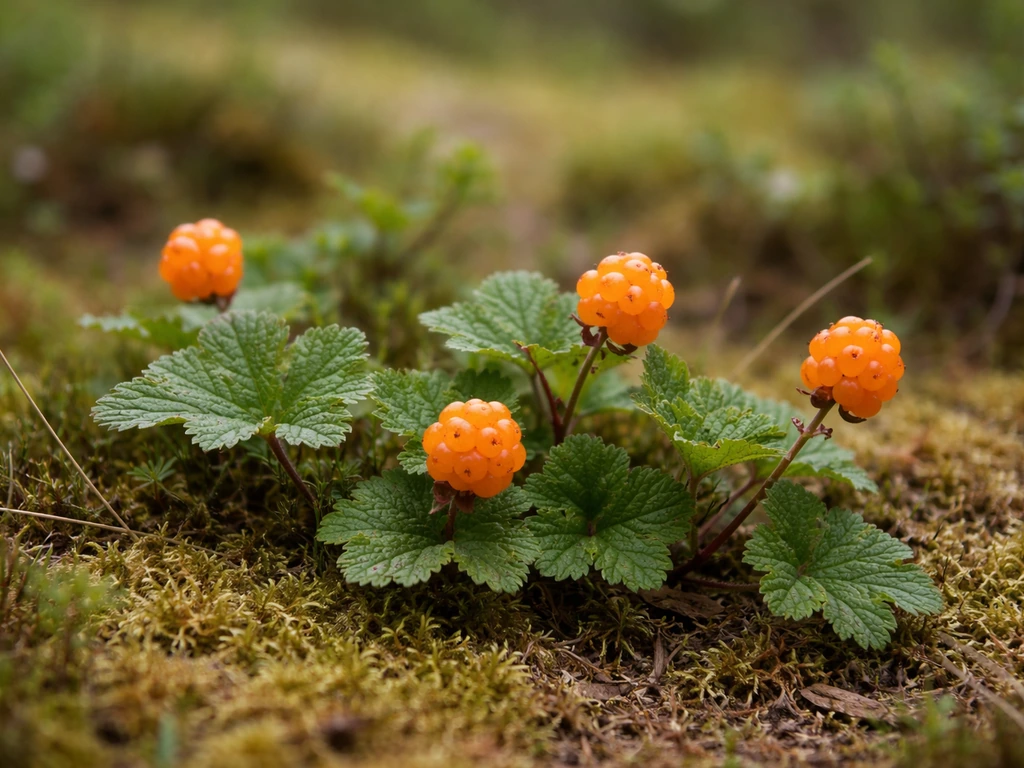
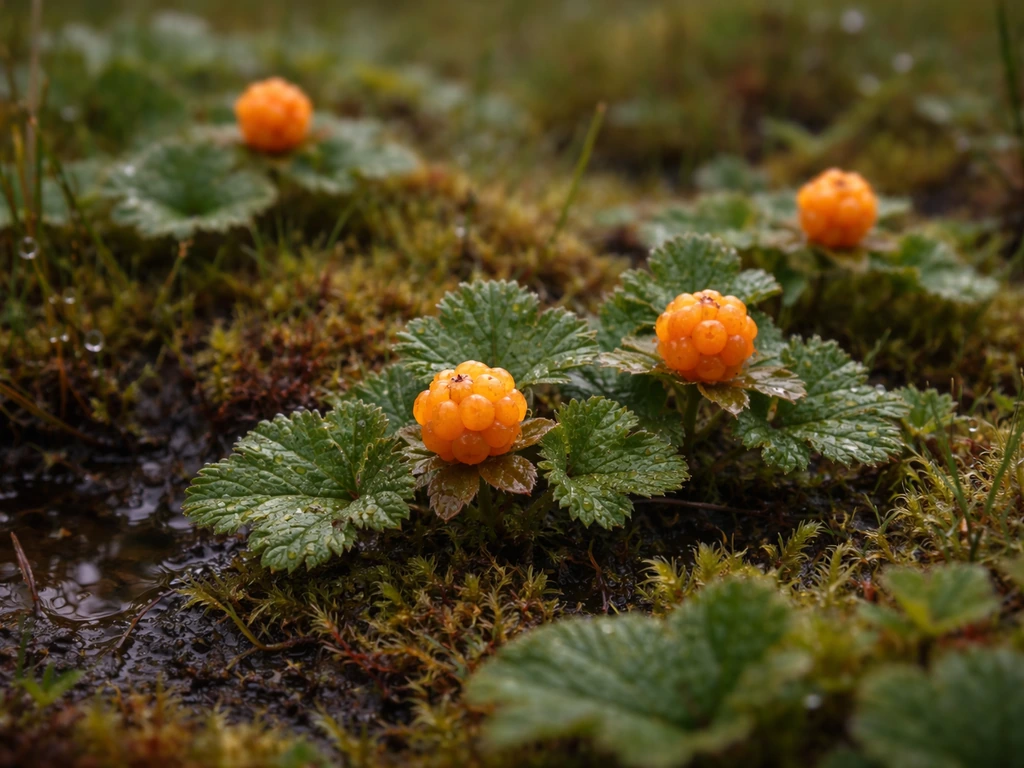
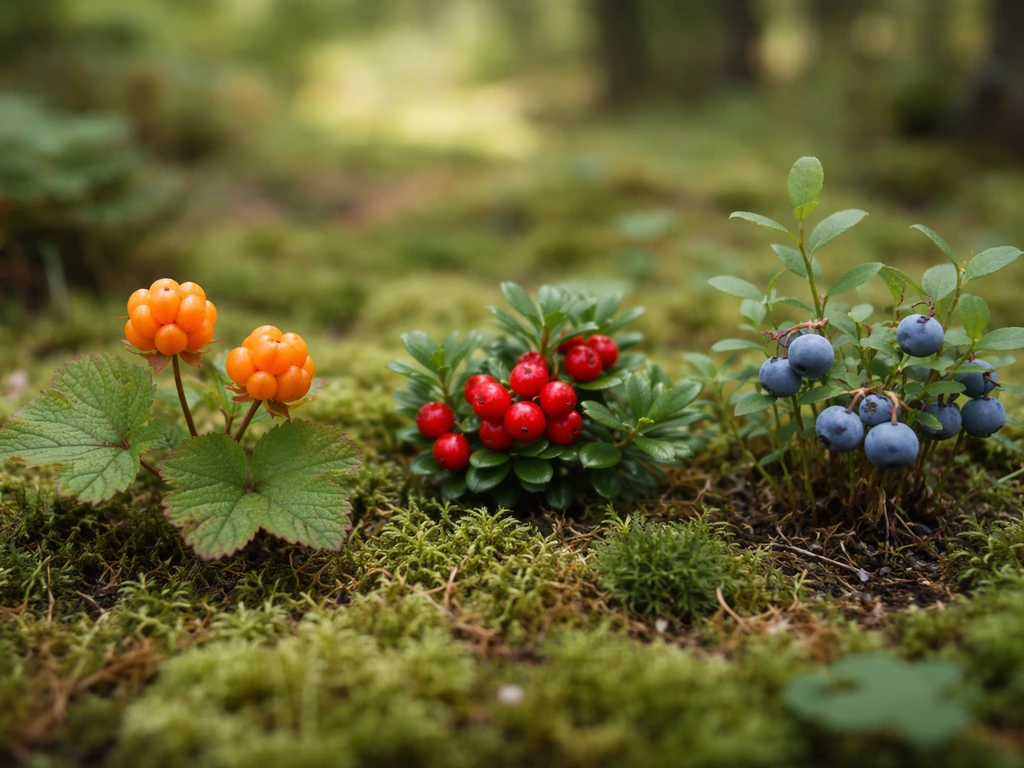
The cloudberry most people are searching for is Rubus chamaemorus, a low-growing perennial plant in the rose family. It's not a blueberry, not a lingonberry, and not a gooseberry, even though those often show up in the same conversations about northern wild berries. Cloudberry is its own species, sometimes called baked-apple berry (especially in Newfoundland), chicouté, or plaquebière in French-speaking Canada. When you bite into a ripe one, it tastes a bit like baked apple with a floral tartness, which is where that name comes from.
Visually, it looks nothing like a blackberry or raspberry even though it's in the same genus. The plant itself stays low to the ground, rarely more than 20 to 25 cm tall, with broad kidney-shaped leaves. The berries ripen from hard red to soft amber or yellow-orange, usually in late July. One important thing to know upfront: cloudberry is dioecious, meaning male and female flowers grow on separate plants. Only female plants produce fruit, so you need both sexes growing in close proximity, and you need pollinators active during the short flowering window in early summer.
Where cloudberries actually grow in the wild
blank" rel="noopener noreferrer">The natural range of Rubus chamaemorus is circumboreal, which means it wraps around the top of the globe through northern North America, northern Europe, and northern Asia. In North America, that means you'll find wild cloudberries in Alaska, northern and coastal parts of Canada (particularly Newfoundland, Labrador, Quebec, Ontario's northern stretches, and the Maritime provinces), and historically in a handful of isolated southern-edge populations, though it is presumed extirpated from New York, where only a single known population existed. In Europe, Norway, Sweden, Finland, and Scotland are the core regions. Russia holds some of the largest wild populations on Earth.
If you want a clearer visual sense of the natural range before digging into your own garden planning, the cloudberry range map breaks down the geographic distribution in more detail. The key takeaway from looking at that range: cloudberry is a plant of the high latitudes. The further south you go in North America, the more absent it becomes from the landscape.
The habitats cloudberries call home
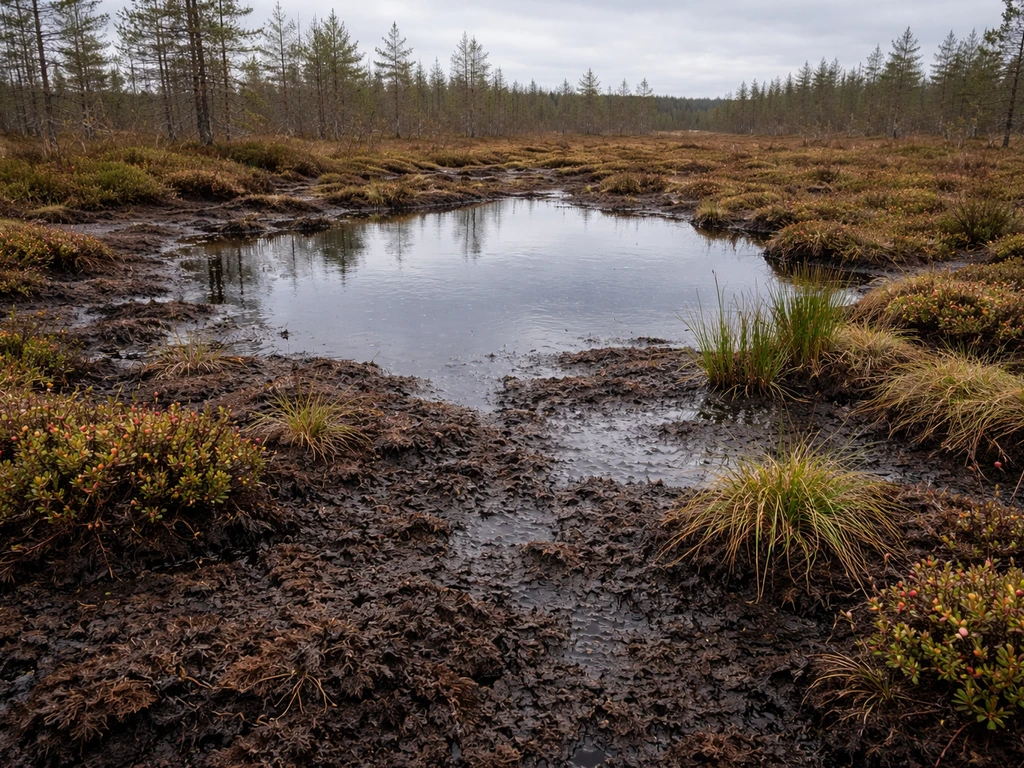
Calling cloudberry a bog plant is accurate but incomplete. Flora of North America lists the full range of habitats it occupies: bogs and muskeg, wet meadows, peaty tundra, exposed sandy areas near lakesides and streambeds, and even rock outcrops in the right conditions. What ties all of these together is consistent moisture and low-nutrient, highly acidic substrate.
In raised bogs and ombrotrophic peatlands (those fed only by rain, not groundwater), cloudberry thrives in Sphagnum moss communities where the pH typically sits below 5. A peer-reviewed open-access study on Rubus chamaemorus in Latvia describes it as thriving in raised bogs and ombrotrophic peatlands with very acidic, rain-fed Sphagnum-rich conditions. 0. The sweet spot for soil pH, based on both cultivation research from Norway and University of Washington propagation protocols, is between 3.5 and 4.5. That's extremely acidic, about as acidic as strong coffee, and far more acidic than most garden soils.
Moisture is the other non-negotiable. University of Washington research protocols describe ideal peat bog conditions for cloudberry as bog substrate between 0.5 and 1 meter deep, with groundwater sitting roughly 40 to 50 cm below the surface. The plant doesn't want standing water at the root zone, but it wants that water table close and consistent. Think of it as perpetually damp, never soggy, never dry.
Climate requirements: how cold is cold enough
Cloudberry is not just cold-tolerant; it needs cold to function properly. In boreal North America, it flowers around June to July and ripens fruit by July to August. That tight seasonal window means the plant depends on a specific rhythm: a long cold dormancy, a cool spring that doesn't rush flowering into freeze-risk territory, and a short enough summer that heat stress doesn't damage the low-growing foliage and berries.
USDA hardiness zones 2 through 4 are where cloudberry is genuinely at home. That covers interior Alaska, much of northern Canada, and the coldest northern-tier US states. In zone 5, you're at the margin, and success depends heavily on microclimate. In zones 6 and above, summer heat becomes a serious limiting factor, independent of winter cold. Research from the University of Alaska specifically flags climate stressors tied to temperature during flowering and the growing period as critical constraints, which is part of why warming trends in native habitats concern researchers studying this plant.
Season length matters too. Cloudberry needs enough frost-free days to complete flowering and fruiting, but not so many warm days that the plant bakes. For reference, the cloudberry's natural habitat typically offers 60 to 90 frost-free days, with cool midsummer temperatures, often staying below 20°C (68°F) on average.
How to tell if your location could actually support cloudberries
Run through this checklist honestly before investing time and money:
- Check your USDA hardiness zone. Zones 2 to 4 are solid territory. Zone 5 is marginal. Zone 6 and above, cloudberry is very unlikely to thrive long-term.
- Look at your average July high temperature. If it regularly exceeds 25°C (77°F), the summer heat will be a problem even if your winters are cold.
- Test your soil pH or the pH of your planned bed. You need to reach 3.5 to 4.5. If your native soil is above 6.0, you'll need to build a dedicated acidic bed rather than amending existing soil.
- Assess your water access. Cloudberry needs consistent moisture without waterlogging. Can you keep a bog-style bed perpetually damp through summer? Do you have a low-lying area, a natural wet spot, or access to rainwater for consistent irrigation?
- Think about your growing season length. 60 to 90 frost-free days is ideal. More than 120 consistently warm frost-free days may push the plant out of its comfort zone.
If you're already curious about the broader cultivation picture, including propagation, sourcing plants, and what to realistically expect in your first few seasons, the deeper guide on growing cloudberries in your own garden covers the full cultivation process from planting to harvest.
Replicating cloudberry habitat in your garden
If your climate qualifies, the next challenge is building soil conditions that mimic a northern peat bog. This is the part most gardeners underestimate. You're not just adding peat moss to a raised bed. You're constructing a system that stays consistently moist, stays consistently acidic, and has low nutrient levels (cloudberry is adapted to oligotrophic, nutrient-poor conditions).
Wet beds and in-ground bog gardens
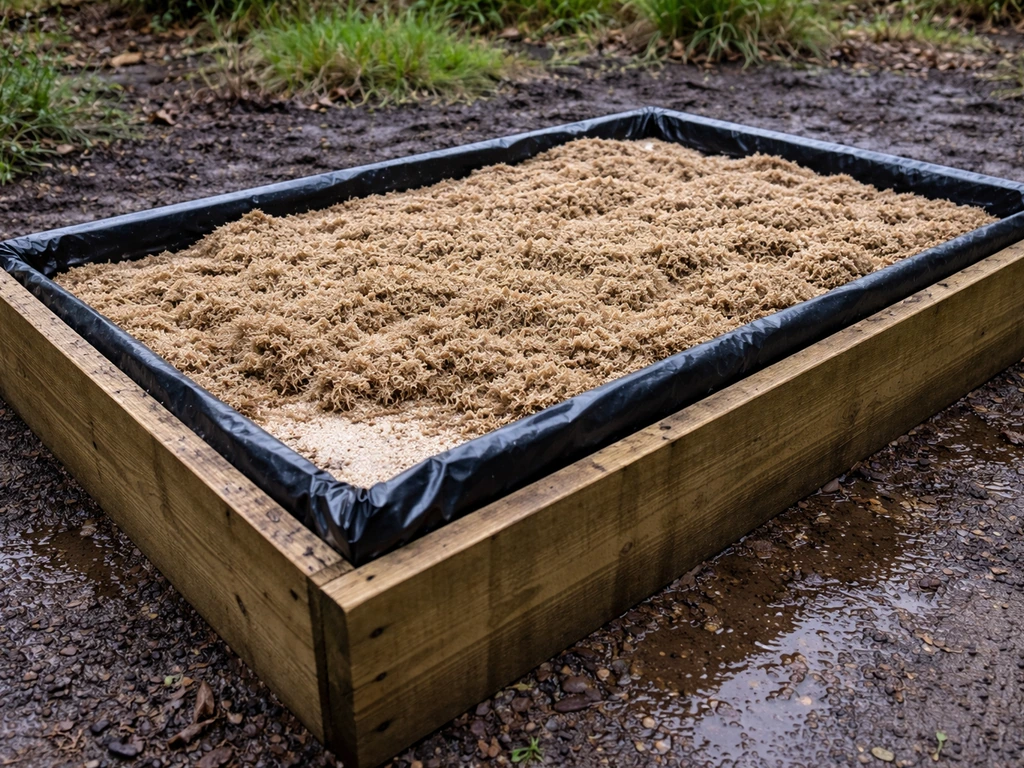
If you have a naturally low-lying, seasonally wet area in a zone 2 to 4 garden, that's your best starting point. Amend the native soil with a generous layer of Sphagnum peat, targeting a depth of at least 50 cm. The Norway-based berry cultivation research recommends a lightly decomposed Sphagnum peat substrate (rated H2 to H4 on the Von Post humification scale, meaning it's still fairly fibrous, not fully broken down). Avoid high-nutrient composts or manure entirely.
Line the bottom of a dedicated bed with a pond liner or heavy-duty landscape fabric to slow drainage and keep that water table close to the root zone. Irrigate with rainwater where possible, as tap water in many areas is too alkaline and will slowly raise the pH.
Raised bog beds
A lined raised bed filled with a mix of Sphagnum peat and washed sand (no fertilizers, no lime) can work if you're in the right climate zone. Keep the mix at least 50 cm deep and install a slow drip irrigation system or keep it in a location that receives consistent rainfall. Check pH regularly with a soil meter, targeting that 3.5 to 4.5 range. Sulfur can be used to acidify further if needed, but add it gradually and retest.
Container setups
Containers are the most controllable option for pH and moisture, but they come with real limitations for cloudberry. The shallow root zone dries out faster, temperature fluctuates more dramatically, and overwintering a container in zone 5 requires serious insulation. If you go this route, use a large, deep container (at least 40 to 50 cm deep), fill it exclusively with Sphagnum peat and sand, and set it in a saucer that can hold some standing water below the drainage holes to simulate a high water table. Keep the container in full to partial sun but in a cool location, and bring it into an unheated garage or shed for winter in marginal zones.
Common mistakes and how to avoid them
The biggest mistake I see is treating cloudberry like a standard garden berry and planting it in regular garden beds with compost-rich soil. That will not work. Too many nutrients, wrong pH, wrong moisture regime, and the plant either dies or sits there looking miserable without producing a single berry.
The second most common problem is planting only one sex. Since cloudberry is dioecious, a garden full of only female plants (or only male plants) will never produce fruit. You need at least one male plant for every three to five females to ensure reliable pollination. And you need pollinators active during the brief flowering window. Research has shown that honeybees can meaningfully improve fruit set when weather conditions allow bee activity, so if you're in a location where early-summer temperatures are still quite cold and native bee populations are sparse, consider the proximity of managed hives.
Germinating cloudberry from seed is a slow, exacting process. University of Washington propagation protocols specify staged stratification: a warm moist period followed by a cold moist period, typically using a peat and sand mix. Skipping or shortening the stratification drastically reduces germination success. Sourcing named cultivars from Scandinavian nurseries (where cloudberry cultivation is more developed) is often a smarter starting point than trying to germinate wild-collected seed.
Finally, be patient with establishment. Cloudberry spreads slowly via rhizomes and rarely fruits well in its first two or three years even under ideal conditions. I've had patches that looked completely stalled in year one and then suddenly started spreading and producing in year three. If the foliage looks healthy and the plant is spreading underground, trust the process.
Cloudberry vs. similar northern berries: a quick comparison
| Berry | Scientific name | Optimal USDA zones | Soil pH preference | Moisture needs | Dioecious? |
|---|---|---|---|---|---|
| Cloudberry | Rubus chamaemorus | 2 to 4 | 3.5 to 4.5 | Very high (bog/wetland) | Yes |
| Lingonberry | Vaccinium vitis-idaea | 3 to 6 | 4.5 to 5.5 | Moderate, well-drained | No |
| Bog cranberry | Vaccinium oxycoccos | 2 to 5 | 4.0 to 5.0 | High (bog/wetland) | No |
| Arctic raspberry | Rubus arcticus | 2 to 4 | 5.0 to 6.5 | Moderate to high | No |
If your climate sits in zone 5 or warmer, lingonberry is often the most practical alternative that still gives you a tangy, northern-flavored berry with much more forgiving cultivation needs. Bog cranberry is another solid option if you have the wet, acidic conditions but not quite the cold winters cloudberry demands.
A note on cloudberries in games vs. the real thing
If you found this article after looking up berry farming in survival games, you're not alone. Cloudberries appear in several popular titles, and the mechanics there are obviously much simpler than real-world cultivation. If you're curious about how berry growing works in those contexts, there are guides specifically covering growing berries in Valheim and growing berries in Grounded that handle the in-game mechanics separately. Real cloudberry cultivation is a different beast entirely, but hopefully this guide gives you a much clearer picture of what the plant actually needs.
FAQ
If I’m in zone 5, is cloudberry completely out of reach?
Look for the plant’s tolerance limits in your local microclimate, not just your USDA zone label. Cloudberry often fails in zone 5 because flowering happens in early summer when heat spikes can stress the foliage and flowers, even if winters are cold enough. Choose a cool, north-facing spot (or a spot with afternoon shade) and use ground-level water control (lined bed, stable water table) to buffer temperature swings.
Can I just use tap water and a bit of sulfur to keep cloudberry acidic?
No. Tap water can gradually raise soil pH because many supplies are buffered to be less acidic. In practical terms, plan to test your irrigation water pH (and your soil pH after watering), then prefer rainwater or other low-alkalinity water. If you do acidification, add sulfur in small doses and retest, because overcorrecting can harm roots and slow recovery.
How many male plants do I need, and how close should they be to females?
A single male plant may not be enough for reliable fruit set, especially if pollinators are limited during the short flowering window. A practical rule is one male for every three to five female plants, spaced close enough for flying pollinators to move between them. Also avoid planting where flowers face wind tunnels or where they get hot midday, since bee activity often drops when conditions shift quickly.
What if I accidentally planted only female cloudberries?
Cloudberry is dioecious and only produces fruit on female plants, so you must confirm sex before planting if your goal is berries. Many growers sell unknown-sex material, so verify through the seller’s labeling or by inspecting how the plants flower in the first season. If you end up with only females, you can’t “fix” it by adding fertilizer or changing pH.
Is it okay if the bed stays soggy or flooded all the time?
Yes, you can lose plants even if you keep the bed wet, because the roots still need oxygen. The target is dampness with a consistently high water table, not standing water at the root zone. If your setup stays saturated or smells anaerobic, improve drainage slightly while maintaining water proximity (for example, adjust the liner depth or the bed’s internal layering) and watch how the leaves respond over a few weeks.
Can I mulch cloudberry like other berries to reduce weeds and evaporation?
Mulch is tricky. Thick organic mulches can raise nutrients and pH, and they can change how quickly the bed dries between rains. If you need surface protection, prefer materials that won’t add fertilizer-like inputs, and keep the core of the bed made from the low-nutrient Sphagnum-and-sand system. In general, avoid compost, manure, wood chips mixed with compost, and anything lime-treated.
What’s the most common reason cloudberry refuses to grow even when pH is adjusted?
If you can’t maintain a water table near the root zone, skip the “raised bed in average soil” approach. Successful beds depend on low-nutrient acidity and moisture stability together. In many gardens, the easiest upgrade is a dedicated lined bed with a peat-and-washed-sand substrate depth of at least 50 cm, plus a controlled irrigation plan that matches rainfall patterns.
How long should I wait before I worry I won’t get any berries?
Most plants will not fruit well in the first couple of years because establishment is slow, even under ideal conditions. If the patch is spreading by rhizomes and the leaves look healthy, treat that as a positive sign. When troubleshooting, focus on your pH, water regime, and sex ratio first, then give it time, because “no berries year one” is often normal.
Is germinating from seed worth it, or should I buy plants for faster results?
Seed propagation is slow partly because the plant’s development stages are extended, and germination depends heavily on staged stratification timing and moisture control. If you want faster fruiting, consider purchasing named cultivars intended for cultivation, and still plan for at least several years before consistent harvest. If you start from seed, do not shorten or skip cold stratification, and keep the medium moist without letting it dry out completely.
What should I monitor monthly or seasonally to catch problems early?
Watch for two “silent” problems that don’t look like nutrient burn immediately: pH drift and moisture regime drift. A soil meter helps, but also track pH trends over time (not just one test), and check that the substrate stays consistently damp without going fully saturated. Retest after changes to irrigation, fertilizing attempts, or seasonal swings.