
Mulberry bushes and trees grow across a surprisingly wide swath of North America, Europe, and Asia, and the good news is that at least one species almost certainly fits your climate. The short answer: mulberries thrive in USDA Hardiness Zones 4 through 9 depending on the species, prefer full sun, and do best in well-drained soil with a pH between 5. ORNL/TM-2016/322 lists white mulberry (Morus alba) hardiness as approximately 4, 8, which helps explain where this species can grow successfully hardiness as approximately “4–8”. 0 and 8.0. But because the three common types (white, red, and black mulberry) differ in cold hardiness, origin, and invasive status, knowing which one you're dealing with makes a real difference in whether your planting succeeds or creates a headache.
Where Do Mulberry Bushes Grow Best? White Mulberry

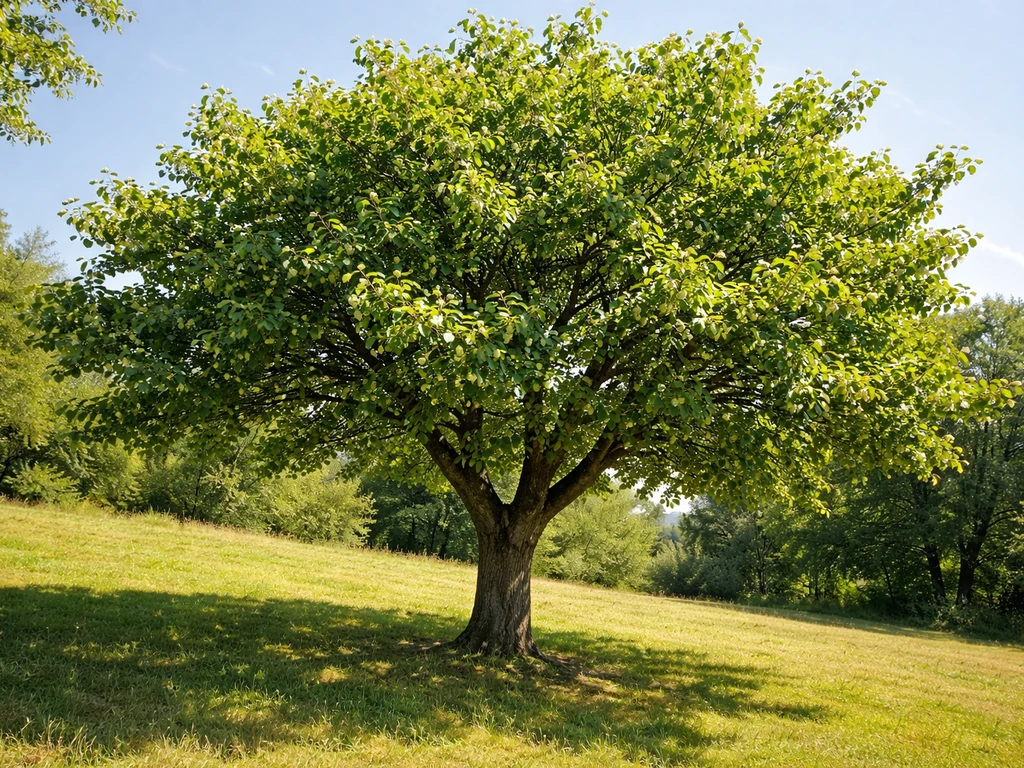
Native range and climate basics for mulberries
The Morus genus has its roots in three continents. Red mulberry (Morus rubra) is native to eastern and central North America. White mulberry (Morus alba) originated in Asia and was introduced to North America, where it has since naturalized so aggressively that many states now regulate it. Black mulberry (Morus nigra), the one with the richest-tasting fruit, originates from western Asia. Together these three cover a broad temperate band, which is why mulberries show up on roadsides, woodland edges, floodplain forests, and backyard gardens across so much of the country.
All mulberries share a general climate preference: temperate conditions with warm summers and a defined winter dormancy period. Utah State University Extension TreeBrowser lists Morus alba (white mulberry) hardiness as 5, 9 white mulberry hardiness as 5–9. They are not tropical plants, and they won't survive in true tropical heat without a cool-season break. They are also not alpine plants, so extreme cold at the edges of Zone 3 or below will kill them outright. Within that temperate sweet spot, though, they are genuinely tough. White mulberry in particular handles both wet spells and dry stretches better than most fruit trees, and it carries a heat tolerance rating that makes it viable in climates that would stress other fruiting species.
Where mulberry trees grow by region
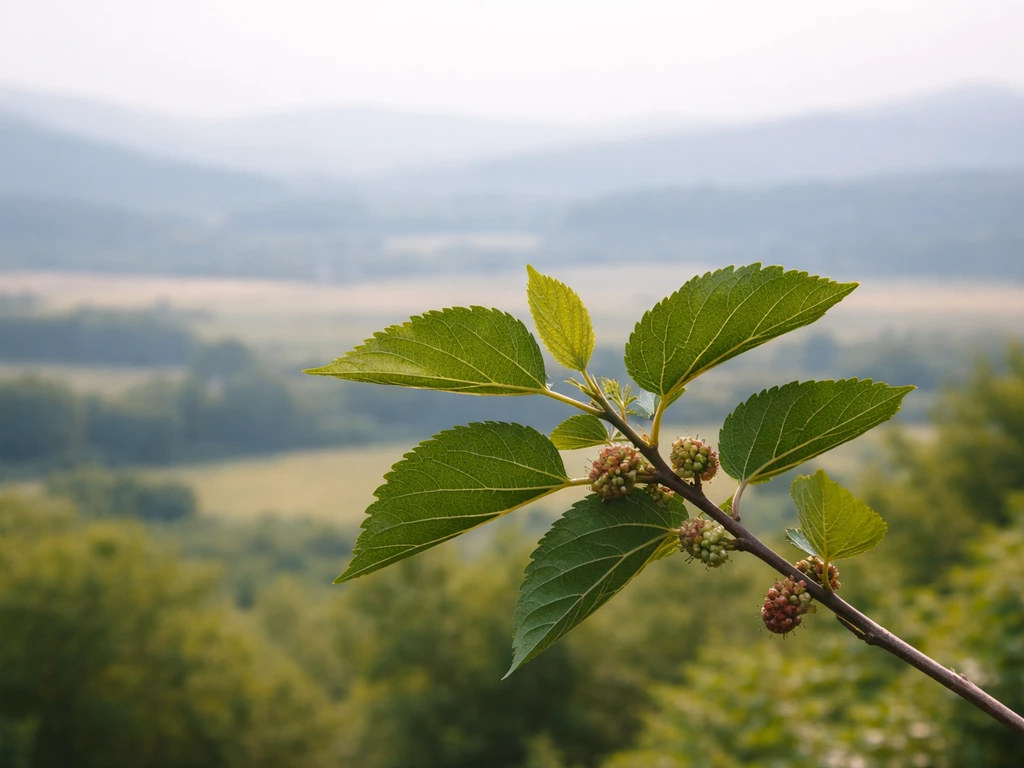
If you want to understand where mulberries grow in the US in practical terms, think of the country in three broad bands. The Southeast, Mid-Atlantic, Midwest, and Great Plains are the core range where mulberries grow with the least effort. The Pacific Coast, especially California's Central Valley, also supports mulberries well. The cold upper Midwest, northern New England, and mountain West are trickier but not impossible, depending on species and microclimate. Alaska and Nevada are the two states where white mulberry has not established itself broadly.
Here is how the two most commonly planted species map onto USDA zones:
| Species | USDA Hardiness Zones | Best Regional Fit | Notable Limitation |
|---|---|---|---|
| White mulberry (Morus alba) | Zones 4–9 (fruitless cultivars to Zone 3) | Most of the continental US except far north | Invasive or regulated in many states |
| Red mulberry (Morus rubra) | Zones 5–9 (some sources say 6–8 for best performance) | Eastern US, Midwest, Great Lakes, South | Less cold-hardy than white mulberry |
| Black mulberry (Morus nigra) | Zones 5–9 | Mild temperate climates; Pacific Coast | Least cold-hardy; slow to establish |
Red mulberry covers much of the eastern US, Great Lakes region, and the South, making it the go-to native option if you live east of the Rockies. If you are in the Midwest or Great Lakes area, you are in red mulberry's wheelhouse, and it is worth noting that mulberries do grow in Michigan and similar northern states, particularly the red and white varieties. Season length matters too: mulberries need roughly 150 to 180 frost-free days to ripen a full crop, which rules out the coldest northern fringes even when winter survival is possible.
White mulberry specifically: where it grows and how it's different
White mulberry is probably the most widely distributed mulberry you will encounter in North America today, and it is worth understanding why it shows up basically everywhere. Introduced from Asia, it has naturalized across almost every US state except Nevada and Alaska, colonizing roadsides, disturbed lots, and edges of woodlots wherever it lands. Birds eat the fruit and spread the seeds efficiently, which is a big part of how it moves so fast. That same adaptability makes it easy to grow intentionally, but it also means you need to check your state's regulations before planting. As of this writing, white mulberry is a restricted invasive in Wisconsin and Ohio, and a prohibited terrestrial plant in Indiana, among other states.
One thing that surprises a lot of people is that many white mulberry cultivars sold at nurseries are male or fruitless, meaning you won't get any edible berries from them. In a Reddit r/PlantIdentification thread about berries in southern Indiana, commenters concluded they were most likely white mulberry (Morus alba) and noted it is native to eastern Asia but invasive in North America blank" rel="noopener noreferrer">male or fruitless. If you want fruit, you need to confirm you are buying a fruiting female cultivar before you pay. The fruitless types are popular as shade trees precisely because they don't drop messy fruit, but they serve a very different purpose than a fruiting tree. White mulberry also hybridizes readily with red mulberry where the two overlap, which has conservation implications for native red mulberry populations.
In terms of site needs, white mulberry is the most forgiving of the three species. It tolerates soil pH from about 5.0 to 8.0, handles occasional wet soil or dry spells without collapsing, and grows in full sun to partial shade, though it fruits best in full sun. It carries a high heat tolerance classification, making it a reasonable choice in hot southern climates where other fruit trees struggle. If you're wondering exactly how mulberries grow from establishment through maturity, the growth habits of white mulberry are a good reference point because the species is so well documented.
A note on mulberry plant form: bush or tree?
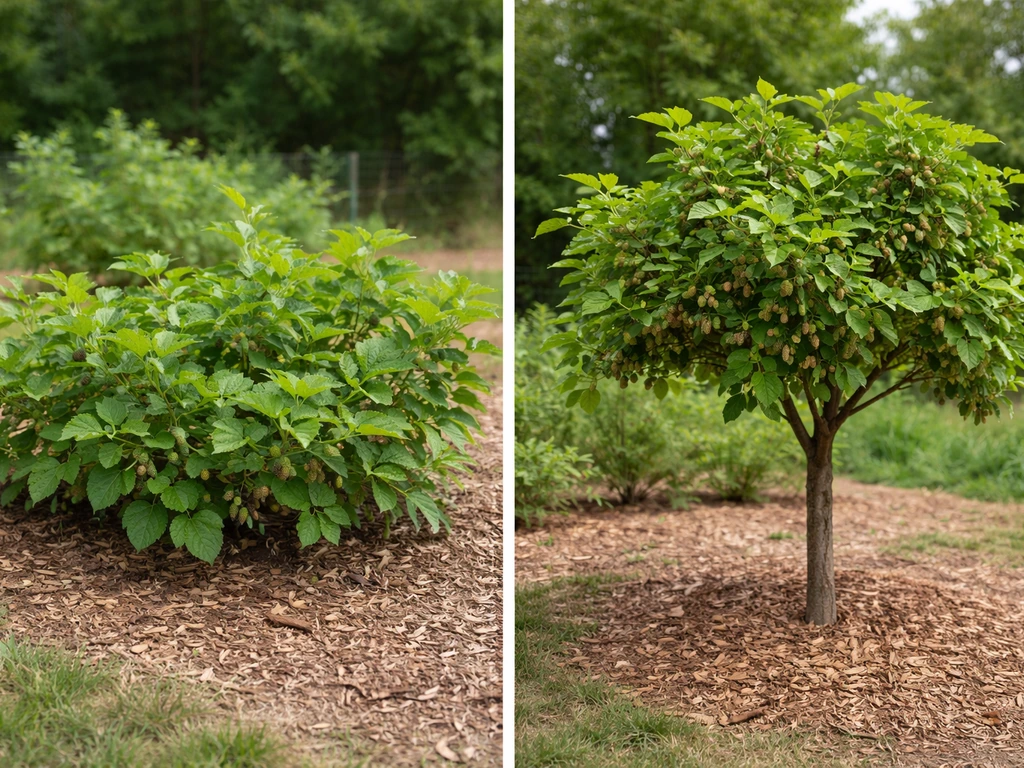
The phrase "mulberry bush" comes from the nursery rhyme, but in reality, most mulberries grown to maturity are trees, not shrubs. Mulberries do grow on trees as their primary form, though young plants or heavily pruned specimens can take on a more shrubby shape. Some growers intentionally keep them pruned low for easier harvesting, which gives the impression of a bush, but left to their own devices, white and red mulberries will reach 30 to 60 feet at maturity. If you have a small yard, plan for regular pruning or look for compact cultivars.
How to tell if your yard is the right fit
Before you order a tree, do a quick site check. These four factors will tell you most of what you need to know:
- Check your USDA Hardiness Zone first. If you are in Zones 5 through 9, all three common mulberry species are candidates. Zones 4 and 3 narrow your options to white mulberry and its hardier cultivars.
- Count your frost-free days. If your growing season is shorter than about 150 days, fruit ripening becomes unreliable. Northern gardeners near the zone edges should note this.
- Look at your sun exposure. Mulberries want at least 6 hours of direct sun for good fruit production. Partial shade is tolerated but will reduce your harvest.
- Check drainage. Mulberries do not want to sit in persistently waterlogged soil. Do a simple drainage test: dig a hole about 12 inches deep, fill it with water, and see how long it takes to drain. If it is still standing after 24 hours, you have a drainage problem to solve before planting.
Soil pH is forgiving with mulberries, especially white mulberry, which handles a range from 5.0 to 8.0 without complaint. If you want to optimize, aim for a slightly acidic to neutral range, roughly pH 6.3 to 6.8. Most garden soils fall in this range without amendment. A basic soil test from your county extension office or a home kit will confirm where you stand. Rich, moist, well-drained soil produces the best growth and fruit, but mulberries tolerate moderately poor soils better than most fruit trees.
In-ground, containers, or protected microclimates
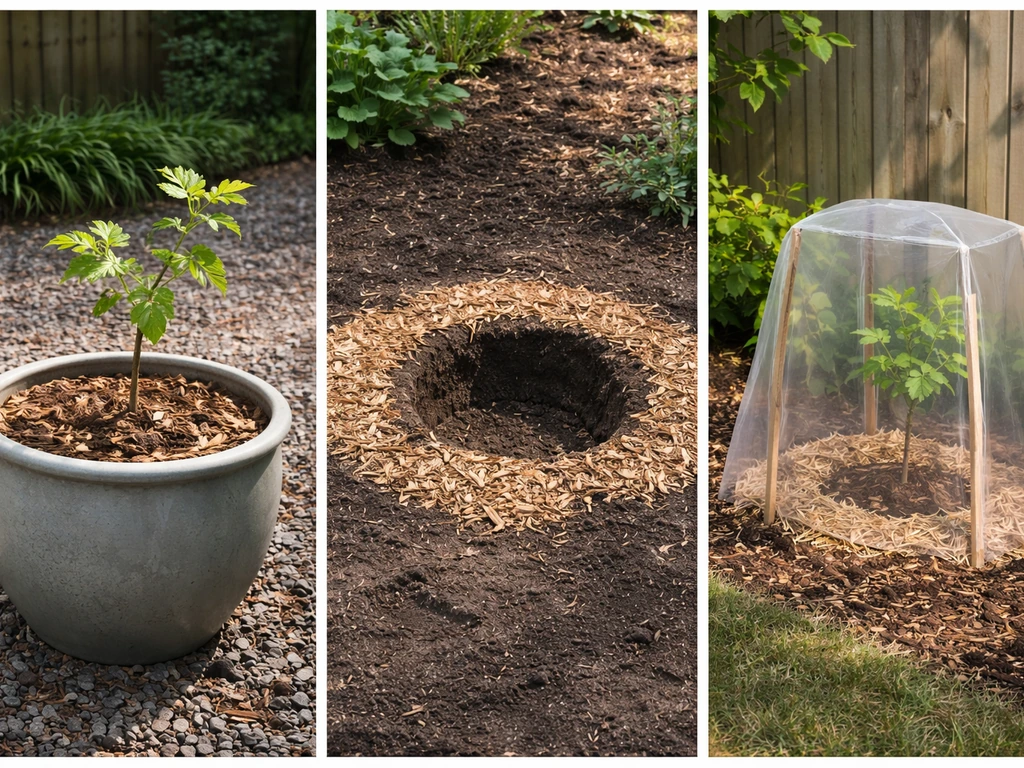
For most gardeners in Zones 5 through 9 with a reasonably sunny, well-drained spot, in-ground planting is the right call. Mulberries have deep root systems and grow large, so they perform best when they have room to spread. Give a standard-size mulberry at least 15 to 20 feet of clearance from structures and other trees. Once established, they become drought-tolerant and largely self-sufficient, which is one of the things I genuinely like about them compared to more finicky fruit trees.
Container growing is possible for white mulberry, especially fruitless ornamental cultivars or compact varieties, but it comes with real tradeoffs. Root restriction limits tree size, which can be an advantage in a small space, but containers require consistent watering because they dry out much faster than in-ground soil. In cold climates, containerized mulberries may need winter protection or garage storage because exposed roots in pots are more vulnerable to freezing than roots insulated by ground soil. If you go this route, choose a large container (25 gallons or more), use well-draining potting mix, and plan on repotting every few years as roots fill the pot.
Protected microclimates are your best tool if you live at the cold edge of mulberry's range. South-facing walls absorb heat and radiate it back at night, extending your effective growing season and bumping your microclimate up by roughly half a zone. Planting near a masonry structure on the south side of a building can make a Zone 4 yard feel like a Zone 5 for the tree's purposes. This is especially useful for red or black mulberry in the upper Midwest or northern New England. Wind protection matters too: a location sheltered from prevailing north and northwest winds reduces desiccation damage on young trees during their first few winters.
Practical next steps: timing, soil prep, and mistakes to avoid
The best time to plant a mulberry tree is while it is in deep dormancy, meaning late winter or very early spring before bud break. Planting during dormancy lets the root system begin establishing before the tree puts energy into leaf and shoot growth, which dramatically improves first-year survival. If you are in the South or Pacific Coast where winters are mild, late fall planting also works well. Avoid planting in summer heat; mulberries are tough once established, but newly transplanted trees in July heat will struggle.
For soil prep, you do not need to go overboard. Dig your planting hole two to three times the width of the root ball and the same depth. Backfill with the native soil rather than a heavily amended mix, which can discourage roots from spreading outward. Spread two to three inches of compost over the root zone after planting, and top that with a layer of mulch to retain moisture. Avoid piling mulch against the trunk.
Watering in the first season is the single biggest factor in whether a new mulberry tree establishes well. Water deeply right after planting, then check the soil under the mulch layer every few days. When the soil feels dry a few inches down, water again. Once the tree is showing strong new growth, you can back off to weekly watering during dry stretches. After the first full growing season, most mulberries in well-drained soil need little supplemental water except during extended drought. The tree becomes noticeably more drought-tolerant once it is well rooted, usually by the end of year two.
Here are the most common mistakes I see from new mulberry growers:
- Planting in low-lying or poorly drained spots because mulberries tolerate wet soil temporarily, not permanently. Persistent waterlogging will rot the roots.
- Buying a fruitless or male white mulberry cultivar when you actually want fruit. Always confirm the cultivar before purchasing.
- Planting white mulberry without checking your state's invasive species regulations, which can vary significantly.
- Underestimating the tree's mature size and planting too close to fences, foundations, or utility lines.
- Overwatering in year two and beyond once the tree is established, which is rarely necessary and can promote root disease in heavy clay soils.
- Skipping the dormancy window and planting in late spring or summer, which puts the tree under immediate heat and moisture stress.
One last thing worth saying: if your region or yard conditions are not quite ideal, don't give up immediately. Mulberries are among the more adaptable fruit trees you can plant, and a little site adjustment, whether that means improving drainage, choosing a south-facing spot, or picking a hardier cultivar, goes a long way. Most gardeners in the continental US have a realistic shot at growing at least one mulberry type successfully, and the payoff in fruit production once the tree hits its stride is genuinely impressive.
FAQ
Can mulberry bushes grow in my area if I’m outside USDA Zone 4 to 9?
Sometimes, but you need to think in terms of microclimates. A sheltered south-facing wall can effectively add about half a zone, and wind protection helps young trees survive winter desiccation. If you are truly below the cold edge, your best bet is an experimental trial with winter protection, or choosing a different fruit that matches your zone more closely.
Do mulberries need full sun, or will partial shade still produce fruit?
Partial shade can keep the tree alive, but fruiting usually drops. If you want berries, prioritize full sun for at least most of the day, especially during the ripening window. If you must plant in shade, expect more foliage growth and fewer edible yields.
Why do some white mulberry trees sold by nurseries not produce fruit?
Many are male plants or fruitless ornamentals, selected to avoid messy fruit drop. Before buying, confirm you are getting a fruiting female cultivar, and ask whether the plant is labeled for edible fruit. If it’s sold as a “shade” or “no fruit” type, you should not expect berries.
If I plant a mulberry tree, will one tree be enough for berries?
Often you still need the right sex and cultivar. Depending on what you purchase, you may end up with a male or fruitless type, which won’t provide edible fruit. Even with a female plant, having compatible mulberries nearby can improve odds of successful fruit set, particularly in mixed plantings.
Do mulberries grow well near buildings, fences, or sidewalks?
They can, but you must plan for root spread and mature size. Give typical plantings 15 to 20 feet from structures and other trees, because mulberries reach large dimensions. If you prune for a smaller canopy, keep up with pruning annually to prevent long, weak limbs from forming close to hardscape.
What soil is “good enough” if my yard is heavy clay or stays wet?
Mulberries prefer well-drained soil, but they tolerate moderate wet spells better than many fruit trees, especially white mulberry. If your yard has persistent standing water, improve drainage before planting by adjusting location or adding a raised planting bed, because chronic saturation can still stress roots even for tough trees.
How much space do I need between multiple mulberry trees?
For in-ground trees, spacing closer than about 15 to 20 feet usually creates crowding once they mature. Better air circulation reduces disease pressure and makes harvesting easier. If you want to harvest reliably, more space also helps each canopy get adequate light.
What’s the best way to keep container-grown mulberries from failing?
The most common issue is inconsistent moisture and root overheating or freezing. Use a large container (25 gallons or more), keep soil evenly moist during the growing season, and mulch or insulate the pot to protect roots in winter. Containers also need more frequent attention than in-ground trees because they dry out quickly.
When do mulberries typically start producing fruit after planting?
Fruit timing varies by cultivar, plant size, and growing conditions, but you can generally expect a ramp-up over the first few years rather than an immediate full harvest. If you bought a fruiting female and your tree establishes well, the most consistent yields usually come after the tree has been in the ground long enough to build a strong root system.
Do birds or wildlife cause a big problem with mulberries?
Yes, birds are a major factor because they eat the fruit and spread seeds. Practically, this means you may need to harvest promptly when berries ripen, or use netting if you’re trying to protect an edible crop. If you want to reduce spread concerns, avoid leaving fallen ripe fruit where animals can disperse it.
Are there regulations I should check before planting white mulberry?
Yes. White mulberry is restricted or prohibited in some states due to invasive spread risk. Check your state and local rules before purchase or planting, because even a “nice shade tree” can create compliance problems once it naturalizes.
What is a simple test to figure out where my mulberry will grow best?
Do a soil test and then pick a site that meets the sunlight and drainage checklist: full sun for best fruit, and soil that dries to workable conditions a few inches down. If your soil is extremely compacted, even a pH that looks right may not be enough, so loosen the planting area or consider a raised bed.