
Yes, mulberries grow on trees. Specifically, they grow on trees in the genus Morus, and the fruit clusters hang directly from the branches. They are not vines, they do not grow on ground-level bushes in the wild, and they are not related to brambles like blackberries even though the fruit looks similar. If you are seeing what looks like a mulberry on a low, bushy plant, there is almost certainly a pruning or management story behind that shape.
Do Mulberries Grow on Trees? Yes, and How to Tell

Marcus Holloway
13 Apr 2026
Mulberry vs. Bush: Why People Get Confused
The confusion is understandable. Type "mulberry" into a search engine and you will find images of everything from a 40-foot tree to something that looks like an overgrown shrub in a backyard. The reason for this is that the USDA Forest Service, UF/IFAS, and the Army Corps of Engineers all [classify Morus alba (white mulberry) under two growth habits: tree and shrub. ](https://www.
fs. usda. gov/foresthealth/technology/pdfs/IPAOv1ed2. pdf) The [USDA Forest Service](https://research.
fs. usda. gov/treesearch/32653) Treesearch description of the genus Morus characterizes mulberries as deciduous trees and shrubs native to temperate to subtropical regions. So botanically, it can go either way depending on conditions and management.
That said, how mulberries grow in undisturbed natural settings is almost always as a tree, sometimes reaching 30 to 50 feet tall. The shrubby versions you see in yards are usually the result of repeated hard pruning, mowing, or damage that forces the plant to regrow from the base in multiple stems.
There is also a naming quirk worth knowing: people sometimes search for where mulberry bushes grow because the word "bush" gets used loosely in everyday speech for any fruiting shrub or small tree. But in horticultural terms, there is no true "mulberry bush" species. The nursery trade does sell mulberry plants pruned and trained into compact, shrub-like forms, especially for small gardens or containers, but the underlying plant is still a Morus tree.
What Mulberries Actually Grow On: Branches, Fruit Type, and Plant Parts
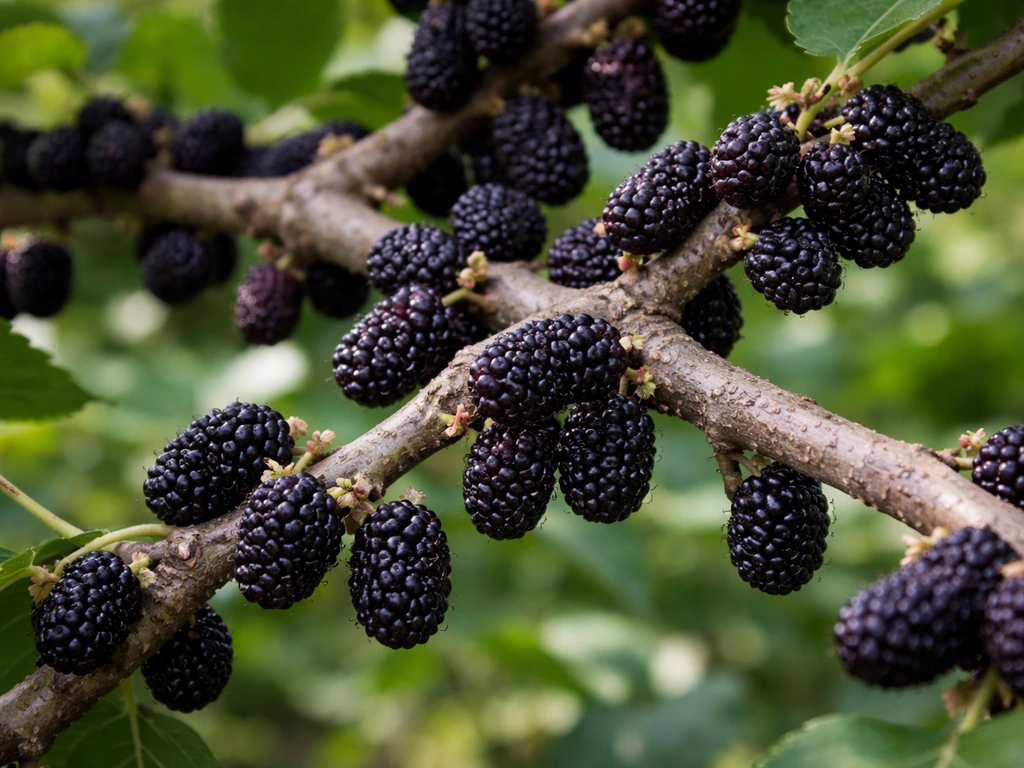
The fruit clusters grow directly along the branches and twigs of the tree, not in a central cluster at the top or on separate flower stalks. Each individual "berry" is not actually a single fruit. It is a cluster of small drupes, fused together, about 1 to 1. 25 inches long when mature, which is why it resembles a blackberry or raspberry in shape.
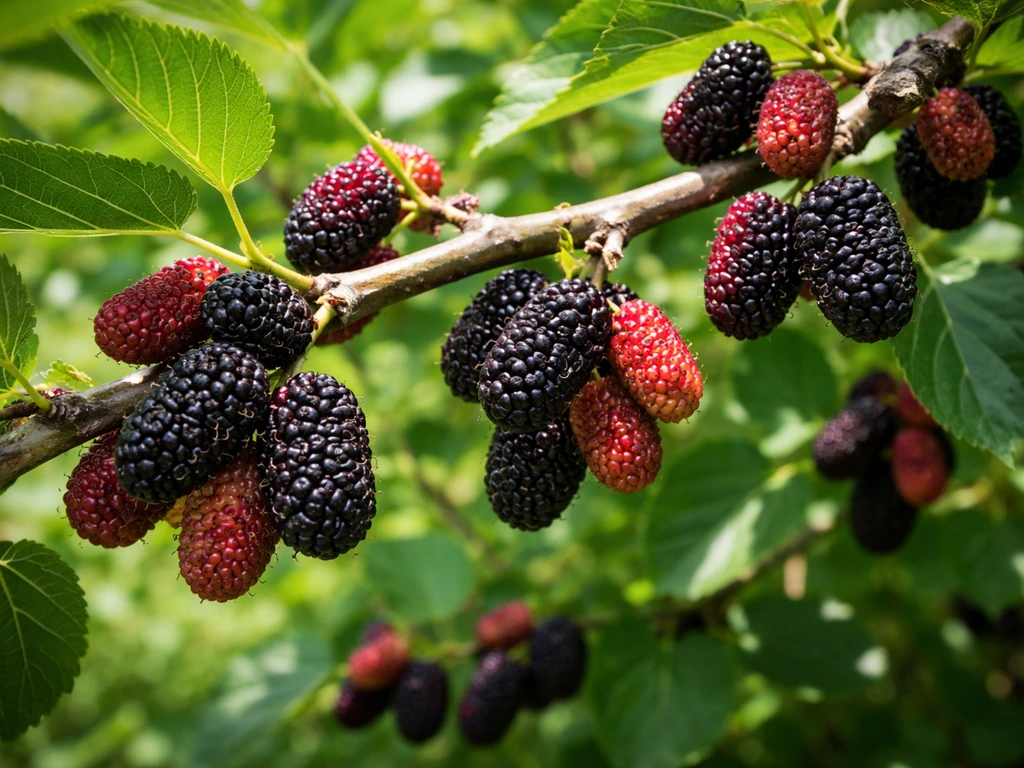
Red mulberry (Morus rubra) ripens in June or July and follows a predictable color path: the clusters start green, shift to pink or red, and then turn dark purple to almost black when fully ripe. White mulberry (Morus alba) follows a similar ripening arc, going from green-white through pink to dark red or sometimes staying white depending on the cultivar.
This branch-fruit relationship is important for anyone trying to harvest or identify a plant. You will find fruit distributed widely across the canopy, not concentrated in one spot. In a managed or pruned tree, the fruit can end up quite low and reachable, which is one practical reason some growers deliberately keep their mulberries compact.
How to Tell If Your Plant Is a Mulberry
Mulberry identification trips people up because the leaves are notoriously variable, even on the same tree. You might see deeply lobed, mitten-shaped leaves on young shoots right next to simple, unlobed oval leaves on older wood. This is completely normal for Morus species and is actually one of the easiest ways to confirm you have a mulberry rather than something else. If a tree has wildly inconsistent leaf shapes on the same branch, mulberry is near the top of your suspect list.
Here are the key identification traits to check, based on standard extension guides for Morus rubra and Morus alba:
- Leaves: Alternate, often heart-shaped at the base, with toothed margins; same tree may show both lobed (mitten or 3-lobed) and unlobed leaves at the same time
- Bark: On red mulberry, bark is thin and somewhat shaggy with an orange-brown or reddish-brown tint; white mulberry bark is lighter and furrowed
- Fruit: A cluster of small drupes resembling a blackberry, roughly 1 to 1.25 inches long; ripens from green through pink to dark red or purple-black
- Fruit timing: Look for ripe fruit in June or July in most of the U.S.
- Sap: Mulberry branches release a milky sap when cut or broken, which is a quick field confirmation
- Leaf surface: Red mulberry leaves feel rough or sandpaper-like on top; white mulberry leaves are smoother
If you have a young plant or a heavily pruned one and the form looks shrubby, focus on the leaves and sap rather than the overall shape. The shape alone will not tell you much if the plant has been managed.
How Pruning Turns a Tree Into Something That Looks Like a Shrub
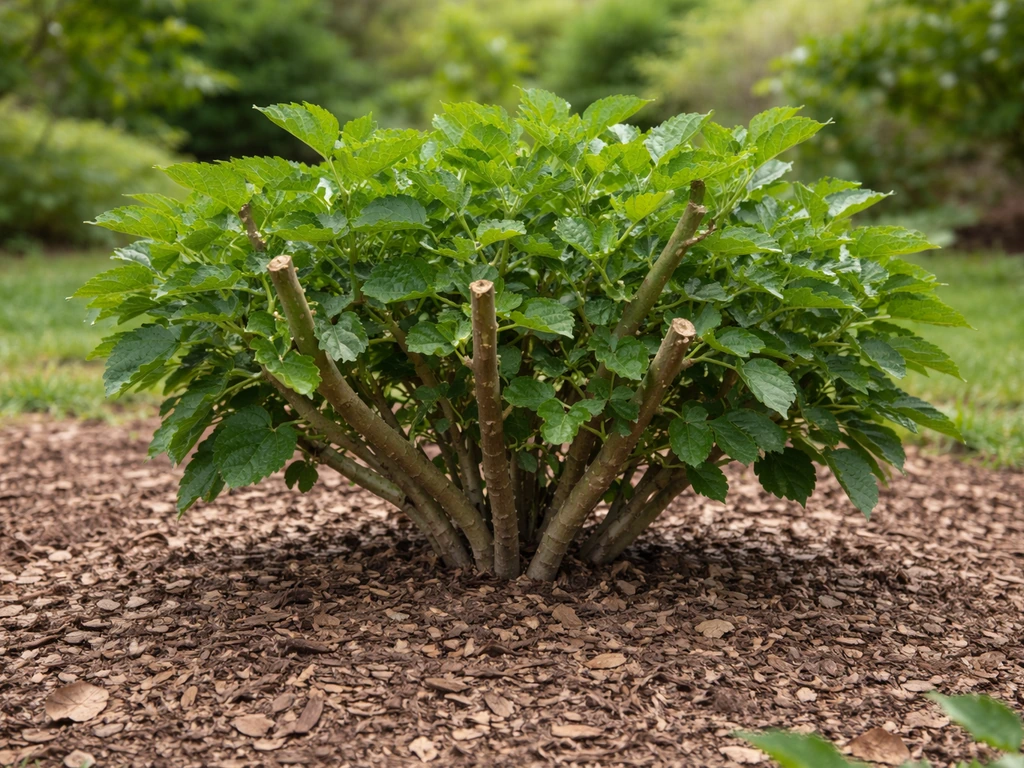
This is the crux of most "is it a tree or a bush?" confusion in home gardens. Mulberries respond aggressively to hard pruning. When you cut a mulberry back severely, whether by topping, pollarding, or repeated heading cuts, the plant resprouts from the base and from lower branch stubs with multiple vigorous shoots. Do that several years in a row and you end up with a dense, multi-stemmed, low-growing plant that looks nothing like a tree. The USDA Forest Service explicitly notes that Morus alba can regenerate vigorously after injury, and pruning studies confirm that techniques like pollarding (cutting back to the same stub points each year) cause dense branching and sprouting that reshapes the crown entirely.
If you want to maintain a mulberry in a shrub-like form for a small space or easier harvesting, the approach borrowed from managing multi-stemmed woody shrubs works well: remove the oldest, thickest stems over several seasons to encourage fresh new growth from the base, rather than doing one brutal cut all at once. This keeps the plant compact and productive without stressing it into a recovery period. In colder climates, you sometimes get a "natural" version of this when winter dieback kills young growth to the ground and the plant regrows as a multi-stemmed clump the following season.
Tree Form vs. Shrub Form: A Quick Comparison
| Feature | Natural Tree Form | Pruned/Managed Shrub Form |
|---|---|---|
| Typical height | 20 to 50 feet at maturity | 4 to 10 feet depending on management |
| Stem structure | Single central trunk | Multiple stems from base |
| Fruit accessibility | Requires ladder or netting | Hand-harvested at waist height |
| Annual maintenance | Minimal once established | Regular pruning needed to hold shape |
| Good for small gardens? | Only with plenty of space | Yes, especially in containers or tight beds |
| Cold climate behavior | May die back to ground in harsh winters | Naturally resets to shrub form after dieback |
| Best suited for | Orchard or large yard plantings | Urban gardens, containers, or training projects |
For most home growers, the decision between tree form and shrub form comes down to space and harvest convenience, not variety. Any Morus species can technically be managed either way.
Where Mulberries Grow Best and What to Expect by Region
Mulberries are impressively adaptable, which is part of why Morus alba (white mulberry) has naturalized across most of the continental United States after being introduced from Asia. For planting purposes, red mulberry (Morus rubra) is the native species, and it performs well across USDA hardiness zones 5 through 9 according to the Morton Arboretum, while Oklahoma State Extension pegs a reliable core range at zones 6 to 8. That covers a huge swath of the country, from the mid-Atlantic down through the South and across the Midwest. If you want to know more about where mulberries grow in the US, both species show up from New England to the Gulf Coast, though white mulberry is far more widespread due to naturalization.
Red mulberry in its natural habitat is a tree of valleys, floodplains, and moist hillsides, which tells you it prefers decent soil moisture and some shelter from extreme exposure. In cultivation, though, both red and white mulberry tolerate a wide range of soil types and are reasonably drought-tolerant once established. Full sun produces the best fruit load, but partial shade is workable.
For northern growers, especially in the Upper Midwest, mulberries show up reliably but often in their managed or multi-stem forms. If you are gardening in the Great Lakes region and wondering whether mulberries grow in Michigan, the answer is yes: both Morus alba and the native Morus rubra are documented in the state, with red mulberry found in forested floodplains and swamps. MSU Extension includes mulberry in guidance for north-central region fruit gardeners, though it is noted that homeowners often manage them heavily due to the mess of falling fruit and the plant's tendency to get large. That maintenance pressure is exactly what produces the shrubby forms many Michigan gardeners are familiar with.
Climate Tips for Picking a Mulberry
- Zones 5 to 6 (Northern Midwest, New England): Stick with Morus rubra or cold-hardy white mulberry cultivars; expect some dieback in harsh winters that will push the plant toward a shrubby form naturally
- Zones 7 to 8 (Mid-Atlantic, Southeast, Pacific Northwest): Both red and white mulberry thrive; full tree form is achievable with minimal intervention
- Zones 9+ (Deep South, Southern California): Morus alba handles heat well; look for heat-tolerant cultivars and make sure drainage is solid
- Container or small-space growing in any zone: Use a dwarfing cultivar and commit to annual pruning to hold the shape; repot every two to three years to prevent rootbound stress
What to Do Next If You Have a Mulberry in Your Yard
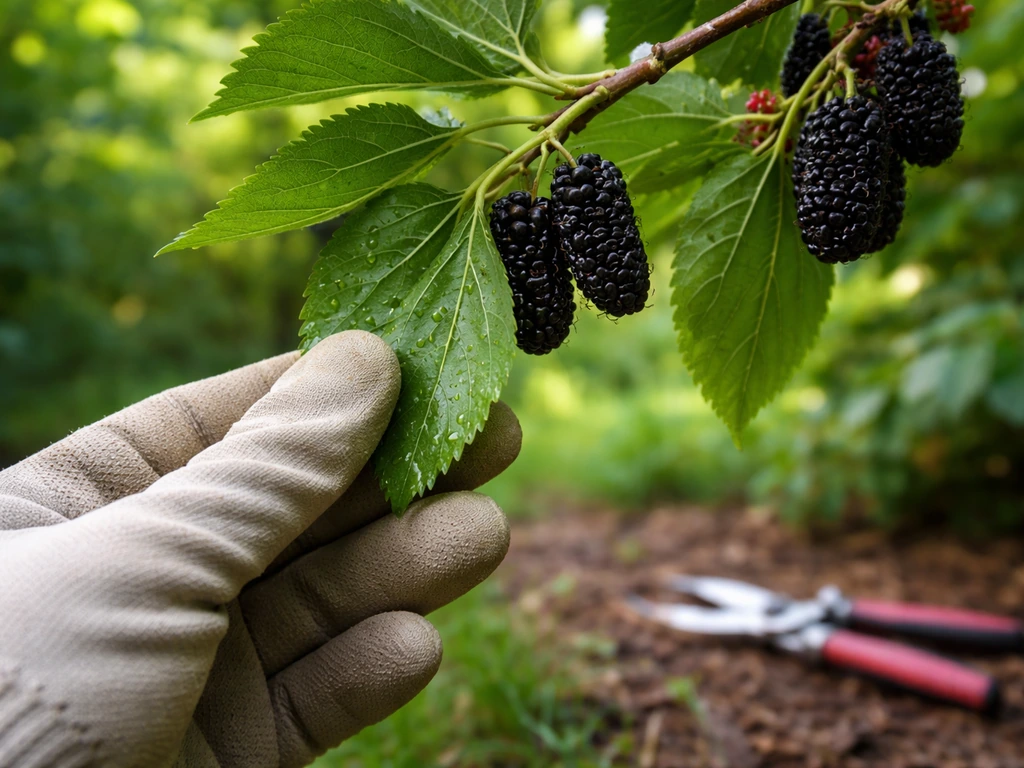
If you already have a mulberry on your property and you are not sure what form it is in, start with the identification checklist above: look for the variable leaves, check the sap, and note when the fruit ripens. If the plant is shrubby and low, check whether there are old cut stubs at the base, which would confirm it was pruned into that form rather than naturally growing that way. From there, you have two paths: let it grow into its natural tree shape by removing competing stems and selecting one dominant leader, or commit to the compact form by continuing to prune it back each year after fruiting.
If you are planting from scratch and want maximum fruit with minimal fuss, plant a grafted red mulberry cultivar in full sun with good drainage, give it room to reach at least 15 to 20 feet, and plan on doing very little beyond keeping the canopy open. If space is tight, choose a recognized compact cultivar like 'Illinois Everbearing' or 'Dwarf Everbearing,' which are designed to stay manageable with routine pruning. Either way, you are growing a tree, not a bush, and understanding that distinction will save you a lot of confusion about what to expect and how to manage it.
FAQ
If I see mulberry fruit low to the ground, does that mean it is not a real mulberry tree?
Not necessarily. Mulberry trees often end up low after repeated heading cuts, mowing, or winter dieback, which can force regrowth as a dense multi-stem clump. Look for mulberry-specific leaf variability and the drupes fused into elongated clusters along stems, and check for old cut stubs near the base.
How can I tell mulberry from blackberry or raspberry when the fruit looks similar?
Mulberry fruit are fused clusters of small drupes that hang along the branches and twigs across the canopy, rather than appearing as a single top-center cluster. Also, mulberry ripening typically follows a predictable green to pink to dark purple or near-black timeline, while raspberries and blackberries have different seed structure and overall fruit organization.
Can a mulberry be trained to stay shrub-sized without ruining fruit production?
Yes, but do it gradually. Instead of one severe cut, remove older, thick stems over multiple seasons to keep new productive shoots coming. Plan to thin the interior canopy periodically so light reaches fruiting wood, since overly dense regrowth can reduce fruit load.
Do mulberries sucker or regrow from the base after pruning?
They can. Aggressive cutting, pollarding, topping, or damage often triggers vigorous sprouting from lower branch stubs and can also lead to regrowth that crowds near ground level. Expect that if you prune hard every year, the plant will progressively maintain a multi-stem shape.
What should I do if I just moved into a yard and the mulberry looks like a shrub, but I want a tree form?
Start by choosing one dominant leader and removing competing stems over time, ideally after fruiting. Keep the canopy thinned and let the selected leader gain height while other stems are reduced gradually, since switching forms too quickly can cause a flush of shoots and delay shaping.
When is the best time to prune a mulberry for shape and harvest?
Plan pruning around your goal and fruiting cycle. Since the fruits ripen in early to midsummer depending on species, many gardeners prune right after harvest to reduce cutting off next season’s fruiting wood. If your area has winter dieback, you may also need light spring cleanup to remove dead tips.
Do both white and red mulberry have the same tree-versus-shrub behavior?
They both can be managed into either form, but white mulberry (Morus alba) is especially known for flexible growth habits and vigorous regeneration after injury. If you are trying to “predict” the final shape, managed pruning history matters as much as species.
Are mulberries in Michigan more likely to appear as clumps than tall trees?
Often, yes. In colder regions, homeowners frequently prune heavily for easier harvesting and to manage the mess from falling fruit, and winter dieback can also reset the plant into a multi-stem clump. If you see repeated cut stubs near the base or many stems emerging low, that usually explains the shrub-like look.
If I’m planting for maximum fruit, does it matter whether I choose a tree-form or shrub-form cultivar?
Cultivar matters more than the label people use online. For maximum productivity in small spaces, look for recognized compact or dwarf cultivars, but still treat the plant as a tree that will need consistent canopy management. Regardless of form, full sun and open airflow are key for strong fruit set.
How do I confirm a young or heavily pruned plant is mulberry when leaf shape varies a lot?
Use multiple checks together. Look for variable leaf shapes on different shoots (lobed on young growth next to simpler leaves), check the sap behavior when you break a small leaf or twig, and confirm the fruiting clusters are elongated drupes fused together along branches. Relying on leaf shape alone is easiest to get wrong, especially on new growth.