
Rowan berries grow on rowan trees (Sorbus aucuparia and related species), which are native across Europe, western Asia, and parts of Siberia, and naturally grow in cool-temperate climates from sea level up to about 2,400 meters. When you’re thinking about what glow berries grow on, remember that rowan berries grow on rowan trees. In Britain and Ireland you'll find them on hillsides, woodland edges, hedgerows, and cliff faces. In North America, the native equivalent is Sorbus americana, which covers northeastern regions from Newfoundland down through the Appalachians. If you live in USDA zones 2 through 6 (or their Canadian/European equivalents), rowan will almost certainly grow near you or in your garden with minimal fuss.
Where Do Rowan Berries Grow? Natural Range and How to Plant
Marcus Holloway
28 Jun 2026
Rowan species: trees, shrubs, and the naming confusion
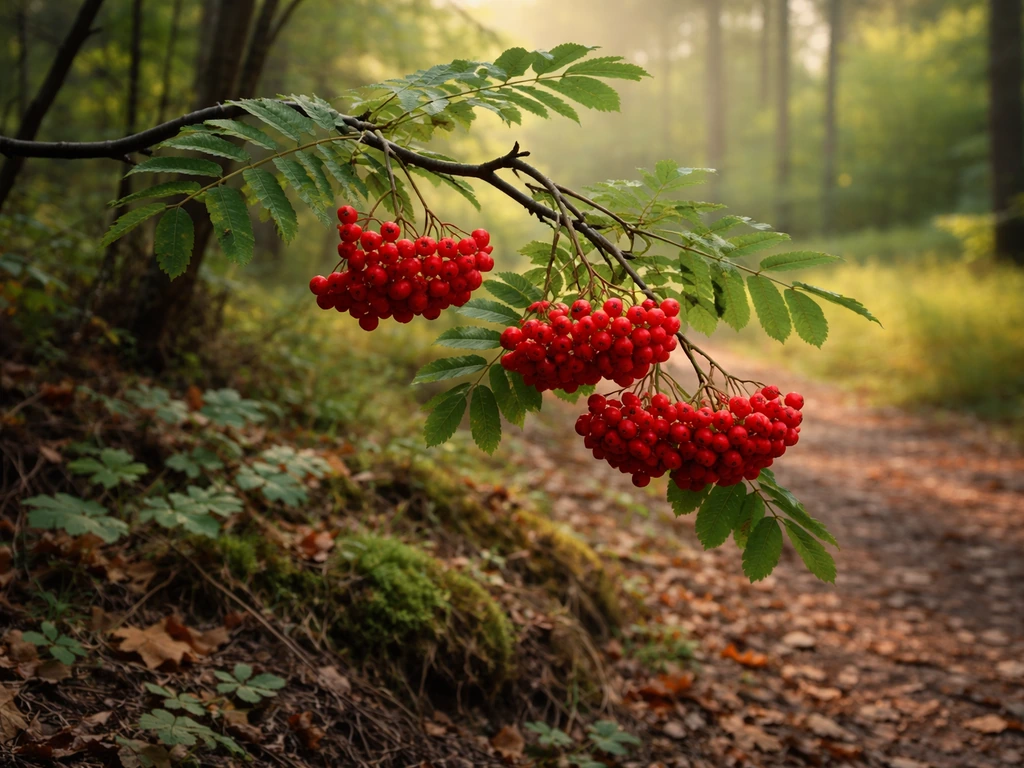
The plant most people mean when they say "rowan" is Sorbus aucuparia, the European rowan or mountain ash. It's a small deciduous tree, typically 5 to 10 meters tall at maturity (occasionally pushing 15 meters in ideal conditions), often starting out as a multi-stemmed shrubby form when young before developing a rounded loose crown. On windswept cliff faces or at high altitude, it can stay permanently shrubby, which is one reason people sometimes wonder if it's the same plant they saw in a lowland hedgerow.
The genus Sorbus is broader than just S. aucuparia though. Sorbus intermedia (Swedish whitebeam) and Sorbus aria (common whitebeam) are recognized relatives that also get lumped under "mountain ash" in common speech, and taxonomy has shifted over the years with some species being moved into the related genus Aria. For practical growing purposes, what matters is that all these plants share similar climate preferences and produce the berry-like fruit clusters people want. In North America, four tree-form and three shrub-form Sorbus species are actually native, so "rowan" isn't purely a European import on that continent either.
Where rowan grows naturally in the wild
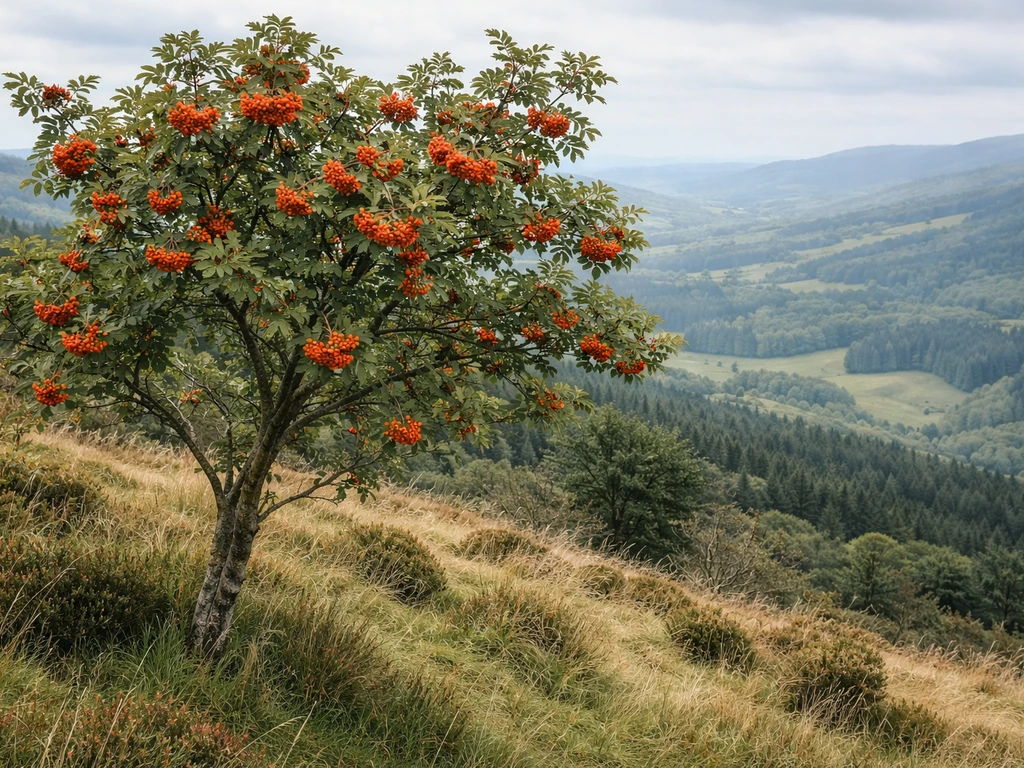
Sorbus aucuparia's native range runs from western Europe (including the British Isles and Ireland) east through Russia and into Iran, with a presence across Siberia and western Asia. The Plants of the World Online database at Kew confirms the species as native across this broad Palaearctic band. That enormous range is possible because rowan is genuinely cold-hardy, more so than almost any other fruiting tree you can grow.
In North America, Sorbus aucuparia isn't native but has naturalized widely, particularly in New England, parts of the Pacific Northwest (including British Columbia, where it's considered an emerging invasive in some areas), and across Canada. The native North American species, Sorbus americana, covers northeastern North America from Newfoundland and Nova Scotia south to New Jersey and Pennsylvania, extending along the Appalachian mountains all the way to South Carolina and Georgia, and west to Minnesota and the eastern Dakotas.
Climate and soil: what rowan actually needs
Rowan is cold-hardy to an impressive degree. Sorbus aucuparia is rated to USDA Zone 2 to 3 by Oregon State University, and Natural Resources Canada lists it as suitable from zone 1b to 9a. UF IFAS narrows the sweet spot to zones 3b through 6 for reliable fruiting in American conditions. The practical takeaway: if your winters are cold enough to kill off most fruit trees, rowan will probably be fine. The real limiting factor at the warm end isn't summer heat so much as drought tolerance and the need for a proper cold period to trigger bud burst in spring.
Soil preference leans acidic. Rowan does well on acidic soils with low base availability, particularly in upland zones. It's also associated with well-drained but permanently moist brown earth soils in northwest Britain, particularly in the Fraxinus-Sorbus-Mercurialis woodland type found in valley heads and upland fringes of Ireland, Scotland, northern England, and Wales. If you have well-drained soil that still holds some moisture (not bog, not drought-prone sand), you're in the right range. The BBC Gardeners World recommendation is fertile, well-drained soil in full sun to partial shade, which is a solid working guide.
Rainfall matters too. French ecological records note that rowan tends to be associated with areas receiving more than 750 mm of rainfall per year, which roughly explains why it's so common in upland Britain and Ireland and less prevalent in drier continental interiors. If you're in a drier climate, supplemental watering during establishment will matter more than it would for growers in wetter western regions.
Where rowan shows up by region
| Region | Species present | Status | Typical habitat |
|---|---|---|---|
| UK and Ireland | Sorbus aucuparia | Native and common | Hedgerows, woodland edges, upland cliffs, valley heads |
| Continental Europe | Sorbus aucuparia, S. intermedia | Native | Mountain forests, submontane woodland, forest edges |
| Scandinavia and Russia | Sorbus aucuparia | Native | Boreal forest margins, river valleys, open hillsides |
| Western Asia and Iran | Sorbus aucuparia | Native | Mountain slopes up to ~2,400 m a.s.l. |
| Northeastern North America | Sorbus americana | Native; S. aucuparia also naturalized | Cool temperate woodlands, Appalachian slopes, boreal edge |
| Pacific Northwest (BC, Washington) | Sorbus aucuparia | Introduced/naturalized | Disturbed woodland, roadsides, forest edges |
| Canada (broad) | Sorbus aucuparia, S. americana, others | Native and introduced | Boreal and cool-temperate zones, zones 1b–9a |
Altitude, light, and why you keep seeing it at the woodland edge
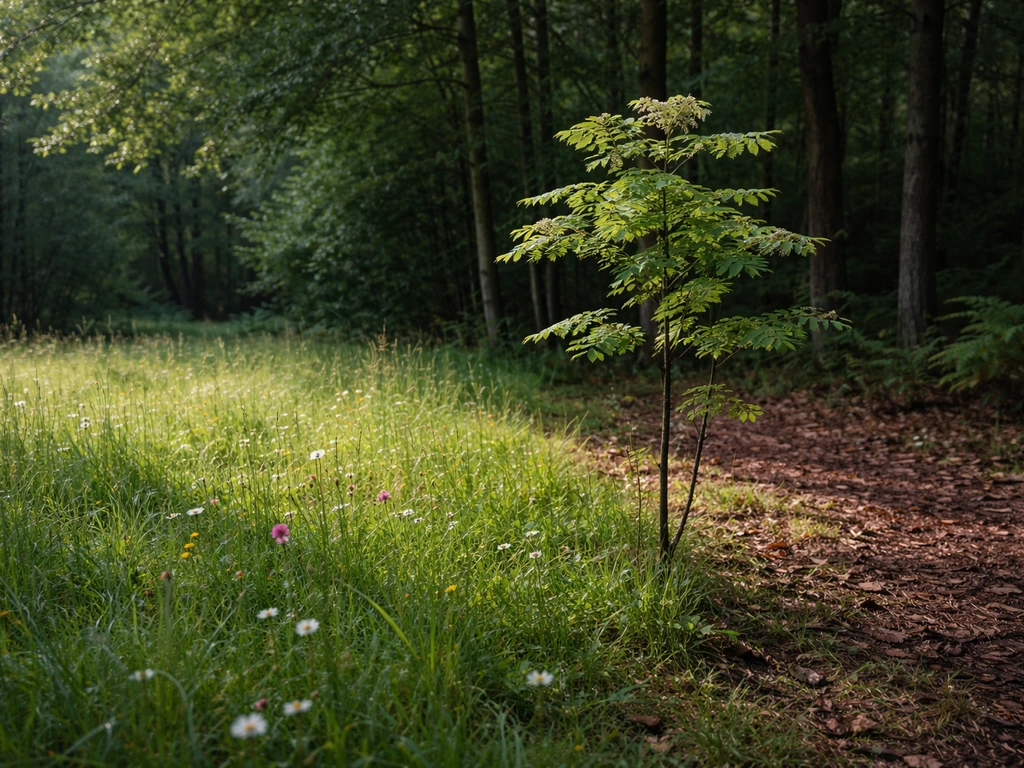
Rowan has a strong preference for the transition zone between open ground and closed woodland canopy, which ecologists call the woodland edge or forest margin. This isn't a coincidence. Young seedlings and saplings can tolerate shade reasonably well, but once a tree reaches flowering and fruiting age it needs decent light. Deep shade suppresses berry production noticeably. That's why you tend to find productive rowan trees at forest margins, along hedgerows, on cliff ledges, and on hillsides where the canopy opens up rather than in the dense interior of a closed wood.
Altitude is another useful cue. In Britain, rowan grows as a tree or proper shrub up to around 650 meters. Above that level, you're more likely to find stunted seedlings and saplings clinging to cliffs or rock outcrops, often only surviving because the cliff face puts them out of reach of grazing livestock. EUFORGEN notes rowan can occur in mountainous regions up to 2,400 meters across its broader European and Asian range, so the altitude ceiling varies by latitude and local conditions. In the Alps or Pyrenees you'll find it growing much higher than you would in Scotland.
How to figure out if rowan grows near you right now
The most direct approach is to just go look. If you want to know where loganberries grow, start by checking climates and conditions similar to how bramble fruits thrive go look. Late summer (July through September in the northern hemisphere) is the best time to spot rowan because the berry clusters turn a vivid orange-red and are easy to see from a distance. Look for small trees or tall shrubs at field margins, along country lanes, on hillsides, and at the edges of woodlands. The pinnate leaves (a single stem with pairs of small leaflets running along it, like a longer, narrower version of ash leaves) are distinctive and make identification straightforward.
- Check your local altitude and rainfall: if you're above 300 m in the UK or in a zone with more than 700 mm annual rainfall, rowan almost certainly grows somewhere nearby.
- Search the BSBI distribution database (for UK and Ireland) or the National Biodiversity Data Centre maps (for Ireland specifically) using your county or grid square to confirm recorded presence near you.
- In North America, use the USDA PLANTS database or Go Botany (for New England) to check whether S. aucuparia or S. americana has been recorded in your county.
- In late summer, scan hedgerow trees and woodland edges for bright orange-red berry clusters on trees around 4 to 10 meters tall. The clusters hang in flat-topped bunches (corymbs) and are hard to mistake once you've seen them once.
- Check your USDA hardiness zone: if you're in zones 2 through 6, rowan is climate-compatible and likely already present in your region even if you haven't spotted it yet.
- Ask local wildlife groups or birding societies. Thrushes, fieldfares, and waxwings target rowan berries heavily in autumn, so birdwatchers in your area will know exactly where productive trees are.
Growing rowan in your garden by matching its natural habitat
The good news for gardeners is that rowan isn't demanding. The key is to replicate the woodland-edge conditions it favors: good light for most of the day (full sun is ideal, partial shade is fine), decent drainage that doesn't let the roots sit waterlogged, and enough moisture that the soil doesn't dry out completely in summer. If your garden soil is heavy clay, improve drainage before planting rather than hoping the tree adapts. If it's very alkaline, rowan will tolerate it but won't thrive as well as it does on neutral to slightly acidic soil.
A mature rowan in good conditions will reach 5 to 10 meters, so it suits a medium-sized garden well. It won't take over like some ornamental trees. Planting it as a standalone specimen or at the edge of a mixed border gives it the open-sky access it needs for reliable fruiting. The Tree Council notes that rowan seed material is used in planting and restoration contexts because the berries provide fruit for wildlife such as thrushes. I've seen rowan planted in full shade against a north-facing wall produce almost no berries for years, then start fruiting properly once the surrounding shrubs were cut back and light improved.
Practical planting steps
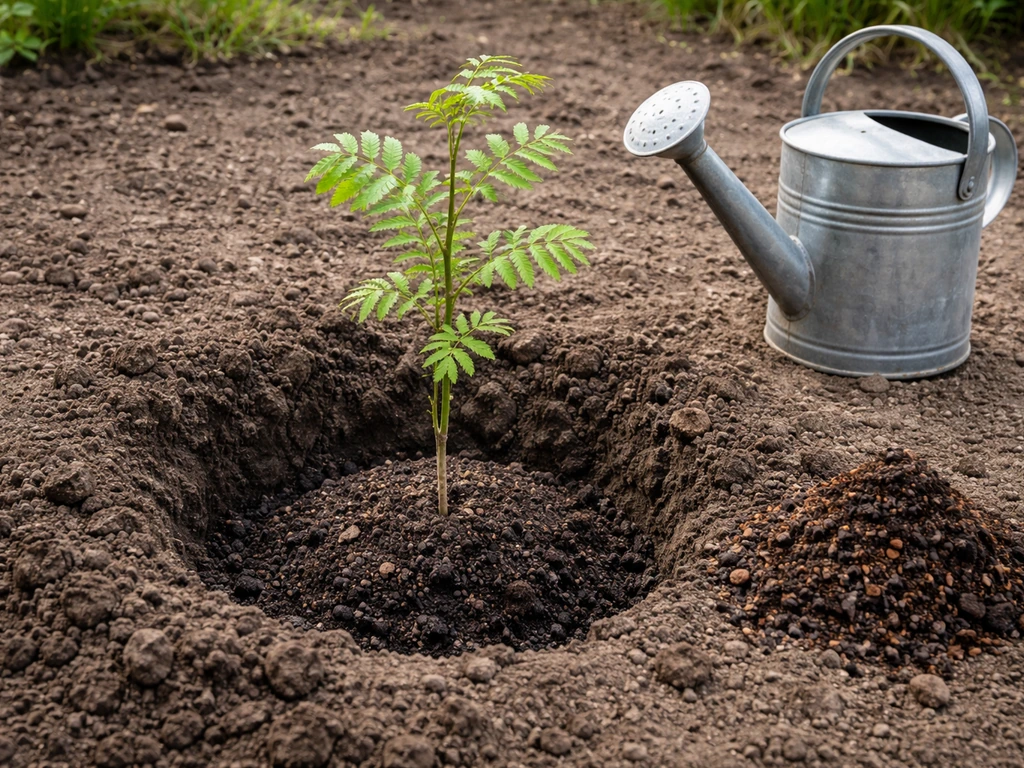
- Choose a spot with at least half a day of direct sun. Full sun produces the heaviest berry crops.
- Prepare well-drained soil with some organic matter mixed in. If your soil is very alkaline (above pH 7.5), incorporate composted pine bark or acidic mulch to shift it toward neutral.
- Plant in autumn or early spring as a bare-root or container-grown tree. Bare-root trees are cheaper and establish just as well if planted while dormant.
- Water well in the first two summers, especially in drier climates. Once established, rowan is largely drought-tolerant in cool-temperate climates but appreciates moisture during summer fruiting.
- Expect the first berry crop around years 3 to 5 from a young tree. A plant in the right spot with good light will reward patience with annual orange-red clusters reliably from then on.
- Mulch around the base each spring to retain moisture and suppress weeds, keeping mulch clear of the trunk itself.
Container growing: is it possible?
Rowan can be grown in a large container, at least for the first several years, which makes it workable for patio gardens or growers in marginal climates who want to shelter the plant in winter. Use a container of at least 60 liters, with a loam-based mix rather than pure peat or coir so the roots have something to grip. Container-grown rowans rarely hit full size, which keeps them more manageable, but they do fruit in a confined root environment as long as they're fed and watered consistently. Move them into a sheltered spot if you're in a borderline zone (7 or 8) where hard frost might damage a pot-grown plant in winter.
If rowan doesn't suit your climate
If you're in a warm zone above USDA 7 or in a genuinely arid region, rowan is going to struggle. The honest alternative is to look at other berry-producing trees that suit your climate rather than fighting rowan's natural preference for cool, moist conditions.
For growers interested in the broader world of unusual berries, it's worth knowing that rowan sits in a different growing category from sprawling cane fruits like loganberries or marionberries, which thrive on different soil and climate conditions entirely. Marionberries grow in cooler, consistently moist conditions, which is why they are often found in the Pacific Northwest and similar climates where do marionberries grow.
Rowan is a tree that earns its place in a cool-temperate or northern garden specifically because of the habitat it evolved in.
If you're in a compatible zone and just want to confirm whether rowan is already growing locally before buying a tree, the combination of the BSBI database, local birdwatcher knowledge, and a walk along any upland hedgerow in late summer will answer the question faster than any reference guide. The berries are unmistakable once you're looking for them. Rowan berries grow on the tree itself in dense clusters that ripen in late summer.
FAQ
How can I tell whether the berries I see are truly rowan (Sorbus), not a lookalike?
Check for the fruiting habit and leaf shape. Rowan has dense clusters of small orange-red berries on upright panicles, and the leaves are pinnate with multiple leaflets along a central stalk. Many “berry-looking” plants form berries singly, on different growth habits, or with simple (non-pinnate) leaf blades.
Where do rowan berries grow best in the wild, forest interiors or woodland edges?
Woodland edges and other transition zones produce the most berries. Seedlings can survive some shade, but once trees start flowering and fruiting they need open light, so you’ll see heavier fruiting along hedgerows, clearings, cliff ledges, and upland slopes where the canopy is broken.
What if my area is cold enough, but summers are dry, will rowan still fruit?
Cold tolerance helps, but dry summers are often the limiting factor. Plan on supplemental watering during the first one to two growing seasons, aiming to keep the soil evenly moist but not waterlogged, especially in sandy or fast-draining sites.
Does rowan require acidic soil to produce berries?
Acidic to neutral, slightly acidic soil supports the best performance, but rowan can tolerate some alkalinity. If your soil is consistently alkaline, expect slower growth and fewer berries, and consider improving conditions with organic matter and careful site selection rather than expecting the tree to fully adapt.
How much sunlight do I need if I’m growing rowan for fruit in my garden?
For reliable berrying, avoid deep shade. Full sun is ideal, partial shade can work, and north-facing walls or tall fence shading can suppress fruit. If your tree has fruited poorly, prune nearby shrubs or thin overhead cover to restore light during flowering and fruit development.
Are rowan berries edible, and do wild locations affect their safety?
The fruit is the same species you’d find in woodland and hedgerows, but “where it grows” can still matter for safety. Avoid harvesting from roadside or industrial areas where pollutants may be deposited, and never harvest from sites that are treated with pesticides or herbicides.
How late can I find rowan berries, and when are they easiest to spot?
They’re most visible in late summer through early fall when clusters shift to orange-red. Earlier in the season they can look less conspicuous because the fruit is smaller and less colored, so scouting mid to late summer improves detection.
Why do some rowan trees look healthy but produce almost no berries?
The most common causes are insufficient light and drought stress. Deep shade delays or suppresses flowering, and inconsistent watering during establishment can reduce fruiting even if the tree survives. Another factor is poor site drainage, which can stress roots over time.
Can I grow rowan in a container and still get berries?
Yes, but it’s more about consistent care than location. Use a large pot (around 60 liters or more), a loam-based mix, and a stable watering and feeding routine. Container-grown trees often fruit smaller than field trees, and moving the pot to shelter during severe frost helps maintain growth and flowering.
Is there a difference in where berries grow for European rowan versus the North American native species?
Yes. European rowan (Sorbus aucuparia) is native across much of Europe and western Asia, while North American berry-bearing rowans are typically associated with Sorbus americana. If you’re trying to match local conditions, choose the species native or naturalized in your region because climate and seasonal timing expectations can differ slightly.