
Ireland grows an impressive range of edible berries, both wild and cultivated. Blackberries, elderberries, rowan, hawthorn, and wild strawberries all occur naturally across the country. In the garden, you can reliably grow strawberries, raspberries, blackcurrants, redcurrants, gooseberries, blueberries, and blackberries without fighting the climate. Ireland's cool, wet, temperate conditions actually suit most of these very well, and a few (blueberries, cranberries) thrive here specifically because of the acidic, moisture-retentive soils found across much of the island. Cranberries can be grown in other climates too, but the key is recreating their acidic, moisture-retentive conditions.
What Berries Grow in Ireland: Native and Cultivated Guide
Marcus Holloway
11 Jul 2026
Native and naturalised berries in Ireland
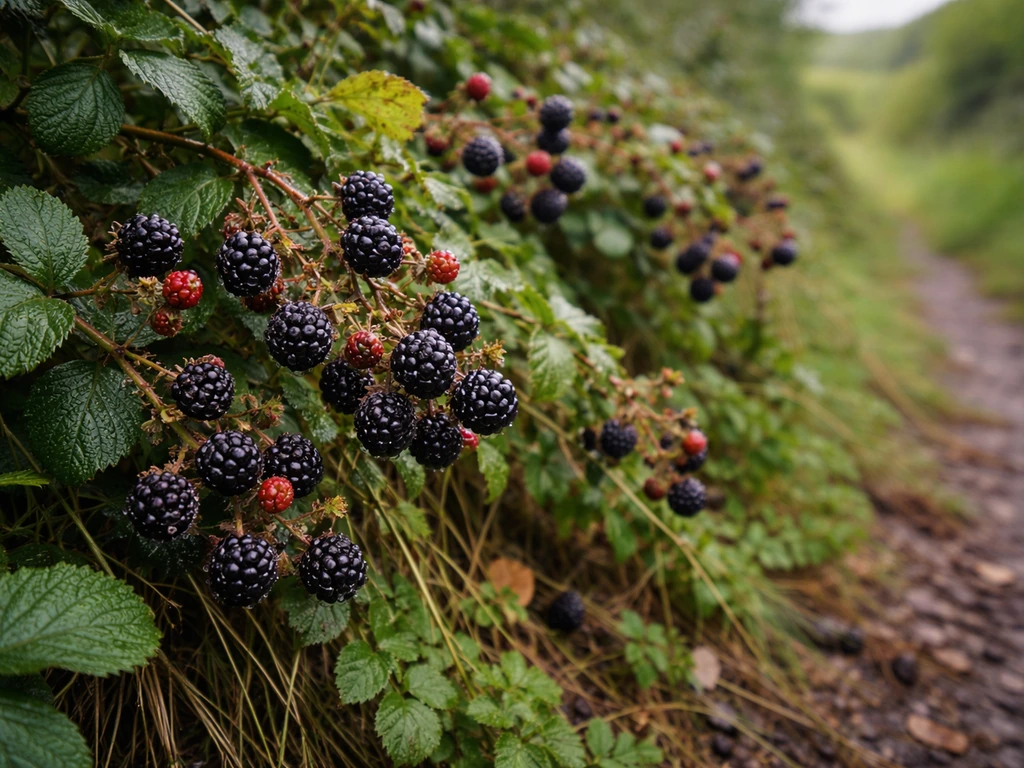
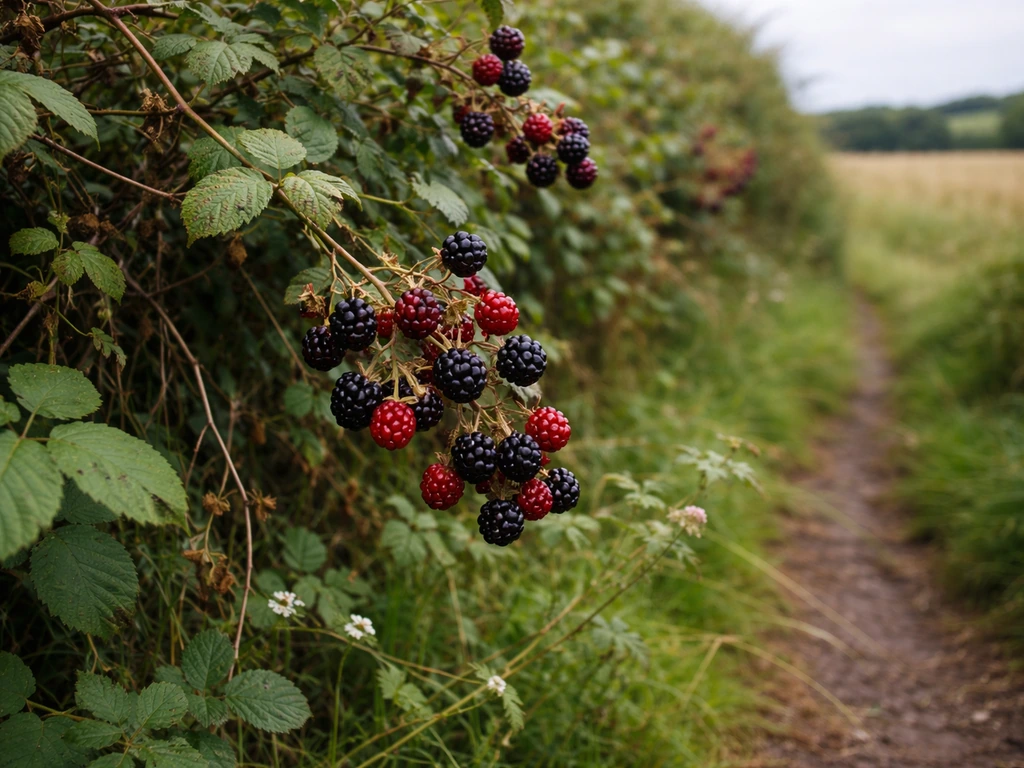
If you've walked along a hedgerow in late summer, you've already seen Ireland's most prolific wild berry: the blackberry (Rubus fruticosus). Brambles are native, widespread across every county, and ripen from August into October. You'll often see green, red, and black fruits on the same arching briar at once, which is a good reminder to check regularly rather than waiting for the whole plant to turn. There are dozens of micro-species within the Rubus group, but for eating purposes they're all the same idea.
Elder (Sambucus nigra) is the other standout native. It grows in hedgerows and woodland edges practically everywhere, producing heavy clusters of small dark berries in late August and September. BTO also notes that elder is common in hedgerows and woodland edges where birds can find it Elder (Sambucus nigra) is the other standout native.. The berries need to be cooked before eating but they're excellent for cordials, wines, and syrups. Elderflower, harvested earlier in June, is a bonus.
Beyond those two, you'll find wild strawberries (Fragaria vesca) in sheltered banks and woodland edges, rowan berries (Sorbus aucuparia) on mountain slopes and scrubland, and hawthorn berries (haws) in almost every hedgerow in the country. Sloe (blackthorn, Prunus spinosa) is abundant too, particularly in the west, and is used for sloe gin even if it's barely edible raw. Wild raspberry occasionally turns up in open woodland and scrub. Bilberry (Vaccinium myrtillus), known as fraughan in Irish, grows on upland heaths and boggy ground, and is Ireland's native blueberry relative.
Climate and habitat match: bog, woodland, hedgerows, and garden beds
Ireland sits in a cool temperate oceanic climate: mild winters, rarely extreme cold, plenty of rain, and long, relatively mild summers. Annual rainfall ranges from about 800mm on the east coast to over 2000mm in parts of Connacht and Munster. That pattern shapes which berries thrive and where. If you’re wondering whether cranberries can be grown in Australia, the key factors are similar: cool-season conditions, acidic bog-like soil, and consistent moisture where.. The key groupings to understand are acid-loving bog and heath plants, woodland edge and hedgerow shrubs, and cultivated garden berries that need reasonable drainage.
- Bog and heath habitats (acidic, wet, peaty): bilberry, cranberry, bog myrtle. These plants are perfectly adapted to western Ireland's upland and bogland conditions.
- Hedgerows and woodland edges (mildly acidic to neutral, moderate drainage): blackberry, elder, hawthorn, sloe, rowan, wild rose (hips). These are Ireland's most familiar foraging habitats.
- Woodland floor and sheltered banks (dappled shade, moist but drained): wild strawberry, occasional wild raspberry.
- Garden beds (cultivated, pH adjusted as needed): strawberry, raspberry, blackcurrant, redcurrant, gooseberry, blueberry, jostaberry. These suit Irish rainfall and temperatures extremely well.
The habitat matching principle is practical: if you want to grow blueberries in your garden, you're essentially replicating bogland conditions on a small scale (acidic, moisture-retentive soil). If you’re wondering can you grow cranberries in Ireland, the key idea is to match their bog-like, acidic conditions and keep them consistently moist grow blueberries. If you want blackcurrants or gooseberries, you need something closer to the nutrient-richer hedgerow soil with good drainage. Getting this right from the start makes the difference between a plant that struggles and one that produces for decades.
Best edible berries to grow in Ireland
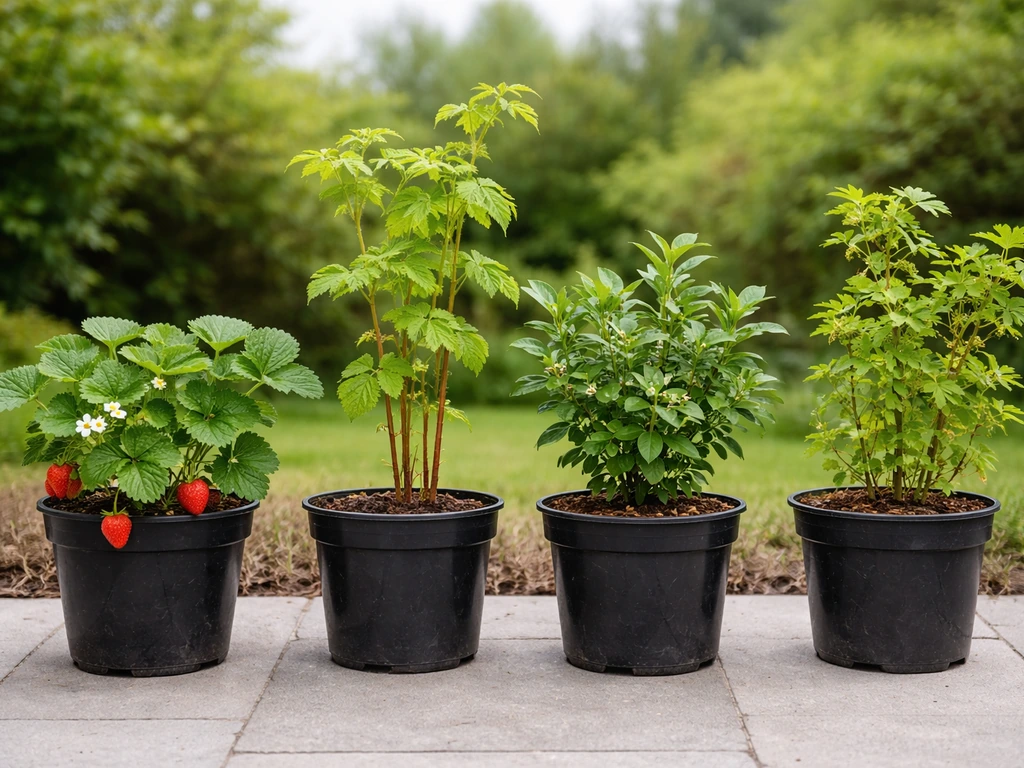
Here's a practical shortlist of berries that perform reliably in Irish garden conditions. All of these are well-suited to the climate, widely available from Irish and UK nurseries, and have realistic yields for a home grower.
| Berry | Best for | Soil pH | Key need | Harvest window |
|---|---|---|---|---|
| Strawberry | Beginners, containers, small gardens | 5.5–6.5 | Good drainage, full sun | June–August |
| Raspberry | Moderate-sized gardens, cane fruit fans | 6.0–6.5 | Support structure, annual pruning | July–October (variety dependent) |
| Blackcurrant | High yields, jam making | 6.0–6.5 | Open position, annual feeding | July–August |
| Redcurrant / Whitecurrant | Compact gardens, training against walls | 6.0–6.5 | Some shade tolerance | July |
| Gooseberry | Reliable, low-fuss fruiting shrub | 6.0–6.5 | Good air circulation | June–August |
| Blueberry | Acid soil/containers, long-term planting | 4.5–5.5 | Acidic soil, two plants for pollination | August–September |
| Blackberry (cultivated) | Large harvests, trained on fences | 6.0–7.0 | Space, training wires | August–October |
| Jostaberry | Low-maintenance, disease-resistant option | 6.0–6.5 | Minimal pruning | July–August |
Strawberries are genuinely the easiest starting point for anyone new to growing berries. If you’re wondering can you grow cranberries in texas, the same idea applies: start with a berry that matches your local conditions and soil needs Strawberries are genuinely the easiest starting point. Raspberries are the second most rewarding, particularly autumn-fruiting varieties like 'Autumn Bliss' or 'Joan J' which sidestep some of the disease pressure that summer types can face. Blackcurrants almost grow themselves in Ireland once established. Blueberries need more preparation (soil acidification) but are very long-lived and well worth the effort, especially in the west where rainfall is high and soils are already naturally more acidic.
How each berry grows: cane, bush, vine, and tree
Understanding how a berry plant grows physically tells you what it needs in terms of space, support, and pruning. Get this wrong and you'll spend years wondering why something isn't producing.
Cane fruits: raspberries and cultivated blackberries
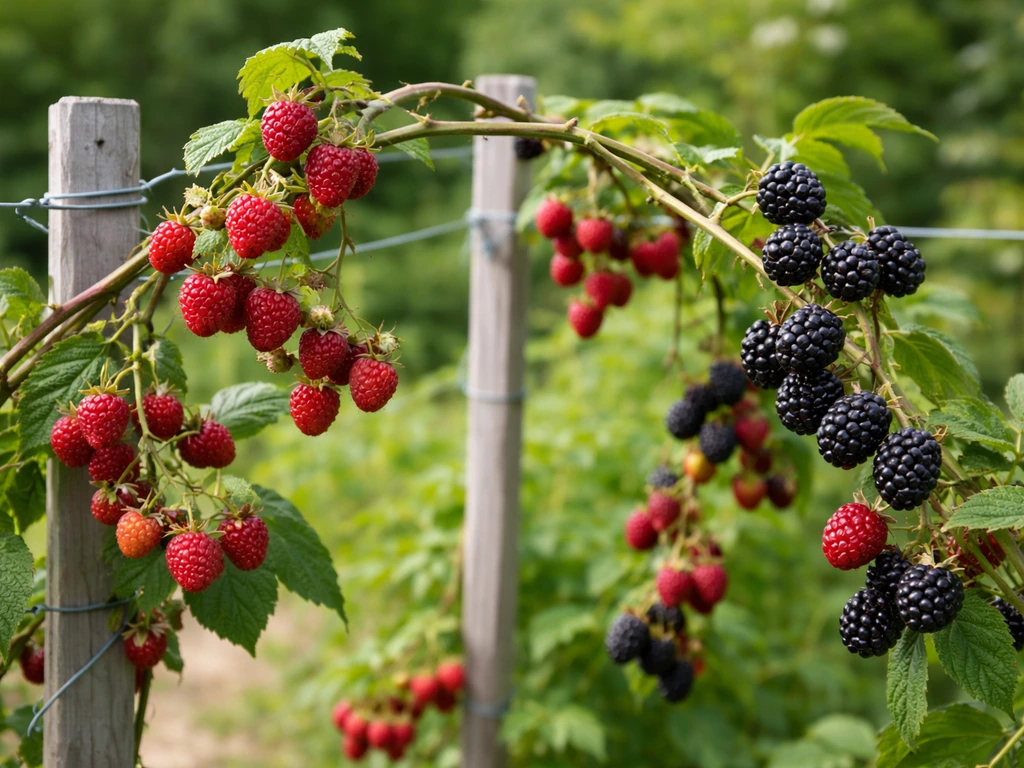
Raspberries and blackberries grow on canes, long arching stems that shoot up one year and fruit the next (in summer varieties), then die back. Autumn-fruiting raspberries fruit on the current season's new canes, which simplifies management considerably: you cut everything down to ground level in late winter and fresh canes grow and fruit that same year. Both need support wires strung between posts, spaced about 60cm apart vertically. Blackberries are more vigorous and need more horizontal space, at least 2.5–3 metres per plant.
Bushes: currants, gooseberries, blueberries, jostaberry
Blackcurrants, redcurrants, whitecurrants, gooseberries, blueberries, and jostaberries are all true bushes. They build up a permanent woody framework and are pruned annually to encourage productive new growth. Blackcurrants fruit on young wood, so pruning removes older stems. Redcurrants and gooseberries fruit on a spur system and can even be trained flat against a fence as a cordon, which is very useful in a small garden. Blueberries form compact, rounded bushes up to about 1.5m tall.
Low plants and ground covers: strawberries and bilberry
Strawberries grow as low, spreading herbaceous plants that send out runners to colonise new ground. They're not woody in the way bushes are and should be replaced every three to four years as productivity declines. Bilberry (the native Irish relative of blueberry) grows as a low woody shrub on heathland and bog, rarely more than 50cm tall.
Trees and tall shrubs: elder, rowan, hawthorn
Elder grows quickly into a large shrub or small tree, up to 6 metres if left unchecked, though it responds well to hard cutting and can be kept smaller. Rowan and hawthorn are proper small trees, and while they're not typical garden fruit trees, both produce useful edible berries and are excellent in a wildlife-friendly or hedgerow planting scheme.
Where to plant and how to prepare your soil
Most Irish garden soils are slightly acidic to neutral, often in the 6.0–6.5 range, which suits the majority of cultivated berries without much amendment. The main exceptions are blueberries, which need a pH of 4.5–5.5 (similar to bog conditions), and strawberries, which prefer slightly better drainage than many Irish garden soils naturally offer.
- Test your soil pH before planting anything acid-loving. Cheap pH test kits from garden centres are accurate enough. If your soil reads above 6.0, blueberries will need raised beds or containers filled with ericaceous compost.
- For currants, gooseberries, and raspberries: dig in a generous amount of well-rotted compost or manure before planting. These are hungry plants that will repay the effort for years.
- Improve drainage on heavy or waterlogged soil by raising beds by 20–30cm, or adding grit to planting holes. Raspberries in particular dislike sitting in wet soil over winter.
- For strawberries, raised beds or mounded rows with good drainage are ideal. Adding horticultural grit to the top layer of soil helps water move away from the crown.
- Blueberries planted in the ground need the soil acidified with composted pine bark, sulphur chips, or ericaceous compost. This takes time, so start the process several weeks before planting. Better still, use large containers (at least 40–50cm wide) filled entirely with ericaceous compost.
- Sun exposure matters: most berries want a minimum of 6 hours of direct sun daily. Currants and gooseberries tolerate partial shade better than most and can perform well on a north-facing wall trained as cordons.
Planting time, spacing, and basic care
Bare-root plants (available from November to March) are cheaper and establish well when planted in autumn or early spring. Container-grown plants can go in any time the ground isn't frozen, but spring or early autumn plantings give the best establishment. In Ireland, bare-root raspberries, currants, and gooseberries planted in November or February tend to settle in fast and start producing by their second year.
| Berry | Planting time | Spacing (plants) | Spacing (rows) | First harvest |
|---|---|---|---|---|
| Strawberry | Late summer to early autumn (August–September) for best results | 30–45cm | 75cm | Following summer |
| Raspberry | Autumn or early spring (bare root) | 45cm | 1.5–1.8m | Year 2 (summer vars), Year 1 (autumn vars) |
| Blackcurrant | Autumn or early spring (bare root) | 1.5m | 1.5m | Year 2–3 |
| Redcurrant / Whitecurrant | Autumn or early spring | 1.2–1.5m | 1.5m | Year 2 |
| Gooseberry | Autumn or early spring | 1.2–1.5m | 1.5m | Year 2 |
| Blueberry | Spring (container grown) | 1–1.5m | 1.5m | Year 3 (restrict fruiting early) |
| Cultivated blackberry | Autumn or early spring (bare root) | 2.5–3m | 2.5m | Year 2 |
Basic ongoing care is fairly straightforward once plants are established. Feed currants, gooseberries, and raspberries with a general-purpose or high-potassium fertiliser in early spring. Mulch around plants each spring to retain moisture and suppress weeds, especially important for blueberries where you're trying to maintain acidic conditions. Water young plants in dry spells during their first season, since Ireland doesn't always get rain at the right moments even if the annual total looks high. Prune raspberries as described above (summer varieties: cut fruited canes after harvest, leave new canes for next year; autumn varieties: cut everything to the ground in late winter). Blackcurrants: remove one in three of the oldest stems annually. Gooseberries and redcurrants: shorten main branches and side shoots each winter.
Common problems and realistic expectations
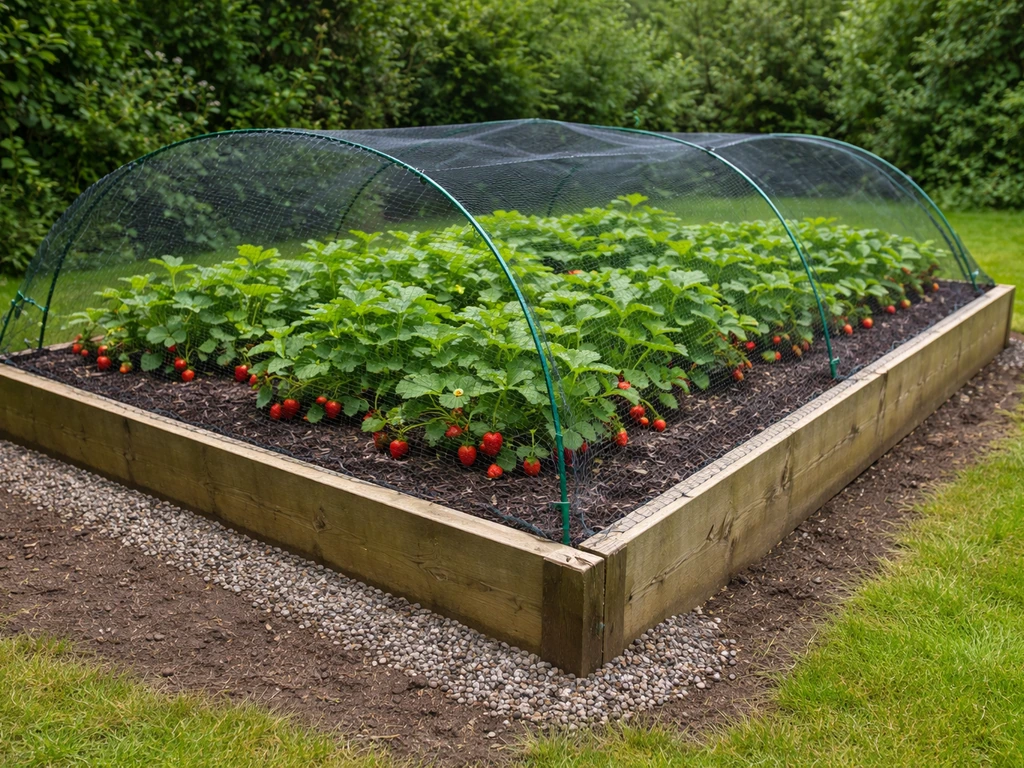
Let's be straightforward about what you'll encounter. Birds are the single biggest frustration for most Irish berry growers. Blackbirds, thrushes, and starlings will strip a redcurrant bush in a single morning if you don't protect it. Netting is the only reliable solution: a fruit cage or drape-over net that reaches to the ground. Don't wait until the fruit is almost ripe to net, because the birds have been watching for longer than you have.
Slugs are a persistent issue with strawberries in Irish conditions. Raised beds, copper tape, or slug pellets (iron phosphate based, safer around pets and wildlife) all help. Botrytis (grey mould) affects strawberries in wet summers, which is basically every Irish summer. Good air circulation, removing damaged fruit promptly, and not overwatering will reduce it significantly.
Raspberry cane diseases including cane blight and spur blight can appear, usually when canes are damaged or air circulation is poor. Growing autumn-fruiting varieties and cutting everything to the ground annually is the simplest way to minimise these problems. Gooseberry sawfly caterpillars can defoliate a bush very rapidly in May and June: check the undersides of leaves regularly from late April and pick off caterpillars by hand early, or spray with an appropriate organic insecticide.
On yields: a mature blackcurrant bush (4–5 years old) will give you 4–6kg of fruit per year. A well-maintained row of raspberries produces about 1–2kg per metre of row. Strawberry plants peak in their second and third years. Blueberries are slow to establish but can produce for 20 years or more once settled. Be patient in years one and two: take off most of the flowers in year one of blueberries and some in year two to let root establishment happen. It pays off significantly later.
Beginner picks for containers and small gardens
If you have a small garden, a patio, or just a few pots, you're not limited to growing nothing. Several berries genuinely perform well in containers, and some actually prefer it.
- Strawberries: the classic container berry. Use a 30cm pot, window box, or hanging basket with good drainage. Varieties like 'Honeoye' and 'Cambridge Favourite' are reliable in Irish conditions. Replace plants every three years.
- Blueberries: probably the best berry for container growing in Ireland. A 40–50cm pot filled with ericaceous compost gives you full control over pH. Two different varieties (for cross-pollination) in adjacent pots will dramatically increase yields. Try 'Bluecrop' and 'Patriot' together.
- Redcurrants and gooseberries: can be grown very successfully as single-stemmed cordons in large pots or in narrow borders. They're naturally compact when trained this way and produce reliable crops in surprisingly tight spaces.
- Autumn-fruiting raspberries: work in large tubs (at least 45–50cm wide and deep) with a central cane support. They won't produce as heavily as in the ground but they're manageable and rewarding on a sunny patio.
- Compact strawberry varieties like 'Toscana' and 'Florentina' are bred specifically for containers and hanging baskets, producing both fruit and attractive pink flowers.
The single best starting point if you're a complete beginner with limited space: one strawberry planter and two blueberry bushes in ericaceous compost. You'll get fruit in year one from the strawberries, and the blueberries will reward you for decades with very little ongoing effort beyond watering and an annual top-up of ericaceous compost. If you have ground space and want higher yields faster, add a blackcurrant bush: it's almost indestructible in Irish conditions and gives you enough fruit to make jam, cordial, or crumble filling by year three.
Ireland's climate is genuinely one of the better ones in Europe for growing a wide range of berries. Do cranberries grow in California? It depends on whether the climate and soil conditions match the plant's cold, bog-like preferences. The combination of mild winters, high rainfall, and reasonable summer temperatures means most berries here don't need the irrigation, frost protection, or heat management that growers in drier or more extreme climates have to deal with. The main adjustments are soil pH for acid-lovers and bird protection once fruit starts to colour. Get those two things right and you're most of the way there.
FAQ
What berries grow in Ireland without needing soil amendments?
If you want the lowest-fuss option, start with strawberries, raspberries, blackberries, redcurrants, and gooseberries. These usually tolerate typical Irish soil that is slightly acidic to neutral, roughly 6.0 to 6.5, so you normally avoid the pH work that blueberries and cranberries require.
Can I grow cranberries in Ireland, or are blueberries the only option?
You can grow cranberries, but it is more demanding than blueberries because they need reliably bog-like, very acidic, moisture-retentive conditions. A practical approach is to use a dedicated container or a raised bed filled with ericaceous compost plus extra acidic, moisture-holding material, then keep it consistently wet, not just occasionally watered.
Do wild berries in Ireland taste different from garden berries?
Yes. Wild blackberries and elderberries are often more intense and sometimes more variable in flavour because they mature in different microclimates and can include less predictable ripening. Garden cultivars tend to be larger and more uniform, with ripening you can time, and they usually yield more reliably year after year.
When is the best time to harvest berries in Ireland?
For hedgerow brambles, pick from August into October and check often, since fruits can include green, red, and black berries on the same plant. For elder, berries typically ripen late August into September, and harvesting too early means more bitterness and tougher texture.
Why do my strawberries grow but not much fruit?
Most often it is a pollination or planting-position issue. Strawberry flowers need good light and consistent access to pollinators, and plants that stay too wet or shaded can produce lots of leaves with fewer fruits. Also remove old, low-producing plants because productivity usually drops after about three to four years.
What is the simplest way to protect berries from birds in a small garden?
Netting that reaches to the ground is the reliable method, but in small spaces use a fruit cage or drape net over the entire plant structure rather than tenting loosely. Birds often start earlier than you expect, so net when berries first start to colour.
How do I know if my soil is suitable for blueberries before planting?
Check pH before you invest. Blueberries typically need about 4.5 to 5.5, and Irish garden soil that is closer to neutral will not work without amendment. If you are unsure, use a test kit and plan on growing blueberries in ericaceous compost or a dedicated, acidic bed.
Can I train redcurrants or gooseberries against a fence in a small space?
Yes. Redcurrants and gooseberries can be trained flat as cordons, and that is particularly useful where horizontal space is limited. This also improves airflow, which can reduce wet-season problems like mould.
Why do my raspberry canes look healthy but the harvest is disappointing?
Spacing and pruning schedule are usually the culprit. Raspberries need support wires spaced about 60 cm vertically, and airflow matters. Also, if you grow summer types and do not remove the fruited canes after harvest, the plant wastes energy and reduces next season’s quality.
What are the biggest disease and pest issues for berries in Ireland?
Bird damage is the most common crop killer once fruit starts to ripen. For plants, strawberries commonly face slugs and grey mould in wet summers, and raspberries can get cane blight when canes are damaged or air circulation is poor. If you choose autumn-fruiting raspberries and cut down old canes annually, you can reduce cane disease pressure.
How many berry plants do I need for realistic harvests?
A few plants can still be productive. As a rough guide, a mature blackcurrant bush around 4 to 5 years old can give about 4 to 6 kg per year, raspberries often yield around 1 to 2 kg per metre of row, and strawberry plants peak in years two and three. Plan variety timing, since harvest windows differ.
Are berries safe to eat if birds have pecked them?
Usually yes if the fruit is fully ripe and you harvest promptly, but bird pecking can create entry points for rot in wet weather. In practice, check for soft or mouldy patches, discard damaged fruit, and focus on netting early so fewer berries get bruised before picking.
Can berries be grown in containers in Ireland?
Yes, and some options actually suit pots, especially where soil conditions are unsuitable. The most beginner-friendly setup is a strawberry planter plus blueberry bushes in ericaceous compost. Containers still need consistent watering, and blueberries will require regular topping up with acidic compost to maintain the right growing conditions.